

7 Common Problems With Lawn Mower Decks (And Fixes To Try)
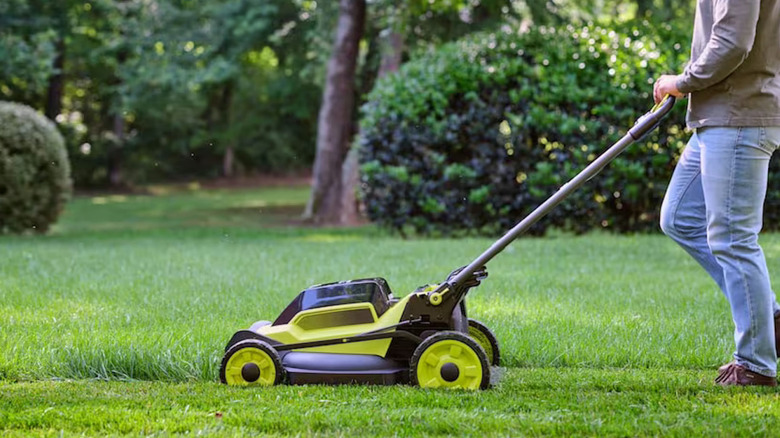
You may encounter a few problems when you use a lawnmower or riding lawnmower in your yard. Although these issues might seem minor and could be ignored, it's always better to deal with them to avoid any prolonged issues that may permanently damage the device. Many of these problems can happen around your lawn mower's mower deck.
The mower deck is the housing unit that surrounds your lawn mower's blades. It protects the blades from the outdoor elements and focuses airflow beneath it to pull the grass clippings into a bag or a mulcher. It's a critical component of various types of lawn mowers and is something you want to regularly maintain. This goes for every major lawn mower brand.
We've gone through to find seven of the most common problems you can encounter when it comes to your lawn mower's mower deck. Many of these problems can be handled by yourself at home, and we've provided the solutions for these issues. However, reaching out to a local expert when you discover the problem never hurts if you're not confident about fixing it yourself. It's better to have a professional take a look than to make the problem worse.
The grass cut is uneven or slanted
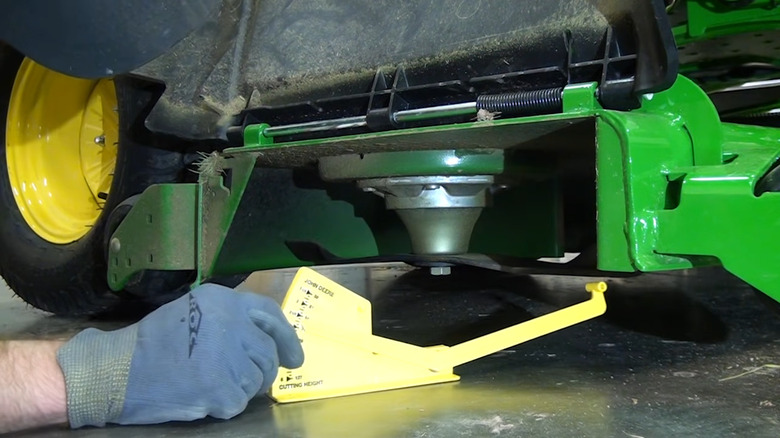
One issue you can quickly notice after using a lawnmower with a mower deck is that the grass you cut is uneven or slanted in places. The overall lawn can look like you were wobbling the entire way, with no consistency across the board. It's not a good look, and the solution to this can be one that you can do from your garage.
Check that the gauge wheels on your mower deck are even, as the slanted grass cuts are likely from wheels that were not put on correctly, and check that they're properly inflated. Using a tire sealant is one way to help maintain your lawn mower's tires. Also, put them on and take them off again to make sure they're all even. Alternatively, the mower guard could be the issue. The guard could be uneven on either side, as having a misaligned mower deck is a common issue. Bring your lawnmower to level ground and check that both sides are even to get a consistent cut.
The mower deck blades are dull
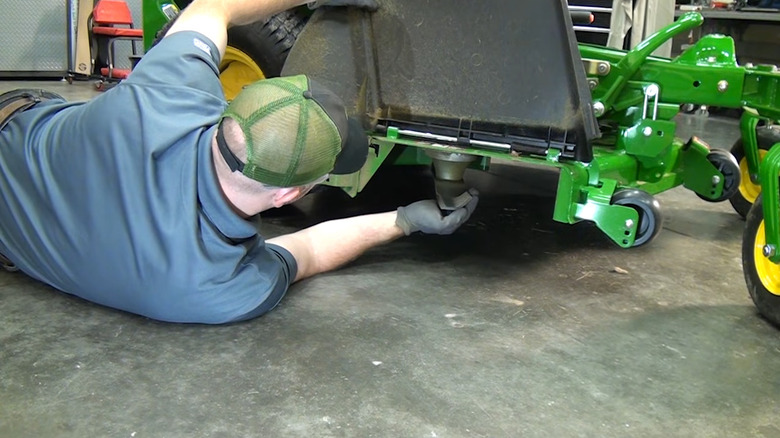
Before going out on your lawnmower, double-checking the sharpness of your mower blades beneath your mower deck is always a good idea. You want to see if the blades have become dull, as they can cause a range of problems, including inconsistent cuts on your lawn, and they can wear down your equipment in the long run. You can tell that the blades have become dull if they're dented or bent, or if there are chunks of grass beneath the deck.
To sharpen a lawnmower blade, remove it from the bottom and use an angle grinder. You don't need to do it for too long. Running the grinder on the blade a few times is all it takes before you're done. Although you can sharpen your lawnmower's blades yourself, it's always a good idea to find someone in your local area to do it for you. Having a professional do it is always worth it to ensure the job is completed properly, and you don't harm yourself in the process. Sharpening your lawn mower's blades is one of the many regular maintenance procedures you should do to help maintain any lawn mower.
The mower deck constantly vibrates
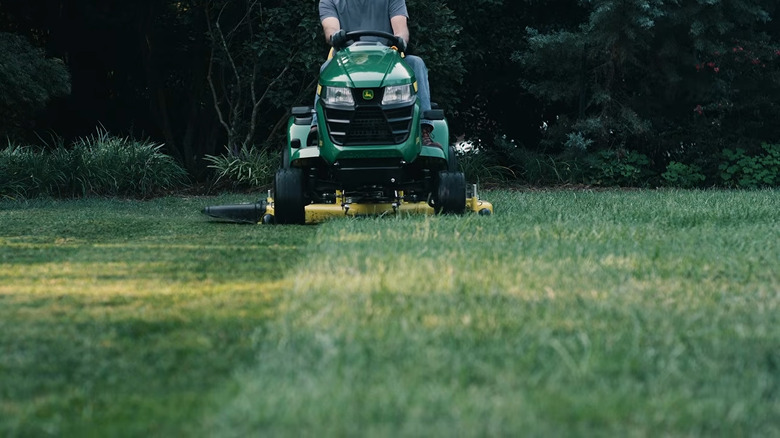
There's a small amount of vibration and power that you feel when you're using a mower deck and going across your lawn. However, it's easy to tell when there's too much vibration, and when that happens, you want to take a look before you work too much of your lawn. A consistently vibrating mower deck can damage your lawn, and it could be dangerous if the vibration is strong enough for the blades to buck into the ground.
The top reasons behind this vibration could be that the blades are damaged, or they're not tight enough. Look underneath your mower deck and inspect the blades to ensure they're still usable and that you have them tight. Another possibility is something loose in your engine or deck hardware, so you'll need to check components like the spindle or mandrel bearings. Also make sure to check the pulleys, as those can be the culprit.
The mower deck's lower section is rusting
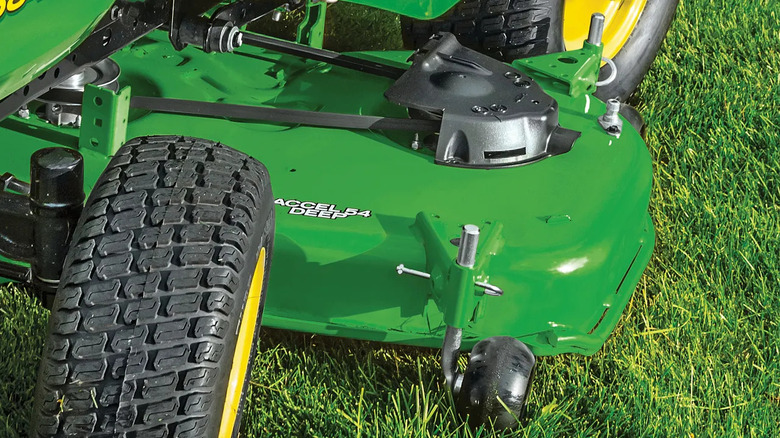
As time goes by, your mower deck has a higher chance of gradually rusting as you continue using it. Any rust on equipment greatly reduces durability and quality, and taking care of it as quickly as possible is an essential procedure.
If you ever notice rust underneath the mower deck, remove the guard and begin cleaning as much of it as you can. Remove all sections of your mower deck, pulling the blades off, to clean both the blade and the underside. Remove all of the grass clippings, debris, and any dirt that you find attached to these pieces. A lawn mower deck scraper is the ideal tool for cleaning this section, and is one of the five useful tools you should always have for cleaning your lawn mower deck properly. For rust, a wire brush and light oil can work, along with other methods for heavy rust, to remove it before applying a coat of paint.
A good way to prevent rust from building up on a mower deck is to clean it shortly after mowing. You don't want the grass and debris to remain on the equipment for too long.
The mower deck begins to slow down
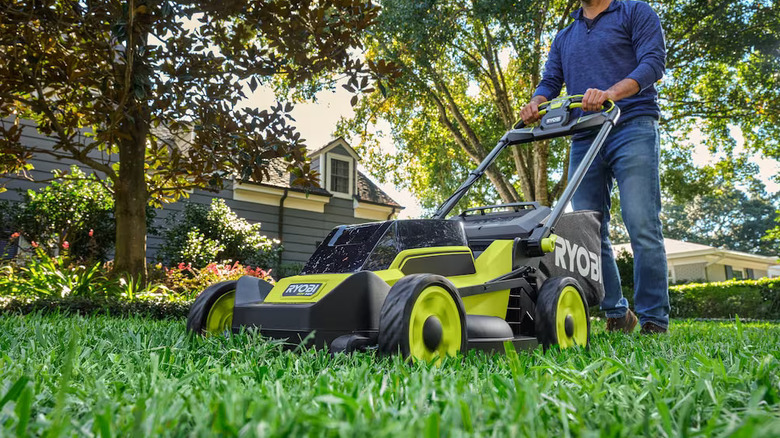
While you're using your lawnmower, it may start to slow down. This common problem can happen for reasons unrelated to fuel or gas issues, often shortly after you've already started. If you notice your mower slowing down or the blades not running as effectively, turn it off to find out what's happening rather than keep running it.
The problem is likely something that you have caught underneath the blades or stuck in the mower deck. When you hear that the mower deck is slowing down below you, there's probably a piece of debris, like a heavy branch, a rock, or a clump of dirt, stuck somewhere down there. Even a small amount of built-up grass clippings and debris can cause the blades to slow down. It's better to remove it manually than to keep running the machine, as the blades could be damaged.
The mower deck loss of power when cutting grass
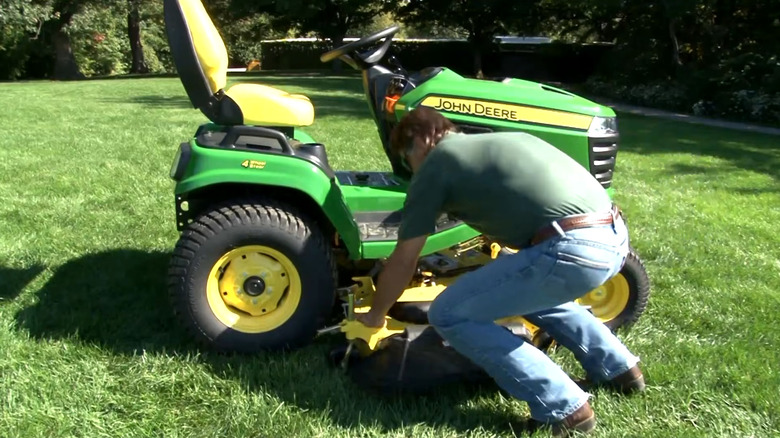
Using a riding lawnmower with a lower deck that consistently loses power when you start using the blades or cutting the grass is a common problem. The power loss could be sudden or happen gradually as you use it, but if this problem consistently happens, there are a few issues it could stem from that you'll want to investigate.
The first thing you want to do is double-check that you can use your mower without engaging the blades. If you can, you can rule out an engine problem. When you have these power loss problems and you're not engaging the blades, it has to do with the engine, and that means checking your fuel lines, the ventilation, or the ignition coils.
If that's all fine, then you want to go through the mower deck. Look around the blade spindles, the bearings, and the pulleys, and check if they feel loose. You'll need to take these sections apart to fully examine them to make sure they're still good and functioning. Also make sure no rope or string is attached to the blades, as that can cause a loss of power.
Grinding noises while turned on
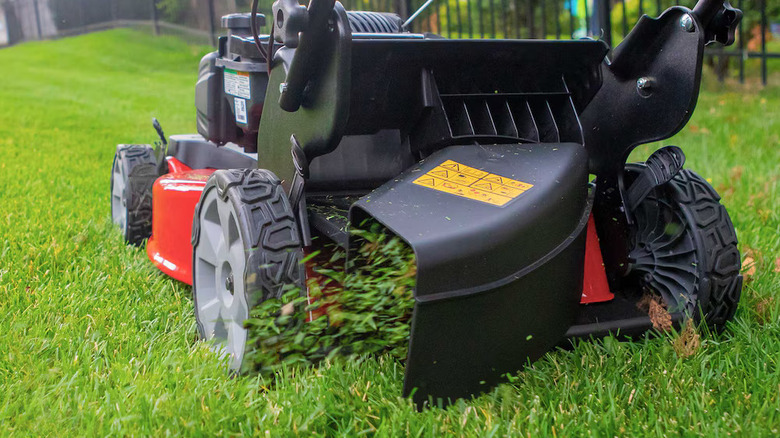
If your lawnmower can work and drive effectively but you hear a grinding noise from the mower deck, it's a common problem that can happen before or during mowing. A grinding noise is never good, even on an older model. Ignoring it can lead to even bigger issues.
If you hear the grinding sound from the lower deck, first check that nothing is caught between the blades. It could be a small rock or root that you caught while you were driving. Once you've checked that it's all clear, the next thing to do is to take off the lower deck and examine the spindles or the bearings. There's an easy way for you to test if the spindles are bad, after removing the blades. Remove the pulleys from around the spindles and check to see if they rotate a lot as you use them, or if you can clearly hear the bearings. When you turn the spindle and you don't hear anything, those bearings are fine. However, if you do, that's likely your culprit, and they're worn out. You'll need to replace them, which will keep you from using that mower until you get the new parts.