

Are Sedans Making A Comeback In 2026?
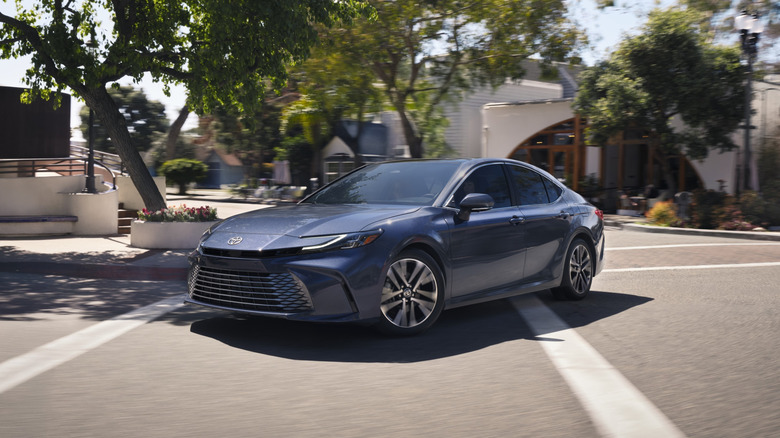
It's no secret that Gen Z's favorite cars are a little different from those of previous generations. The reasons sedans seem to be back in vogue range from a shift in preference due to "SUV fatigue" to simply because smaller cars are cheaper and more efficient. Indeed, the average MSRP for a car in the USA has increased to $52,933. At the same time, gas prices have remained excessive. The American Automobile Association reports the national average currently hovers around $3.78 per gallon. A big, expensive car that chugs gallons faster than a camel at an oasis is the last thing someone looking to save some in this economy would want.
It's no surprise, therefore, that a few automakers are seeing some impressive growth numbers. A great example is America's best-selling sedan itself, the Toyota Camry, which sold 260,684 units from January through September 2026. That's an impressive figure as is, but it's also up 11.2% compared to the same stretch in 2025.
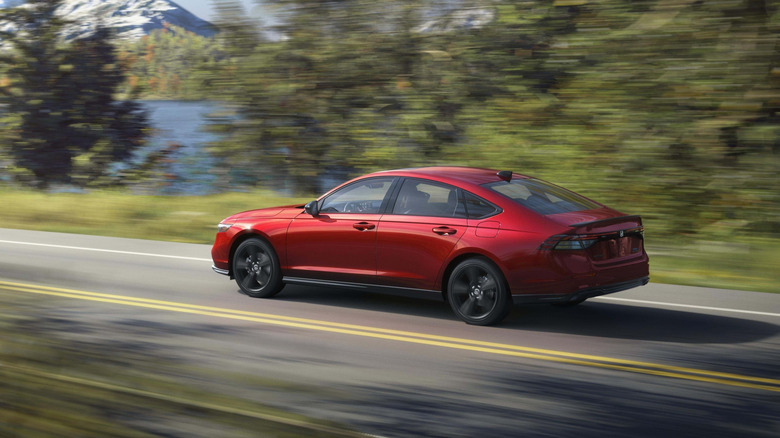
Toyota aside, another sedan-maker seeing growth is its rival, Honda. While the company's light trucks — a category that includes SUVs, pickups, and minivans — recorded a growth of just 1.1%, its passenger car sales rose 14.4% through October 2026. In total, the company moved 401,152 passenger cars. Out of these, the Honda Accord stole the show, recording its best sales in October since 2020 — even if the Civic moved more units overall.
Toyota and Honda are the biggest sedan sellers in the U.S., proving there's definitely an uptick in interest in sedans, in at least some parts of the market. For Honda alone, its passenger cars are outperforming its SUVs in growth.
Why buyers are turning to sedans
The rising average MSRP for a car sold in the U.S. only paints part of the picture. SUVs are generally pricier than sedans due to mechanical costs and manufacturing complexity. In fact, according to Kelley Blue Book, the average compact car was priced nearly $10,000 lower than the average compact SUV in the U.S. ($28,030 versus $37,895), as of October 2026. For that price difference, you get an arguably sportier build and similar features; the only difference is the body style.
Since many households today are feeling a financial squeeze, as suggested by a USA Today report, going for the more economical option has grown more tempting than ever. It's exactly why the less pricey segments are seeing an uptick in sales. In fact, vehicles priced from about $28,000 to $38,000 have grown 9.6% in sales in October versus the same month last year, according to Cox Automotive. Coincidentally, this is the same band where many entry-level sedans sit.
Also, because sedans are priced lower, their hybrids come out to be cheaper as well. And with high gas prices, the powertrain is more important than ever. The Toyota Camry is exclusively sold in a hybrid variant that starts at $29,700.
The Toyota Corolla and Honda Civic also deserve a mention here, since they make up the top four sedans sold in the U.S., including the two above. The Corolla and Civic also recorded modest growth of 8.4% and 5.4%, respectively, through September.
The comeback isn't as big as it looks, though
Toyota and Honda are only two brands, though, and while the four sedans may look like a big win on paper, they represent a tiny percentage of the overall market. Add up the sales of the four sedans above in the U.S. so far in 2026 with Camry at 260,684, Corolla at 195,141, Civic at 195,135, and Accord at 145,520, and you get a total of 796,480. That's just 6.6% of the estimated total vehicle sales in the U.S. at 12,055,059.
Of course, there are a host of other sedans to pick from, but this goes to show that even the biggest sedan nameplates don't exactly leave an impressionable dent. As a matter of fact, Kelley Blue Book's Brand Watch survey found that fewer people than ever are considering sedans today. Among mainstream shoppers, sedan consideration fell to a record-low 25% in the first half of 2026. At the same time, SUV consideration rose to an all-time high of 71%. The takeaway here is that while sedan sales are up at a few brands, the average buyer isn't even looking at a sedan.
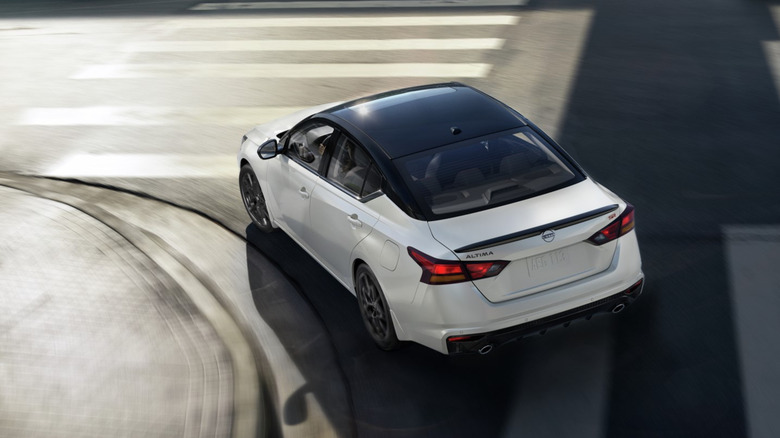
So what's exactly going on here? Clearly, the best-selling sedans are recording solid growth. But since they make up a niche, any growth is limited to a tiny segment. As of early 2026, according to Carscoops, passenger cars made up just 18% of the U.S. new-vehicle sales. It's exactly why most U.S. automakers don't even sell sedans anymore. Some companies are even seeing sedan sales head in the other direction. Nissan, for one, saw its Altima sales down 26.8% from January through August 2026.