

Gas Prices Are Surging Around The World - Here's Where Fueling Up Costs The Most
If you dread watching the fuel pump digits climb higher every time you fill up, you're not alone. Earlier in 2026, gas prices in the U.S. hit a four-year high, and many consumers are not optimistic that they will go down any time soon. According to AAA, gas prices have risen more than $0.37 in just one month, with the average price of one gallon sitting at $4.45 at the time of writing. You may be afraid to even think about the situation getting worse, but the truth is that many other countries actually do have it worse.
Rising gas prices are a worldwide issue. The most recent rise has mainly been attributed to the war in Iran and the blockade of the Strait of Hormuz, where about ⅕ of the world's seaborne oil passes through. Due to the conflict in this region and other factors, the average price of gas around the world today is just over $6 when converted to U.S. dollars. As you would expect, it tends to be more expensive in countries that import oil and cheaper in countries that produce and export their own. The most expensive gas in the world is currently found in Hong Kong at $16.70 — almost four times the average in the United States.
It's all about perspective
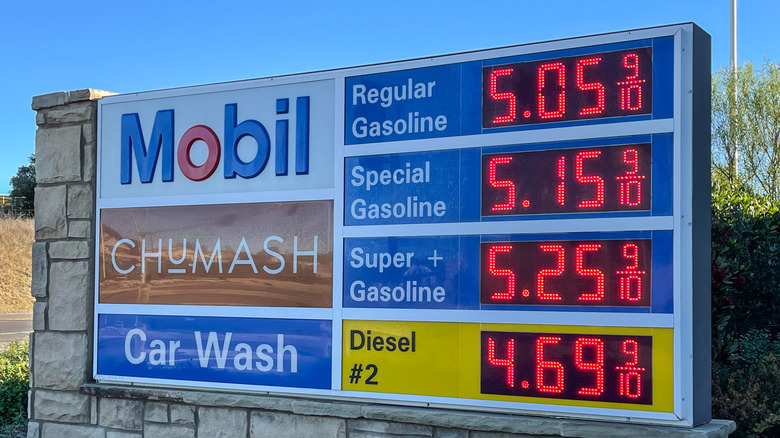
Many Americans would likely be surprised — and relieved — to learn that the U.S. doesn't rank anywhere near the top 20 countries with the most expensive gas. Malawi, in southeastern Africa, has the second-highest gas at $12.26. Norway, Denmark, and the Netherlands are all paying more than $10 per gallon. In the United Kingdom, drivers should expect to pay about $8.69, and Canadians are seeing prices hover at about $5.50. This perspective may make it easier to accept $4.50 in the U.S., but it's also much cheaper in other parts of the world.
Some readers can probably remember a time when gas was under $1. In Libya, Iran, and Venezuela, it still is. In Russia, gas is about $3.37. Meanwhile in Japan, it's just over $4. At the time of writing, crude oil was trading at approximately $89.50 per barrel. If it were to hit a terrifying $200 per barrel, U.S. consumers could expect to pay $7 or more per gallon.
Luckily, there are a few steps you can take to ease the burden, both big and small. If you've been thinking about buying a new car or your current lease is up, consider buying a hybrid or electric vehicle. If you aren't ready for a new ride, keep a regular maintenance schedule and be sure your tires are inflated to the recommended level. Try not to sit idling and avoid long engine warm-ups. Finally, ease into acceleration and avoid sudden starts and stops, which can increase fuel consumption.