

What Type Of Chainsaw Chain Stays Sharp The Longest?
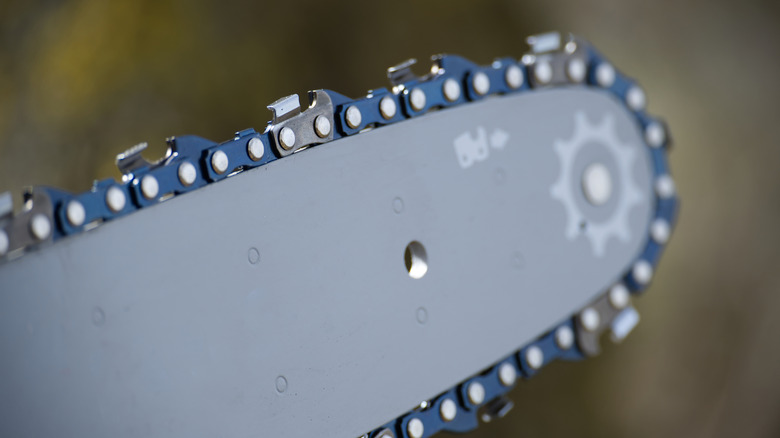
These are some of the things to bear in mind when determining how long your chainsaw chain might last, including the shape of the cutting teeth. Three common layouts are the chipper, the semi-chisel, and the chisel or full chisel, with some additionally sporting carbide tips for improved longevity. Broadly speaking, those with these tips will retain their sharpness the longest, with Stihl claiming that its Picco Duro chain, a carbide version, will keep its edge for as much as four times longer than a standard steel counterpart.
With or without the addition of carbide, though, semi-chisel chains will typically last longer than their full-chisel counterparts. This is primarily because full-chisel designs have sharper, more angular cutting edges that wear more quickly. The differences between cutter design types can seem quite subtle to those more unfamiliar, but they have a significant impact on the way a given chainsaw performs and the specific roles it's best suited for.
The different types of chainsaw chain
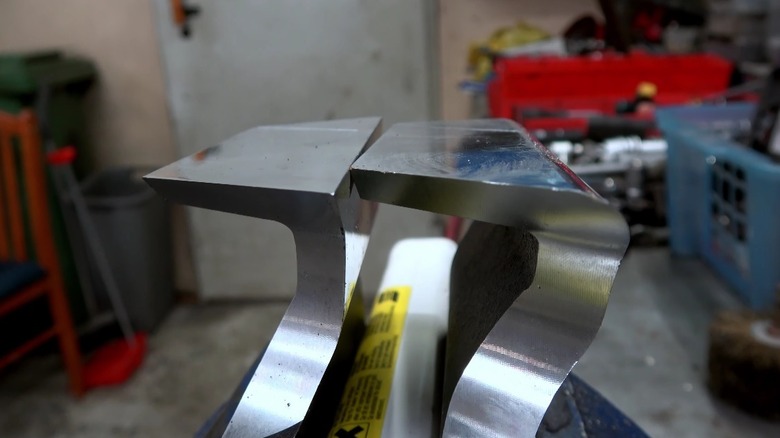
The chipper and the chisel varieties are effectively two opposite sides of the scale, with the former having the most rounded cutting edges and the chisel boasting, manufacturer Husqvarna explains, "sharp cutter corners that efficiently split wood fibers. They provide the fastest and most efficient cutting experience in clean softwood." As such, this type of chainsaw chain is often used when there's a large volume of such work to be done. Logging, for which volume and efficiency are essential, is one example of this.
By contrast, the semi-chisel arrangement's cutting edges are more rounded, so they are better suited for muddier conditions and/or harder or worse-condition wood. The fierce, sharp blades of a full-chisel model have sharp square cutting edges, which typically do a faster job of slicing through wood in the appropriate conditions but which also explains why they can lose sharpness so quickly. A semi-chisel chain will often be better suited to tasks like cutting firewood, where uniformity isn't such an issue and the condition of the wood might not be ideal.
Maintaining the sharpness of a chainsaw chain
Carbide inserts also have an important impact on a chainsaw chain's sharpness. The impact of friction and the microscopic damage that happens to the surface during use gradually eat away at the smooth surface that's so essential for a clean cut. Along with technique, an appropriate work surface, and careful use, tungsten carbide chains can also have a huge positive impact on how long the sharpness lasts. This extra strength is invaluable for challenges like frozen wood.
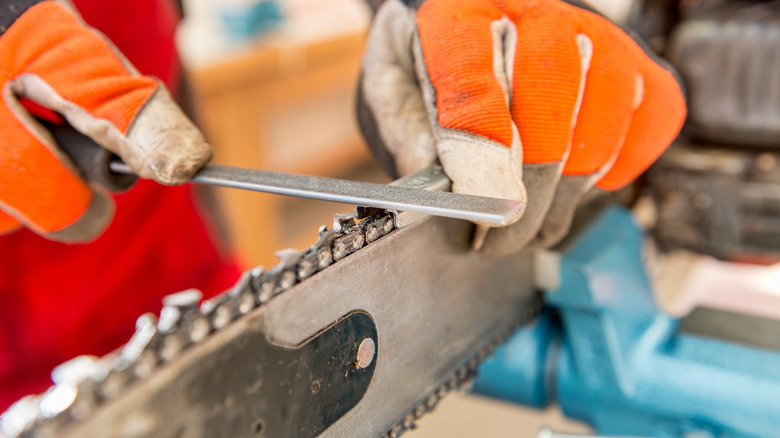
The thing to bear in mind with a tungsten carbide chain, though, is that it's a more expensive initial purchase. Another potential caveat is that, though they will typically last considerably longer between sharpenings, that sharpening work generally cannot be completed with a simple tool that a more conventional chain uses. In general, the recommended means of sharpening your chainsaw will differ depending on the specifics of the model you're using.
If you notice a reduction in cutting efficiency, or the formation of dust rather than clean chippings, the chain needs to be sharpened. Sometimes, of course, a chainsaw chain will need to be replaced rather than sharpened. Be sure to check the owner's manual for your specific model to determine how often you should sharpen your chainsaw. With a semi-chisel model, for example, it may depend on how the model is used. Manufacturer Rotatech recommends sharpening after every use if tackling dirty wood, while the blade should safely retain its sharpness for up to six hours of active use if the wood in question is soft and/or fresh.