

How Long Do Chainsaw Chains Last With Proper Maintenance?
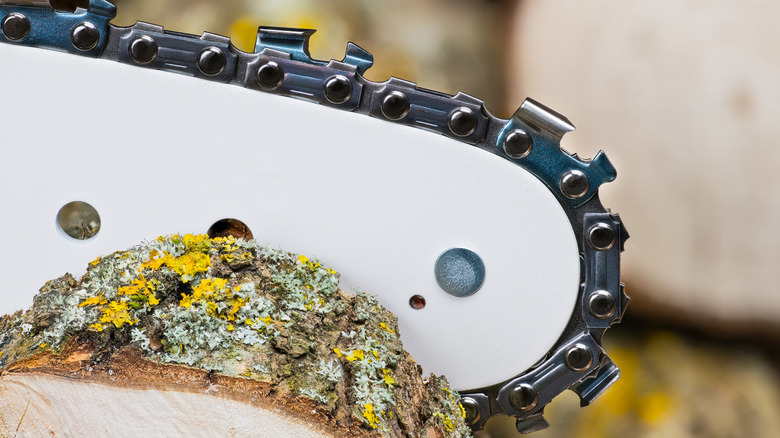
While there's no trustworthy hour-count or calendar deadline at which a chainsaw chain expires, there are a number of ways to tell when yours needs replacing. The primary wear factor on a chainsaw chain is erosion of the metal on the cutter teeth, which get filed down every time you sharpen. Inevitably, that means that heavier use, leading to more frequent sharpening, means a shorter overall lifespan for a chain. However, proper maintenance can help extend that window as well.
Stihl points out that each chain cutter has wear markers; every sharpening removes small amounts of steel and chrome plating from the tooth and depth gauge, and when you reach the wear marker, it's time to replace your chain. Continuing to sharpen past this point risks a significant dip in performance, and can even cause a tooth to snap off during use.
Husqvarna also has a concrete answer for when an old chain needs to go. According to the company, any time the longest remaining part of a cutter tooth measures less than 4 mm, or if you notice any cracks in the chain, it's time for a replacement. As our guide points out, a noticeable drop off in cutting performance or visible damage to the teeth are also clear signs you need to invest in a new chain. While there may not be a reliable time frame (though Oregon Tools suggests somewhere in the range of 10-20 resharpenings), there are a number of ways to evaluate when a replacement is necessary.
How to extend the life of your chainsaw chain
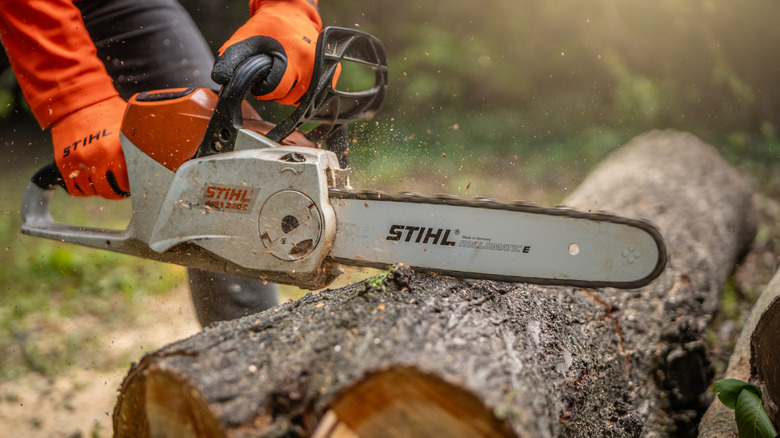
You can reduce the number of times you need to splurge on a new chain. One vital tip is to pay attention to what the numbers stamped on your chainsaw chain actually mean. Making sure you buy a chain with the right pitch, gauge, and drive-link count will prevent unnecessary wear and tear from an ill-fitting chain (and is crucial for safe operating as well).
You'll also want to consider how tight the chain is, and conduct some cutting tests to make sure it's snug but not overtight. This can lead to more efficient cutting, which means less wear. Also, don't wait too long to sharpen. It's a vicious cycle: a dull chain doesn't cut as well, which leads to longer cutting sessions, which leads to increased dullness. Inspect and touch up your chain regularly with the correct file and filing guide for its pitch and cutter profile. Husqvarna recommends a filing gauge with arrows pointed in the direction of the chain's rotation, then filing away from your body with smooth, even strokes.
Proper lubrication can also help immensely. Avoid used oil or old motor oil; use clean guide-bar-and-chain oil and make absolutely sure that it's distributed when you're cutting. A good rule of thumb is to fill up the oil reservoir every time you fill up the gas tank (or charge up, for a battery saw).