

12 Of The Most Dangerous Tech Products Ever Unleashed Upon The Public
When you go out and buy a product, it's likely to have been tested and proven safe for public use. There are laws and government agencies that ensure this happens, so when you spend your hard-earned money on a new tech product, you don't have to worry that it's going to burn down your house, cause serious injury, or, in some cases, result in the death of whoever is unlucky enough to use it.
In the United States, the Consumer Product Safety Commission (CPSC) is there to ensure that anything sold to the public isn't going to cause irreparable harm. While that does happen on occasion, the vast majority of products sold in the U.S. and abroad are safe to use. Additionally, if a product has the potential to cause harm, it's slapped with all kinds of warning labels and stickers, ensuring that anyone who uses it is advised of the risks involved.
It wasn't always that way, and before the 1970s, product safety wasn't particularly well regulated. It took some seriously awful things to happen before the government took notice and stepped in. Before that happened, using a product from before the '70s was something of a gamble. Each of these 12 tech products is among the most dangerous ever unleashed on the public, and they're arranged from newest to oldest.
Creepy Crawlers Thing-Maker
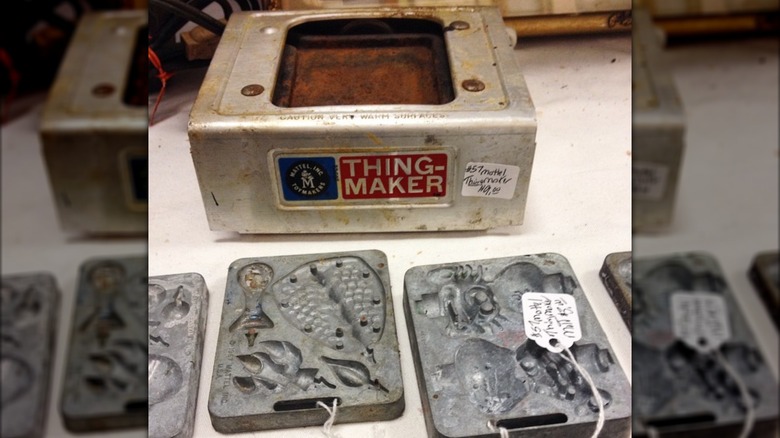
In 1964, Mattel began selling a practical, yet dangerous device called the Creepy Crawlers Thing-Maker. On the surface, it was a neat toy because it gave children the ability to effectively make something new to play with. Using metal molds and what was effectively a hot plate, a child could inject a substance called "Plastigoop," which was a form of liquid plastic, into a mold and create a bug or some other creepy crawly.
Plastigoop came in different colors, including red, black, flesh tone, and Nite-Glo, which glowed in the dark. With different molds, children could create mustaches, eyes, fingernails, bugs, skulls, or a variety of other things, and the product was fun to play with. It was also dangerous for any child who used it because the hot plate could heat up to around 310 degrees Fahrenheit, though some sites list the temperature at 440 degrees Fahrenheit.
On top of that, the chemicals in the Plastigoop were toxic if inhaled, so the Creepy Crawlers Thing-Maker was an all-around nightmare for parents whose kids were burned simply by using it. Mattel kept it on the market for several years before the Creepy Crawlers Thing-Maker left store shelves. Years later, Mattel almost brought the Thing-Maker back as a 3D printer, but it never manifested. Instead, a safer alternative from Jakks Pacific hit the market in 2021.
Microwave Ovens
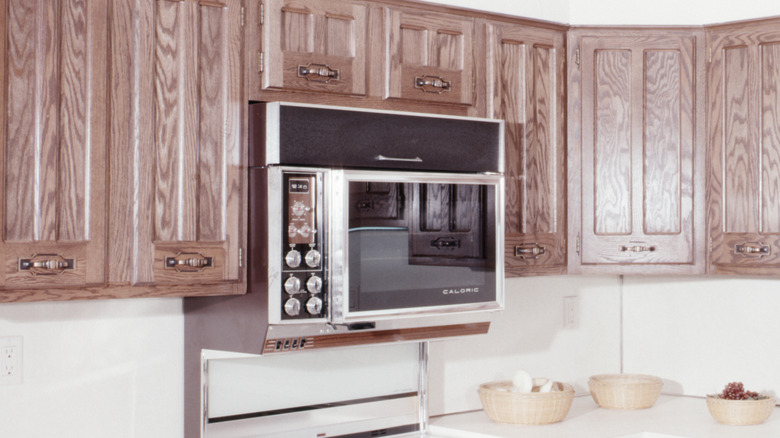
When you use a microwave oven today, you don't need to worry about it damaging you. They're made to incredibly high standards, and microwave ovens have a mesh door to keep the dangerous microwaves contained. It's safe to use, and millions of people around the world use them each and every day. It wasn't always like that because earlier model microwave ovens were incredibly dangerous to use for several reasons.
In the late '60s into the early '70s, microwave oven shielding wasn't nearly as effective as it is today. This was especially true of the early model mesh screens, rubber seals, latches, and hinges, which were prone to wearing down. Because of this, a microwave could leak radiation outside of the main chamber, potentially causing problems for anyone who got too close. This was rare, and the public had concerns, as early adoption of microwaves was spotty.
Additionally, the magnetron, which is what produces the microwave energy, didn't have automatic stopping mechanisms, so some early models from 1967 to 1971 had the potential to continue releasing dangerous energy after cooking ceased. The Food and Drug Administration began regulating microwave ovens in 1971, so these concerns pretty much disappeared. If you have or find an old microwave, be sure to have it checked before using it, as it may be dangerous.
Electric Blankets
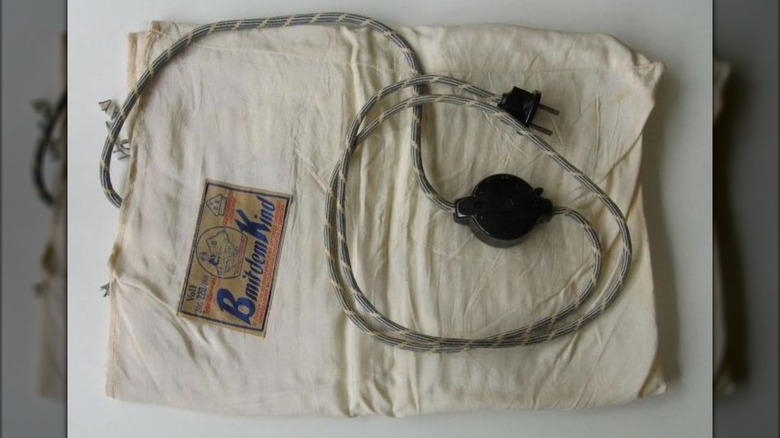
Like microwaves, modern electric blankets are safe to use, though because they have a heating element, they come with plenty of warnings. That's not unusual, and you can find all kinds of safe and highly-rated electric blankets on Amazon and elsewhere online. Initially, electric blanket safety was far from what it is today, and it wasn't uncommon for them to overheat, shock people, and start fires. On top of that, they often contained asbestos.
That makes sense since asbestos was widely used as a means of insulation to prevent fires and excess heat in blankets and other products until its carcinogenic nature was understood. Asbestos is reason enough to avoid using any electric blankets made prior to 1987, but the risk of fire is another reason not to use them. The Public Protection Partnership advises replacing modern electric blankets every 10 years, and they should also be tested every two years by an electrician.
After testing a blanket made in the 1960s, it was clear that it failed to meet modern safety standards. Although modern blankets are widely considered to be safe, they should be used with care. There are cases of heat stroke deaths from their use; there are numerous examples of house fires caused by defective blankets, old and new, and other serious injuries are possible. Never use one that's more than 10 years old, and follow the safety instructions before use.
Radial Arm Saws
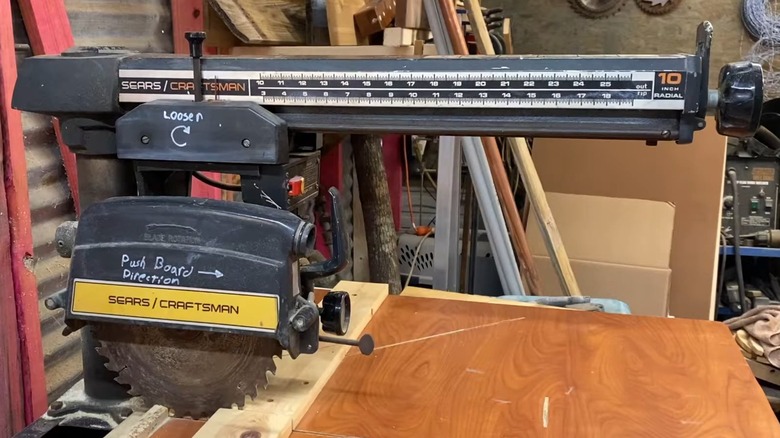
Power tools are inherently dangerous if used improperly, which is why they're covered in safety stickers and warning labels. This isn't new, as companies have ensured their products are labeled to protect themselves and consumers, but one type of power tool proved too dangerous for the public, prompting one of the biggest power tool recalls in United States history. In 2000, 3.7 million Craftsman radial arm saws were recalled because they lacked a guard covering the entire blade.
What's incredible about the recall is that it covered Craftsman radial arm saws sold from 1958 until 1995 at Sears. That's a long period of saw sales, but it was warranted. The CPSC identified around 300 reports of severe injuries from using the saws, noting "hand and finger amputations; lacerated hands, arms and fingers; fractured hands and fingers; and facial injuries."
The Emerson Tool Co., which owns the Craftsman brand, issued a recall remedy for saw owners. It was a seriously dangerous piece of equipment, and because it lacked a proper cover, the saw blade could bite into the wood and jump out, moving toward whoever was using it. It's unclear how much the recall ultimately cost Emerson, but it mailed $50 to everyone who qualified, not to mention any payments from lawsuits, one of which sought $7 million.
A.C. Gilbert U-238 Atomic Energy Laboratory
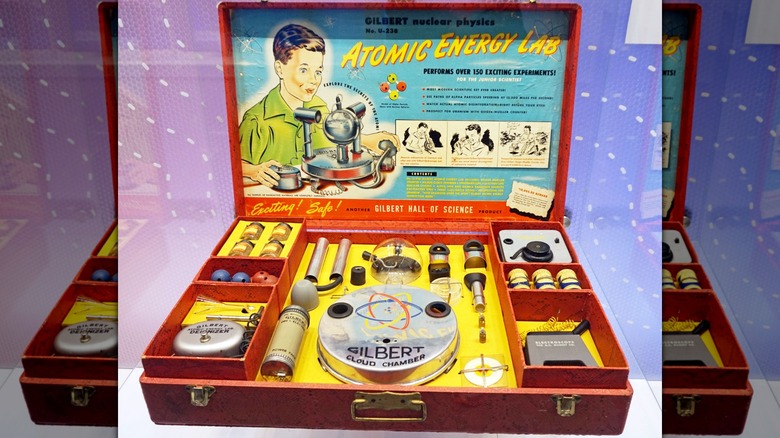
If you owned a chemistry set as a kid, you may have played with several substances in an attempt to create a stink bomb to annoy your sibling. I may or may not speak from personal experience, but in 1950, there was an option that unsurprisingly disappeared from store shelves. The A.C. Gilbert U-238 Atomic Energy Laboratory wasn't a standard chemistry kit because it was all about the nature of radiation and atomic experimentation — albeit for kids!
The kit's concept revolved around creating and observing chemical and nuclear reactions, and to do that, you need one thing: radioactive material. The set included a spinthariscope, electroscope, and other tools for measuring and detecting radiation, but it also included four glass vials containing uranium-238-bearing ore samples of carnotite, torbernite, uraninite, and autunite. It also included lower-level radioactive material and a battery-powered Geiger–Müller counter.
Granted, it was a pretty cool kit; it just wasn't safe for children, and let's face it, adults probably shouldn't have used it either. What's so fascinating about the Atomic Energy Laboratory is that we knew the dangers of radioactivity in 1950. After all, the atomic bomb had existed for five years, and the effects of radiation exposure were understood to be hazardous, but someone had the bright idea to sell this kit regardless.
Little Lady Stove
While you're probably familiar with the Easy-Bake Oven that launched in 1963, which uses a light bulb to cook food for kids, in the early 20th century, small stoves designed for little girls were not only dangerous; they were deadly. In 1909, a six-year-old girl poured kerosene into her miniature stove, as she'd seen her mother do in the family's regular stove. It exploded, resulting in her death and her father's injury in his attempt to put out the fire.
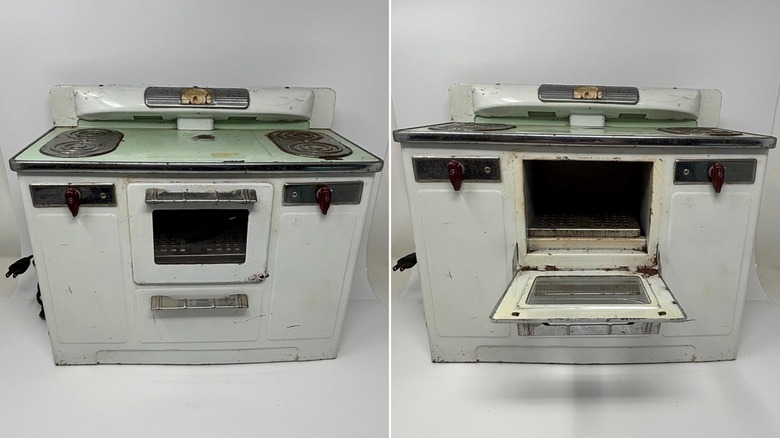
Small ovens continued to sell throughout the 1930s up into the 1940s, when World War II's demand for tin halted the practice. One popular brand that children had was the Little Lady Stove. Unlike the Easy-Bake Oven, Little Lady Stoves were effectively miniature ovens that heated up via electric power. They were small and came in a variety of configurations, but as you can see from the picture, it's a little stove with an oven component and burners.
The small wire burners could cook small pancakes in tiny pans, and the ovens could heat up to as much as 500 degrees Fahrenheit, according to their thermometers. Like earlier pre-electric stoves, Little Lady Stoves were dangerous, causing burns when children inevitably touched the heating element. Eventually, they disappeared, and Hasbro's Easy-Bake Oven took over, though that too was discontinued alongside the 100-watt light bulb in 2012.
Shoe-Fitting Fluoroscope
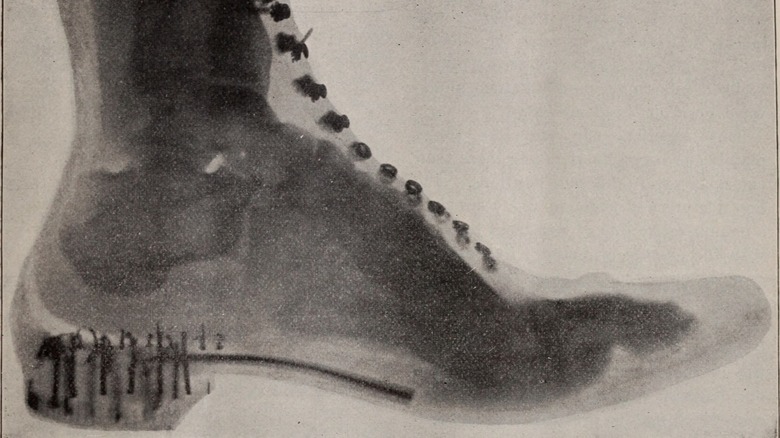
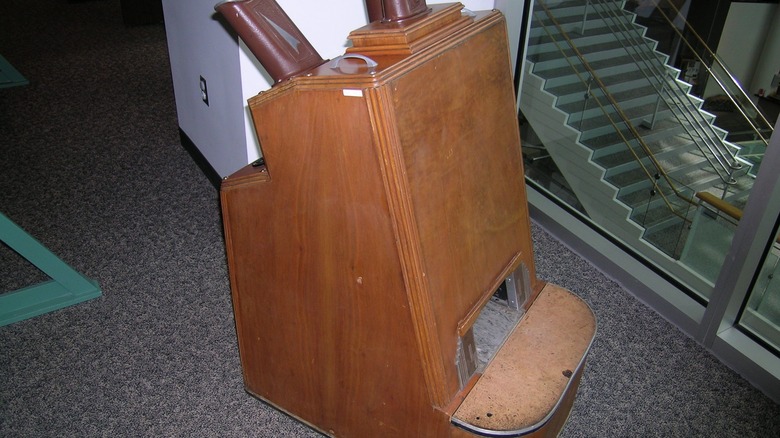
When you go to a shoe store, you can measure your foot accurately with a Brannock Device, which is what those metal things are called. Back in the '20s and well into the '70s, there was another option via the Shoe-Fitting Fluoroscope. Why use a measuring device when you can stick your feet into a small opening in a wooden cabinet and see a live view of your foot under an X-ray? While X-rays were discovered by accident, they quickly proved their usefulness in medicine, but also in shoe fitting.
These devices were incredibly dangerous for obvious reasons, but of all the radiation people receive, minimal amounts of X-rays aren't too damaging. That doesn't mean they're safe; after all, you wear a lead apron at the dentist's office for a reason. Still, Shoe-Fitting Fluoroscopes were popular for decades, and they could be found in shoe stores all over the world,
In the U.S., the most-used product was called the Foot-O-Scope, and a study in 1948 of 43 machines in Detroit, Michigan, found that they produced between 16 and 75 roentgens per minute, where a roentgen is a measurement of exposure to X and gamma radiation. The American Standards Association issued safety codes for industrial X-rays two years earlier that limited exposure to 0.1 roentgens per day, showing how dangerous these machines could be to anyone nearby.
The Tricho System
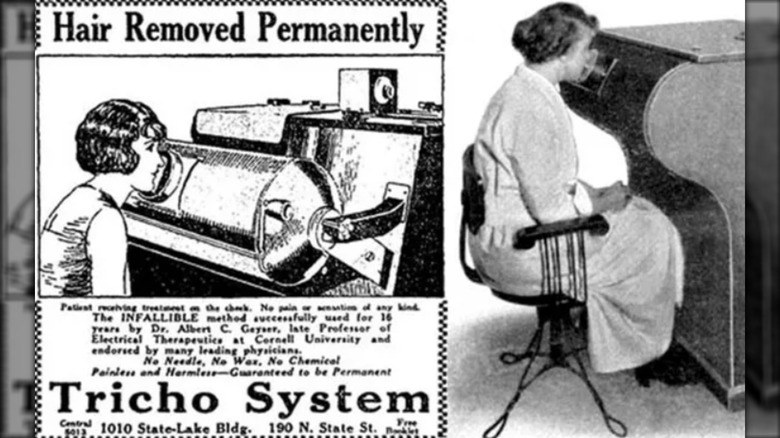
Modern hair removal can be accomplished in several ways, whether it's done via electrolysis, lasers, or other means, and these methods are safe and regulated. That wasn't always the case, and in the 1920s, if you wanted to get rid of some pesky facial hair, the Tricho System was available for anyone willing to give it a go. They appeared in beauty salons and used powerful X-ray radiation to permanently remove hair from the face or other parts of the body.
The interesting thing about the Tricho System was that it worked, but as you might have guessed, it wasn't safe. The painless process required multiple treatments to permanently remove hair, and that much targeted X-ray exposure proved problematic in the years that followed. The Tricho System caused severe skin damage, resulting in numerous problems that were severe enough to warrant trips to the doctor, surgeries, and more.
These included hypertrichosis (excessive hair growth), telangiectasia (spider veins), radiodermatitis (radiation burns), skin atrophy, ulcers, and basal and squamous cell carcinoma (skin cancer). The Tricho System, like many early uses of radiation in technology, resulted from widespread ignorance of its lasting effects on human tissue. Before long, doctors began attributing the damage in their patients to the Tricho System, decrying it publicly. Eventually, the Tricho System disappeared, but it didn't fully go away until the government banned it in 1946.
Zeppelin Passenger Service
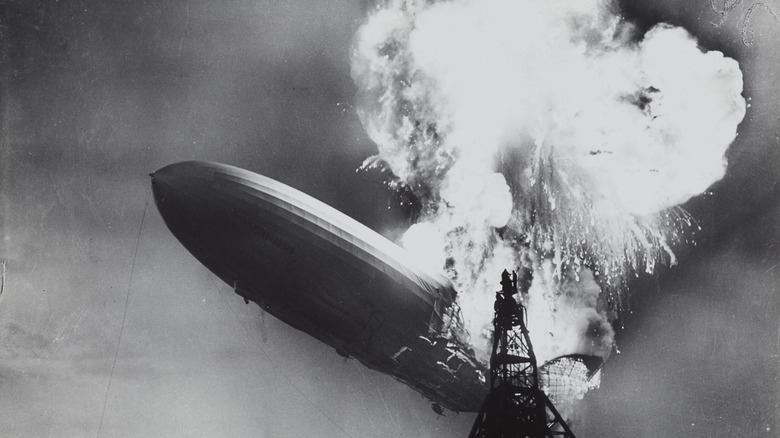
The first Zeppelin, the LZ-1, flew in 1900, three years before the Wright Brothers flew at Kitty Hawk, North Carolina. After that initial flight, zeppelin passenger service became popular when the first arrived in 1909, and it continued to be a luxurious means of travel for decades. Throughout most of their use as passenger aircraft, zeppelins were safe and reliable, but that changed in 1937. That's when the Hindenburg burst into flames over the skies of New Jersey.
The accident occurred when a spark ignited a hydrogen leak, resulting in a massive fireball. The accident claimed the lives of 35 people, while 62 survived, including several crewmembers and passengers. The news broadcast of the accident was horrific to behold, prompting radio reporter Herbert Morrison to famously exclaim, "Oh, the humanity!" The Hindenburg disaster was an era-defining moment, and it marked the final flight of the first passenger airline.
From then on, passenger zeppelin service wasn't tenable, as nobody wanted to board a giant gas bag that could burst into flames. The writing was on the wall, and zeppelins stopped flying almost entirely. Eventually, modern blimps emerged, swapping out flammable hydrogen for much safer helium. Despite this, some scientists want to bring hydrogen-based zeppelins back as large, autonomous cargo-carrying aircraft. That's because helium is hard to come by, while hydrogen can be derived from water.
Refrigerators
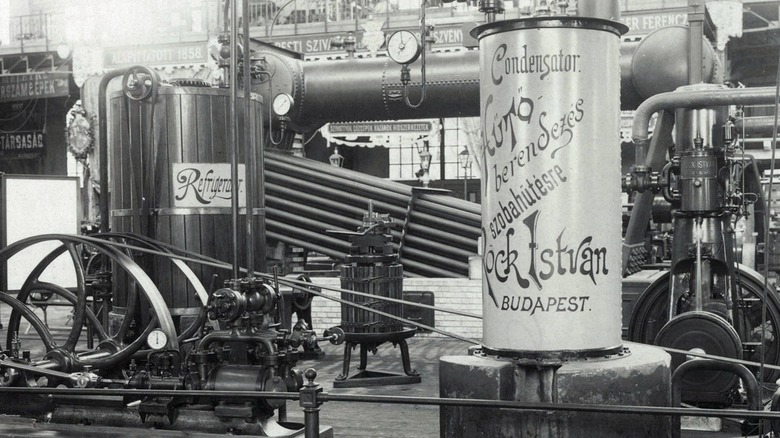
If there's one common appliance few consider dangerous, it's refrigerators. They're heavily regulated by the U.S. Department of Energy and have numerous safety features built into them, but when they first started popping up between the late 19th century and 1929, they were incredibly dangerous. New technology carries inherent risks, but back then, even owning a refrigerator was a gamble. This is because they had the potential to leak hazardous chemicals and compounds like ammonia, sulfur dioxide, and methyl chloride.
Inhaling any of those could lead to serious respiratory issues and death, so it's not something you want building up inside your home. Those three toxic gases were what the refrigerators used for cooling, and in the 1920s, several people died from exposure. Because of the dangers posed by those compounds, Thomas Midgley Jr. and engineers at General Motors' Frigidaire division worked together to find an alternative, which ultimately led to the discovery of Freon.
Once Freon entered the picture, it was used in place of the aforementioned gases, and compressor refrigerators became far safer to use, though Freon initially contained chlorofluorocarbons (CFCs). Eventually, CFCs were found to damage the ozone layer, informing the world that refrigerators were still quite dangerous, but on a global scale. As a result, Freon containing CFCs was phased out of commercial products, and most modern refrigeration units are perfectly safe to use, though you should avoid using older ones that still contain Freon with CFCs.
Electric Tablecloths
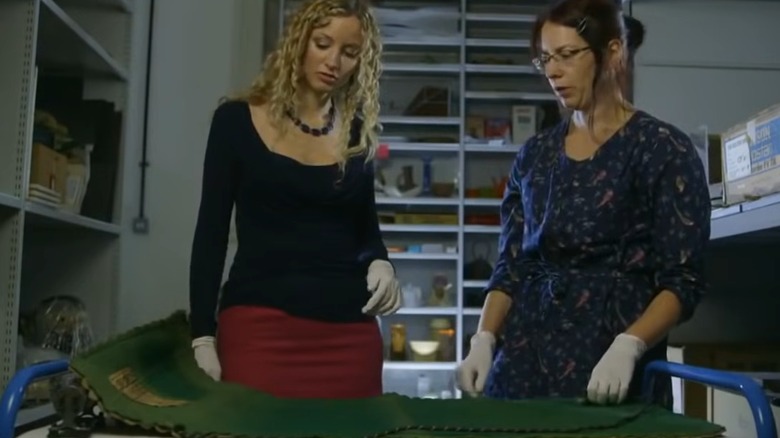
Electricity took some time to find its way into everyone's homes in the Western world, and in the late 19th and early 20th century there were tons of products that used electricity dangerously. One of the oddest was the electric tablecloth. These were a series of products created by multiple companies primarily between 1900 and 1910, and they were indeed fabric tablecloths with electric wires running through them, most of which were unshielded.
Electric tablecloths weren't meant to keep food warm or anything like that. Instead, they utilized a special kind of electric light that was pushed through the fabric where electric prongs would meet the wires, illuminating the lights. It was an effective way to spread electric light across the table, and it worked as advertised. They also had bare wires running through cloth that was susceptible to spills, so you can likely see where this is going.
A tablecloth donated to a museum featured a note calling it an "unusual novelty item" that could be "lethal if liquid were spilled on it." Despite this, some families passed electric tablecloths down through the generations, and if you can find working lights, they could potentially still work. That said, they're not safe to use and should be displayed only in museums because of the obvious fire risk.
Radium Watches and Clock Dials
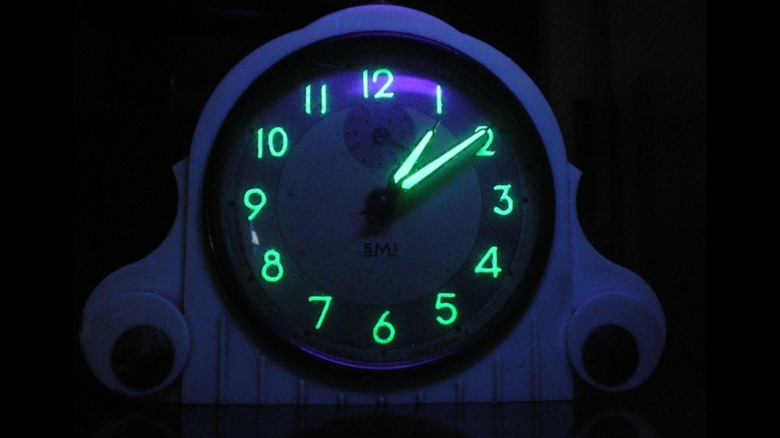
Just like people did with electricity when it was new, radioactivity was commonplace in the late 19th and early 20th centuries. You could buy all sorts of products that included radium, including purported medical items that required people to ingest the harmful substance. It was a fad that wasn't regulated, and people sold it as a cure for cancer and other ailments.
As you already know, these things didn't work. In fact, radium can cause cancer, though it can also be used to treat it. One of the most common products featuring radium-226 was radium watches and clock dials. Radium doesn't naturally glow, but when it's mixed with phosphor, it emits a visible green light. This was used to illuminate clock and watch dials, as well as faces and other products, as it wasn't deemed unsafe for some time.
Some products contained tritium, which was safer, though it was widely used throughout the early 20th century. While it wasn't common to become sick or die from a radium-illuminated clock, the people who made them weren't nearly as safe. A dozen women, known as "Radium Girls," died as a result of exposure, and others lost their jaws and teeth, suffered anemia, and had other serious health concerns. If you have any radium clocks or watches, you should dispose of them safely.