

5 Engine Brands Owned By Caterpillar
Caterpillar is universal enough that people practically use the brand as a byword for yellow-painted construction equipment. That reputation has endured for over a hundred years now — fun fact: Caterpillar celebrated its 100th anniversary in 2025. Today, you'll be hard-pressed to find a job site in the United States without that famous logo on some sort of machinery, but the equipment itself isn't the only thing the company produces. In fact, the "Caterpillar" corporation is actually an umbrella, a conglomerate with over a dozen smaller companies specializing in different products.
From marine applications to small parts like hydraulic fittings, Caterpillar produces an incredibly diverse range for just about any residential or commercial field, most of which are powered by engines. And engines are also something Caterpillar has historically built very well. Take the famous Cat 3406 engine, in production from 1973 to 2007 and still beloved by truckers everywhere — engines like these draw upon a century-deep well of experience in engine production.
Because Caterpillar engines are so in demand, it only makes sense for the company to diversify its portfolio and offer different powerplants for various specializations. Each of its subsidiaries generally specializes in certain applications as well, giving Caterpillar access to a wide array of talent. Some companies have even been around for an extremely long time, themselves, producing other goods in addition to engines — take Hindustan or Olympian, for instance. And that diversity is a good thing, considering how different a household generator is from, say, a quarry dump truck, even though both run on the same internal combustion principle. Let's have a closer look at these brands and what they specifically produce.
Caterpillar itself
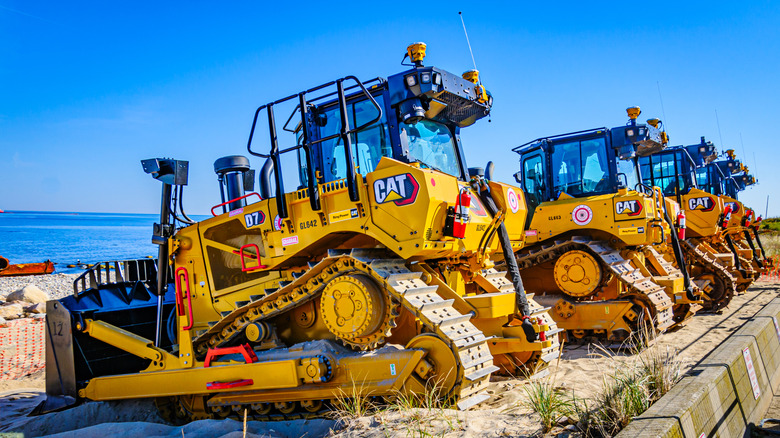
The principal and most obvious engine manufacturer for Caterpillar is, well ... Caterpillar, and it builds a lot of engines by any company's standards, even one as large as this. Granted, the flagship brand is officially called Cat, but its engines remain one of Cat's primary revenue streams today, with offerings for a dizzying array of applications. Cat produces everything from electric forklifts to marine diesels, citing power figures ranging from 7 to 7,670 hp.
Cat officially divides its engine manufacturing into four categories: electric, industrial, marine, and oil and gas. Its electrical powertrains also include diesel and gas generators, like those used on your typical diesel-electric train locomotive, alongside mobile generator units and chargers. The industrial subsection houses engines for agriculture, construction, forestry, and so on — it's where the truck engines would also be, had Caterpillar not halted its truck engine production. Then there's marine, which obviously focuses on waterborne engines such as midsize commercial diesels, generators, auxiliary engines, and controls. Lastly, there's oil and gas, which features power plants designed to work with compressed gas and oil drilling operations.
Of all the subsidiaries beneath the Caterpillar umbrella, Cat is arguably the most generalized in both region and commercial specialization. You could order a Cat engine for just about any kind of construction or industrial machinery, and it'd likely have something. Of course, that something generally comes in a Cat-branded piece of equipment, but the engines themselves are absolutely available standalone as well. Additionally, the brand has expanded into training programs, including servicing, legacy parts, rebuilds such as Cat Reman, and more, cementing its portfolio as a top engine manufacturer for the foreseeable future.
Perkins
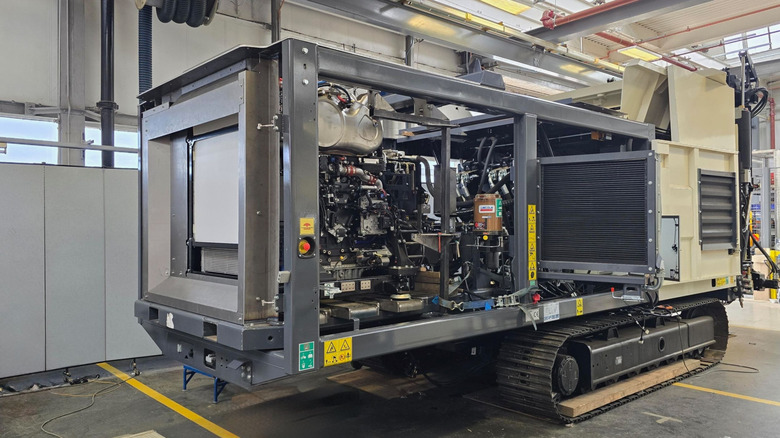
Perkins is Caterpillar's principal power generator engine subsidiary, working closely with other companies to assemble complete generators. If a company like, say, FG Wilson wanted to build a new generator, it would source its engine from Perkins. Let's use that as an example.
FG Wilson's offerings range in power from 6.8 to 2,500 kVA — basically anything from small, portable generators up to backup generators for large commercial buildings — all of which are powered by Perkins. For instance, its largest generator, the P2500-series, is a diesel engine rated to help power extremely thirsty buildings such as data centers, airports, and hospitals. That particular engine comes in at a whopping 61.1 liters of displacement; for comparison's sake, that's enough displacement to equal roughly eleven 5.7-liter GM LS-platform engines found in Corvettes.
Building such a demanding engine is no easy feat, a process that Perkins is extremely good at — the company draws on talent dating back to its founding in 1932. But it didn't start with the huge industrial stuff — Perkins established its name as an early innovator of industrial diesel power, starting slow at first with smaller engines for cars and trucks. It then relocated following World War II and heavily invested in construction engine production, growing exponentially until its acquisition in 1997 by Caterpillar.
Today, Perkins builds engines for a number of different firms and specializations, ranging from agricultural to power generation. It's the only major brand under the Caterpillar name that solely builds engines, so if you're operating a Cat, it likely has at least some Perkins parts under its hood. Likewise, it gives Caterpillar a wealth of talent to share with its other subsidiaries.
Hindustan
This one's a bit confusing for anyone who knows Asian cars. The Hindustan name is arguably most famous in the public consciousness for the Hindustan Ambassador, a sedan in continuous production for an amazing 57 years, from 1957 to 2014. Then there's Hindustan Aeronautics Limited, which produces one of the world's smallest fighter planes. But the one we're concerned with is Caterpillar's Hindustan PowerPlus and later just Hindustan, which is actually the result of a joint venture operation, an effort by Caterpillar to expand its influence in South Asia. To this end, Caterpillar began the process of acquiring Hindustan PowerPlus, an Indian firm specializing in heavy-duty diesel engines and power systems.
Caterpillar and Hindustan PowerPlus actually go way back, with their first collaboration dating to the 1950s. Things didn't pick up until 1984, though, when Hindustan entered into an agreement with Caterpillar USA to produce engines for the latter. Then in 1988, PowerPlus followed up with a contract to produce earthmoving equipment for Caterpillar. All this resulted in Caterpillar announcing its intention to acquire the outstanding shares of Hindustan in 2003, a process completed two years later with the company absorbed alongside its venture partner, the C.K. Birla Group.
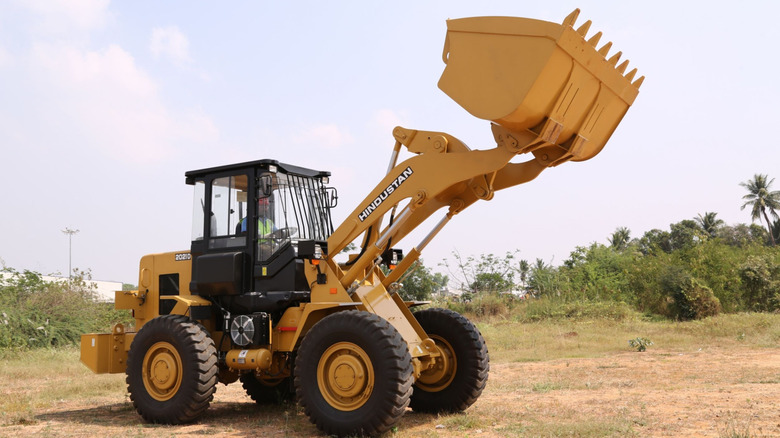
To make this even more complicated, Hindustan is also the name of Hindustan Motors, Ltd. — whose earthmoving equipment division Caterpillar purchased in 2000. That then merged with PowerPlus, which is why it's just called Hindustan by Caterpillar today. That said, historically, Hindustan is best known for its production of industrial generators and various engine components, operating as a principal exporter across multiple Caterpillar facilities. Since the merger, however, Hindustan now builds small wheel loaders such as the 2021D, continuing the legacy of Hindustan Motors, Ltd. in full-size vehicles rather than single components.
MaK
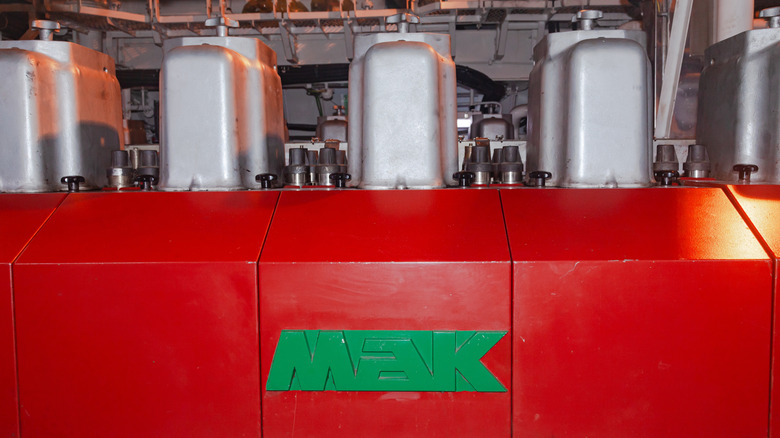
As a company, MaK actually predates even Caterpillar by a whole generation, starting its life in 1866 as an ordnance depot building weapons for the German military. It wasn't until 1922 that MaK, short for Maschinenbau Kiel GmbH, expanded into engine production, and it hasn't looked back since. In fact, its operations only grew, both figuratively and literally — when discussing its current lineup, well, we're talking about some of the largest piston engines in the world. Heavy-duty stuff for cargo ships, for instance. Or it did until Caterpillar halted its new engine production in 2022.
The story begins in 1997, when Caterpillar first acquired MaK. The German company operated under Krupp before then, a firm that itself specialized in industrial equipment. It was renamed Caterpillar Motoren and principally offered several services: It built large marine engines, reassembled older models, and produced components to keep everything running. Moreover, it offered specific optimization programs to maximize efficiency and power generation depending on the client's needs. However, with the closing of the engine production facilities, MaK now only works with parts, optimization, remanufacturing, and rebuilding — yes, rebuilding and remanufacturing an engine are two different processes.
Ultimately, the decision to shutter MaK's operations came down to sales going down; bear in mind how many similarly specialized businesses went under during the Pandemic. Nevertheless, given that the company still works with its existing models and produces new parts, its engines remain in service and in demand as international shipping picks up steam. Demand has surged so much, in fact, that Caterpillar announced in late 2026 that it is restarting production of the 10-megawatt MaK platform to help power AI data centers. These days, MaK is the company Caterpillar defers to for retrofit kits, modernizations, rebuilds, and whatever else related to these massive marine diesels. It's currently working on fuel optimization, such as dual-fuel options, high-pressure direct injection retrofits, two-stroke to four-stroke conversions, and more.
Progress Rail
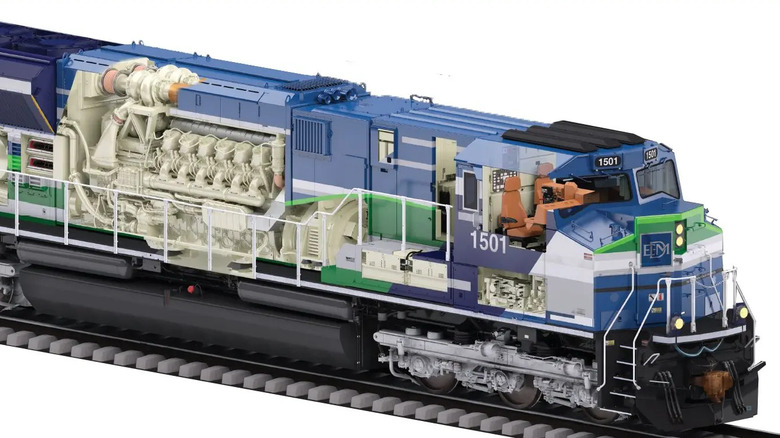
Progress Rail is to Caterpillar (the brand, not the umbrella) what, say, Cadillac is to Chevrolet. No, it doesn't produce pricey luxury versions of the same thing; rather, it shares most of its underpinnings. It's just a more singularly focused brand of Caterpillar, focusing exclusively on, as the name implies, railway locomotives and their components. In other words, Progress Rail is the main brand under which Caterpillar sells its rolling stock, much like Cadillac is the brand under which General Motors primarily sells its luxury cars.
In addition to producing locomotives themselves, Progress Rail also offers a number of additional services related to rail transport, ranging from large-scale infrastructure projects, overhauls and upgrades, car recycling, and component manufacturing. And yes, those components do, in fact, include whole engines, to the tune of over 75,000 engines manufactured worldwide. Its most popular entry is the two-stroke EMD 710, an engine available with anything from 2,000 to 5,000 hp in 8, 12, 16, or 20-cylinder configurations. Moreover, recent developments like the EMD 1010 T4 promise modernized emissions and fuel efficiency.
Considering the vital role fuel efficiency plays in moving goods, freight trains are among the most crucial lifelines of the global economy; Caterpillar would be remiss not to take advantage, considering the company's reputation and heritage. To this end, Caterpillar has worked with Progress Rail since 1983, even co-developing the CAT C175 powerplant, an engine that reached its 10,000-unit production milestone in December 2023. In addition to rail transport, these engines are also used for power generation; the 10,000th engine, for instance, was purchased by the CloudHQ data center — though even railway engines barely scratch what data centers need for power, considering they plug in directly to power plants.