

3 Disadvantages Of Flat-Four Motorcycle Engines
Understanding the different types of motorcycle engine and how each one affects the ride is an important step in finding the right bike for you. Not only in terms of performance, but maintenance, accessibility, and matters such as the design of the engine itself and how its positioning might affect the ride's feel.
These factors each have a considerable impact on a motorcycle. An inline four motorcycle engine, for instance, has its own unique disadvantages and upsides, which will make it well suited for some motorcycle designs but inappropriate for others. The same is true of its rare four-cylinder cousin, the flat-four.
A flat-four is a type of engine in which a quartet of cylinders is arranged horizontally around the crankshaft in the center. It's a setup that has a lot of unique advantages, such as better balance, thanks to by the simultaneous movement of the pistons and its impact on the smoothness of the experience. Riders should also be aware, though, that the flat-four engine format also has its own disadvantages compared to other types. Let's take a look at some of the most significant ones and how they can impact the riding experience.
The repair and maintenance issue of the engine's complexity

The more complex your engine's makeup, the more difficult it will typically be to work with. The placement of the cylinders in relation to the crankcase give a flat-four motorcycle a lower center of gravity compared to other engine types, but it also means that they are an unusual shape compared to those counterparts and are positioned differently on the bike's body.
Flat-fours tend to require an expert touch. Of course, veteran mechanics may know their way around a flat-four, but even then, they typically aren't very user-friendly. There may be less maneuvering required to access this spot on a naked bike, but models that have a lot of other components in the vicinity of the engine are challenging. Mechanics may need to remove certain elements to be able to access it, because the weight and the spread of these engines can make them unwieldy, like a boxer engine on a car.
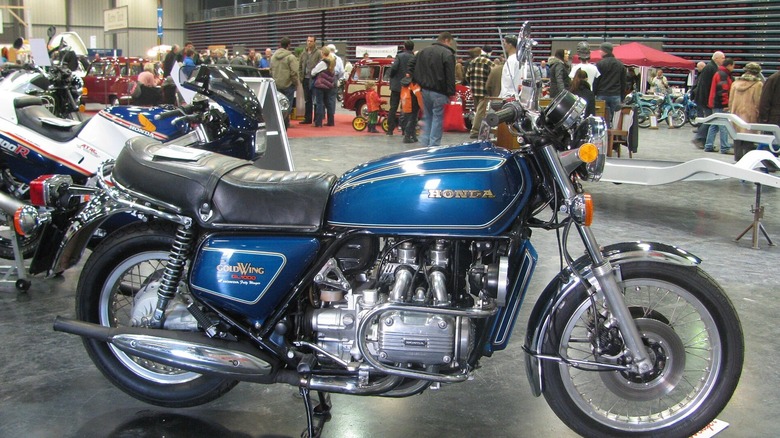
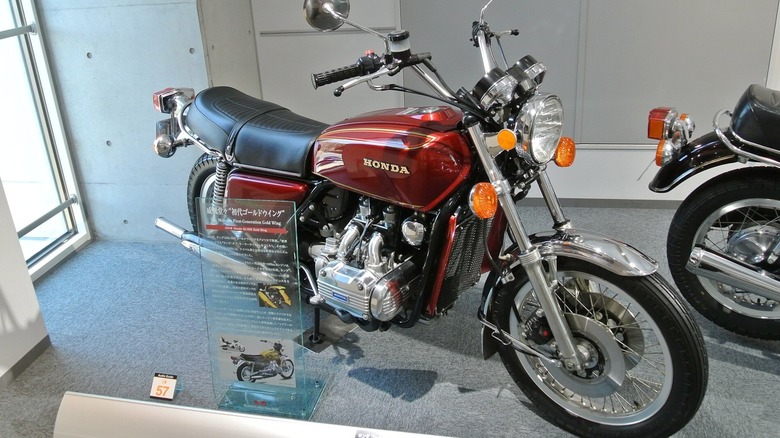
Unfamiliarity can also be an important element, as well as their sheer dimensions, because not many popular machines make use of flat-fours. They're certainly not unheard of, having been prominently equipped on early-generation models of the iconic Honda Gold Wing in the mid-1970s, but are much less common than, say, the classic one-cylinder model that's equipped on such a variety of machines today.
They can potentially detract from the rider's comfort
When considering a new motorcycle, one of the most important concerns is how it feels to ride. You want all the time you spend with your machine to be enjoyable, and the engine has a big part to play in helping ensure this. The flat-four's unique layout does help provide a well-balanced ride, but the dimensions and positioning of the engine can also be detrimental.
Motorcycles are all about efficiency of space and ensuring that the rider has as much freedom as they can. The hefty nature of a flat-four can potentially limit this. That's not to say they're necessarily a bad option, but the trade-off of the smoother run on more challenging terrain is that the engine may take up a lot of space for the rider's feet and legs, depending on the type of flooring or boards their bike offers.
It's also vital to remember that a low center of gravity isn't always a strictly positive trait for a bike. More broadly, boxer engines and true boxers can shine here too, but they also have their downsides as well. It's an important trade-off to consider.
They could potentially be at more risk of damage
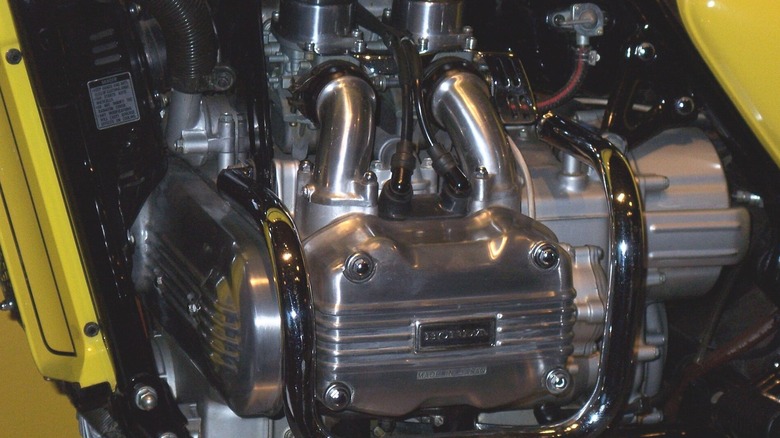
Fitting a flat-four into a motorcycle set-up as efficiently and practically as possible can mean that they're somewhat exposed in the unfortunate case of a collision. The heads of the cylinders, for instance, can be in particular danger of this.
The design of a flat-four motorcycle engine means that protruding elements could, potentially, scrape on the ground, and that could mean some damage. This is exacerbated by the low position on the model that a flat-four generally adopts, which also means that it can be more difficult to perform closer-to-the-ground maneuvers such as more extreme turns. However, there's also a possible upside to this in that, without the engine in that position, the rider themselves could be left more vulnerable.
The dangers of motorcycles are well documented. A collision is the nightmare scenario for any biker, and however well-equipped they are, luck can play a huge factor in the rider's safety and the damage that can occur in the event of one. What this means is that this unusual engine positioning could be a factor that makes all the difference, should the worst happen.