

4 Disadvantages Of Mini Split Air Conditioners
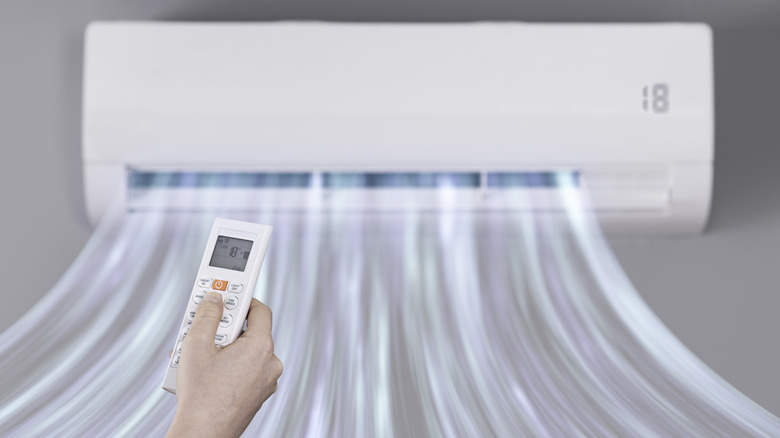
While traditional central HVAC systems are the gold standard for air conditioning, mini-split air conditioners offer an elegant alternative to intrusive window ACs. Mini-split ACs are ideal for home extensions and for cooling spaces, such as the basement, where extending existing HVAC ducting is neither cheap nor convenient. Mini-split systems don't need elaborate ductwork. Instead, they use refrigerant lines to connect an outdoor compressor/condenser to the indoor evaporator unit.
This ductless design provides significant advantages. The non-centralized nature of mini-split ACs allows multi-zone configurations with independent temperature control. Modern mini-split air conditioners often use inverter-driven compressors that improve energy efficiency by dynamically adjusting power based on actual cooling demand. The lack of ducting not only reduces energy lost to leaks and other insulation issues, but the physical isolation from the compressor unit also makes them noticeably quieter. Most mini-split systems can also be deployed as reversible heat pumps that can cool or heat your living spaces.
All this might make mini-split AC systems sound like a slam dunk, but they aren't perfect for every application. Mini-split systems have disadvantages that make them neither cheaper nor practical for some households. Let's take a closer look at some mini-split shortcomings that make them unsuitable for certain use cases.
Harder to maintain, with more points of failure
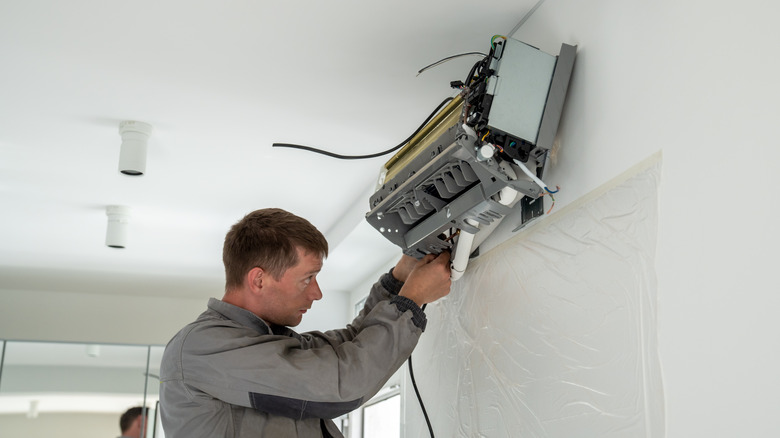
Mini-split ACs offer impressive perks, such as independent temperature zones and ductless air delivery. However, each zone needs its own evaporator unit, which requires care and maintenance. Instead of servicing a single central HVAC system, you now have multiple points of failure.
Mini-split systems require more involved periodic cleaning and maintenance. The cold coils snaking through the indoor evaporator units generate condensation, which leads to moisture-induced biological growth over time. The built-in air filters and blowers also need regular cleaning, but they're hard to reach and often require disassembly. Skipping these chores can lead to mold buildup, which can worsen into AC drain-line clogs. And that's how you get condensate leaking into your living space from the indoor units.
The outdoor units bearing the compressor are no different. Keep the heat-exchanging fins on the condenser coils free of leaves, debris, and dirt to maintain heat-exchanger efficiency. While cleaning the outdoor unit is relatively uncomplicated, cleaning the indoor unit requires specialized equipment and waterproof service hoods to keep your interiors from getting drenched. Don't assume mini-split AC maintenance is as easy and hassle-free as installation.
Installation is surprisingly expensive
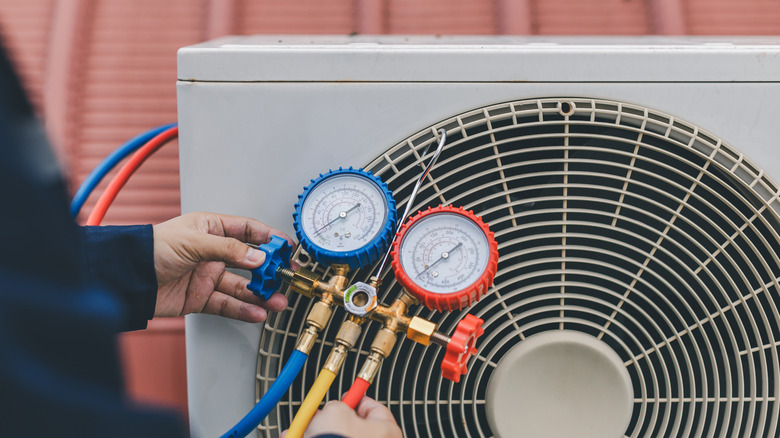
Extending existing central AC systems to cover additional spaces is no easy feat given the complexity of the associated ductwork. While mini-split ACs eliminate this complexity, they unfortunately don't translate into lower installation costs. This is especially true for multi-zone mini-split installations. Each zone requires a separate indoor evaporator unit, which in turn adds refrigerant piping, electrical connections, and condensate drainage. Refrigerant piping length limits further complicate where you can place the indoor air-handling units, and whether you can even use a single compressor for multiple zones.
Window AC units offer similar benefits and are also DIY-friendly. Mini-split ACs, on the other hand, are more complex and require expensive equipment to install. Because the compressor and evaporator are separate, they require refrigerant piping that must be vacuumed, leak-tested, and correctly pressurized (with a flammable refrigerant) using specialized equipment. The installation process is involved and includes wall penetration, mounting brackets, and placing the outdoor compressor in potentially precarious locations, especially in apartments.
Skilled labor isn't cheap either. Deploying several mini-split ACs in multi-zone setups can quickly become costly. The complexity and danger of DIYing a closed-loop flammable-refrigerant system don't compare to installing a DIY window AC. While it's easy to rent power tools, renting them for a mini-split AC installation isn't advised unless you know what you're doing.
Inability to cool large spaces evenly

Central AC systems have their drawbacks, but they deliver air evenly across large open spaces thanks to a network of strategically distributed ducts throughout the building. Mini-split ACs, however, struggle to cool large spaces evenly because indoor units' blower fans have limited reach. While central AC systems use several overhead cooling vents to cool large rooms, mini-split systems must either add more indoor units or use ceiling-mounted cassette units that can be installed deeper in the room. Both options increase installation cost and complexity because they require additional indoor evaporator units and associated refrigerant piping.
A well-planned network of supply and return vents lets central HVAC systems distribute conditioned air evenly throughout the structure. However, mini-split ACs eliminate ductwork and instead act as a point source, blowing air into the room. That, combined with the lack of a return-air path, makes mini-split ACs susceptible to hot spots. That's also why you can't fix these temperature uniformity issues by increasing cooling capacity. A larger compressor unit may reduce energy efficiency and worsen hot and cold spots. A larger air conditioner won't fix circulation issues.
Mini-split systems therefore require careful consideration of room size, orientation relative to the sun and other heat sources, and other factors like insulation effectiveness to determine compressor power. Ceiling fans improve circulation, which helps mini-split ACs cool large spaces uniformly
Lack of fresh air intake
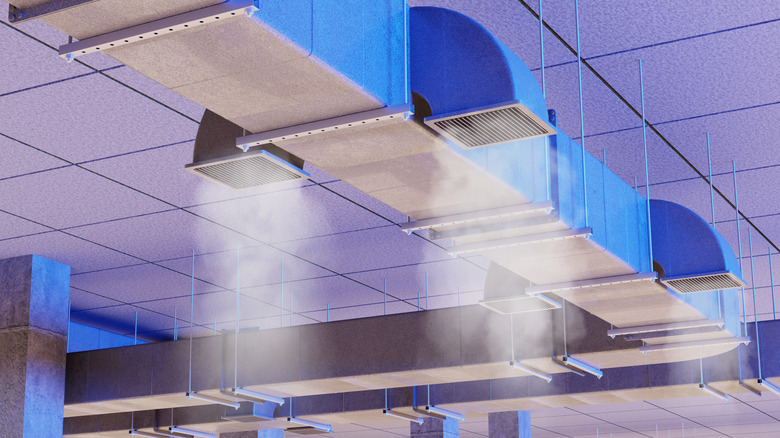
Some central HVAC installations have dedicated fresh-air intake systems that control how much fresh air enters the house. Mini-split air conditioners, by contrast, can only recirculate the air already in the room. Although this improves cooling efficiency and enables separate temperature zones, it works like leaving your car's AC permanently in recirculation mode.
Over time, stale air and carbon dioxide (CO2) can build up, causing fatigue and splitting headaches. While mini-split systems that can draw fresh air from outdoor ducting have appeared in Japan, this niche application hasn't caught on elsewhere as of this writing. Managing fresh air is therefore difficult in spaces with mini-split ACs.
This is especially true in kitchens, where odor and smoke buildup can pose health risks without effective ventilation. Many mini-split ACs advertise filtration capabilities, but they only trap airborne dust particles. The thin filter sheets in these mini-split ACs cannot scrub smoke or CO2 from the air. Fresh air intake is a major concern when cooling tightly sealed spaces with mini-split air conditioners.