

No, A 4-Cylinder Isn't The Same As A 4-Stroke Engine: Here's What's Different
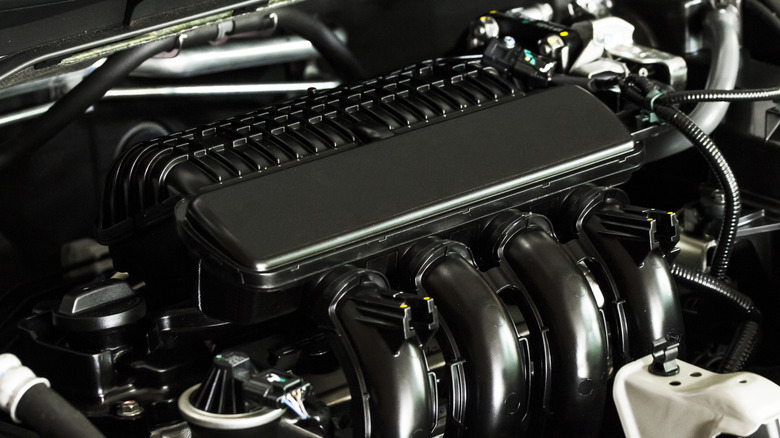
We drive in cars and trucks every day, but many of us have a limited understanding of how the mechanisms that power them actually work. Some people go their whole lives without considering what controls their car beyond the gas, brake, and steering wheel. Learning about how engines work can often seem intimidating, as the terminology can sometimes be a bit confusing to the mechanically uninitiated. Of course, you don't need to know all the ins and outs of automotive engineering in order to drive a car, but you may wish to have a better understanding of what exactly these motor specifications are saying when it comes time to choose your next vehicle.
There are several different types of combustion engines out there, and they all work a little differently. For instance, you might hear the terms "four-cylinder engine" and "four-stroke engine," and understandably wonder if these two descriptions mean the same thing. They sound similar, and they're closely related in terms of the parts of the engine that they're referring to. A lot of modern car brands have 2.0L 4-cylinder engines, and virtually all modern passenger vehicles use four-stroke engines.
These are actually completely different specifications, however. One refers to the physical design of the engine itself, while the other refers to the way that the piston and crankshaft move during each individual power cycle. Understanding the difference between these two can help you gain a better understanding of how combustion engines work and what manufacturers are referring to when they use these terms.
What is a 4-cylinder engine?
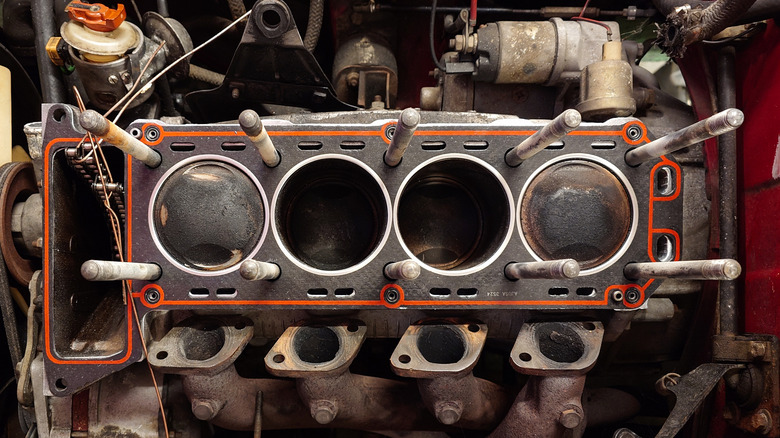
To understand what a four-cylinder engine is, we first need to take a look inside the engine block. At its core, a gas engine is essentially a metal housing containing mechanical components that turn the concussive force of combusting fuel into rotational motion. Every gas engine has a certain number of cylinders. These are cylindrical holes bored into the solid metal block (or blocks). Inside each cylinder, you'll find a piston, intake and exhaust valves, a spark plug, and a fuel injector (or intake port in carbureted engines). A piston is essentially a heavy metal plug that fits snugly inside the cylinder. The combustion cycle taking place in the section of the cylinder that is above the piston is what generates the energy to move the piston downward toward the crankshaft, creating the force required to rotate the crankshaft, which all of the pistons are connected to.
Some engines, such as those found in most push mowers and some motorcycles, might only have a single cylinder while others may have over a dozen. As you might have guessed from the name, a four-cylinder engine is an engine with four cylinders. There are many different kinds of four-cylinder engines, including inline-fours, flat-fours, and V4s. These terms refer to the way the four cylinders are oriented. Different engines will also offer different cylinder sizes. Engines with larger cylinders will offer more fuel displacement, which has a direct correlation to the amount of power and torque that the vehicle is able to produce. There are several pros and cons to four-cylinder engines. They typically don't generate as much power as engines that contain six or eight cylinders, but they're also usually lighter, more fuel-efficient, and cheaper to maintain.
2-stroke vs. 4-stroke
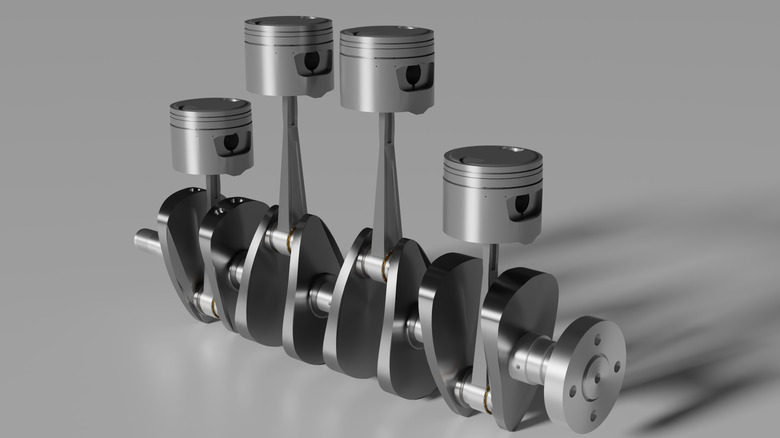
Now that we've established that the number of cylinders refers to the physical hardware inside of the engine, let's take a look at what the term "stroke" means on an engine. There is a physical design aspect to this as well, but the term generally refers less to the layout of the engine and has a lot more to do with the way the pistons and crankshaft move during the combustion cycle.
A combustion cycle consists of four phases: intake, compression, combustion, and exhaust. The intake is when the fuel mixture is sent into the combustion chamber; compression is when the piston pushes up on the fuel in the chamber; combustion is when this fuel is ignited, pushing the piston back down; and exhaust is when the spent fuel is ventilated from the chamber. The components in the engine react differently depending on whether the engine is a two-stroke or four-stroke engine.
Two-stroke engines complete this cycle in just two strokes of the piston: once during intake and compression, and once during the combustion and exhaust phases. In simpler machines, like dirt bikes, boats, and power tools, these require oil to be mixed into the fuel and are typically used. Four-stroke engines are designed to make the piston move on each of the four phases, requiring twice as many strokes of the piston per combustion cycle. They're generally more fuel efficient, cleaner burning, run cooler, and last longer. Four-stroke engines are used in the vast majority of modern passenger vehicles, regardless of the number of cylinders the engine has.