

Don't Trash Your Lawn Mower If You Flip It Upside Down Or Tip It The Wrong Way - Try These Fixes First
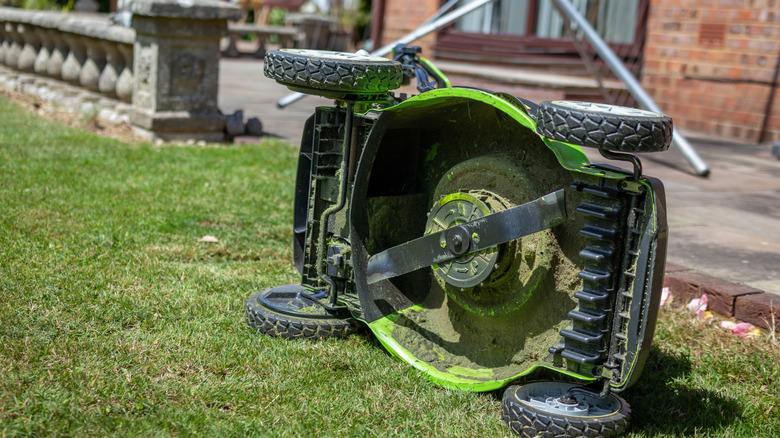
You're not supposed to flip over a lawn mower. Well, that's half true, because there is a correct way to do it if you're trying to get through some maintenance or repairs. You kind of have to access the bottom if you're swapping out the blade, for example. But the big reason why flipping it the wrong way is a no-no is because fluids like engine oil or sometimes gasoline can leak out into areas where it shouldn't be, such as the air filter or carburetor. Oil is the main culprit here, and it could also seep into the combustion chamber and cause some serious problems with the spark plug. Push lawn mowers are notorious for a bevy of operational issues, and while the solutions are fairly straightforward in most cases, the troubles that exhibit after a wrongful tipping can be as varied if not more so. Will it start? Why is it smoking? What do you do next?
Basically, those who accidentally tip their mower might deem it a lost cause, especially if they're having trouble getting it running again. The reality is that there are some quick fixes that can help revitalize it. Either way, before you call junk haul services or lug your mower to the local dump, give one of these tweaks a try — it might also save you the money you'd spend buying a new one. Oh, and set the mower upright again if you haven't done that already.
Disconnect and examine the spark plug as soon as possible
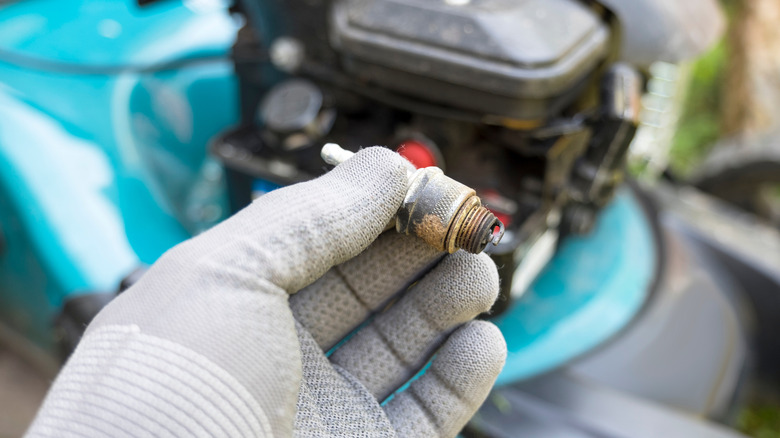
A well-sealed lawn mower might not leak at all when tipped improperly, or it may leak like a sieve, there are never any guarantees. The real concern comes from oil leaking on components or into areas like the combustion chamber. You do not want oil in there. To be safe, step one should be to remove the spark plug from your lawn mower to allow it time to dry out. There is another reason why this is important to do first, as well — it can prevent the mower's engine from starting accidentally while you're working on it.
After removing the plug, wipe it down with a dry rag or cloth if you notice damp residues. Do note, you'll need a socket wrench to loosen it. If you observe damage or the spark plug is completely covered in dark soot or contaminants, you'd be better off replacing it entirely. You're supposed to replace them about once a year anyway.
If there is indeed oil or fluids on the plug, tug on the starter cord a few times to expel what you can from the combustion chamber. Make sure the plug is out before doing this and don't put a new one in yet, you're not actually trying to start the engine.
Allow parts to dry out to be safe
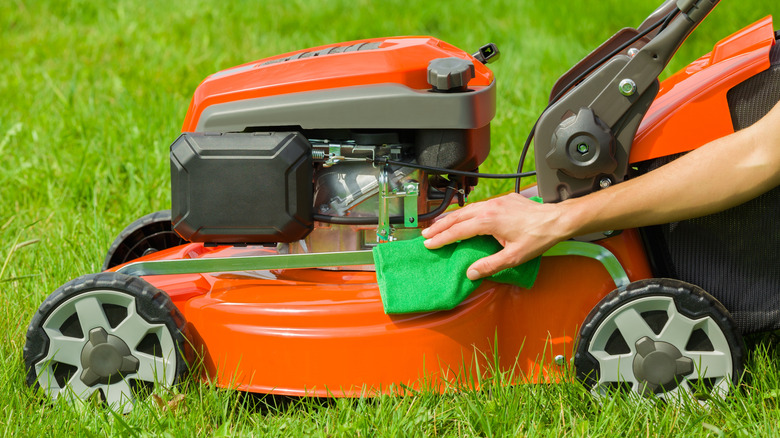
If fuel sloshes onto parts of the cap when the mower tips it can clog critical vents, creating a vacuum and starving the engine. Another possibility is that oil can seep into the carburetor's breathing tube, or get into the air cleaner after soaking the filter. In all of these cases, provided you've cleaned up as much as the affected areas as you can with a cloth, it's really a waiting game. You have to allow the parts to dry.
With a soiled cap, you might see thick black smoke when you try to start the mower again for the first time — black smoke comes from fuel, while white and blue is usually oil burning — but so long as it had ample time to dry, the mower should continue running fine afterward. The same is true for the other scenarios. Dismissing the mower as broken when it won't start right away could well be hasty. It's always a good practice to allow the motor to sit and run for five to ten minutes after starting it up again, which helps it burn off residue.
Inspect the air filter and the oil levels
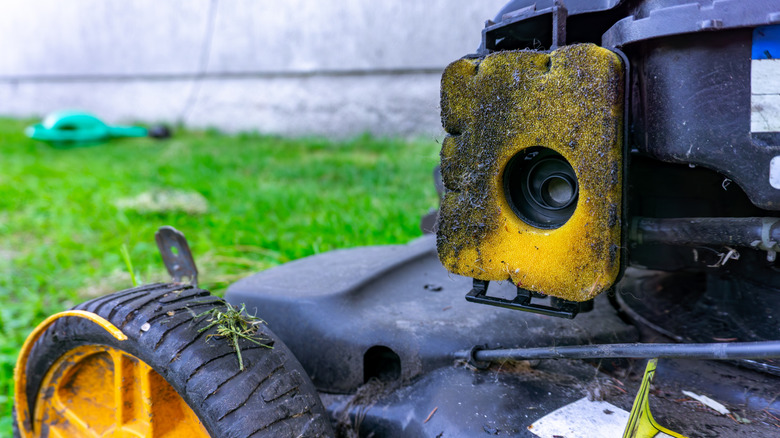
Two other areas to inspect include the oil dipstick, so you can see how much oil leaked out if any, and the air filter. With the latter, you're looking for signs of oil, whether it's soaked and still wet or there is dried residue visible. If there is oil in the filter, in any conceivable amounts, you'll want to swap that out for a clean one. There's no use in trying to clean out or rinse the old filter if it's soaked regardless of whether it's the foam or paper type.
As for the dipstick, what you're looking at is the oil level. If the oil is low, and it was full before – hopefully you checked it at some point before tipping it over — that means quite a bit spilled out, and you may have your cleaning work cut out for you. If it's still full, or was low to begin with then you can let it sit for a brief period before trying to start it up again. It goes without saying, if it's low, top it up before you crank the engine. Before turning it on, it's also a good idea to wipe down the exposed areas to remove any leaked fluids there.
In the future, if you're going to adjust or tip the mower, make sure you do it with the air-filter side facing up, or lean it so the air-filter remains elevated.