

Did Land Rover Kill The Wrong Defender V8?
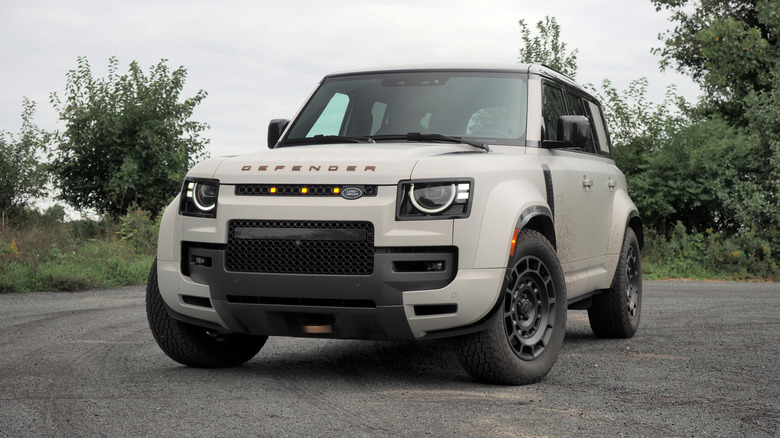
These days, finding an eight-cylinder engine under the hood is a rarity, even in high-end SUVs. The burble and power of a V8 are swell, but the thirst is less appealing. Factor in the reality that modern six-cylinder engines — and even inline-fours — can now match their V8 cousins on performance, and you'd be forgiven for thinking that the age of the big, beefy powerplant is over.
That makes it all the more astonishing that Land Rover offered not one, but two V8 options in the modern Defender. When it returned in L663 form in 2020, the Defender set out to school luxury upstarts on what duality really means: off-road talent not dimmed by rugged on-road cosseting. If choice is the biggest luxury of all, then having two eight-cylinder engines might've been Land Rover's boldest decision.
 Chris Davies/SlashGear
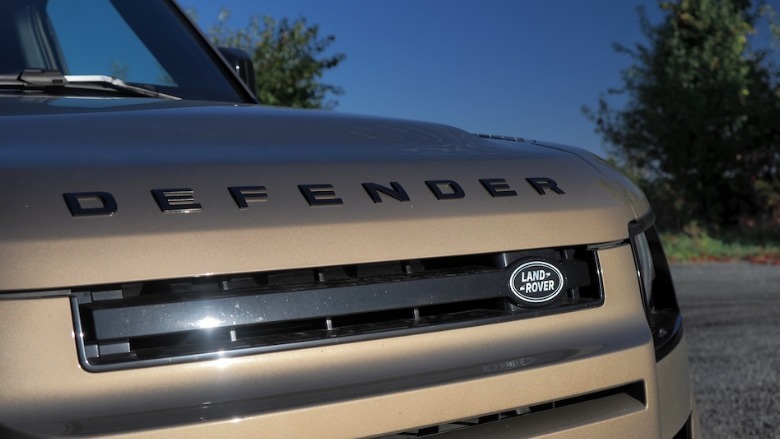
On the one hand, there was the Defender 110 V8 complete with a 5.0-liter supercharged V8. On the other, the Defender Octa opts for a BMW-supplied 4.4-liter twin-turbo V8. Two very different interpretations of performance V8, and — so it turns out — two very different versions of the same SUV. But is one Defender better than the other, and now that Land Rover has axed one engine, did the automaker make the right choice?
A supercharged classic
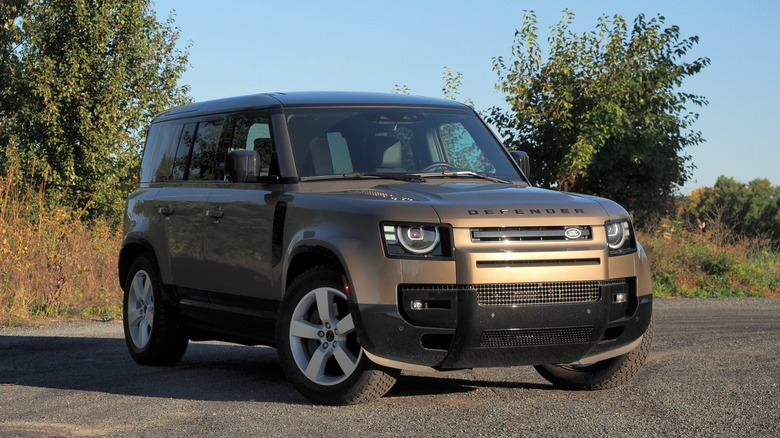
Fair to say, the AJ-V8 engine — in this case the AJ-V8 Gen III 5.0L Supercharged version — is an icon in Jaguar history. While the original design first launched in 1996, the Defender V8's 5.0-liter forced-induction variant didn't appear until 2009. Since then, it has been offered with a variety of tunes, including the 2026 Defender 110 V8's 493 horsepower and 450 lb-ft of torque. That's piped via an eight-speed automatic transmission to standard all-wheel drive, with a twin-speed transfer box.
Supercharging — where the engine's crankshaft is tapped to force pressurized air into the cylinders, allowing for more fuel to be added and thus a more aggressive explosion — is less common these days compared to turbocharging. Though there are many factors for that at play, you can probably blame fuel economy most of all. The 5.0-liter engine is indeed the thirstiest of the 2026 model year line-up: in the 110 body style you see here, the EPA rates it for 14 mpg in the city, 18 mpg on the highway, and 16 mpg combined.
 Chris Davies/SlashGear
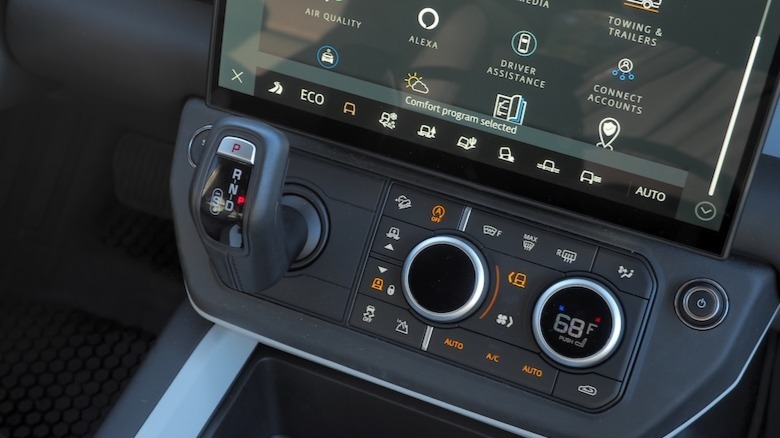
My own 17 mpg in mixed driving felt almost frugal in comparison (I did say almost), but it's hard to fault the thirsty Defender's driving dynamics. The supercharger's whine is kept at an arm's distance and, frankly, I wouldn't have said no to some more of it in the soundtrack; it's a rare thing these days. But its steady contribution makes for a tidal wave of power. Peak torque lands at 2,500 rpm, and the eight-speed is happy to slur through its ratios to keep things feeling potent without getting too shouty about that.
Sadly for its fans, the 2026 model year marks the end of the 5.0-liter V8 option in the Defender. Indeed, the most fearsome version of the SUV now looks to a whole other automaker for its engine.
British badge, German heart
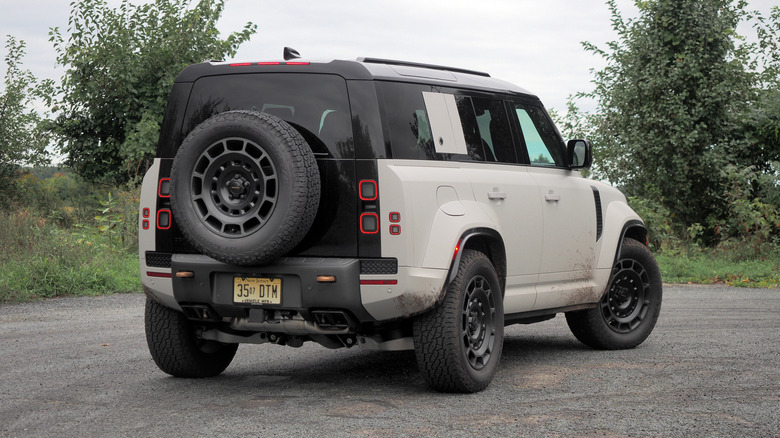
If the supercharged V8 was a beloved hand-me-down from the days of old-fashioned British engineering, the 4.4-liter twin-turbo V8 in the Defender Octa is a thoroughly modern, take-no-prisoners slab of Germanic excess. Snagged from BMW's line-up, while it's down on cylinder capacity the power numbers certainly aren't lagging. 626 horsepower and 553 lb-ft of torque are positively massive, and good — Land Rover claims — for a mere 3.8 second 0-60 mph time.
 Chris Davies/SlashGear
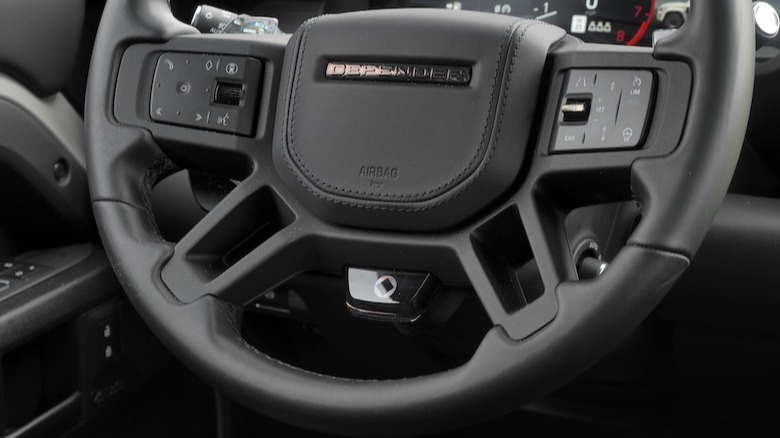
Thanks to the turbocharging and some 48v mild hybrid help, peak torque from the 4.4 hits at just 1,800 rpm. To experience the Octa at its most aggressive you need to hold down the special "O" drive mode button bolted to the bottom of the steering wheel. It lights up red, as do the ever-so-slightly-tacky clear plastic paddle-shifters, but that summons settings more urgent than the Dynamic mode the supercharged Defender tops out at.
It's more powerful, but that's not the Octa's secret weapon
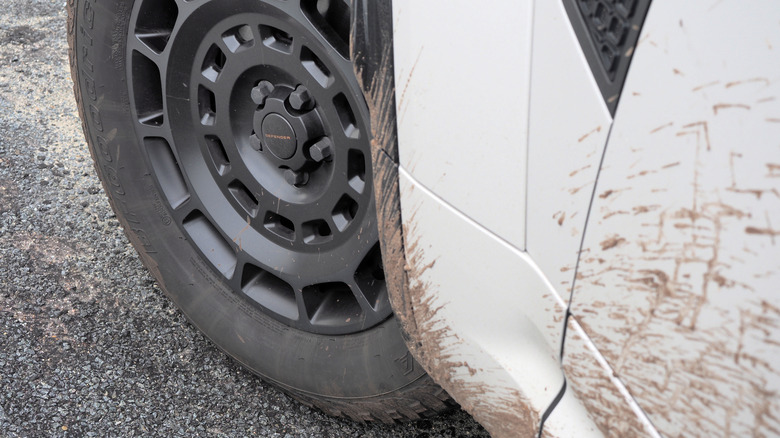
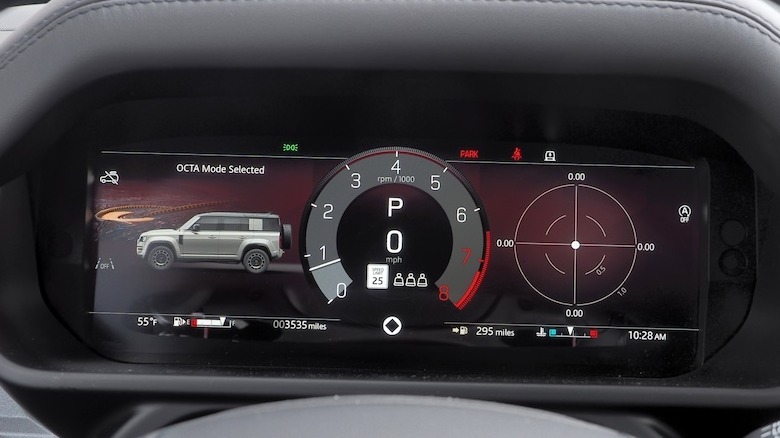
This is a very, very fast SUV. Stomp on the gas pedal and the back end hunkers down, the needle on the Defender's digital tach surges, and you are thrust forward in a way which ensures this Land Rover is equally entertaining on asphalt as it is out in the mud. The steering is direct and precise, and while a glance may leave you guessing at the possible changes under the widened body, rest assured the JLR engineers didn't leave it alone.
 Chris Davies/SlashGear
The hydraulically linked suspension — here branded "6D Dynamics" — and adjustable-height air springs ostensibly keep things level and measured in tricky terrain, but they pay dividends on the road, too. It takes some pluck to trust the system to handle nearly 6,000 pounds of tall SUV in tight corners but bends you'd be wise to ease off ahead of in the supercharged Defender are here dispatched giddyingly at speed. It's a testament to Land Rover's suspension talents, only expanded beyond just off-road applications.
Refined, but not restrained to the road
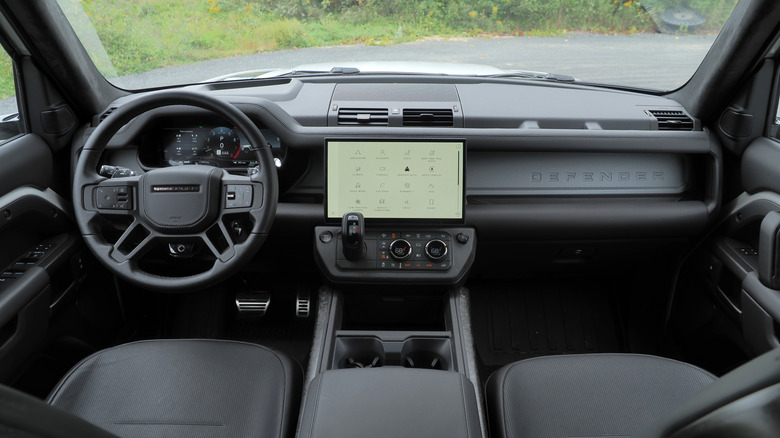
It's fascinating, really, just how different the two Defenders are from behind the wheel. With BMW's engine propelling it, the Octa is instantly and obstinately aggressive: very much the epitome of the modern performance SUV, complete with extra-firm suspension and a shouty soundtrack. In comparison, the 5.0-liter supercharged V8 almost feels like it stumbled into performance by accident. Yes, it can be swift, but that's merely a side-effect of aiming to emulate a freight train's confident surfeit of power regardless of when that's requested.
 Chris Davies/SlashGear
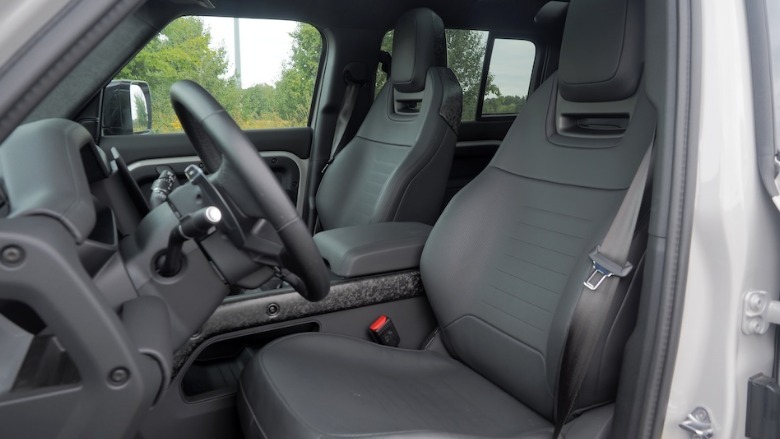
Its cabin underscores that intent. Where the Octa sprinkles in slabs of "sporty" carbon fiber, the Defender 110 V8 doesn't stray from Land Rover's standard fare. Both take a workhorse approach to luxury: nice enough, but with acknowledgment that a Defender may go places (or face mud and dirt) a Range Rover probably could, but probably won't. It's a sensible strategy, but it doesn't do much to give the Defender 110 V8 a unique identity.
 Chris Davies/SlashGear
You can't blame the Octa entirely for the supercharged V8's retirement. The 3.0-liter turbocharged six-cylinder engine Land Rover now fits as standard to the Defender — available with as much as 395 horsepower and 406 lb-ft of torque — is smooth, powerful enough, and marginally more frugal.
Supercharged is super, but you can't beat the Octa's suspension
Rationally, I can't really argue with Land Rover's decision here. The twin-turbo 4.4-liter V8 is every bit as aggressive as you could want from the sportiest Defender; the inline-six powering the mainstream Defender is more than up to the SUV's remit of ambitious weekend romping and comfortable weekday restraint. Two eight-cylinder versions of the car was just plain confusing, not to mention profligate for a company in JLR's financial condition.
Those finances are likely to be buoyed, given V8 buyers must now go the Octa route. Where the 2026 Defender 110 X-Dynamic SE you see here landed had a sticker just over $100k (including destination), or $111k with some nice-to-have extras, the 2026 Defender Octa kicks off around $160k. Just also budget for gas, since while the EPA says the Octa can manage 17 mpg combined, my own 15 mpg in mixed driving suggests you'll need self-control to achieve it.
 Chris Davies/SlashGear
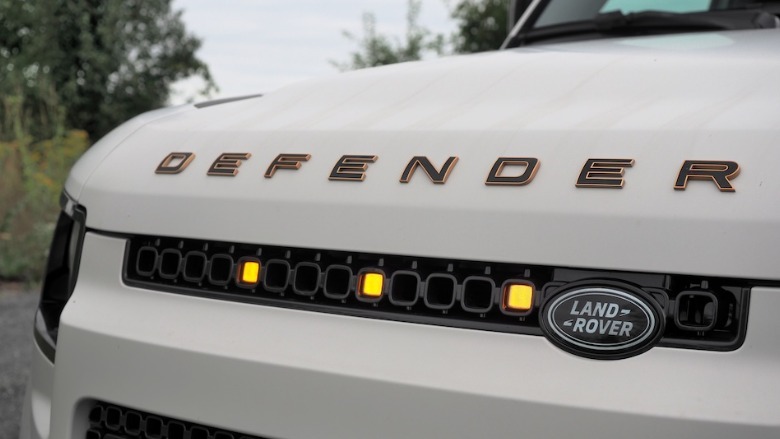
You're not just getting more power for your extra spend, though, you're getting that near-magical suspension trickery too. Honestly, as fun as a supercharger can sound, and as silky in its delivery the 5.0-liter V8 can be, there's no doubt that the Octa is the better all-rounder. Land Rover may be down to just one eight-cylinder Defender, but it doesn't take much driving to realize it made the right choice.