

3 Downsides Of Superchargers You Should Know About
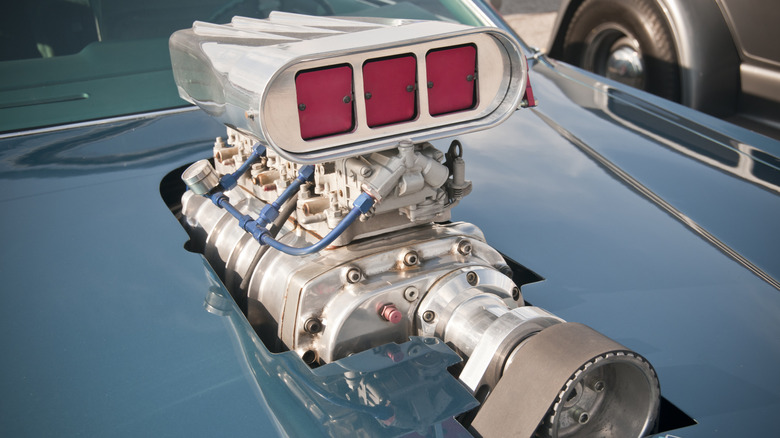
A supercharger is a mechanical component that can boost an engine's horsepower around 46% on average, per The Drive. There are several different types to choose from, leaving automotive enthusiasts carefully considering the difference between twin screw vs roots vs centrifugal superchargers. Most superchargers are gear or belt-driven, using the engine's crankshaft to operate. Regardless of type, the job is straightforward: pull in air, compress it and force it into the intake. While superchargers have a similar goal to turbochargers, they work differently, with the latter utilizing exhaust gas to power up.
You've likely seen at least one type of supercharger in action on the dragstrip, where some vehicles feature a large blower rising out of the hood, pulling in air for a root's supercharger. One of the strengths of this setup is enhanced performance on the low-end, adding immediate torque off the line.
It sounds like adding a supercharger would provide you nothing but advantages, especially if you want to add some punch to performance. But there are significant drawbacks anyone considering a supercharger should be aware of before moving forward. You'll spend more at the pump, add stress to your engine, and increase complexity under the hood.
A supercharger is going to cost you more at the pump
Considering how superchargers work, it may not come as a surprise that these don't exactly improve your gas mileage. The problem lies with how a supercharger is powered, which is directly off the engine. Referred to as parasitic loss, the supercharger leeches power, forcing the engine to work much harder.
This effect is exacerbated the higher you push RPMs, with upwards of 20% of the engines overall power generation going straight to the supercharger. Also consider that being connected to the engine means the supercharger is always working whenever the engine is running, even in scenarios where it's not being used.
Remember that you typically don't want to pump lower octane gasoline into your supercharged vehicle. It's like how some engines require higher octane fuel. Because superchargers raise both the temperature and pressure inside the cylinders, lower octane options may prematurely detonate, causing a phenomenon known as knock. Knock can damage your engine, so most supercharger setups necessitate premium fuel. With national averages around $4.98 per gallon for premium, according to AAA, you'll be paying more at the pump.
Superchargers put more strain on the engine
While you might think sending more air into the engine wouldn't be a big deal in terms of wear and tear, think again. Remember it's not just air, but highly compressed air being forced into the system. And in addition to increased pressure, there is also more heat generated. If the supercharger came stock, the automaker has already taken measures to shore up things under the hood via testing. However, you can't just add an aftermarket supercharger to a naturally aspirated engine without beefing up other components. This could include some basics like more robust idler pulleys, gaskets, and O-rings, but it goes further.
Because a supercharger supplies more air, which asks for additional fuel, you'll need components like upgraded fuel injectors (or a larger carburetor, depending on the engine) and a pump that can handle the additional requirements. If you can't deliver fuel quick enough, it'll throw off the mixture essential for optimal combustion.
With higher pressure inside the engine, you'll also may need to upgrade things like your valve springs. A stock, naturally aspirated engine wasn't designed with components rated for such an environment, leading to intake valve's opening in response to the added boost pressure. Gone uncorrected, this could result in lackluster performance at higher RPM regardless of boost.
Superchargers add complexity
Adding a supercharger to a vehicle that's never had one before, presents some challenges in terms of space and location under the hood. Mechanical superchargers usually need to be connected to the engine's crankshaft. Trouble is, there may be other components like the water pump, alternator, or parts of the power steering system in the way. Often, you'll need to make adjustments for clearance and/or modify these parts in order to get a supercharger installed.
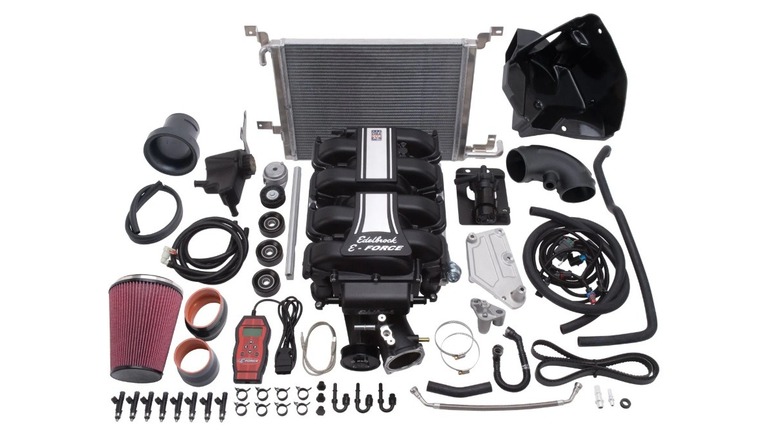
And don't forget the intercooler, which helps combat the heat generated by a supercharger, as it also must find a home under the hood with dwindling space available. Fortunately, you can opt to purchase supercharger kits that fit your model and these should offer some help. These kits can include fuel system enhancements and typically offer customized mounting hardware.
Another way superchargers add complexity is by increasing the number of failure points. These forced induction components utilize rotors, belts, pulleys, couplers, and additional hoses and connections, which can all wear out or develop problems. Beyond the supercharger itself, the intercooler can also suffer failure. Add up all these additional parts and things under the hood just got a lot more convoluted.