

9 Of The Best Mini-LED TVs You Can Buy In 2026
We may receive a commission on purchases made from links.
Sitting between QLED and standard OLED TVs, mini-LED panels use thousands of small LEDs scattered across a backlight that can be individually dimmed for better black levels and local dimming. For viewers who want great picture quality without paying a hefty premium for an OLED panel, a mini-LED TV can be a viable alternative. It's easy to dismiss the term as marketing lingo, but a mini-LED panel does enough to set it apart from regular LED TVs, largely because of the higher number of LED diodes in the backlight.
Samsung, Hisense, TCL, and Sony are four major smart TV brands that offer some of the best picture quality with their mini-LED TVs. From amazing local blacks to bright image output that performs well even in well-lit rooms, these TVs should be more than up to the task for anyone seeking the best mini-LED TV they can get their hands on in 2026.
Sony Bravia 9 II
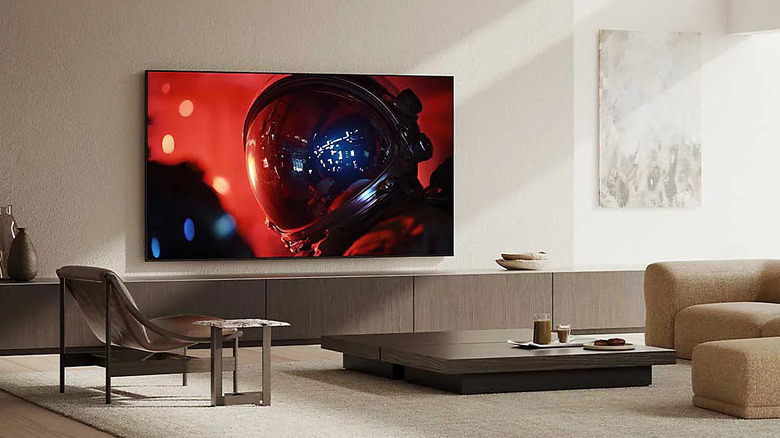
At $3,599.99, the Sony Bravia 9 II packs a mini-LED panel that punches above its weight, delivering performance that wowed critics for color reproduction and overall brightness. The matte panel and anti-reflective design do a great job of minimizing any glare, according to critics. They did find the picture quality too bloomy at times, though it was more prominent at an angle. They also noted that the television's sound was pretty loud, doing justice to Dolby Atmos and DTS audio. However, a software bug can hamper Dolby Vision output.
A high-performance HDMI 2.1 port and support for both VRR and ALLM make this a good gaming TV. That said, PC gamers won't be huge fans of the 120Hz refresh-rate cap. They'd also prefer more than just two HDMI 2.1 ports. T3 praised the Mirage Stand that comes with this TV. They praised it as a novel way to make the Bravia 9 II easier to place on TV stands and similar setups. While a 98-inch variant would've been convenient, the Bravia 9 II comes in a wide array of sizes: 65, 75, 85, and 115 inches, which should be more than enough for the average user.
Hisense U6SF Pro
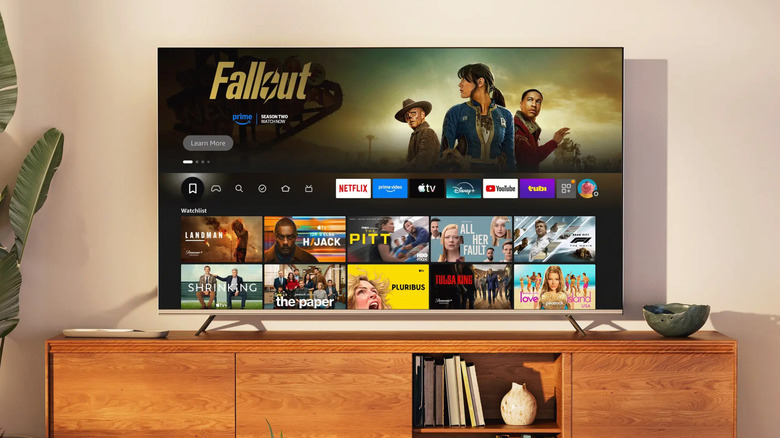
Yet another TV with only two HDMI 2.1 ports, a limiting configuration that forces you to sacrifice one for eARC, the budget-friendly Hisense U6SF Pro still shows what makes mini-LED TVs so special. Despite costing $849.99, reduced to $599.99 at the time of writing, the U6SF Pro's overall picture quality outclasses its price range for many reviewers. A 1,200-nit peak brightness rating, 96.1 percent P3 color coverage, and a glare-resistant screen impressed critics in their tests and show why this Hisense TV's picture quality is off the charts.
Plus, the TV can reach a 144Hz refresh rate, which pairs well with its minimal input latency. PCMag tested it and found the U6SF Pro has 4.6 milliseconds of input lag at 1080p with a maximum FPS of 120. This doubles when you switch to 4K at 60 FPS. While it lacks native support for NVIDIA G-Sync, it supports AMD's FreeSync Premium Pro. Critics also found the sound quality a pleasant surprise, with the built-in subwoofer making the TV's audio punchy. Reviewers noted blooming on this TV, with TechRadar lamenting poor shadow quality and vignetting that cropped up from time to time.
TCL QM7K
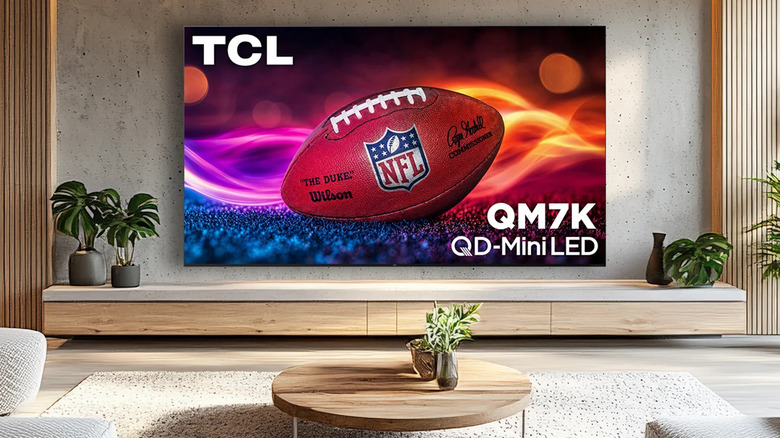
Another mini-LED TV delivers stellar picture quality at an affordable price, and the TCL QM7K's color accuracy has earned praise from multiple reviewers. If a retail price of $799.99 isn't too high for you, you can currently snag this TV on sale for $599.99. Critics also praised the contrast, with the QM7K's Halo Blooming feature ensuring blooming effects don't detract from the viewing experience. On paper, support for Dolby Atmos and DTS Virtual:X sounds great, but Digital Trends found the TV's sound output to be quite disappointing.
Critics also praised the viewing angles, noting that the picture didn't seem warped or suboptimal when you weren't looking at the TV head-on. For gamers, this TV also packs great features. You can play games at 4K on a 144Hz display, which is boosted to 288Hz for 1080p gaming. Anyone with a high-end PC will love this support, along with the usual gaming features you expect, like ALLM and VRR. Don't assume there are no picture-quality issues; reviewers noted that the screen did little to reduce reflections, and TechRadar said the TV also suffered from the dreaded vignetting effect. Still, that didn't stop us from recommending the TCL QM7K as one of the best TVs for watching sports.
Sony Bravia 7 II
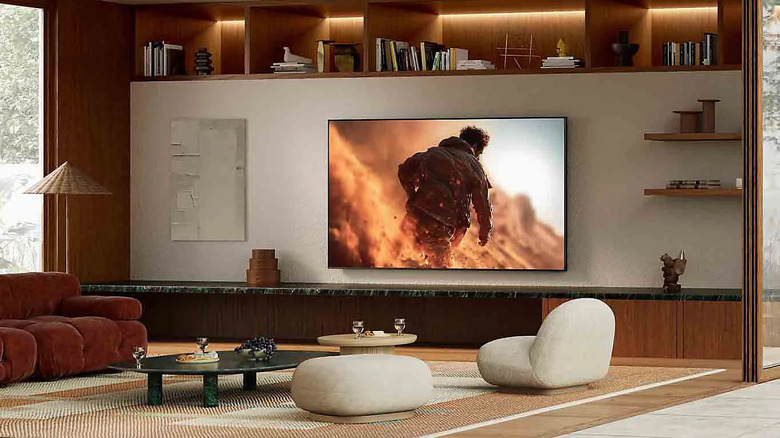
If the Bravia 9 II is out of your budget but you still want a reputable TV brand like Sony, the Sony Bravia 7 II is a solid option. The 55-inch variant currently retails for $1,399.99, below its $2,099.99 list price. Although this TV targets budget-conscious customers, the TCL and Hisense models we mentioned are cheaper. The Bravia 7 II also comes with major caveats reviewers highlighted: it has only two HDMI 2.1 ports, PC gamers will be frustrated by the 120Hz refresh rate cap, the TV body is a bit too chunky, and viewing angles aren't great. What Hi-Fi? also found lackluster sound.
Despite its drawbacks, the Bravia 7 II nails the most important part of a TV: picture quality. True RGB does much of the heavy lifting here, unlocking a wide color gamut that reaches 98 percent DCI‑P3 coverage. This technology uses multi-colored backlights instead of a single white backlight, which helps people who want high HDR brightness; Trusted Reviews measured the TV's peak brightness at just over 2,100 nits when displaying this content. With support for 120Hz, VRR, ALLM, and HGiG (HDR Gaming Interest Group), the Bravia 7 II is well suited for console gamers. Given how snappy Sony's UI is, multiple critics were impressed by the smart TV experience.
Samsung QN90F
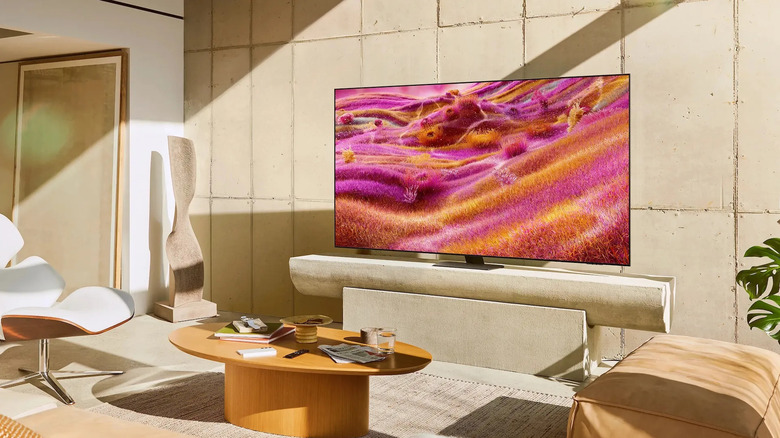
Samsung's flagship S95H OLED TV is arguably the best TV on the market, but people who want to stick with Samsung TVs without paying astronomical prices can settle for the Samsung QN90F. Consumer Reports ranks it among the best Samsung TVs. The 55-inch model costs $1,297.99, which seems reasonable. However, to hit this affordable price point, the QN90F does something egregious in the eyes of cinephiles: it has no Dolby Vision support whatsoever. What Hi-Fi? wasn't a huge fan of its out-of-the-box settings, while Trusted Reviews found the TV's lack of bass to be disappointing.
Thankfully, the QN90F delivers strong picture quality, which is why reviews were largely positive. The matte screen does a great job of reducing reflections, and Trusted Reviews' peak HDR brightness of 2,500 nits is most welcome. You can switch between five picture settings: Eco, Standard, Dynamic, Movie, and Filmmaker Mode. Out of these, What Hi-Fi? appreciated both Standard and Filmmaker modes. They stated that Standard is a great way to enjoy a painless frame, while Filmmaker is for people who want SDR and HDR brightness to look as authentic as possible. Gamers will love the features that make this TV well-suited for console and PC gaming: four HDMI 2.1 ports, 4K at 165Hz support, and compatibility with both HGiG and FreeSync Premium Pro.
Hisense U7SG
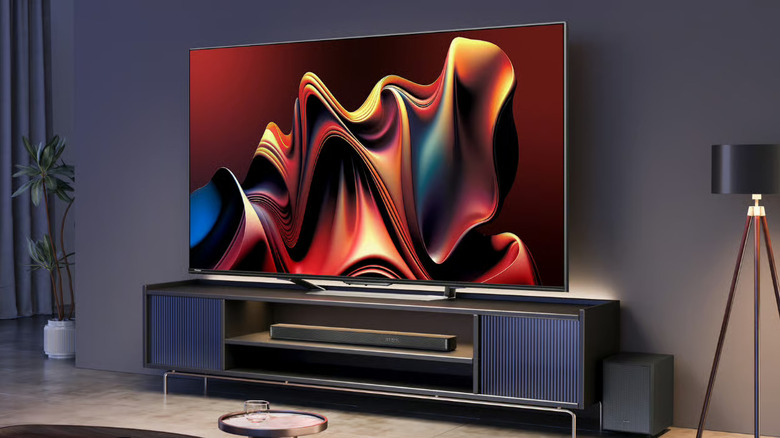
Expect Hisense and TCL to dominate this list going forward. This is to be expected—mini-LED TVs are a budget-friendly alternative a step below pure OLED panels, and both brands excel here. Take a look at the Hisense U7SG, a mid-range TV that does a lot for its affordable price. At a retail price of $1,497.99, it's on sale as of this writing for $997.99, making it a sweet deal. Brightness was praised across the board, which is understandable given that this is one of the rare mid-range offerings with a peak brightness rating of 3,000 nits. Critics also praised the TV's shadow detail and deep blacks, noting that it clearly makes the most of the mini-LED panel and its local dimming capabilities.
That said, the picture has some issues. CNET found the TV's colors to be slightly dull and a bit too greenish for their liking, Wired wasn't a huge fan of the unoptimized default picture settings, and The Verge wasn't a huge fan of the blooming issue and a color temperature that favored cool hues a bit too much for their liking. Still, given the sheer number of features packed into this TV, it's hard to complain about the adjustable picture settings. This TV offers four HDMI 2.1 ports, a 165Hz refresh rate, and AMD FreeSync Premium Pro support, making it a great choice for gamers.
TCL QM9K
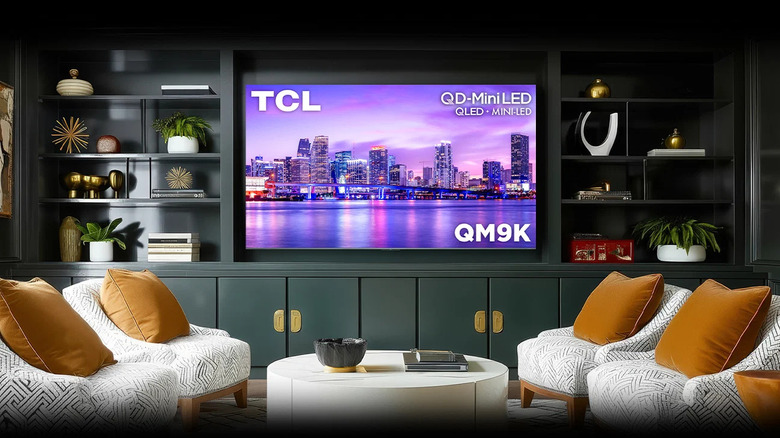
While TCL is no stranger to affordable TVs, this smart TV brand has more than satisfied customers with its offerings; it's now entering premium territory with the TCL QM9K. The list price of $1,799.99 does make it a bit of a tough sell, but anyone seeking out a good mini-LED TV right now is in for a treat — the QM9K is on sale at the time of writing for $999.99, making it a very good option for people seeking out a high-quality TV that reviewers have praised across multiple fronts. Its brightness, measured at over 5,400 nits by Tom's Guide, is one of its best features, as is its cinematic contrast. The dreaded blooming problem we've mentioned for other mini-LED TVs is also absent here.
Most modern smart TVs run Google TV, so the QM9K's smart TV experience is snappy, as multiple reviewers felt the need to praise it. If you're pairing this TV with a good sound system, enable Dolby Atmos FlexConnect. If you don't have speakers with auto-room calibration like Sonos, you can use this feature to tweak the spatial audio to your room's dimensions instead. Even without this system, the Bang & Olufsen speakers in the QM9K were impressive enough to wow TechRadar.
Hisense U8QG
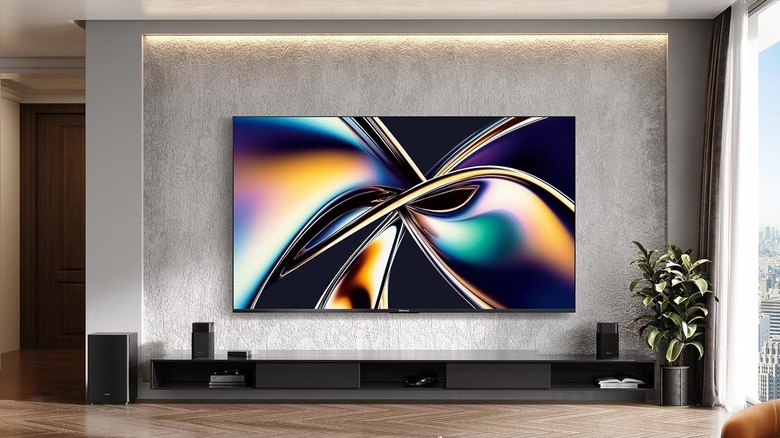
With its 5,000-nit brightness rating, the Hisense U8QG is a bright mini-LED TV that will deliver a great viewing experience in 2026. Don't worry that this high brightness will overshadow color and contrast, since multiple reviewers have praised this TV's stellar picture quality. The 55-inch model is on sale for $999.99 as of this writing, down from its list price of $1,424.99. Some reviewers have complained that the TV includes only three HDMI 2.1 ports, though that's still better than most of its competition, which sticks to just two. Audio is another area critics weren't fans of, so pairing this TV with a good speaker system is highly recommended.
This TV also supports 4K resolution at a 165Hz refresh rate and FreeSync Premium Pro, making it one of the best TVs for PlayStation or Xbox, according to gamers. The only catch is response time — IGN gauged it at almost 20 milliseconds with a game running at 165 FPS. Meanwhile, cinephiles seeking the best picture quality will love watching Dolby Vision and HDR10+ content on the U8QG.
TCL X11L
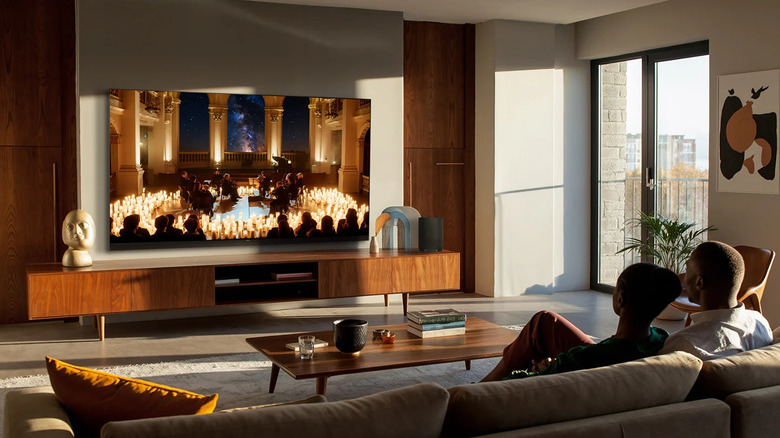
The TCL X11L was made for home theaters, starting at 75 inches. It has the highest list price of any TV on this list — a whopping $4,999.99. Thankfully, it's on sale at the time of writing for $2,999.99, so you don't have to pay a massive premium to enjoy a TV with. As per Choose.TV, the best mini-LED TV on the market for pure blacks. Reviewers also loved the Super QLED for its excellent color saturation and praised its brightness. In fact, TCL is so confident in this TV's bright display that it claims it can reach a peak brightness of 10,000 nits, unheard of for a mini-LED TV. Real-world tests place this rating between 3,000 and 4,000 nits, which's still bright enough for most viewers.
Anyone who loves gaming on a massive screen will find the X11L a great TV to hook up their gaming console, high-end PC, or both. Four HDMI 2.1 ports, a refresh rate of up to 288Hz, and standard features like VRR and ALLM are music to hardcore players' ears. TCL's partnership with Bang & Olufsen reappears, with reviewers highlighting the front-facing soundbar design and side-firing drivers as a standout feature. In fact, Digital Trends went so far as to call it the best built-in audio of any television they've tested, which is hefty praise.
Methodology
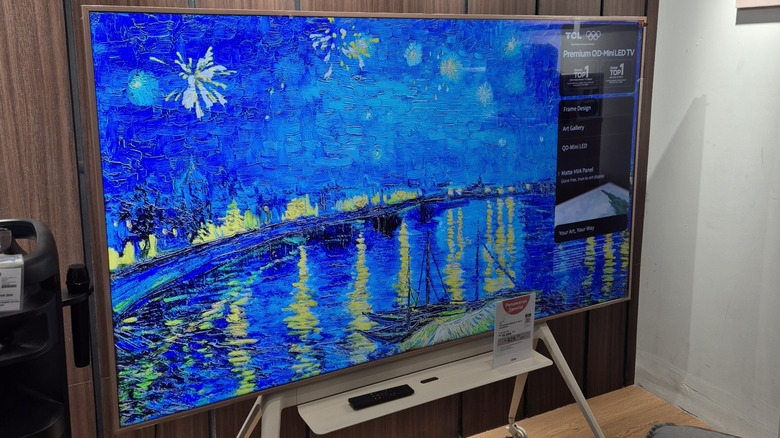
This list covers the most notable mini-LED offerings from multiple television brands. To ensure high-quality recommendations, we've included only TVs with strong review scores — at least 4 out of 5, 8 out of 10, or 80 out of 100 — from three or more online publications. These digital outlets include Expert Reviews, TechRadar, Tom's Guide, CNET, Wired, PCMag, IGN, Digital Trends, Choose.TV, BGR, The Verge, Android Headlines, Trusted Reviews, What Hi-Fi?, and T3.