

Your Truck Could Be Considered A 'Car' Thanks To This Federal Rule Change
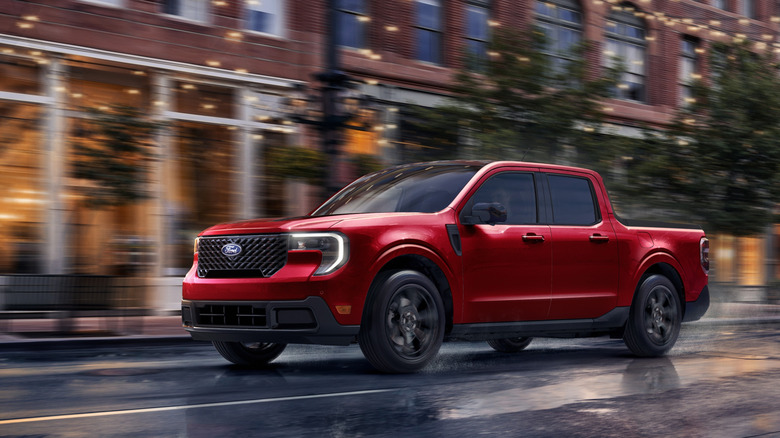
Much like back in 1973, we're in the midst of a new Oil Crisis. Oil reserves have reached record lows and the price of fuel is skyrocketing to previously unprecedented levels. Moreover, with a plethora of huge, inefficient trucks clogging American roads, the automotive industry is ill-equipped to weather the storm. Enter the all-new Safer Affordable Fuel-Efficient Rule III, or SAFE Rule, as the U.S. government promises to reclassify these vehicles as "cars." Or, at least, some of them. In what it calls a "sweeping recalibration," the new mandate effectively redefines the concept of a light truck, but it's a deceptively nuanced one that requires a bit of contextualization.
The story begins in 1973 with the Malaise Era, a period of automotive development marked by the rejection of gas-guzzling American V8s in favor of compact imports that sipped fuel, like the very first Honda Civic. It single-handedly changed the course of automotive history practically overnight, literally rewriting the rules for what even constitutes a car in the first place. This marked the beginning of Corporate Average Fuel Economy (CAFE) requirements being installed, a law that mandated all manufacturers hit strict fleet-wide economy requirements.
Fast forward to 2026, and decades of development has emboldened automakers. Most have found refuge in a specific loophole — the difference between a car and a light truck. In short, light trucks don't need to meet as stringent demands for fuel economy as cars, so it saves R&D time for automakers. It's that rule that SAFE addresses, altering the criteria for what is considered a "light truck" to reflect modern sensibilities.
Why this is a problem
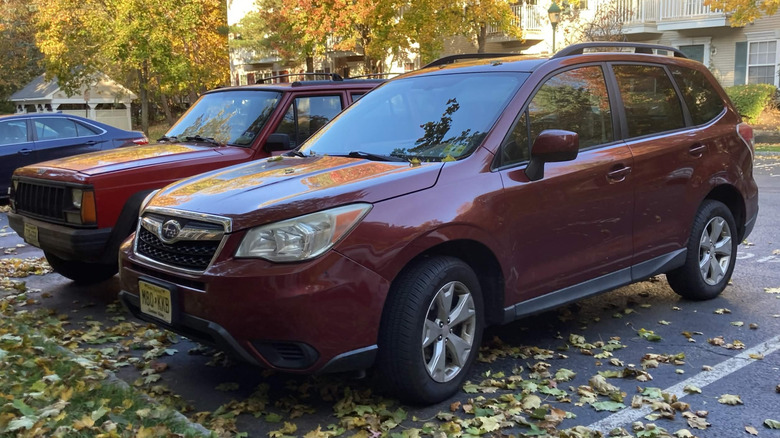
Let's set up the problem facing the EPA — look around on any American road and you'll see a number of SUVs and trucks, and there are a plethora of speculative and logical reasons why. Many of these vehicles are marketed as family cars, for one. Crossovers effectively supplanted the minivan and sedan, station wagons all but died in American showrooms; and light-duty pickup trucks grew to disproportionate sizes, becoming more status symbols than honest work trucks. Moreover, despite the underground revolution of Generation Z rejecting SUVs, the fact remains that you need a healthy income to even afford a new car.
This leaves the EPA at an impasse because of the fine-print in CAFE's rulebook. Automakers have pushed for higher-priced but lower volume cars since the 2020 pandemic, at least. And larger vehicles with SUV-like proportions dominate most manufacturer pages; companies like Ford and GM produce maybe one or two normal cars, and they're sports cars. In short, everyone is building modular SUVs on similar platforms because it makes good money, it's marketable, and it doesn't need to meet the same efficiency standards as cars do.
Therein lies the core philosophy of SAFE. When you're building SUVs and classifying them as "light trucks," but then never actually intend to use them as "light trucks," it defeats the whole point the CAFE standards made. The exception was for the benefit of commercial vehicles, not as a loophole exploited by clever marketing and modular chassis. From an environmental standpoint, this basically means you're building cars with sub-par fuel and safety standards because you're classifying a compact crossover in the same category as a Ford F-150.
How SAFE hopes to rectify it

Note that this isn't some broad, sweeping thing that will classify a GMC HD Denali as a "car" even if it never sees dirt in its life. It has nothing to do with what the vehicle is used for, only what its physical characteristics and capabilities are. These include a list of outlined criteria such as towing capacity, approach and departure angle befitting off-highway use, cargo capacity, and other similar design features, all by model year 2030.
Theoretically, this means that any vehicle that doesn't meet these requirements will be legally considered a "car" regardless of it's size; therefore, it must meet the fuel economy and safety standards of any other passenger car. If such a rule was magically enforced this second, this would result in the vast majority of American manufacturers effectively clean-slate wiping about three-quarters of their fleets. Crossovers and SUVs — yes, they're different — wouldn't disappear entirely, but the majority would need radical redesigns to comply with new emissions standards. At that point, you might as well just build smaller cars anyway, because smaller and lighter is more fuel-efficient.
That's the ultimate hope in the fine print here. Because everyone's building and marketing these "light trucks" as family cars, why not reclassify them as family cars and demand better from them? It certainly couldn't hurt, seeing as we're staring down the barrel of a new and improved Malaise Era. Moreover, such a law could see widespread changes in how we perceive fuel sources; EVs would obviously be less affected, for instance. Here's hoping it's taken seriously and implemented on time.