

5 Riding Mower Attachments That Can Come In Handy This Fall
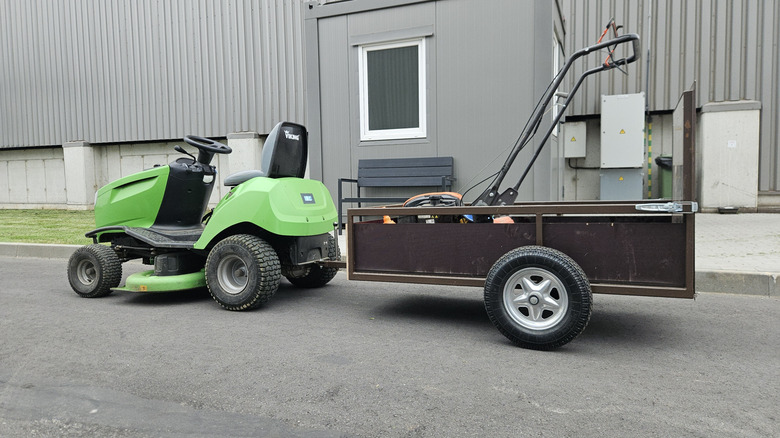
A riding mower is helpful in all seasons (outside of winter) for keeping your grass looking neat and uniform. However, in fall, lawn maintenance isn't just about cutting the grass; it's also about dealing with assorted fallen leaves and sticks, freshening up the soil, and just generally prepping the lawn to make a proper comeback after winter has come and gone. Taking all of these tasks into consideration, even a high-end riding mower can't handle all of the work by itself.
The good news is that it's actually not that hard to give your riding mower a little extra functionality. All you need to do is hitch the right tools and attachments to its rear, and your riding mower will be able to handle all of those tasks on top of your regular lawn maintenance. Whether it's a lawn sweeper picking up all those fallen leaves, a dethatcher cleaning up that tightly packed layer of dead roots and stems, or an aerator to invigorate the soil before the snow starts falling, the right riding mower attachment can do your lawn a lot of good during the autumnal season.
Lawn Sweeper
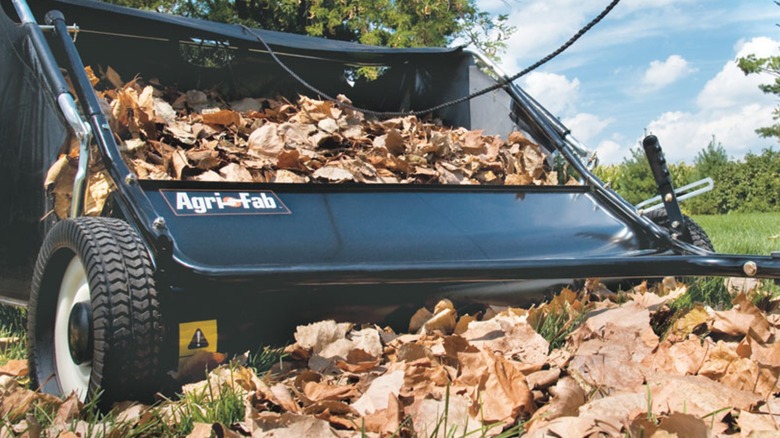
When you think about lawn and yard care in the fall, the first thing that probably springs to mind is picking up fallen leaves. While some lawn mowers have mulching systems for grabbing and dicing up leaves, if yours doesn't have that feature, there's not much it can do about large quantities of leaves on its own. For baseline autumnal lawn care, you may want to hitch a lawn sweeper behind your riding mower.
A lawn sweeper rolls along the ground behind your riding mower, catching any assorted debris it rolls over. This is generally handy year-round for keeping a lid on grass clippings flying everywhere, but it's especially nice during the fall because, in addition to clippings, it can also suck up fallen leaves, pine needles, and larger objects like twigs and pinecones. It's certainly faster and easier than trying to tackle fall's leaves with a rake. The only catch is that you need to consider the kind of mower you have, as not all sweepers are universally compatible. Also, they're best used when the leaves are freshly fallen and dry, as they may become too heavy to pick up if they get wet.
Dethatcher
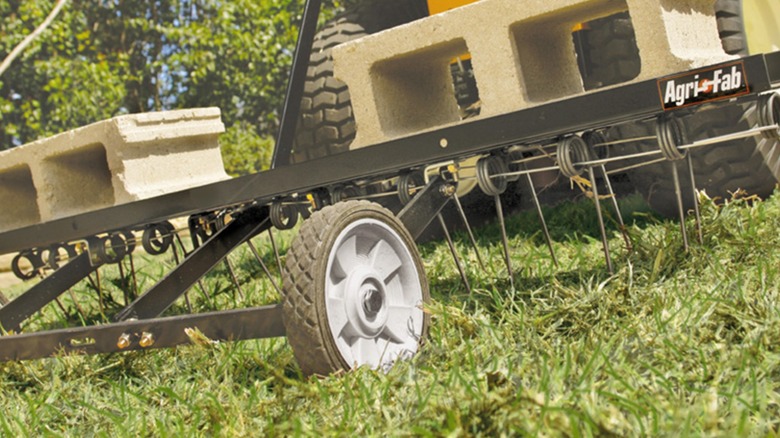
In addition to fallen leaves and twigs, fall is the season when thatch starts to accumulate heavily on your lawn. As a tightly packed conglomeration of dead stems, roots, and turfgrass, thatch can be difficult to detangle from the surface of your lawn. The longer it stays there, the more it chokes the plant life beneath out from sunlight, water, and nutrients. If you've got thatch piling up, and it's too densely packed to remove with just a sweeper, you'll want to hitch up the dethatcher next.
A dethatcher, not to be confused with a scarifier, is exactly what it sounds like: a tool for removing thatch. A riding mower dethatcher, specifically, rolls on its own wheels behind the mower and rakes the ground with an array of thick tines, much like giant forks. These tines are large enough to pull accumulated thatch loose and drag it away, after which it can be easily disposed of in the trash. Compared to dethatching a lawn with a handheld tool, even a powered one, using a towed dethatcher with your riding mower takes far less time and effort, making it the optimal choice for dethatching a larger lawn.
Aerator
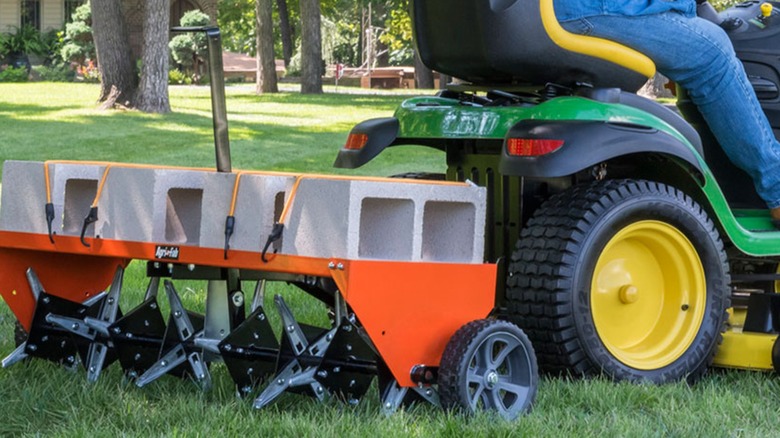
Even after you've removed the large debris and dethatched your lawn, the actual grass and soil has probably already been pretty tightly compacted by the pressure, not to mention shrunk by the encroaching cold of the season. If you want your lawn to safely survive through the winter, it doesn't just need to have the debris removed, it also needs as much nutrition as it can possibly get. To get your lawn the nutrition it needs, that'd be a job for a towing aerator.
Similarly to a dethatcher, a riding mower aerator consists of large knives that rake along the ground as your riding mower tows it. The difference is that these spokes pull "plugs," to use the technical term, out of the grass and deposit them back on the ground leaving distinctive holes along the surface of the lawn. These little holes help to loosen up soil that's been compacted by summer foot traffic and fall debris, as well as improve drainage and send water and nutrients directly to the roots to shore up the lawn ahead of the winter. Meanwhile, the plugs are small enough that they break down quickly, keeping nutrients and microorganisms in the ground for next season.
Spreader
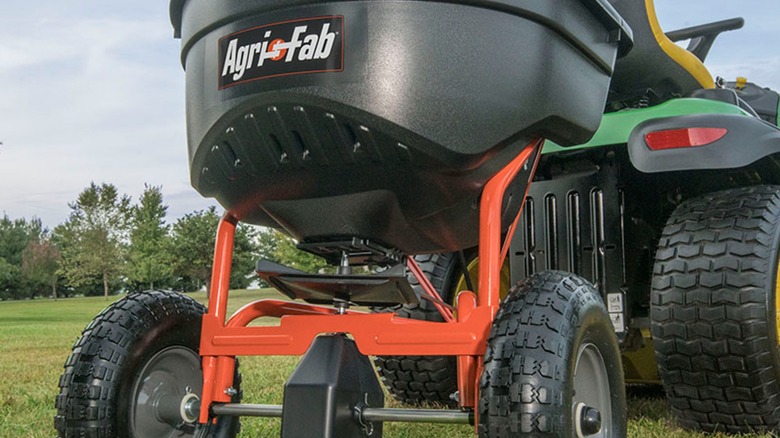
You might assume that, when it comes to making your lawn grow, spring would be the best season for seeding. In actuality, though, seeding a lawn, specifically overseeding, is best done in the late summer and early fall, when the soil is warm and the air is cool. Overseeding right before the winter freeze sets in helps to create a fresh layer of thick, healthy grass that's ready to endure the cold while also pushing out invasive weeds. If you're looking to get some overseeing done, hitch up a spreader to your riding mower.
As your riding mower does its business across the lawn, a spreader scatters seeds in its wake in a large swath, ensuring any cut grass gets some friends next to it. This makes the process of overseeding a lot easier than just walking around the lawn with a bucket. In addition to seed, a spreader can also be used to scatter other helpful lawn resources, such as fertilizer for nourishing the plant life and ice melt for fighting off looming frost. Just be sure to research the best time of year to overseed in your area, because that can vary greatly by region.
Lawn Roller
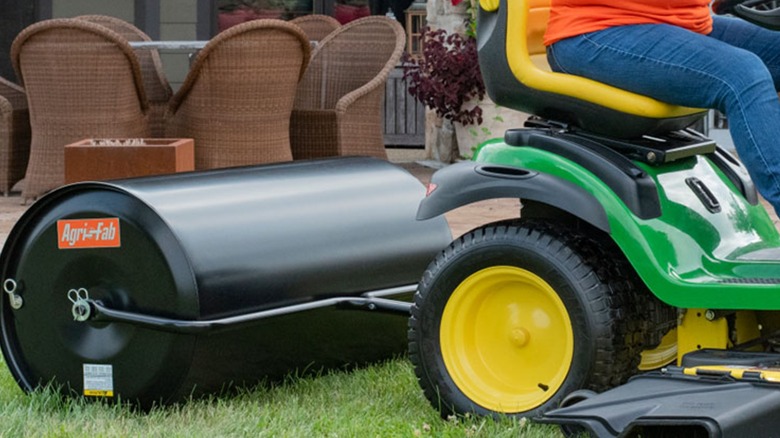
While aerating and seeding your lawn in the fall is a great way to shore it up before winter, just throwing seeds around doesn't necessarily guarantee that they'll actually take root, nor does aerating ensure the lawn will remain flat and level. After you perform both of those tasks, you might want to swap out your riding mower's current hitch in favor of a lawn roller, just for a little extra landscaping work.
A lawn roller is quite possibly the simplest riding mower attachment there is. It's a large, cylindrical drum that rolls behind your mower and flattens out the grass and soil beneath it with its sheer weight. Running a lawn roller over your lawn right after scattering seeds will help to press them into the soil where they can take root properly, while also flattening out undulations and heaves in the lawn. This helps make the whole lawn nice and even, ensuring that, after winter is over, the lawn beneath the melted snow will be pleasantly flat and ready for easy mowing.