

12 Classic Tech Inventions From The '40s And '50s That Shaped The Modern World

If you step outside and look around, you'll find yourself in the modern world. It's where there are jet packs, airplanes, and a global Internet encompassing nearly all of human knowledge. After all, you're reading this article right now on your phone, tablet, or computer, and all of the aforementioned pieces of technology were made possible by innovations and ideas from the past.
Technology rarely arises via a eureka moment and is instead developed over years, employing smaller discoveries and innovations, building upon what came before. That's as true as the phone in your hand or the passenger jet streaming high above in the sky. Incremental gains over long periods are how humanity has gone from analog to digital, and new inventions arise all the time.
Today's modern world owes much to earlier decades, where clever people found new methods of communication, travel, and more. While much of today's tech can be traced back to the 1960s and subsequent decades, we owe a lot more than most people think to the 1940s and '50s. World War II sparked plenty of innovation, but that conflict was hardly the only driver in making the world we live in today. Each of these 12 classic tech inventions arose in the '40s and '50s, and they all provided vital steps in creating the modern world we live in today.
Radar
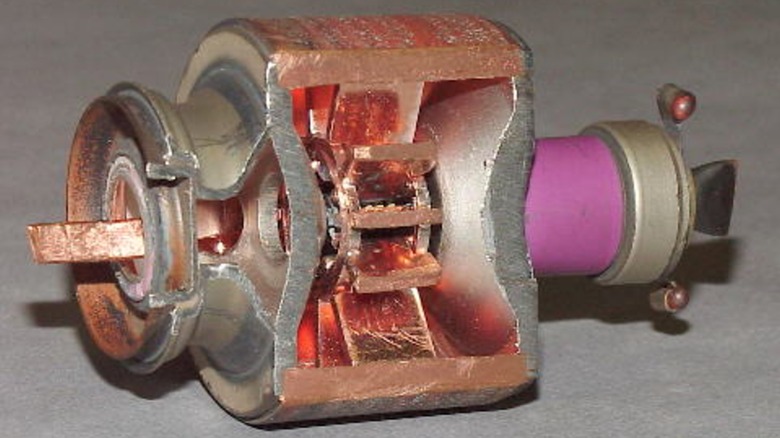
When WWII began, the concept of locating airborne threats without actually seeing them was in its infancy. The first working radar system arrived in 1935, but it was limited and required massive structures to function. By 1941, the British developed a more robust system, though it was highly classified. Ultimately, modern radar didn't properly come into being until 1940, when the resonant-cavity magnetron radar arrived. The new technology was a game-changer, significantly helping the Allies during WWII.
Still, unless you're a pilot, air traffic controller, or in the military, radar isn't something most people interact with. That said, the invention of the resonant-cavity magnetron later influenced another technology that many people use on a daily basis: microwave ovens. The magnetron led to the development of the Doppler radar, and in 1945, Percy Spencer, a researcher at Raytheon, walked by his equipment, and later noticed that a chocolate bar in his pocket had melted.
Most people don't know how a microwave oven works, and to be fair, they don't need to. Basically, they use a cavity magnetron as their primary component. It's an oscillator that emits electrons via a hot cathode, generating microwaves. This, in turn, excites water molecules in food, which heats it up. So, the next time you enjoy some microwave popcorn, you can thank researchers in the '40s for developing its primary component used in early radar systems.
Jet Engines
When the Wright Brothers first took to the skies in 1903, the concept of moving at excessive speeds was still a long way off. Aircraft became more powerful, enabling high speeds and excellent maneuverability that played their part during WWII. Eventually, propellers gave way to jet engines, offering incredible speed. Development of jet engines dates back to the late 1920s, but it took some time for engineers to produce a new means of generating thrust.
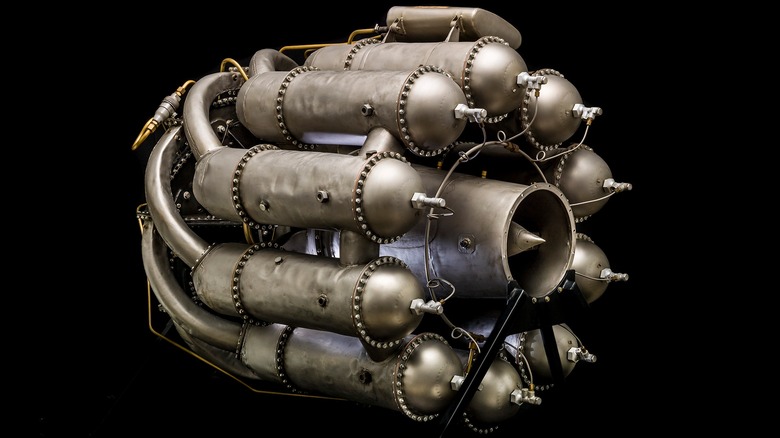
Frank Whittle produced the first working British prototype, which he tested on April 12, 1937. The prototype was a proof of concept that Whittle and others refined over the next two years to overcome a combustion issue. Subsequent testing over another two years resulted in more adjustments and innovations that ultimately resulted in the production of the W.1X (pictured), the Allies' first turbojet engine that took flight on May 15, 1941.
Unfortunately, more kinks had to be worked out before a proper turbojet engine could go into production, leaving the Allies without a jet aircraft in WWII. The Germans, on the other hand, beat the British by 18 months and later produced the world's first fighter jet, the Messerschmitt Me-262, which appeared in the skies over Europe in late 1944. Ultimately, the Messerschmitt Me-262 failed, but it proved that jet engines could power aircraft, launching the jet age.
The Digital Computer
Computers are among the most important inventions of the modern age, but people have worked on creating them for longer than most realize. Analog computers date back to the mysterious Antikythera Mechanism, which was made some 2,000+ years ago. What humanity needed in the 20th century was a digital computer, and one finally came into being in 1942. The Atanasoff-Berry Computer, better known as "ABC," used electricity and capacitors to complete calculations in just 15 seconds.
John Vincent Atanasoff and Clifford Berry invented the first digital computer, and ABC opened the door for digital calculations at incredible speeds. Granted, one calculation every 15 seconds is ridiculously slow when compared to modern processors; it was a significant achievement in '42. The PC that this article was written on can perform up to 110 billion calculations every second, but it only exists as an incredibly advanced evolution of the technology first demonstrated in the '40s.
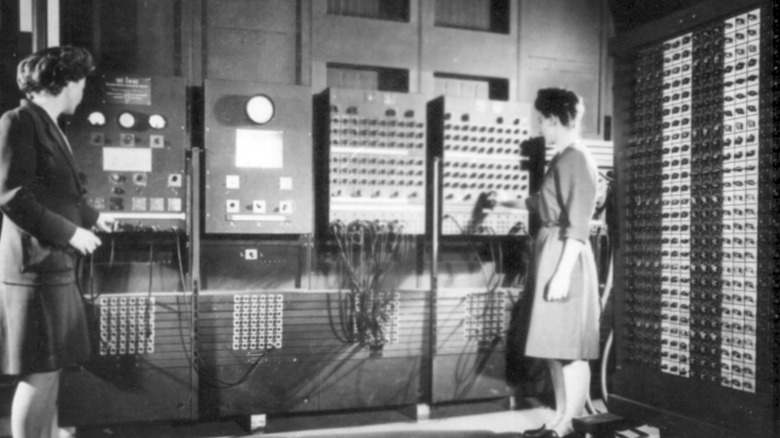
It took a long time and thousands of upgrades for computers to become as fast as they are today. The world's first true digital computer, the Electronic Numerical Integrator and Computer (ENIAC), was invented in 1945. Unlike ABC, ENIAC was programmable and had a general, non-specific purpose, making it Turing complete. It's from ENIAC that modern programmable computing originated, though it owed its existence to ABC and the many analog computers that preceded it.
Nuclear Reactors
While most people know about the atomic bombs dropped on Hiroshima and Nagasaki, Japan, which ended WWII in 1945, another key innovation came before such destructive power was unleashed upon the world. Nuclear reactors are among the most important inventions made in the early 1940s, and they continue to play a significant role in the modern world by providing around 9 percent of the world's energy.
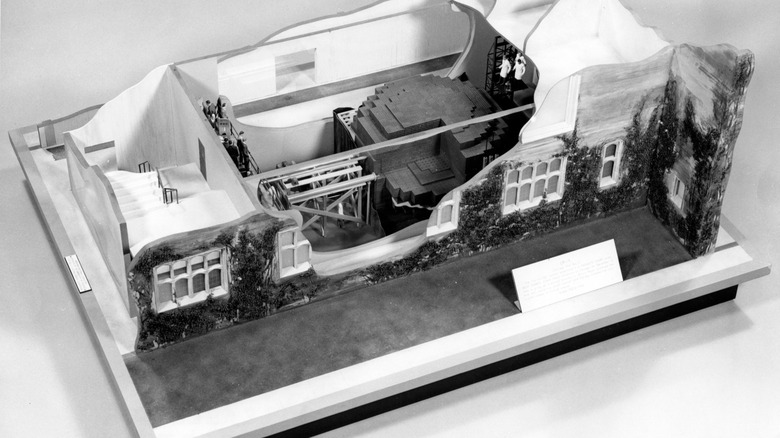
The first nuclear reactor was invented by the same people who developed the atom bomb, though it came earlier. In 1942, as they worked to produce "the bomb," researchers involved in the Manhattan Project first had to produce a nuclear chain reaction. The first sustained nuclear chain reaction occurred on December 2, 1942, at the University of Chicago. The researchers worked in a squash court at Stagg Field, resulting in the creation of "Chicago Pile-1."
That discovery was vital in the production of the bomb, but it doesn't get much attention due to the destructive power that came from it. Chicago Pile-1 consisted of graphite blocks piled 20 feet high. Each was studded with hundreds of small blocks of uranium placed precisely in 57 layers. The blocks were dotted with fitting holes for cadmium control rods. The project was completed on December 1, 1942, and the following day, a group of 49 scientists achieved the first nuclear chain reaction at 3:53 p.m.
The Aqua-Lung
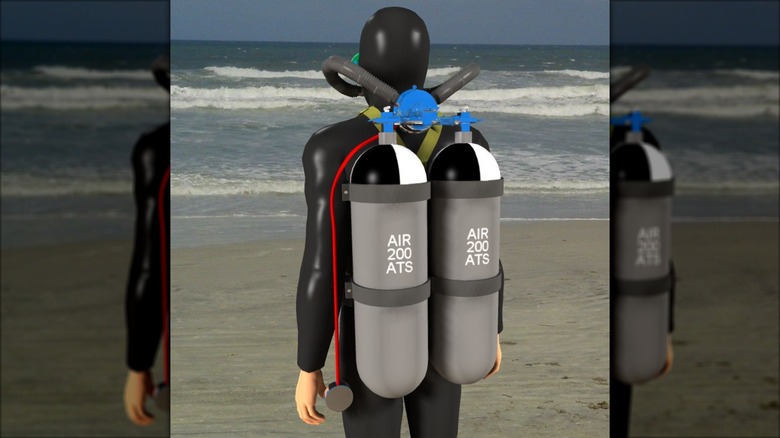
Today, if you want to go Scuba diving, you need to get certified, rent or purchase your own equipment, and find a good place to visit underwater. It wasn't always like that, as it took years to go from massive diving suits that received pumped air from hoses on the surface to something you could wear on your back. Scuba, or self-contained underwater breathing apparatus, consists of a face mask, compressed air tank, and a regulator that is common wherever there's a great place to dive.
The first scuba set was called the Aqua-Lung, which was invented by Jacques Cousteau and Émile Gagnan in 1943, completely revolutionizing underwater diving. Development of the Aqua-Lung began during WWII at the French Riviera, leading to the development of a demand regulator for cooking gas, as there was a shortage. Cousteau took the invention and ran with it, adapting the regulator meant for gas on the surface into something that functioned underwater.
The Aqua-Lung completely opened the door for widespread exploration of the ocean and the many fascinating shipwrecks spread about the globe that divers enjoy visiting. That was made possible by Cousteau and Gagnan's work in the 1940s, which built on previous innovations from the 1920s and before. You can see the impact they had on the modern world every time you dive to check out a beautiful reef or wreck.
Transistors
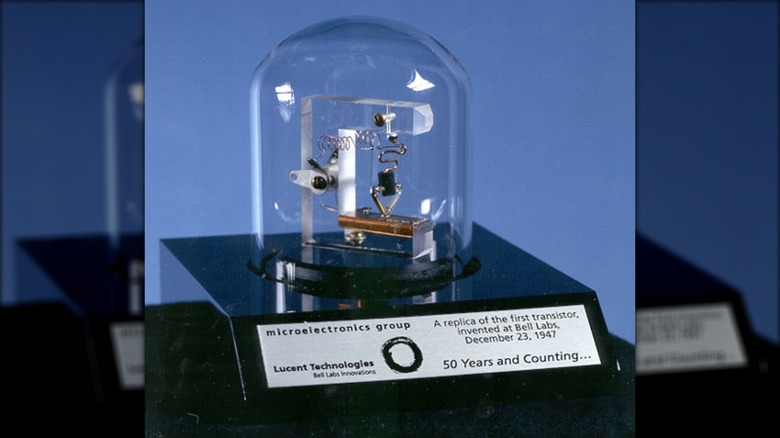
If you stop a person and asked them what the most mass-produced invention in the world was, you'd likely get a variety of answers. Some might say cars, while others would add to that with tires, and while there are tons of them, they pale in comparison to transistors. All modern technology uses transistors, but when they were invented on December 23, 1947, it was tough to find an application for them. Fortunately, that changed, and in 1956, Walter Brattain, John Bardeen, and William Shockley received the Nobel Prize in Physics.
Transistors are devices that consist of an emitter, base, and collector that function as an electronic switch or a signal amplifier. To put it simply, they function as switches that can be turned off (zero) or on (one). The aforementioned ENIAC used 18,000 large vacuum tubes, which failed and had to be replaced often, making them unreliable for computing.
Enter the transistor, created at Bell Labs, and vacuum tubes quickly became things of the past. The first transistor (pictured) was large and functioned more as a proof of concept than a practical device. Still, it proved capable of producing positive voltage and negating it entirely, forming the basis of what a transistor does: turning off and on. Between 1947 and 2018, humanity collectively produced over 13 sextillion transistors, which amounts to the number 13 followed by 21 zeroes.
Passenger Jets
Today, we take jet engines for granted as passenger aircraft take people from one place to another at speeds that nearly reach Mach 1 (550 to 600 mph), but it wasn't always like that. For the vast majority of human history, people got around using animals and ground-based vehicles, or they simply walked. Eventually, ships became the best way to travel great distances, enabling the crossing of oceans, but it remains a fairly slow means of travel.
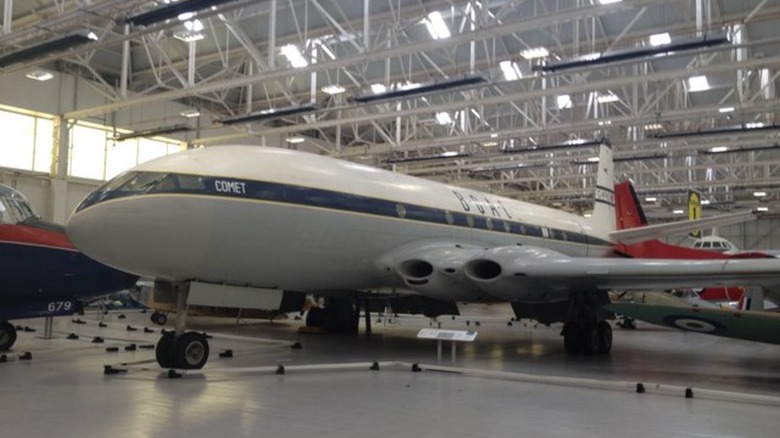
Airplanes, on the other hand, move incredibly fast, though initially they weren't used to ferry folks from one town to another. That didn't become a thing until 1952, when the first passenger jet, the de Havilland DH.106 Comet(pictured), started operating for the British Overseas Airways Corporation (BOAC). The first passenger jet service took place on May 2, 1952, establishing an entirely new industry that continues today.
The de Havilland Comet was an impressive aircraft for its time, as it could take up to 36 passengers across 2,500 miles at a cruising speed of around 450 mph. Before the de Havilland Comet began operating, such speeds and convenience were the stuff of science fiction. Afterward, a new industry took off (pun definitely intended), which opened the door for global travel, helping to connect the world. It's hard to imagine modern travel without passenger jets, so we owe much to BOAC's 1952 venture.
Optical Fibers
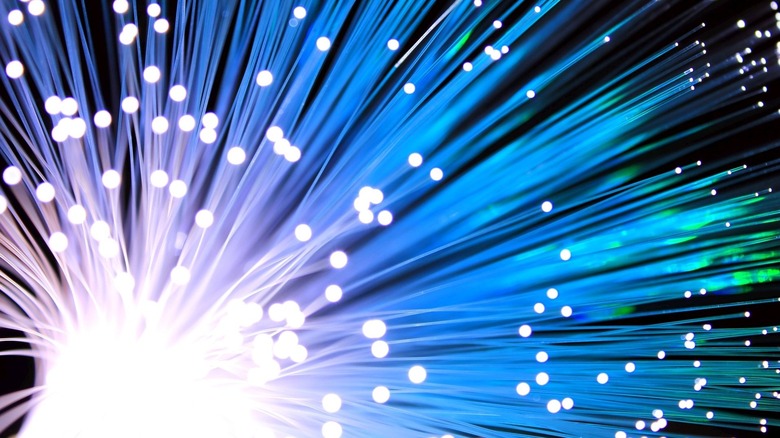
For the vast majority of the population, optical fibers aren't something they deal with often, but many use them without realizing it. Today's fiber-optic cables carry high-speed internet signals by transmitting data at the speed of light, and they're vitally important to the internet and other telecommunications processes. An optical fiber is a long strand of transparent glass that allows for transmission of light signals at speed without interruption through bends, without needing to travel in a straight line.
While the theory involving them dates back decades, the first optical fibers didn't come about until 1953. Dr. Narinder Kapany successfully demonstrated the application of sending a light signal through bent glass fibers, which was an incredible breakthrough. His discovery proved the concept, and eventually, fiber-optic cables were laid down all over the world. The massive underwater cables that connect continents consist of optical fibers, which make modern communications possible.
Dr. Kapany was dubbed the father of fiber optics in a 1960 issue of "Scientific American," and he literally wrote the first book on the nascent technology. His work led to subsequent developments, including the successful transmission of a laser's beam through an optical fiber. It's one of the most important components in modern communications that hardly anyone outside of the field thinks about, but you'd have a tough time streaming a movie on Netflix or chatting with someone across the ocean without optical fibers.
Transistor Radios
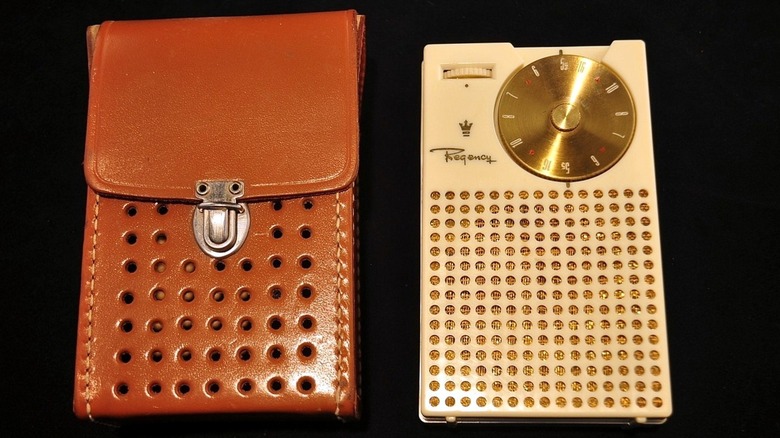
Radio is another invention that people take for granted, or they no longer use it in favor of audiobooks, podcasts, and music streaming. Still, radio is a vital component in modern technology because it's what cell phones use for communication. It's also the means of communicating between a pilot and air traffic control, which is one of a myriad of uses for radio. The invention predates the 1950s by a lot, as radio came into being in 1901, so it's been around for a while.
Transistors, on the other hand, didn't come into play until 1947. A relatively short time later, in 1954, the first transistor radio appeared. Initially, radios took up a great deal of space, making them more like furniture the family gathered around to listen to news, entertainment, and music. After vacuum tubes were given the ol' heave-ho in favor of transistors, it became possible to shrink radios down.
Transistor radios offered something that hadn't been available previously: portability. The first transistor radio was the Regency TR-1 (pictured), first released in 1954. As you can see, it's a relatively small handheld device, which was limited to AM transmissions. It cost a whopping $50 in 1954, which may not sound like much, but that amounts to around $625 in 2026. Regardless, transistor radios ushered in portable music, which led to iPods, cellphones, and more.
Computer Language
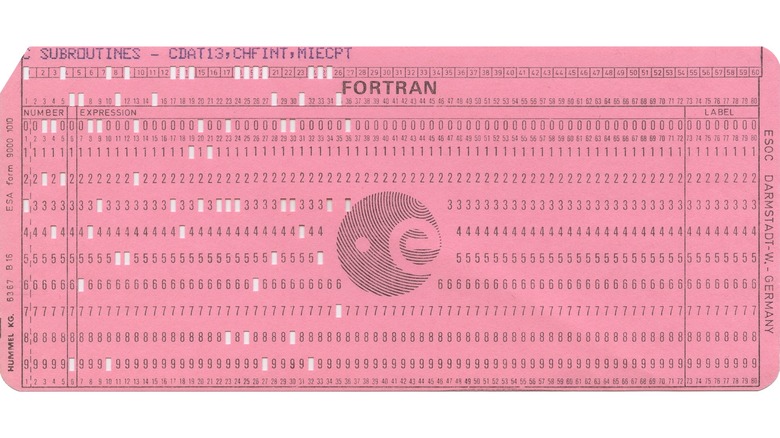
Modern computing utilizes a variety of computer languages, which are essentially a means of providing instructions to a computer. Every game you play, each spreadsheet you fill out at work, and every website you visit utilizes one computer language or another, but it didn't start out that way. The aforementioned ABC and ENIAC machines lacked a formal computer language, and it took years before one manifested. The first such language was FORTRAN, which was created in 1954, and it opened the door for modern programming.
FORTRAN is short for formula translation, and it was officially released to the public in 1957. The language gave everyone, not just specialists, a means of programming problems directly into a computer without having to rely on a programmer. Prior to FORTRAN, specialists wrote code in machine language, which was a complex process that took a great deal of time. FORTRAN made that unnecessary, and it brought computer programming to the masses.
FORTRAN was born largely out of necessity, as computers were getting faster and more complex, necessitating a better means of telling them what to do. FORTRAN still exists and is used and further developed more than 70 years after its introduction. Every computer language that followed, whether it's JavaScript, C++, Python, or many others, owes its existence to programmable punch cards like the one pictured above, such that FORTRAN gave rise to modern computing.
Hard Disk Drives
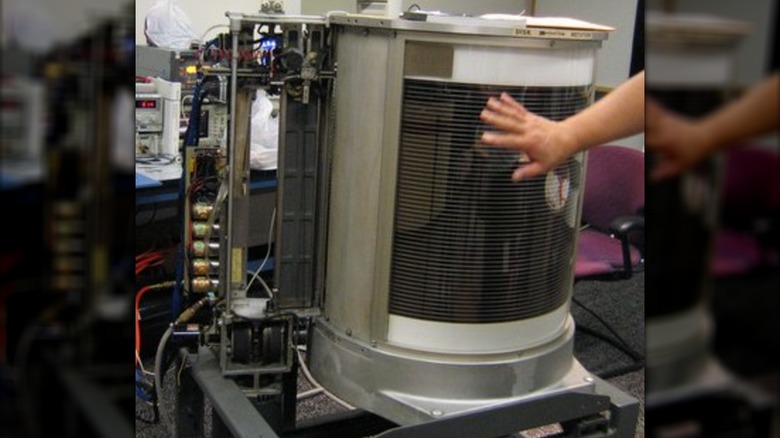
It used to be that if you wanted to save anything on a home PC, you had to do it on a disk of some sort. Granted, that technology wouldn't come about until the 1970s, which limited folks' options. While home computers had a ways to go before digital storage was available, the first hard disk drive (HDD) was invented years earlier in 1956. The first random-access disk drive, or RAMAC, changed how people used computers, as the technology was later adopted by large businesses, governments, and NASA.
Prior to its invention, retrieving information stored on a computer was a difficult process that could take days to complete. RAMAC provided the solution, and while it was a massive device that weighed more than 2,000 lbs., it worked as designed. RAMAC was able to hold 5 million binary decimal characters, and while that may seem like a lot, the drive had between 5 and 10 MB of storage capacity.
Nowadays, that's laughably infinitesimal, but in '56, 10 MB was a monumental achievement. At the time, computers primarily stored data and executed programs, so people didn't contend with storage space for images, videos, and other media. That allowed for a great deal of capacity, though things progressed fairly quickly. Nowadays, you can buy a MicroSD card capable of holding 1 TB of data, giving them 100,000 times more capacity at one-four millionth the weight.
Microchips
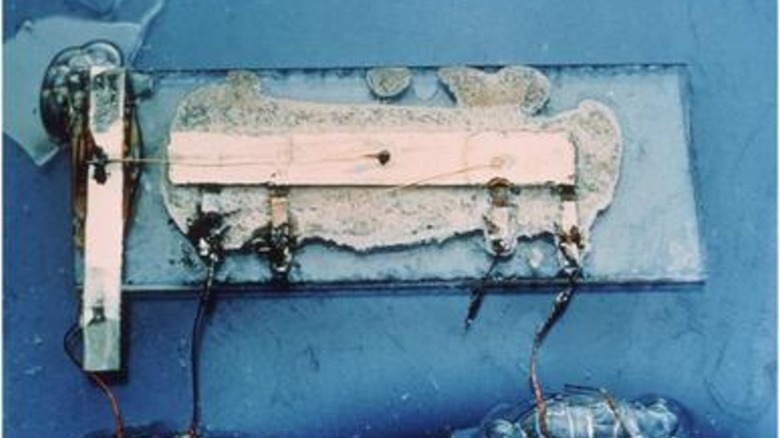
Another technology that doesn't take up too much mind space for the average person is the microchip. Despite this, they're packed into pretty much all consumer electronics, whether it's your television, cellphone, or car. Microchips are at the very heart of modern electronics, and they didn't exist prior to 1959. A microchip is an integrated circuit that features every component of an electronic circuit on a single semiconductor chip made out of silicon.
Microchips were invented by Robert Noyce and Jack Kilby, the latter having received the Nobel Prize in Physics in 2000 after Noyce's passing. The first microchip (pictured) was a rather unattractive device despite its importance in modern technology, but it paved the way for what followed. Microchips have grown, but not in size; they've grown via their reduction in size. The first was around half the size of a paperclip, while modern microchips are around the size of a fingernail but include significantly more transistors.
The first microchip included only a single transistor coupled with three resistors and a single capacitor. Modern ones feature billions to hundreds of billions of them. This has enabled far more complex computer processes than in previous decades, and it's all thanks to the first microchip introduced in 1959. Without microchips, Apollo 11 wouldn't have landed men on the Moon, cell phones wouldn't exist, and modern technology as we know it would be relegated to science fiction.