

Hyundai's Venue Is The Cheapest New Car Around, But Is It A Bargain Or A Bad Idea?
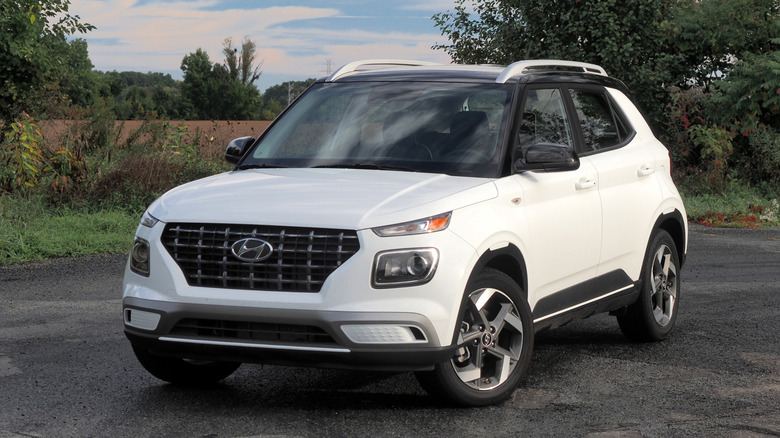
The 2026 Venue is Hyundai's cheapest new car in the U.S., and — as I write this, at least — the cheapest new production car in the U.S., period. It's simultaneously an impressive boast, and a reminder that the days of sub-$20k new cars are behind us. Then again, beyond affordability, I'm not sure how much any of us truly miss the old Nissan Versa. Can the Venue endear itself where other low-cost offerings have struggled?
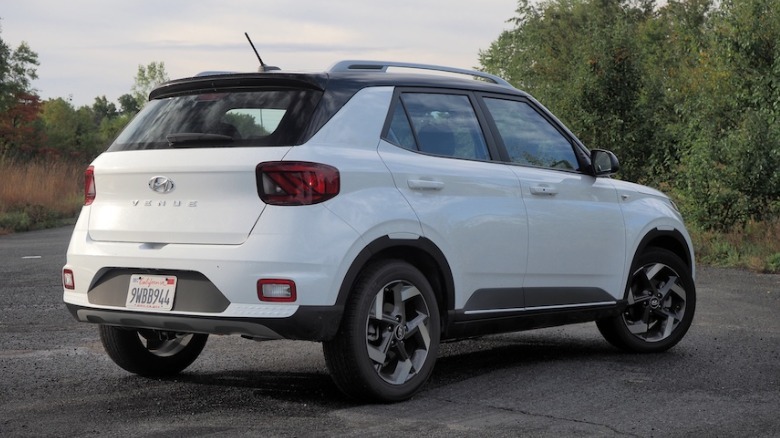
There's something vaguely toy-like about the Venue, with its chunky little mini-SUV design. At 159 inches long and 70 inches wide it's certainly easy to park; the base SE trim (from $20,550 plus $1,650 destination) gets dinky 15-inch alloy wheels, while the SEL (from $22,825 before destination) gets 17-inch versions. Hyundai has a decent array of paint colors to choose between, too, beyond just the usual black, white, and gray.
 Chris Davies/SlashGear
You can't knock the Venue's safety tech, either. All trims get forward collision-avoidance assist with pedestrian detection, lane-keep assist, driver attention warnings, and auto high-beams (though the headlights themselves are a little milquetoast in their brightness). SEL trims get blind spot warnings and rear cross-traffic collision warnings, plus keyless entry with push-button start. Hyundai rounds things out with its healthy warranty: a 5 year/60,000 miles limited warranty, and 10 years/100,000 miles for the powertrain specifically.
Not fun, but nimble
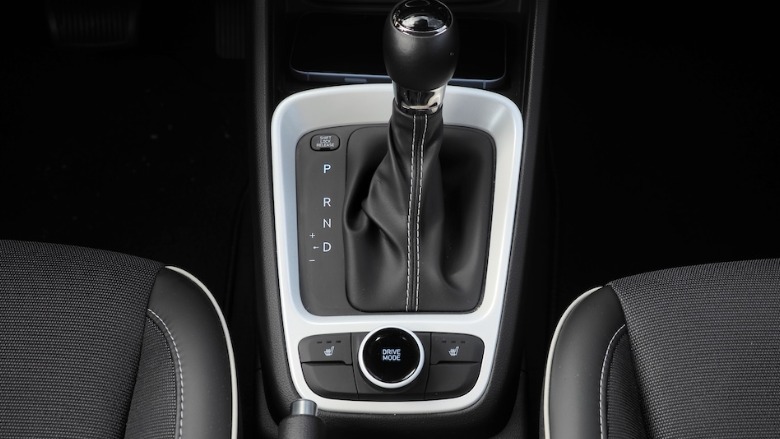
Hyundai offers a single powertrain for the Venue, a 1.6-liter inline-four gas engine paired with a CVT transmission — billed Intelligent Variable Transmission or IVT in Hyundai-speak — and front-wheel drive. With 121 horsepower and 113 lb-ft of torque, this is not an engine which will startle with its blistering acceleration. There's no all-wheel drive option nor, equally unsurprising, a tow rating. All trims get a choice of Normal and Sport drive modes; SEL models add a Snow mode.
 Chris Davies/SlashGear
Given all that, you'd be forgiven for having less-than-humble expectations for how the Venue drives. In actual fact, things are a lot more cheerful. With a maximum curb weight just north of 2,700 pounds, the little SUV feels surprisingly nimble around town. It handles predictably — assisted, perhaps, by the fact that even in Sport mode the engine doesn't encourage too much bad behavior — and the steering is precise enough, if light in weight. On the highway, the engine's power shortcomings do mean overtaking needs some serious preparation.
 Chris Davies/SlashGear
Look, I'm not going to tell you the 2026 Venue is fun per se, but it feels more like a hatchback than a true (bulky) SUV or crossover. It reminded me, in fact, of passing my driving test and borrowing the keys to my mom's old Fiat Punto: sensible on paper, but provokable into something akin to entertainment if gently mistreated (sorry, mom). Somehow, the absence of electronics beyond the bare minimum have left the Hyundai weirdly charming.
Budget accommodations never felt so good
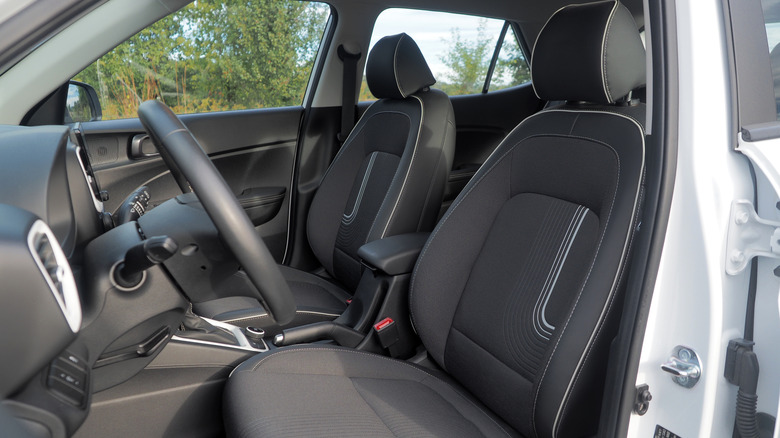
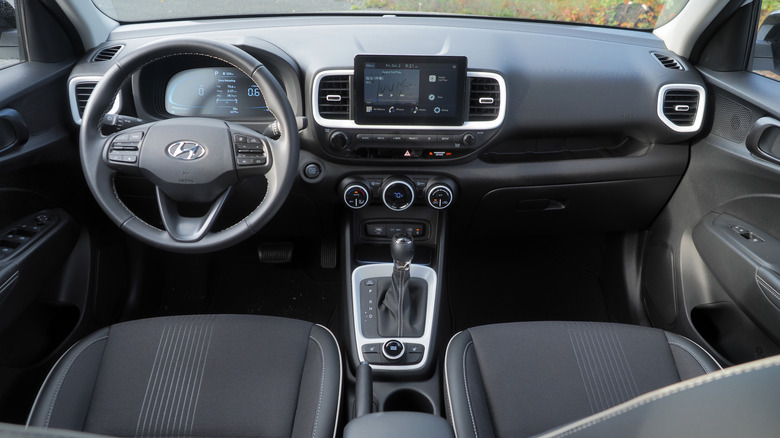
You could say the same for the cabin, where the designers have clearly done their best on a budget. What would otherwise be fairly dark and dour is lifted with some white trim; there's just enough in the way of soft-touch materials to avoid the whole thing feeling desperately spartan. Hyundai's minimal spend has coincided with modern driver sentiment: dedicated physical controls for the SEL's automatic climate control; shortcut buttons for the simple 8-inch touchscreen; and sturdy, practical cloth for the seats (with heated front seats on the SEL trims).
 Chris Davies/SlashGear
Compared to Hyundai's dash-spanning displays on more expensive models, the Venue's 8-inch touchscreen feels restrained; its graphics are dull, but there's wireless Apple CarPlay and Android Auto across the board, and SEL trims get wireless charging and add a pair of rear charging ports to the standard two up front. The SEL gets a sunroof, unless you opt for the SEL with 2-tone roof (the latter also swaps the cloth upholstery for leatherette).
 Chris Davies/SlashGear
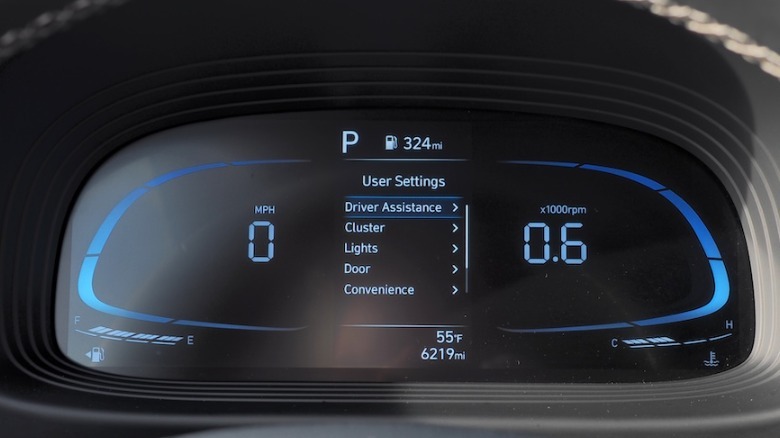
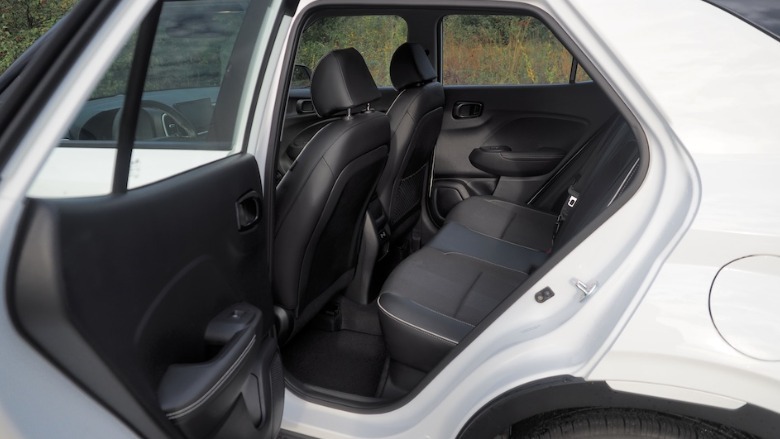
Where other cheap cars can feel like they're shaming you for your restraint, the Venue embraces frugality. The 4.2-inch display in the driver's cluster is tiny, but Hyundai blends it with swoopy digital graphics that blur the edges of that cost-saving. All the switchgear — on the wheel and in the center console — feels sturdy. Yes, there's a lot of plastic, but it's not nasty plastic. And both rows of seats feel reasonably adult-scale, even if 34.3 inches of rear legroom is decidedly snug.
2026 Hyundai Venue verdict
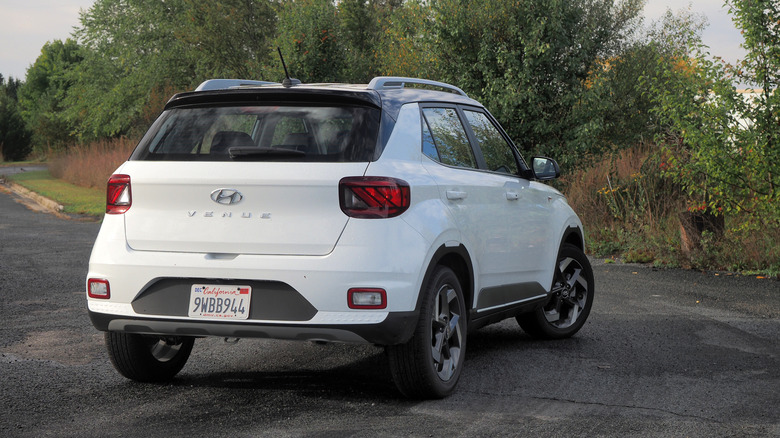
With no electrified option (and not even a stop-start system) the little engine isn't as frugal as you might expect. The 29 mpg city, 33 mpg highway, and 31 mpg combined ratings from the EPA are reasonable but not excessive. In my own, mixed driving, I saw just short of 34 mpg. Better than predicted, but you don't have to look far for budget alternatives that easily best the Venue's running costs.
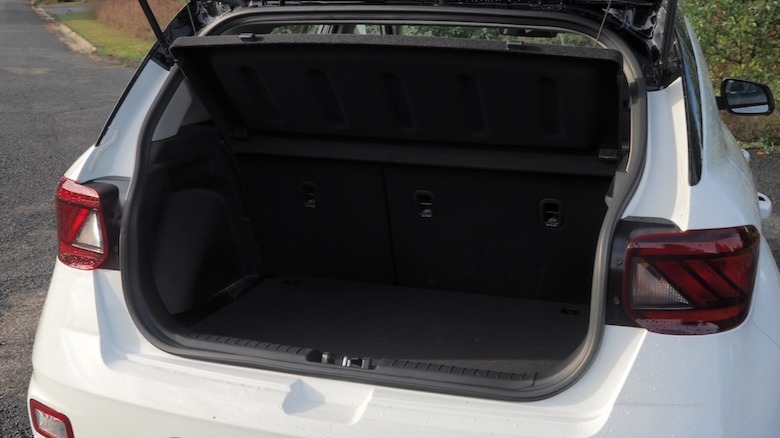
A Toyota Corolla Hybrid is more expensive to buy — from $26,470 including $1,295 destination — but its 50 mpg combined rating pays off over time. After five years of typical use, the EPA says, the Corolla driver will have spent $4k less on gas than the Venue driver. Then again, the Toyota's 13.1 cu-ft trunk is a far cry from the 18.7 cu-ft the Hyundai has (expanding to almost 32 cu-ft with the split rear bench folded). The upright silhouette comes with a definite practicality upside.
 Chris Davies/SlashGear
There's an honesty to the 2026 Venue which I can't help but appreciate. It's not luxurious, by any stretch, but the SEL trim — from $24,475 including destination — covers more than the bare essentials while still delivering an ounce of personality. It's hard to ask for more from Hyundai's cheapest model.