

This Farmer Is Fighting High Gas Prices By Fueling His Tractors With Trash
Anyone who's a car person or has a lot of gas-powered tools in 2026 is painfully aware of the ongoing fuel crisis. The average price of gasoline over the course of the 2026 calendar year is among the highest that it's ever been, outpaced only by a single spike in prices in March 2022. It's about two times more than how much we paid for fuel in 2016, by comparison, and about 1.5 times more than during the pandemic. In particular, the supply of diesel fuel is experiencing massive shortages — tune into the news or social media and you'll find plenty of stations with exorbitant prices, or simply reading "OUT" on the digital sign.
The reasons for this consistent inflation are incredibly nuanced, revolving around the many conflicts happening throughout the oil-producing world in addition to logistics, tariffs, trade disputes, and more. And it's led various people to take matters into their own hands. After all, when you have to provide for a family, sometimes a little creativity can go a long way.
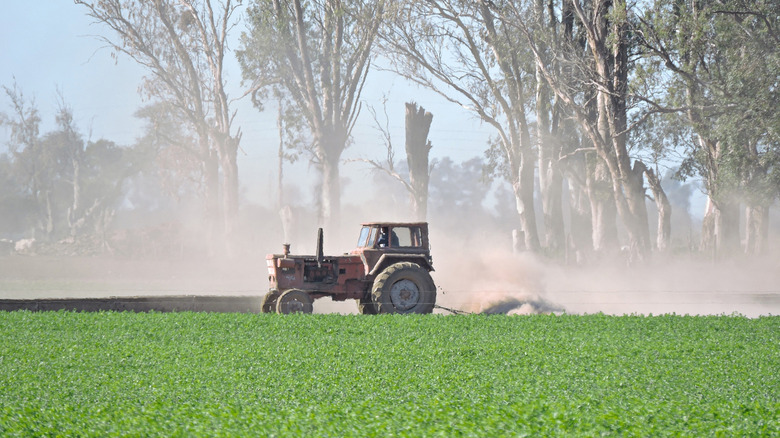
Enter Etson Machaca, a resident of the Bolivian Altiplano. As in many other regions, mechanized farming has sustained his community, which is a problem when fuel is hard to come by. So he took matters into his own hands, building a plant that converts common trash — plastic bags, rubber products, whatever — into usable fuel for farm equipment and vehicles. It's not a major operation, but it's enough to sustain his patch of farmland, and provide sustainable diesel at half the price of the country's average.
One man's trash is another's treasure, literally
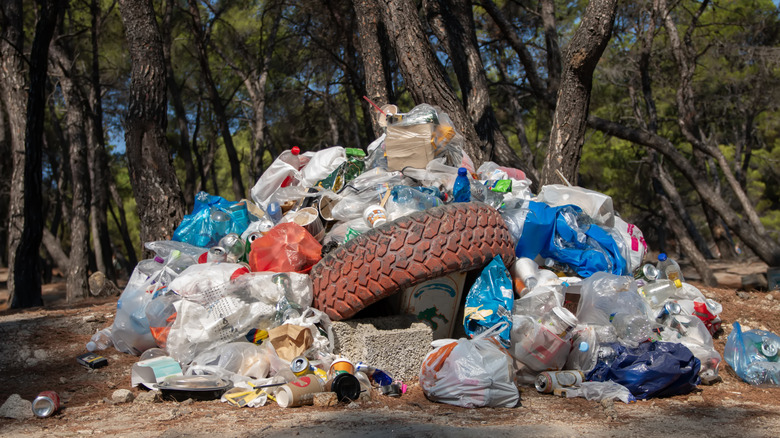
How on Earth do you turn a bunch of plastic bags into usable diesel fuel? It's actually pretty straightforward in principle, thanks to the power of physics.
They say that necessity builds creativity, and this is a classic case. Here we have a farmer who built a plant that uses the principle of pyrolysis — superheating the material in order to break it down into base components, which can then be recycled into fuel. It's a relatively recent development, one which actually shows quite a bit of experimental promise — to the tune of about three-quarters of the total mass becoming usable fuel. The product is called pyrolysis oil, and it mimics the specific density and viscosity of diesel fuel well enough that it'll apparently run in basic stuff like diesel generators and farm equipment.
Diesel fuel is inherently a good starting point for this because of its properties; diesel engines use compression to run, not spark plugs like a gasoline engine. The fuel is inherently denser and less volatile than gasoline, which is why it can be compressed so much. So all you really need is something that ignites at a similar compression ratio and produces enough energy to keep the cycle going, and the engine itself will run fine. That's why diesels can run on vegetable oil, albeit less efficiently than actual diesel fuel and with long-term durability concerns without modification. This fuel will likely produce similar results, though it's still too soon to extrapolate; it's a developing science, and the plant itself is obviously small-scale.
Fueling a community
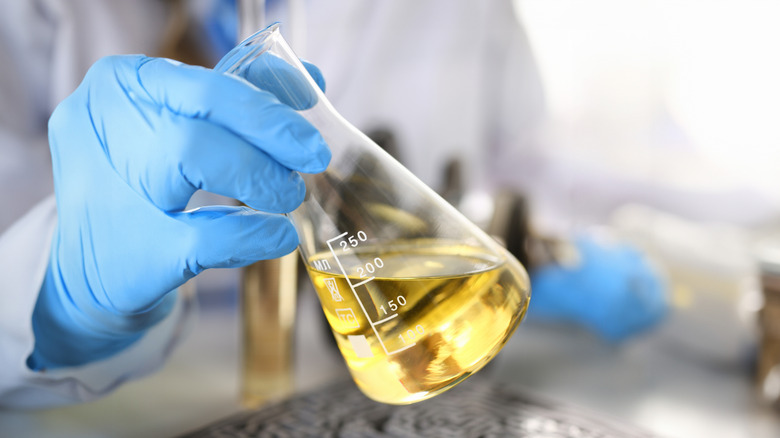
Pyrolysis is a well-understood science, with reactors coming in many shapes and sizes depending on what's being burned and the end product you're looking for. In Etson Machaca's case, it means heating the raw materials without any oxygen present to break everything down — mainly plastic, rubber tires, old oil, and other detritus. This is then processed into usable diesel fuel, which Machaca uses for his agricultural needs.
The Bolivian community, like many farmers around the world, has largely become dependent on mechanized agriculture to sustain its population and generate profit. However, the vast majority of diesel in Bolivia is imported, meaning the global conflicts disproportionately affect places like this. Machaca's solution, from a cost perspective, effectively halves the price of diesel, from about $5.83 per U.S. gallon to between $2.27 and $3.25 per gallon, likely depending on what is broken down and how efficient the processing is. Machaca is not selling the fuel, he is simply using it in his own farm equipment.
Such ingenuity was likely fueled (no pun intended) by the politics in Bolivia today; the country has recently scrapped its diesel subsidy, instead opting to sell diesel fuel at a uniform cost that rises and falls with global averages. As we see more and more scarcity and rising fuel costs worldwide, it's likely that we'll also see a proportionate growth of these kinds of alternatives and evolutions.