

Can Sealed Transmissions Still Be Overfilled?
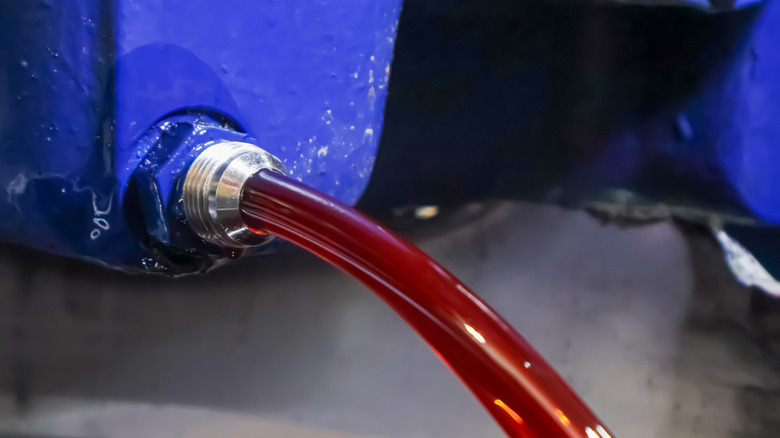
Transmissions are among the single most complicated devices in your entire car, so much so that some manufacturers decided to seal the systems entirely — a decision which is, frankly, one of the most horrible car features in recent memory. It calls into question the principle of right to repair, by making it egregiously difficult for anyone but the dealer techs to do the the repair. Yes, it's actually possible to perform a full service of a sealed transmission, much the same as any other. They work identically, after all, and so they need servicing just the same.
This raises an interesting question, though — there's no dipstick in a sealed transmission. You're technically not even supposed to service it yourself, hence why it's sealed in the first place; even everyman Toyota advertises its sealed transmissions as functionally "maintenance-free." In reality, that simply means that the fluid is designed to last the length of the powertrain warranty. So let's say that's expired, or you do a lot of towing and want to change the fluid because it's going off. Can you overfill it, and if so, what'll happen?
Yes, you absolutely can overfill a sealed transmission. Automatic transmission fluid (ATF) expands when it heats up, and you have more stuff to cool down — transmission fluid heats up fast due to all the working components inside a gearbox. Whether or not it's sealed makes no difference apart from making it harder to fill up in the first place. So, whenever you fill your sealed transmission, do so in increments to prevent overfilling. Let's discuss how it's done.
How to fill up a sealed transmission properly
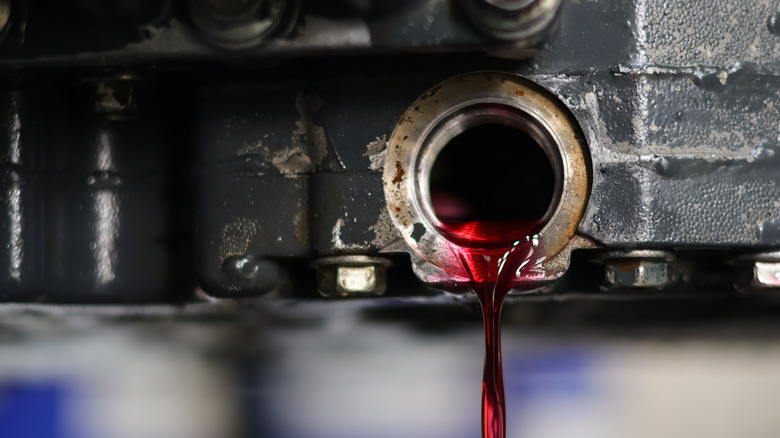
First thing's first — yes, you absolutely need to change your sealed transmission fluid according to the service manual. If you tow a lot, drive aggressively, live in a particularly dirty location, or you notice your transmission overheating or slipping, you should change the fluid even sooner than what the manual advises. Like changing gear oil in a manual transmission, it's pretty common sense to just follow the service intervals, regardless of what kind of transmission you have.
That said, changing a sealed transmission is especially tricky because there's no dipstick. It's not unlike bleeding brakes, in that a full-on flush is the equivalent of constantly getting old fluid out and pouring new fluid in, unless you have specialized tools like a fluid exchanger. You could also drop the pan like you would a car's oil pan, meaning you have to break the seals and undo all the bolts, but that will allow you to inspect everything. If you hear grinding or notice metal flakes in the fluid, you might want to drop the pan for a closer look at any potential damage.
Ultimately, though, actually filling up the fluid is as simple as measuring what came out of it and putting that exact quantity back in. You'll need to run the transmission over and over to flush out all the fluid from the coolant send and return lines, plus the converter, but once it's all out and the new fluid is in, that's it. After that, it's a matter of praying because you don't have a dipstick to double-check your work.
What happens if you accidentally overfill the transmission?
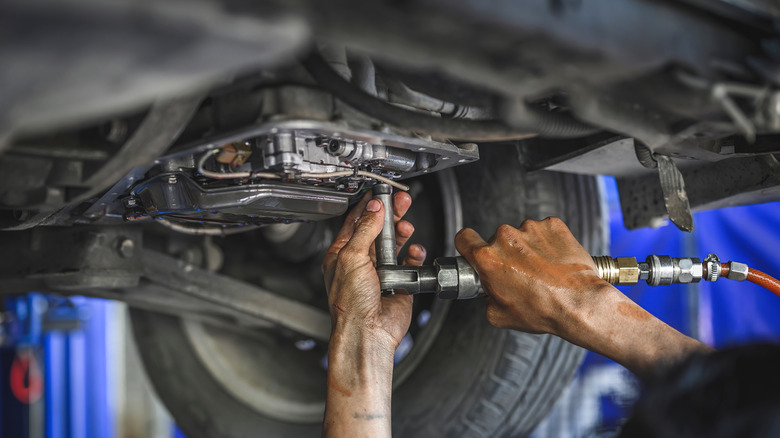
Suppose you do everything right but misread a label or accidentally do something twice — what now? Well, a sealed transmission functions the same as any other automatic transmission, so it'll experience the same symptoms of overfilled fluid. What symptoms are those, exactly?
Transmission fluid acts as a medium by which power is transferred from the flex plate to the gearbox; it interacts within the torque converter to do all this. It also cools your transmission and lubricates the gears, similar to the oil in the engine. If you overfill your transmission fluid, then all of these factors can get affected, oftentimes all at once.
Because there's too much fluid, hydraulic pressure can't fully stabilize — it's like a traffic jam on a busy highway. You'll end up with fluid that's an inconsistent (often too hot) temperature, and the pump won't be able to cycle anything properly. Now the gearbox can't get adequate lubrication and gears start grinding. Counterintuitively, it might seem like everything is underfilled because the fluid isn't getting to where it needs to go. But, going back to the traffic jam analogy, neither does your car in New York City rush hour. Adding more cars won't solve that problem.
If you do overfill your transmission, it's not the end of the world; just flush it again and refill it with the manufacturer's listed amount. If the manufacturer does not list said amount because sealed transmissions are "maintenance-free," then consult a mechanic — specialized service manuals may list such fluid amounts.