

5 Drawbacks Of Pushrod Engines
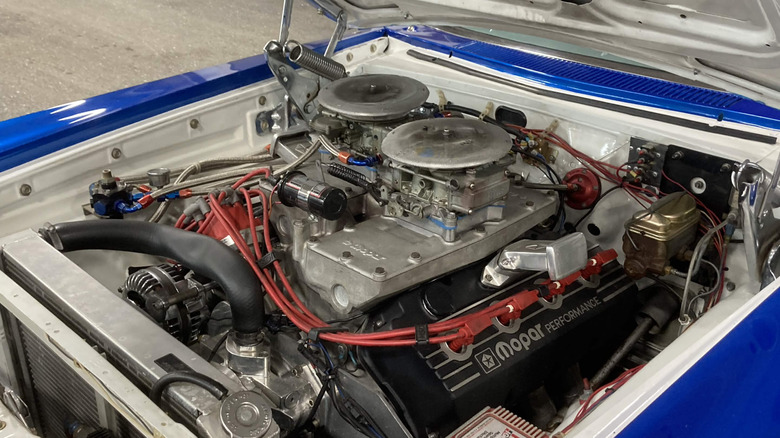
Most automotive engines fall into one of three categories: single overhead cam (SOHC), double overhead cam (DOHC), and overhead valve (OHV). What the heck is all that, though? In short, that's what defines your car's valvetrain — how the fuel gets into the combustion chamber and the exhaust exits. Basically, different engines have different setups, each with distinct pros and cons.
What is an overhead valve configuration, though, and why is it sometimes called a pushrod engine? The OHV design is the only one with substantial pushrods. What are pushrods, though? Okay, imagine a V8. At the bottom of the V, where the crankshaft is, there's another shaft — your car's camshaft. That controls all the valves, located at the top of the V. But how do you get a rotating shaft to move a bunch of valves all the way up there? You have to literally reach up and push on them — that's the job of the pushrod. It's a physical rod that runs through the engine block, moving a valve up and down with the camshaft lobes.
This setup has its own benefits. It's a simple, compact design that favors low-end torque. There are no intricate timing belts or pulleys, so it's relatively easy to work on. But it also has a number of drawbacks, making it a somewhat more niche engine option these days compared to yesteryear. Let's explore a number of these downsides and why they're a thing.
Pushrod engines can't reach high RPMs easily
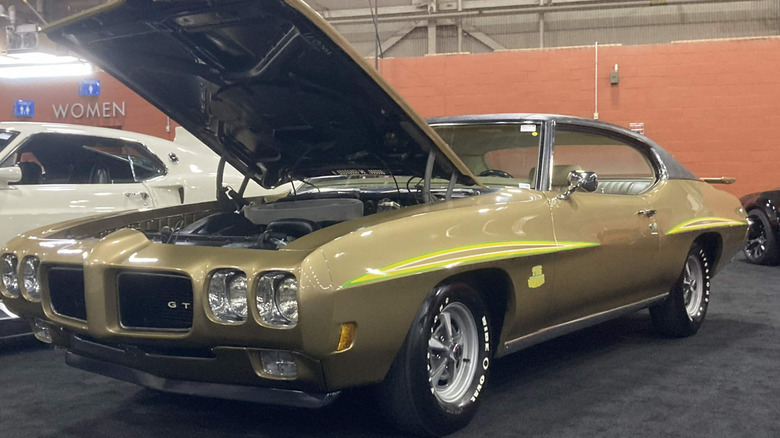
This is a bit of a catch-22 if you're a car designer, because maybe you want something with a little extra grunt. Something like a diesel truck, a muscle car with a traditional V8, or a 4x4 with lots of torque, for example — these are all great applications for pushrod engines because they inherently work better at lower RPMs. But that comes with the trade-off that you simply cannot get higher RPMs out of them without specialized valvetrains to prevent valve float.
The problem is reciprocating mass. In order to get fuel into the engine, you have to open a valve that will then immediately seal back up; this prevents the fuel from going back out of the intake or firing straight through to the exhaust. This airtight seal is crucial to maintaining compression as well, so you need to time your valvetrain to open and close at precise intervals. How do you do that with pushrods, though?
It's relatively easy at low RPMs, where the pushrods and valve springs have time to rebound to their original positions with every revolution. But the faster the engine goes, the more momentum all those parts will have to overcome. At some point, they just won't keep up. The valve will stay open for too long. This is called valve float, and it can downright break certain engines. If your piston hits an open valve, then something's bound to give; you'll either have a bent valve or a hole in the piston head. Neither scenario is ideal if you want your engine to keep running.
Restricted valve count
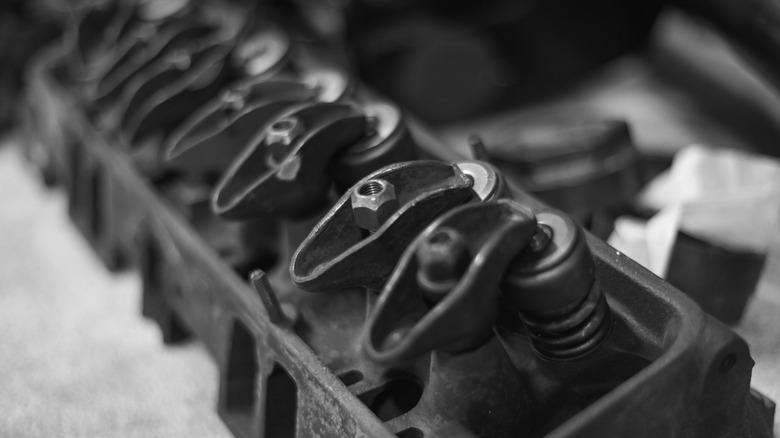
Next question: How do you actually fit the pushrods into the engine block? You need channels on either side of the cylinder walls. The camshaft pushes them up through the channels, and they push down on the valves. Okay, it's a bit more complicated with stuff like lifters — both solid and hydraulic lifters, at that, the former of which are considered archaic. But it's common sense that you need the physical space to fit all this stuff into.
Therein lies the second problem. Suppose you're a manufacturer that wants to build a 16-valve four-cylinder, so four valves per cylinder. You now have a far more complex setup with a lot more reciprocating mass, which leads us back to the original problem of not working well with high-RPM applications. But such a setup is perfect for diesels because of their lower RPMs. Take the 6.6L Duramax, for example — that's an overhead valve design with four valves per cylinder. So it's certainly possible, with multi-valve designs using specialized forked components to actuate two valves at the same time. But it is also more complex and niche than simply running an overhead cam in a passenger car.
The whole idea behind OHV in a passenger application is to keep it relatively simple, inexpensive, efficient, and compact. While yes, more valves have a big impact on your engine's performance, A higher valve count benefits at higher RPMs. To repeat one advantage of pushrod designs, they function best at low RPMs. So unless it's a specialized role like a truck engine, evidently manufacturers believe these drawbacks don't outweigh the benefits.
Lack of advanced variable valve timing features
Variable valve timing is one of those enigmatic features that takes some intuitive thinking to understand. In pushrod engines, the short answer is oil pressure: you use the engine's oil pressure to advance or retard valve timing accordingly. What does this mean? Basically, when the engine is working harder and has higher oil pressure, it'll keep the valves open at a specific time optimized for higher performance. When it's at idle, it'll open the valves at a different time, better for efficiency and low-end torque.
VVT is crucial because it allows automakers to build engines without compromising valvetrain performance. In a fixed configuration, you can either have the valves operate optimally at low, mid, or high RPMs. Variable valve timing lets you have your cake and eat it, too. So why is it that pushrod engines have a hard time with this?
To be clear, much like four-valve pushrod engines, VVT does exist for pushrod applications, most notably in GM's LT-series since 2007. The problem is inherent to a pushrod engine's design — all OHV engines use exactly one camshaft for everything. That means you cannot independently vary the timing between the intake and exhaust valves like you can with a DOHC, which has the benefit of two camshafts, one for each bank of valves. Furthermore, the factory GM LT engine uses a basic VVT setup without variable cam lobes, meaning it can only control when the valves open, not how long they stay open. You'll need aftermarket stuff for that. But it does help the case for why GM continues to use pushrod designs when others have moved on.
More moving parts in the valvetrain
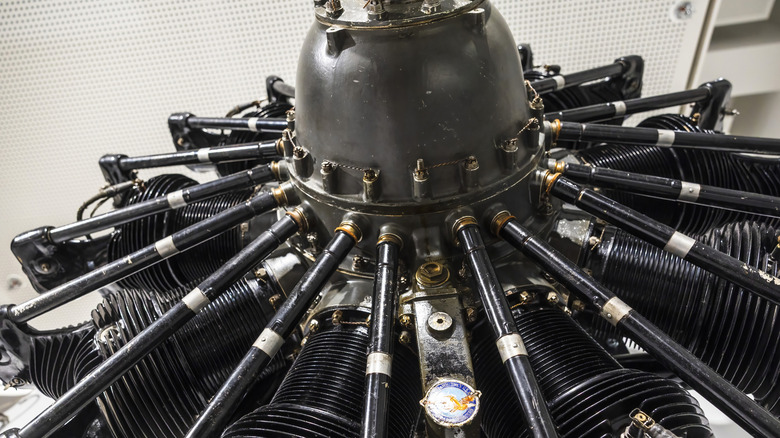
A car's valvetrain is like a complex synchronized dance routine. When viewed in slow motion, it looks like a ballet that can be barely understood due to all the moving parts going up and down and rotating around between the engine block and cylinder head.
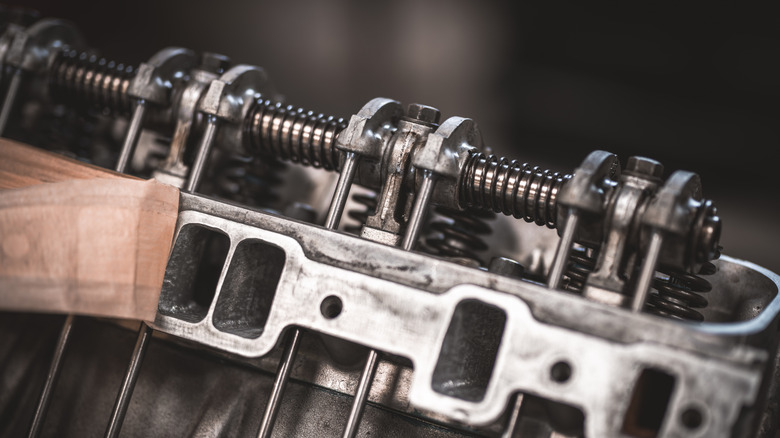
To start with, you have the camshaft, which is driven by a chain running off the engine's crankshaft. The camshaft has lobes in it that act like fingers. When a lobe presses on the lifter, the lifter then acts on the pushrod and shoves that rod up. The rod is connected to a rocker arm, which acts like a fulcrum. It goes down when the rod goes up. That downward motion then pushes on the valve, which opens it up and lets in the fuel-air mixture. Complicated enough yet?
In the simplest terms, you're converting the energy from a rotating egg-shaped thing into an up-and-down motion. To do that, you need to either press directly on the valve itself, which is what an overhead cam design does, or you need some way to mechanically reach up and press it down for you. A great big arm going through the engine — adding a lot of extra steps in the process. Those steps each require individual components. Pushrods, lifters, rocker arms, the cam and chain, valve springs, guides, and so on, all of which need regular maintenance like any other moving part. Overhead cam designs are also complex, granted, but that's mostly because they have intricate timing belts or chains and sometimes two or four camshafts. They don't have pushrods or rocker arms.
Increased failure points
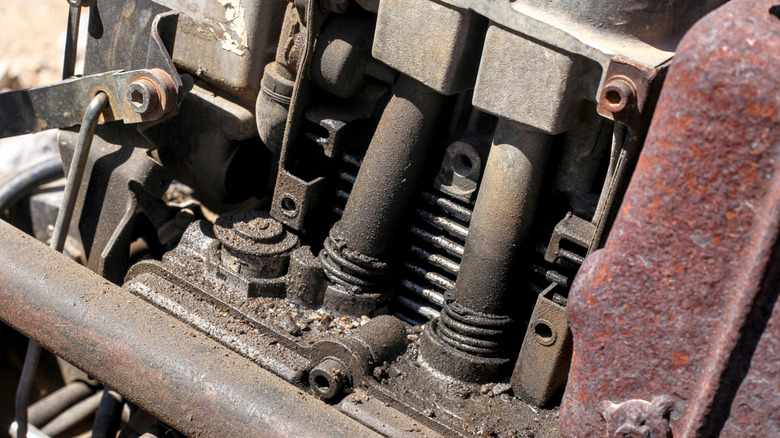
Let's say you turn on your car in the morning and notice a distinct ticking noise, so you open up the hood and hone in on a particular section of the engine block. It's weak, perhaps even developed a misfire, and the idle sounds all wrong. That all points to a bent or broken pushrod.
Pushrods are long metal rods about the diameter of a construction nail. If you're driving a particularly high-mileage car, you haven't changed your oil in a while, or your car overheats a lot, that metal can get bent or damaged. That's because, like anything else that's moving around and made of metal in the engine, it needs adequate lubrication. Metal-on-metal contact quickly builds up heat, and that heat can then warp or weaken a pushrod. Moreover, a bad rocker arm will likely lead to a bad pushrod, since the two are directly tied to one another — a pushrod acts on a rocker arm like a lever to open and close the valve.
Basically, pushrods represent crucial weak points if your engine is overheating and the metal expands, or the oil is bad and you build up friction, and so on. Hydraulic lifters may even stick on, potentially bending the pushrods from overpressure — and that's not getting into lifter tick. In most older engines, you can remove the valve cover and inspect the rocker arms directly — if you see any that aren't moving, or are moving erratically, or are obviously damaged, chances are a pushrod or lifter has also gone bad, too.