

2V Vs 4V Engines: Why More Valves Can Make A Big Difference
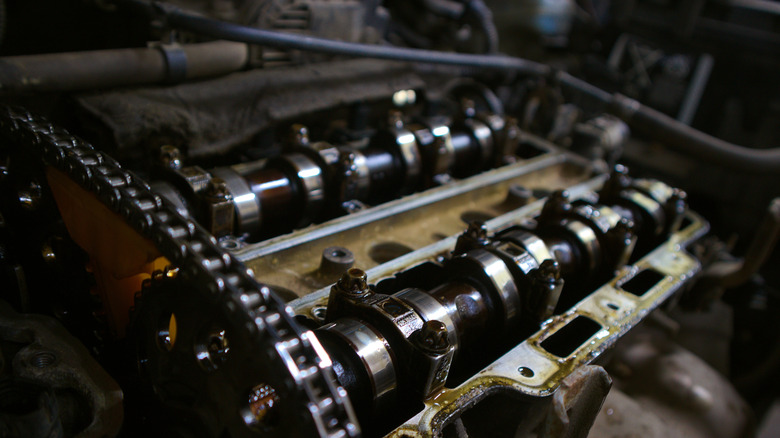
It's common knowledge that your engine is an incredibly complex piece of equipment, though it's still somewhat hard to grasp the complex dance that is your car's valvetrain. The way it all works is clever and simple once you get it; Ahmed Afifi on YouTube has posted a great, basic animation of a double-overhead cam four-valve system to get you started. You'll notice these valves move together in pairs, why is that?
Well, your valvetrain is split into two distinct parts — not the engine block and cylinder head, that's a different distinction. The first is your intake valve, which opens and lets the air and fuel into the engine. The second is the exhaust valve, which lets the burnt gases out through the exhaust. Think of it like a series of two doors. The first door opens and lets a worker in (that's your fuel/air mixture). The worker does their job, then once the job's over, they're all exhausted. So they leave via the exit door and go home. That's how the valvetrain works.
The next question, then, is why are some cars two-valve, while others are three, four, or even five-valve? Let's keep it simple and stick with four valves, two for the intake and two for exhaust. Such a system comes with numerous benefits and deficits. More moving real estate means more airflow into the engine, so more valves is more high-end performance.
However, more valves also means a more complicated valvetrain, and two-valve setups tend to do better in torquier pushrod applications. Some four-valve engines also inject more fuel into the cylinder at one time, leading to higher fuel consumption. There's a host of pros and cons for each, along with different applications, so let's explore both in-depth.
A closer look at the two-valve engine design
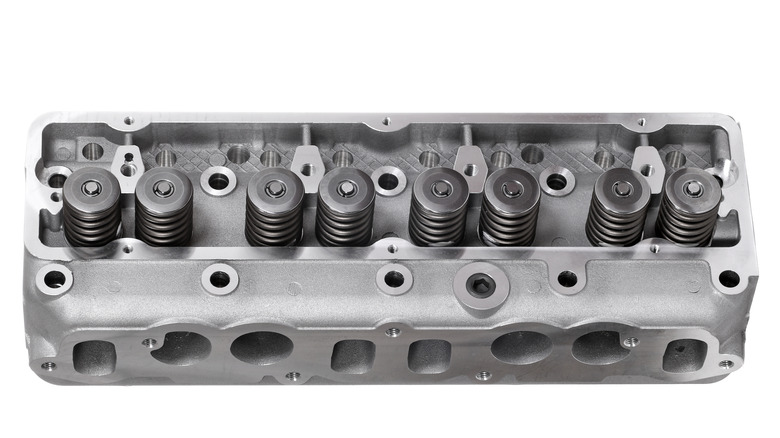
For simplicity's sake, let's start off with a basic two-valve configuration. These are typically found in your common pushrod (OHV, or overhead-valve) and single overhead-cam (SOHC) engines, as opposed to dual overhead-cam (DOHC) designs for four-valve layouts. You'll typically find two-valve engines in classic cars and basic daily drivers; their mechanical simplicity offers several tangible benefits over a more expensive and intricately-built four-valve head.
There aren't many specific advantages to a two-valve design apart from this simplicity, however, at least in today's engines. Yesteryear's engines are a different story, though. Early four-valve head designs could move more air at once due to a greater valve surface area, yes. But that air moved slower, which meant it wasn't as good in lower RPMs. Picture this — open your mouth really wide and try to blow as hard as you can. There will be a lot of air, but it won't move as quickly as if you closed your mouth a little more.
That same principle applies to a two-valve engine design. Let's say the piston isn't moving quickly enough to draw in enough air because you're rocking four valves and the intake airflow is too slow. That means you won't be burning enough air and your car will run rich at low RPMs. That's the benefit of a two-valve; stuff like diesels or an undersquare gas engine — that is, an engine with a higher stroke versus its bore — will get adequate air at the low RPM range, perfect also for city driving.
How a four-valve engine is better or worse
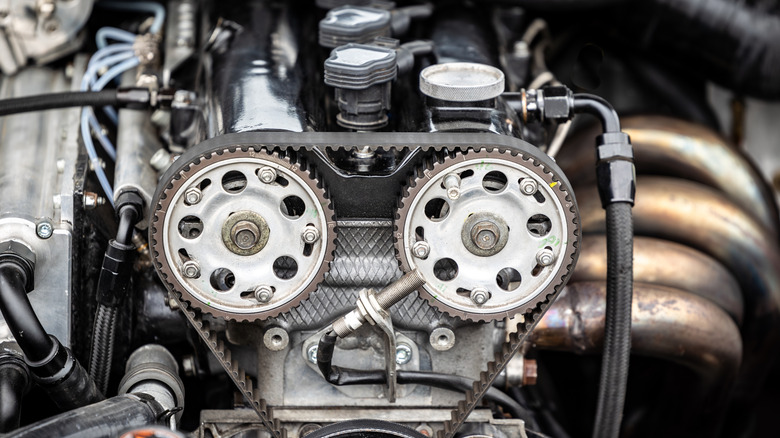
Modern four-valve intake design has evolved considerably since the old days, with this problem largely eliminated from all but more specialist applications. Innovations like variable valve timing and advanced intake manifolds help offset the low-RPM air starvation problem, and the expense dilemma is largely offset by common mass-production of such designs. That said, there are also numerous advantages inherent to four-valve setups regardless of all that.
For one, these engines do better in higher RPM ranges. When the engine can pull in all of that air and expend it just as quickly, it helps to maximize the surface area you have available. You're simply filling in more space in the cylinder head with valves, and you can arrange those valves in more intricate ways.
Moreover, more advanced technology can benefit from that increased airflow. Aside from the variable valve timing, you also have more accurate computer-controlled ignition with coils, as opposed to the distributors of old. Then you have systems like fuel injection, which dramatically improve what you can do, because you're mixing the fuel far more precisely, sometimes on a per-cylinder basis with stuff like direct injection, as opposed to doing it all in one or two carburetors.
In short, valvetrain and fuel mixing technology has advanced leaps and bounds in the past half-century. Today's technology effectively offsets most of the downsides of multi-valve setups, save for expense and simplicity, in regular modern cars. However, two-valve and pushrod engines still have a variety of applications, most prominently on classic cars and modern muscle cars, like Gen III Hemis with their 16 spark plugs.