

4 Drawbacks Of Mid-Engine Sports Cars You Should Consider Before Buying
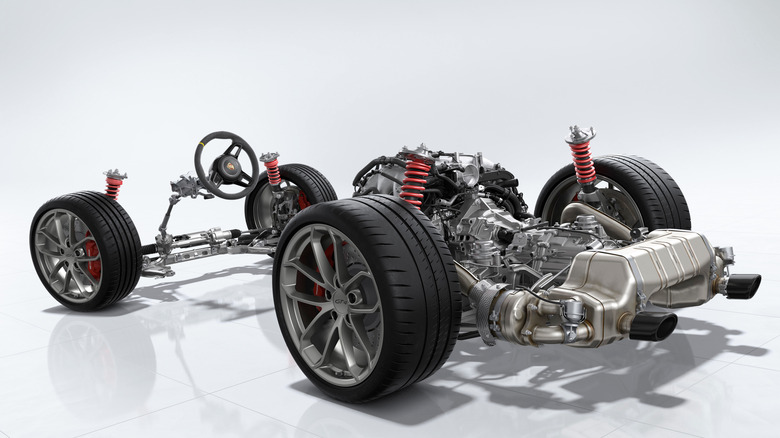
Mid-engine sports cars, which place their engines behind the driver and ahead of the rear axle, have acquired a legendary status because of the positive attributes they are reputed to have, compared to cars with a front-engine or rear-engine engine layout. We have covered this topic before, but like all things automotive, every option has its pros and cons.
There are many advantages to mid-engine cars, which include improved acceleration through increased traction, less understeer than a front-engine vehicle, and improved handling responsiveness thanks to a lower center of gravity and having the car's mass concentrated near its center. But the very things that create these benefits also cause some major downsides, which you would do well to consider before purchasing a mid-engine sports car of your own.
We'll make our way through these mid-engine drawbacks, one at a time, so you'll have a fuller understanding of the compromises you may need to endure in exchange for the driving nirvana that comes with the acquisition of a mid-engine car.
Passenger space limitations
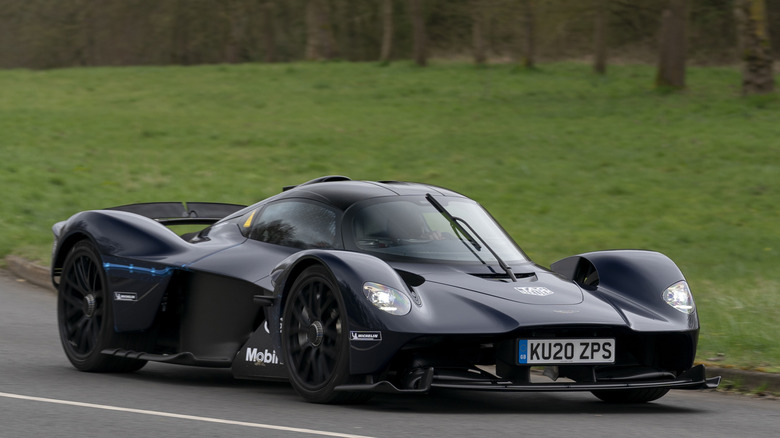
There are not many modern mid-engine cars that will seat more than two people, with the possible exception of the $1.7 million-plus Koenigsegg Gemera, a 2,300-horsepower megacar that seats four comfortably. There have been some 2+2 mid-engine configurations developed during the 20th Century, including the Lamborghini Urraco, the Ferrari 308 GT4 and Mondial, and the Maserati Merak. Unfortunately, their seating arrangements in the wayback were typically cramped and unsuitable for adults.
This is largely due to the fact that in a mid-engine sports car, the engine sits right behind the driver, where the rear seat would normally be. Adding a rear seating area would normally involve stretching the car's wheelbase, which is what was done to allow four people to fit comfortably into the Gemera. Another way to fit some extra seating into a mid-engine car is to position the engine transversely, or sideways across the car, which helps it take up less space. Either way, the addition of a rear seating area ends up making the car longer, compromising the dynamic performance aspects that you were presumably after when you decided to buy a mid-engine car in a first place.
This helps to explain why most mid-engine cars are best enjoyed by two people, who should ideally like being in each other's presence. A modern mid-engine car typically places its two occupants right in front of a multicylinder powerplant making all the right mechanical noises. This layout may not be great for maximizing the number of people you can carry, but it tends to be ideal for performance.
Storage space limitations
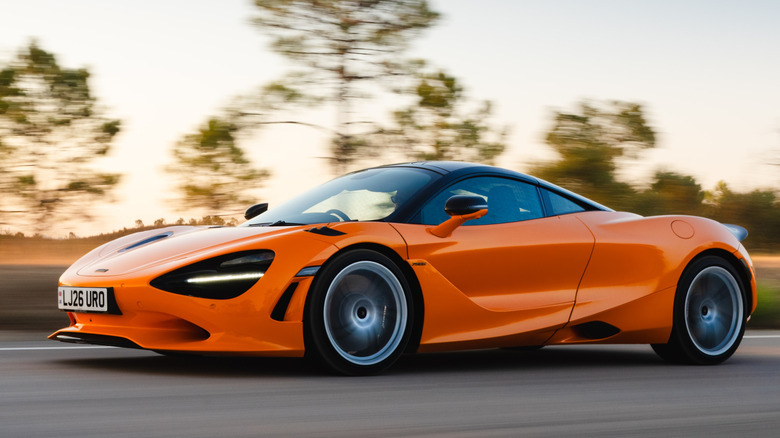
Unlike a normal car that has a back seat, your average mid-engine car simply doesn't have one. This means you can't throw your stuff back there when you drive it. And depending on which mid-engine vehicle you're considering, you may or may not get much storage in either the rear trunk or the frunk, which can be very large on sedans like the Lucid Air.
However, with the need for most mid-engine cars to display swoopy, aerodynamic styling in the front, while housing a heavy-duty cooling system that needs to keep its high-performance engine from overheating during hard acceleration, there may not be much room left in the front for storage. The amount available for rear storage varies greatly among mid-engine cars, starting with the very low 0.4 cu. ft. of storage space in the current Ford GT, which has no frunk and a very tiny space for cargo located behind its engine. Then you have the McLaren GTS, which has been designed for people who expect to travel long distances in their mid-engine car. The McLaren GTS can actually carry a set of golf clubs (and not much else) behind its passenger compartment. So consider your options.
Ultimately, with a few exceptions like the McLaren GTS, mid-engine sports cars are not designed to transport you and all of your baggage to your vacation destination. That's a job best left up to your high-performance SUV. What sports cars like these really excel at are getting your heart racing as you pilot one along your favorite winding road, enjoying its incredible handling.
Engine access limitations
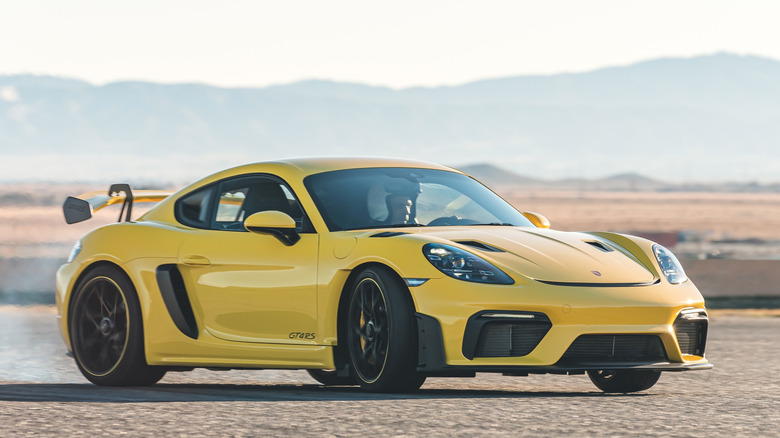
The maintenance and upkeep of a mid-engine car tends to cost more than a car with its engine in the front. This is largely because of where the engine resides, which is between the cockpit area and whatever rear trunk space exists. This makes access to the engine compartment and all of its components tougher, which directly equates to higher labor costs, whether it's at the dealer or at an independent shop. And that's on top of whatever your Porsche, McLaren, or Aston Martin shop already charges for its services. In spite of this, there are some mid-engine cars among our list of supercars that are unexpectedly cheap to maintain.
On the other hand, if you are seriously into doing your own maintenance and wrenching on your mid-engine sports car, you may want to reconsider your choice of engine placement. Know going in that everything you do on a mid-engine car will be more difficult and will definitely take longer, thanks to these issues. You will be working in cramped quarters, with minimal space around the engine to work in. In addition, many mid-engine cars don't give you access from the top — unless you remove the panels covering the engine. For instance, accessing the top of a Porsche Boxster's engine requires you to put the convertible top into "service mode," remove the rear cubby and the carpet panels, then detach and remove the cover over the engine. However, procedures like changing the oil and replacing the spark plugs must be done from the bottom, making a lift helpful.
Handling compromises at the limit
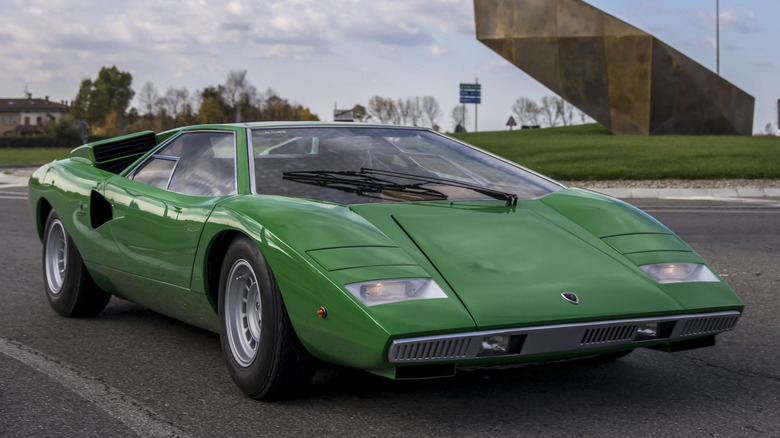
Mid-engine cars are well-known for their exceptional handling abilities and are some of the fastest sports cars ever built. Having the engine in the center of the sports car gives it a low polar moment of inertia, meaning that it can very easily change direction, compared to a front-engine or a rear-engine sports car that has its engine placed at one end of the vehicle. This is because the majority of the vehicle's mass is placed between its axles.
However, this ability of a mid-engine car to be extremely agile can cause problems at its limit of adhesion, such as when the tires reach their maximum levels of grip, or in rainy or snowy conditions. If a mid-engine car begins to spin, it can be very difficult to bring it back under control, something which can also be attributed to its low polar moment of inertia. In other words, once a mid-engine car starts to spin, it wants to keep spinning, unlike its counterparts that have their engines placed at one end or the other. In a mid-engine car, it becomes much more difficult to get your traction back once you lose it.
Sports cars with their engines placed in the vehicle's center are renowned for their pure design, their performance, and their handling qualities. But they also come with limitations, in terms of space for their occupants, cargo capacity, restricted engine access, and their handling when you push the car beyond its normal limits. Keep these drawbacks in mind before you commit to the purchase of a mid-engine car.