

10 Car Parts You Might Never Have To Replace
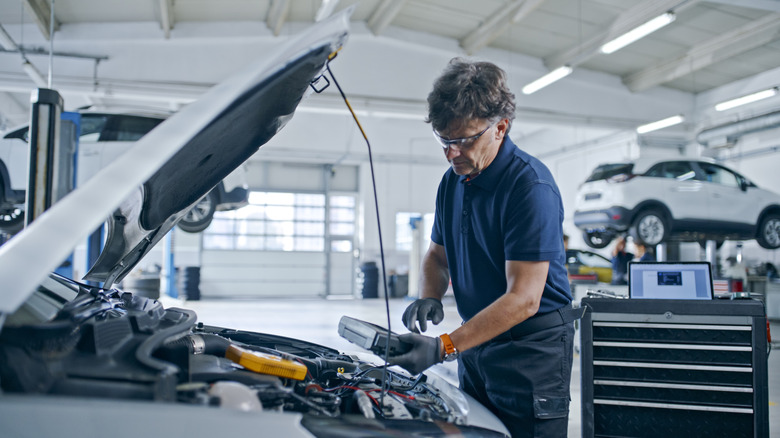
Your car is a complex machine made up of many small parts, each performing a specific, interconnected task. When they work well, you can drive with few issues, but keeping these parts well maintained and functioning properly is key to keeping everything running. If one part fails, it can cause a knock-on effect on other components.
However, some parts don't require as much thought as others because they last a long time. Each part eventually breaks down, but you might never need to replace some. We've highlighted 10 car parts you might never have to replace. You still need to maintain these parts properly to make them last as long as possible. Here are the 10 car parts you might never have to replace.
Engine block
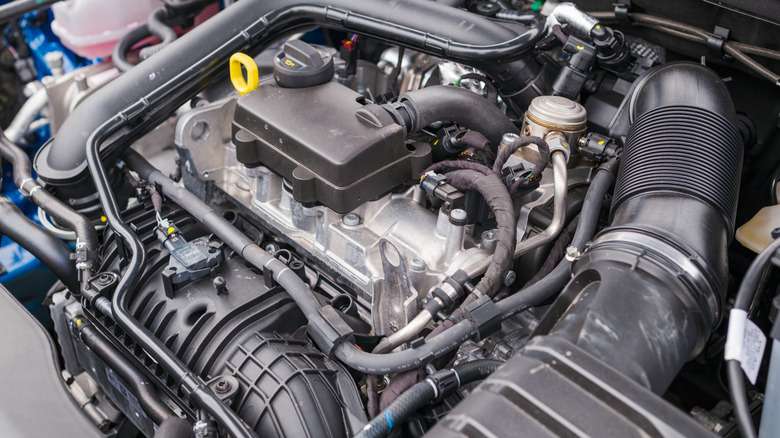
One part you shouldn't have to worry about replacing is your vehicle's engine block. The engine block contains the cylinders and components that power your car's engine, allowing it to start and run. It's a crucial part that's designed to remain intact throughout a car's life. Without it, your car won't run.
An engine has many smaller parts, like the pistons, valves, spark plugs, and more. These parts can break down before the larger block does, but they are easier to replace. Still, you shouldn't have to worry about an engine block failing until you get closer to 200,000 miles, potentially even 300,000, if you take care of the engine and replace or regularly have these parts checked while you own the car.
You might know your engine is having trouble if you see blue-grey exhaust when you start it, or if the engine overheats, which you might see on your dashboard. An engine block is extremely costly to replace. If you do have to replace it, you're looking at over $6,000 for a new one, or closer to $4,000 for a remanufactured one.
Car frame
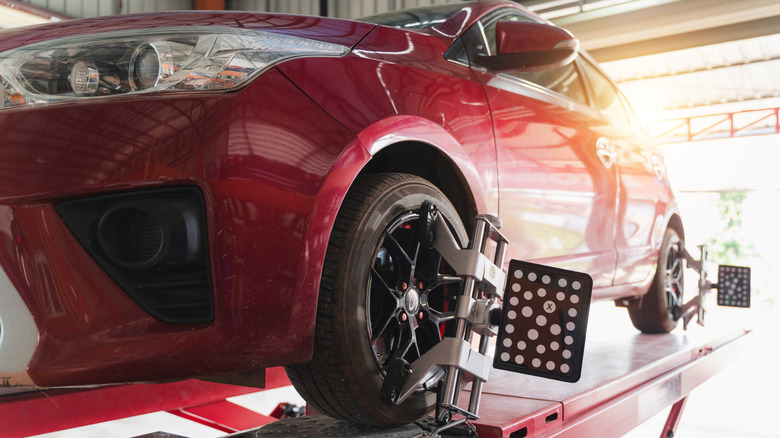
The car frame acts as the skeleton. Sections can rust or need replacement, but the frame itself should last until you retire it or sell it. You can try to repair rust on your car frame, but it depends on the type of rust.
If you're in a bad accident and the frame is no longer sound, it's typically better to scrap the vehicle. Throughout the car's life, you might have to replace the hood, doors, trunk, or even the roof if it takes damage from above.
Some frame damage can be minor, and you may be able to repair it if it's not too severe. You can tell your vehicle's frame needs a look if you notice unusual tire wear, panels or parts don't fit properly, the steering pulls in a specific direction, or you hear strange noises while driving.
Transmission
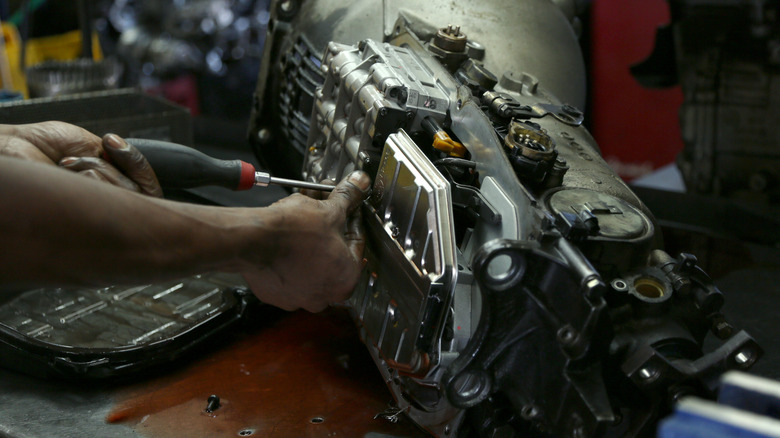
The transmission is essentially your gearbox. It takes the energy the engine creates and delivers it to the axles and wheels, letting them move and letting you drive. Without it, your car won't function, even if the wheels and engine are working fine.
Transmissions have an exceptionally long expected lifetime, close to 200,000 miles, but with proper maintenance, you shouldn't have to worry too much about it. The same goes for automatic transmissions. That means draining and replacing the fluid, cleaning the transmission pan, and replacing the gaskets and filters when needed. You should expect to refill the transmission fluid every 50,000 to 60,000 miles, on average. Check the dipstick to see if it needs a change.
You'll know the transmission is having problems if you notice grinding, rattling, or clunking in the clutch disc, or if you hear chattering when you press the clutch down. The transmission is the second most expensive component to replace or rebuild, next to the engine block. If you need a new transmission, it may be time to decide whether it's worth replacing it or buying a new vehicle.
Seat belts

An easy-to-overlook car part is the seat belt. They are designed to keep you in your seat in an accident, protect you from being thrown forward, and help keep you from being hurt by airbags during a collision.
A fully functioning seat belt should have a strap across your pelvis and a strap across your ribcage, centered on your chest and away from your neck. The bottom strap should cross your hips, not sit below your stomach. If a seat belt is damaged to the point that you can't keep it strapped like this, you'll likely need to replace it. Belts are tough, though, and most need only a quick clean.
Car clutch

A car clutch connects and disconnects power from the engine to the transmission, letting you shift gears while driving. An automatic vehicle does this without a pedal, but a manual requires you to do it yourself each time you change gears. It's a part of a car that should last a long time; however, it may require maintenance or replacement if you don't take care of it.
To help your car's clutch last longer, focus on good driving habits: use the clutch only when you need it, and don't ride it. Avoid putting too much pressure on the clutch, such as using it when you don't need to or shifting gears too often. Rapidly changing gears can cause unwarranted wear on this component. You can tell your car's clutch needs replacing if it struggles to change gears or the clutch slips.
Crankshaft
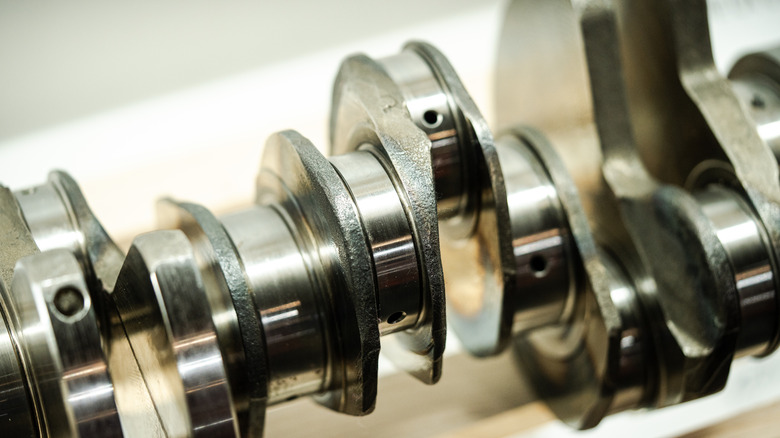
The crankshaft and the camshaft are different. The camshaft controls the valves, while the crankshaft converts the pistons' up-and-down motion into the force that drives the car's wheels.
The crankshaft is a part of your vehicle's engine that's expected to last the entire time you own it. However, it can fail before you're ready to stop using the car. You can extend its lifespan with proper maintenance, including regular oil changes, cooling system checks, and prompt repairs for any issues you notice or that a mechanic recommends. Neglecting these parts can cause crankshaft failure, forcing you to replace it. Still, a crankshaft can last anywhere from 150,000 to 300,000 miles.
You can tell your vehicle's crankshaft is failing if oil pressure drops, you find metal shavings in the oil, you hear a deep knocking sound when you're running the engine, or the engine misfires.
Car starters

When you turn the key or press a button to start it, the starter brings everything to life: it cranks the engine and starts combustion. There's no set distance a car travels before a starter goes bad, so you can't expect to replace it after a certain number of miles. Instead, it's more like how many times you've used the starter.
If you start your car more often and don't drive far, you're more likely to need a new starter than someone who takes longer drives and uses the starter less often. A starter can last longer if you take longer drives and use it less often, but engine problems can also cause issues.
You'll know a starter has gone bad if you hear clicking or grinding when you start your vehicle, or smell an unusual odor when you start it. A bad odor can indicate overheating.
Alternator
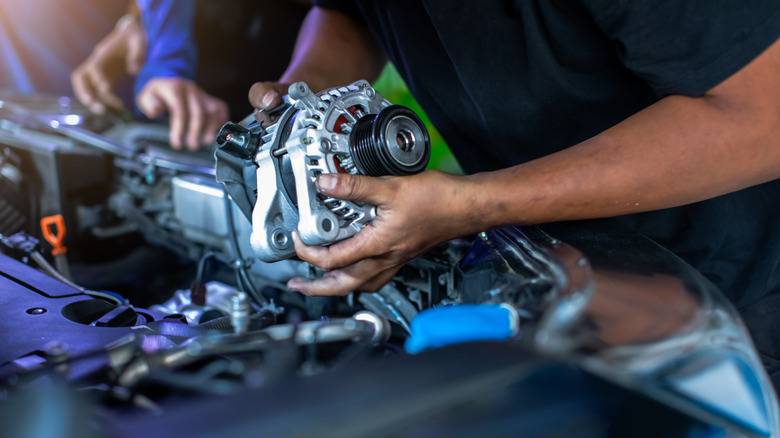
A vehicle's engine and battery bring it to life, but the alternator converts the engine's mechanical energy into electrical energy. That electrical energy powers your vehicle's electronic systems and recharges the battery while the engine is running. It's basically a generator that gets mechanical energy from your car's pulley, which is driven by the engine belt. It's a crucial component you need for those key systems to work.
The alternator is one of the longer-lasting parts of your vehicle, but it may need replacing around 150,000 miles. You can help extend its life by keeping your car battery in good condition, balancing the electrical load inside your car, and replacing any worn belts or components it shares with the engine. If you maintain these parts and replace them when needed, the alternator could last much longer.
Keep an eye out for signs it's starting to fail, though. There are three signs that your alternator is bad. These include electrical glitches on your dashboard, grinding or whining noises from the engine, or a battery warning light on your dashboard.
Side and rearview mirrors

Your side and rearview mirrors are parts of your car that you use every time you drive. They help you see around you while you're driving, making it easier to turn and avoid hitting other cars. They are crucial for safe driving, and you don't want to go without them.
These mirrors don't have a replacement timeframe or mileage limit. Instead, they last until you're done with the car, but stray rocks can cause surface-level damage. They might also get damaged or need replacement in an accident, especially the side mirrors rather than the rearview mirrors. Still, these are fragile items attached to your vehicle, and they don't have the same durability as other pieces, like your car's frame.
Some cars no longer have rear-view mirrors and instead use cameras. These are common in more modern vehicles, but they can still be damaged and need replacement. If a mirror needs replacing, ordering new parts is fairly common, and with the right tools, you can do it yourself without making a mechanic appointment.
Front and rear differentials
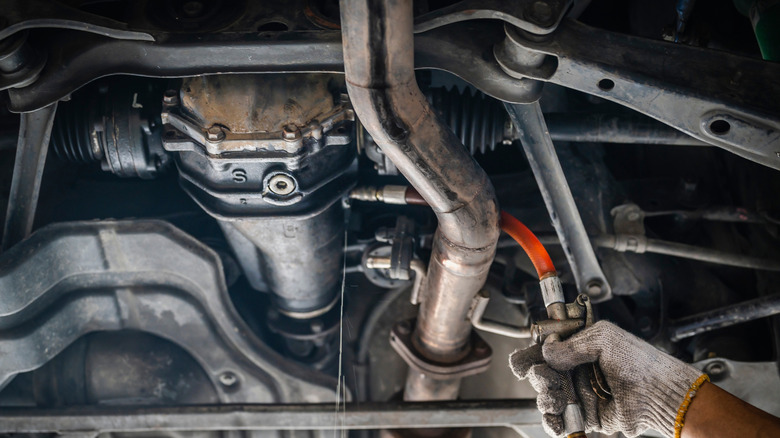
The differentials distribute the engine's power to the wheels. They provide the final gear reduction before the power reaches the wheels, slowing the transmission's rotation. Your wheels move at different speeds, and when you turn, the differentials send the right amount of power to the correct wheel.
Your car's differentials should last close to 150,000 miles. However, they can last longer if you properly take care of them. A key way to keep them working well is to replace the differential fluid every 30,000 to 50,000 miles. Because differentials distribute engine power, they constantly move and rotate while you drive. They need lubrication to work properly, which is where differential fluid comes in. Replacing it with good-quality fluid keeps both differentials working effectively.
Look for signs your differentials are failing. You may find leaking fluid underneath your car, a whining or grinding noise when you accelerate, unusual vibrations at speed, or poor handling when you try to drive in a straight line.