

What Would Change If You Switched From Conventional To Synthetic Oil?

You have plenty of options when it comes to oil changes, whether you change your oil yourself or have a professional do it. There are dozens of different brands, each one with different numbers, manufacturer and mileage specializations. One question you'll see pop up time and again is whether to use conventional or synthetic oil. Of course, which oil your car accepts is one thing, but let's say you have a car that's been running on conventional for however long, then you decide to splurge and go for a full-synthetic option. What'll happen, if anything?
The answer to that question, like anything else when it comes to automotive maintenance, depends largely on the car and what you use it for. Several factors will change, but the most pertinent to the end user is the service interval — synthetic oil usually carries a longer lifespan than conventional, so you don't need to change it as often. It'll also likely take some time to work up to those extended changes; synthetic oil has various additives that help break up a lot of the buildup in older, higher-mileage engines that used conventional oil, so expect to see dirty oil for the time being.
However, there are some cars where the manufacturers strongly advise against using any synthetic oil, period — most prominently being Mazda Wankel engines. Other times, it seems like your car doesn't "like" the synthetic option for whatever reason — oil pressure issues, dirty oil, and so on. Let's discuss why that happens and if it's actually bad for your engine.
Why would you switch over to full synthetic?
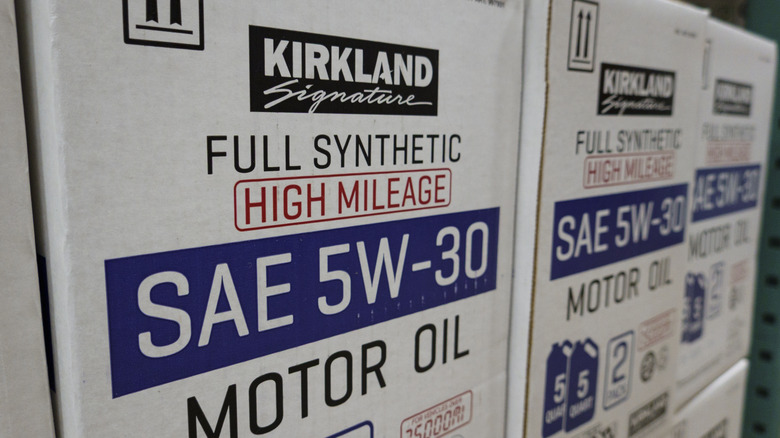
As anyone who's ever bought oil can tell you, full synthetic is expensive, especially when you get into the higher-end stuff. So if your car was rated by the manufacturer to accept conventional oil, what's the point of going synthetic in the first place? The key here is additives. Think of it like a person getting older and getting a lot of cholesterol buildup in their arteries. So they're prescribed a medication to help break that up, in addition to the usual diet and exercise changes — that's basically what these additives do.
As an engine gradually wears, it'll build up layers of carbon deposits, generally from things like unburnt fuel, and oil that snuck past the piston rings. This affects the geometry of the combustion chamber, harming fuel efficiency and power, and eventually damaging valvetrain components. Oil that breaks down easier at higher temperatures, or has lower viscosity than the recommended level, can create this buildup.
A lot of synthetic oils, meanwhile, feature specialized detergents designed to break up all that; the net result being that you have better protection for older engines in classic cars, which can be more susceptible to carbon fouling. Moreover, because synthetic oil is man-made, its molecules are inherently more stable. That means it's better at handling cold temperatures without thickening, and hot temperatures without thinning or burning. So depending on where you live and how hard you drive, a synthetic oil may disproportionately affect your car more positively than it otherwise would, just because of its properties.
Are there any reasons not to switch to synthetic?

Let's play devil's advocate, considering it's easy to sing the praises of synthetic — what about conventional oil? Ultimately, outside of niche applications, synthetic oil is simply a better product in almost every way, save for how expensive it can be. It protects the engine more consistently, has better additives, and is more widely applicable than conventional thanks to its stability. That said, if your car accepts conventional just fine, there's no immediate need to switch over.
Some people report disadvantages such as increased risk of leaks or clogged filters in older engines, but ultimately these are more to do with maintenance (or lack thereof). Engines with a lot of carbon buildup that have these chunks dislodged will see oil pickups get clogged with carbon fouling, requiring periodic cleaning. Similarly, engines with bad seals will let synthetic sneak by, and these additives don't burn well, creating more buildup.
That becomes a problem with oil burning engines, like two-strokes (they use their own formulations) and Wankel rotaries — yes, they need regular oil changes, too. Wankel rotaries are the only modern engine design that deliberately injects oil into the combustion chamber, meaning you need specific oil that works well in those conditions. Some have had success with certain synthetic oils, such as Royal Purple, but Mazda recommends high-quality mineral oil in high-performance applications like the twin-turbo 13B found in the RX-7. In short, not every engine is created equal — be sure to check if you're not sure yours will accept (or even need) synthetic oil.