

12 Classic Tech Inventions From The 1970s That Shaped The Modern World
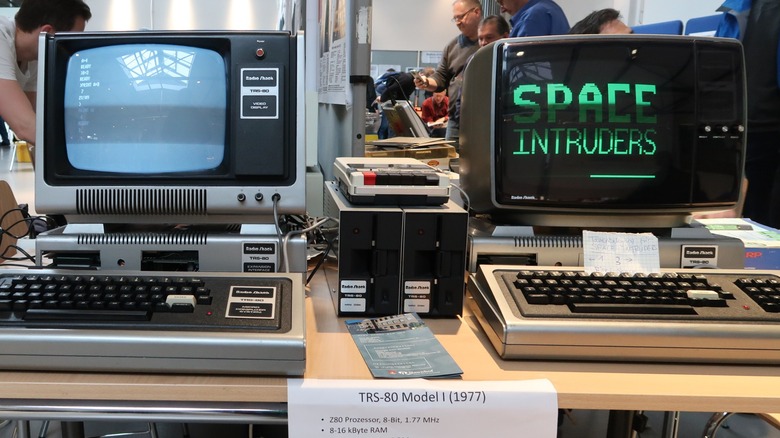
Today, we take all kinds of technological advances for granted, as they've been a part of our lives for a long time. While your latest iPhone and the Nintendo Switch 2 are relatively new products, they owe their existence to the devices that preceded them. Your phone, which you may be reading this article on right now, is the end result of technological advances dating back decades, with some going back to the 1970s.
You wouldn't think that while looking at your phone, but the incremental technological gains that resulted in today's technology began long ago. In fact, you can highlight some tech inventions from the 1970s and draw a line right to what you're holding in your hand, which is fascinating considering how ancient '70s tech seems by comparison. The decade had plenty of great innovations in a number of areas, including telecommunications, video games, displays, cameras, and much more, many of which younger generations may not be familiar with.
Whether it's your phone, your laptop computer, your car, or anything else you interact with daily, there's a good chance that it can be tied back to '70s tech, which makes the decade that gave the world disco and "Star Wars" one of the most important of the 20th century. Here are 12 classic tech inventions released between 1970 and 1979 that helped shape the modern world.
LCD
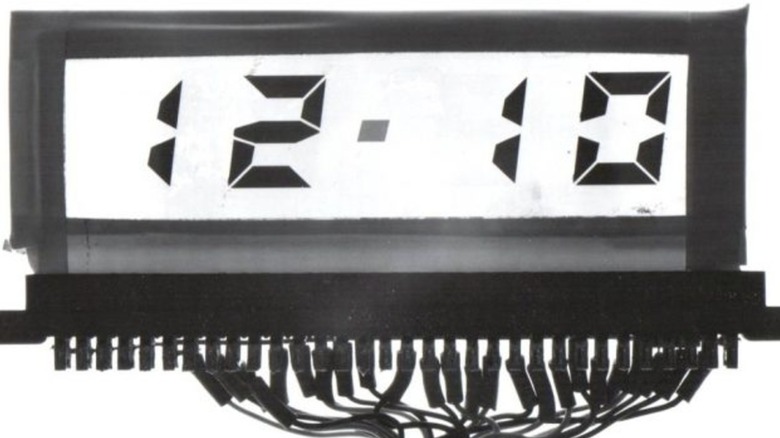
A key innovation came in 1970 with the invention of the twisted nematic liquid crystal display (LCD) by American inventor James L. Fergason. He filed a patent for his new technology the following year, and his design quickly became one of the most important advancements in display tech in years. Initially, LCDs were used in a variety of technologies, but before long, they became the standard for digital quartz watches. In the beginning, LCDs were low-resolution displays with very limited capabilities.
As time passed, the technology evolved, and what began as a means of displaying simple numbers on watches or other small devices became a mainstay of display technology. Researchers refined their understanding of how electric voltage influences the orientation of liquid crystal molecules, which helped transition LCD technology into modern display tech. There's a good chance that you're reading this article on an LCD monitor of some type if you're on a computer.
Modern LCDs are significantly enhanced when compared to the technology introduced in 1970. They are thin, bright, compact, and energy-efficient displays that you can find in laptops, computer monitors, and televisions; in fact, most TVs sold as "LED TVs" are LCD TVs with LED backlighting. Instead of being limited to monochrome, LCDs today can display millions of colors, but much of it started in 1970 with technology that was comparatively simple, which just goes to show how technology can evolve over the decades as it finds more widespread usage.
Microprocessors
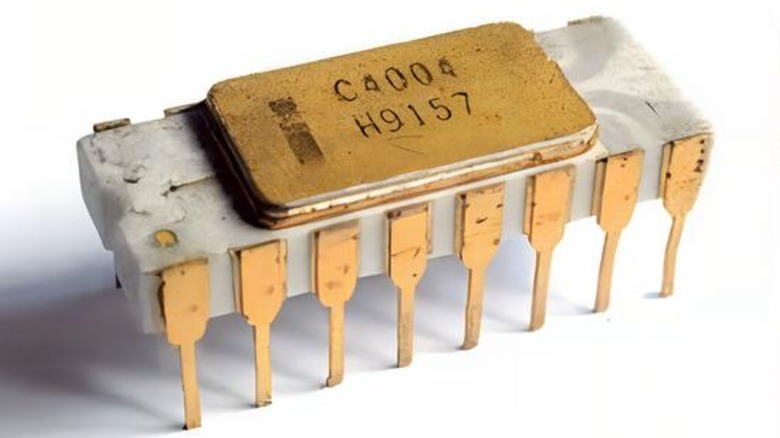
Perhaps the most important invention of the 1970s was the microprocessor. Before it came along, a computer's processing functions were spread across numerous integrated circuits and circuit boards, making computers large and impractical for use outside of an office or research facility. The microprocessor, which hit the market in 1971 via the Intel 4004 (pictured), completely changed computing technology by making it smaller and far more efficient than what was previously available.
Once the microprocessor was introduced, it took little time for the personal computer to follow. The first commercial computer that utilized a microprocessor was the Micral N, which was introduced in France in 1973. The Kenbak-1 is often recognized as the first personal computer, but it didn't feature a microprocessor, which is why the French Micral N is considered to be the first microprocessor-based personal computer. In 1975, one of the most important PCs hit the market in the form of the Altair 8800.
Regardless of which came first, PCs as we know them today wouldn't exist were it not for the introduction of microprocessors. The earliest of these, the Intel 4004, packed the core components of a CPU onto a single integrated circuit, which streamlined computer design. Nowadays, microprocessors' transistors are measured in nanometers, which is how a smartphone small enough for your pocket can hold an entire computer.
Computer Space
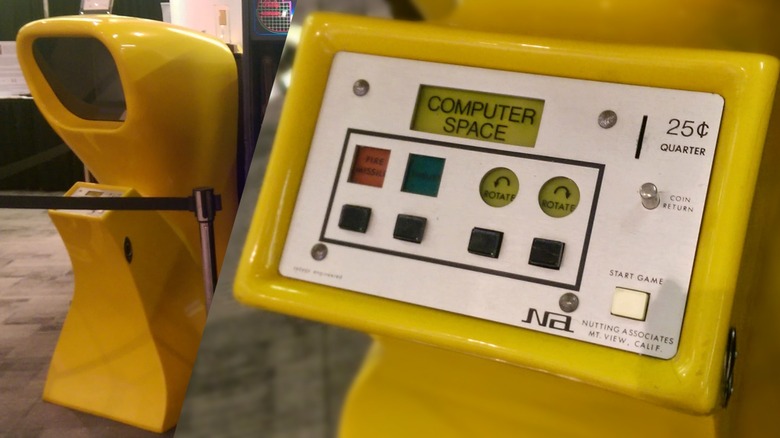
While many people incorrectly believe that "Pong" was the first arcade video game, that distinction actually belongs to a little-known title called "Computer Space." The first arcade game arrived in 1971, and it came in the form of a distinctive, custom fiberglass cabinet in several different colors. It had a retro-futuristic look and was the first arcade video game to appear in a major motion picture: a white cabinet shows up in 1973's "Soylent Green."
When it arrived in '71, there wasn't a video game industry at all, though video games had been around for some time. Most were limited to large computers at universities, and one of the earliest, "Tennis for Two," was created in 1958 at Brookhaven National Laboratory. While games existed, it wasn't until "Computer Space" arrived with a coin-op mechanism that took quarters that commercial video games began. The game was designed by Nolan Bushnell and Ted Dabney, who went on to co-found Atari, Inc.
"Computer Space" was successful, but it wasn't a massive hit, which is why it's largely unknown to folks today. More people are familiar with the likes of other '70s classics, including "Space Invaders," "Pong," and "Asteroids." Still, were it not for "Computer Space" and the coin-op mechanism that charged people a quarter to play it, who knows if or when the massive video game industry we have today might have arisen?

If there's one piece of technology that we take for granted these days, it's email. After all, email, in one form or another, has been around for decades. Still, like most tech innovations, email took some time to develop and catch on. While the World Wide Web didn't come about until 1989 at CERN, a different type of interconnected network already existed, which was designed and built by DARPA; only back then, it was known as ARPA.
The ARPANET, as it was called, was the precursor to the internet, and it went online in 1969, which is the only reason it's not covered here. Email, however, made the cut because it came along in 1971, when Ray Tomlinson sent the first networked email. The computer engineer sent a simple test message to himself, which, according to him, consisted of "something like QWERTYUIOP," which is the top row of letters on a standard keyboard.
Tomlinson sent the message from a computer in Cambridge, Massachusetts, to another computer sitting right beside it, routed through the ARPANET. While modern messaging has evolved considerably, email still plays a big role in our daily lives, whether it comes in the form of spam, an important notice from your bank, or an old friend reaching out. There's no denying the impact email has had on the modern world.
Magnetic removable storage
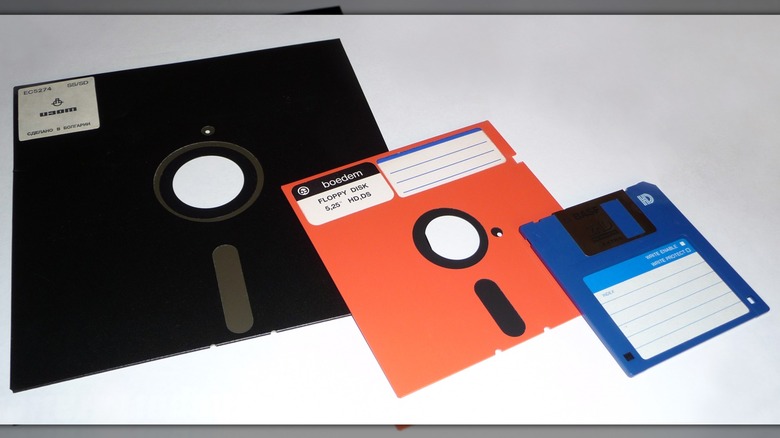
When computers started popping up in research centers and universities, they were massive machines that could only be programmed via paper punch cards and tape. As the years passed, several storage innovations arose, but they were costly, bulky solutions that couldn't store much in the way of data, so paper punch cards remained common. Finally, in 1971, IBM's ongoing Project Minnow, which began in 1967, produced the first floppy disk, which IBM sold in conjunction with the first floppy disk drives that same year.
This was a massive innovation because it meant that home computer users didn't need to understand programming languages to use their machines. Instead, companies could develop their own software, record it onto a floppy disk (or several), and sell it directly to consumers. This completely reinvented the home PC market because it created a means of transferring data that was easy, inexpensive, and hugely beneficial to software developers.
Of course, in the beginning, floppy disks were large and had limited storage. The save icon everyone is familiar with today depicts the later 3½-inch floppy disk, which held 1.44 MB of data. As the technology advanced, Zip disks could hold as much as 750 MB. Eventually, removable magnetic storage gave way to solid-state media like thumb drives, but it all started with large, cumbersome floppy disks first introduced in 1971.
Magnavox Odyssey
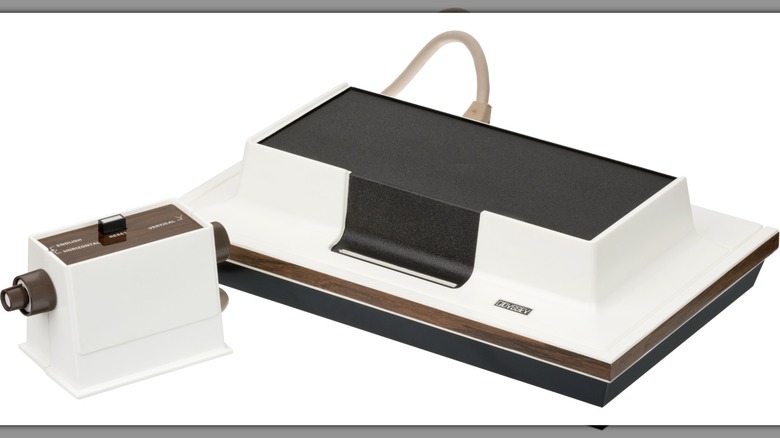
The video game industry generates close to $200 billion in annual consumer spending, covering mobile, console, and PC games. While arcade games were just getting their start in the early 1970s, it didn't take long for home options to arise, and in 1972, the Magnavox Odyssey beat the competition to become the first home video game console.
While it's not as well known today, the pioneering console brought video games into people's homes for the first time. Unlike its successor, the Magnavox Odyssey 2, which was released in 1978, the Magnavox Odyssey didn't feature anything in the way of impressive graphics, as it was limited to displaying three square dots and a single line on the screen in black and white. To play, you placed a plastic overlay onto your TV screen, which added color and set the scene.
By today's standards, the Magnavox Odyssey barely qualifies as a home video game console. Still, it was the first one, kicking off the first generation of video game consoles. Every console that followed owes its existence to what came before, and seeing as the Magnavox Odyssey was the first, you can draw a line from the PlayStation 5, Nintendo Switch 2, and Xbox Series X|S right back to it.
Digital watches
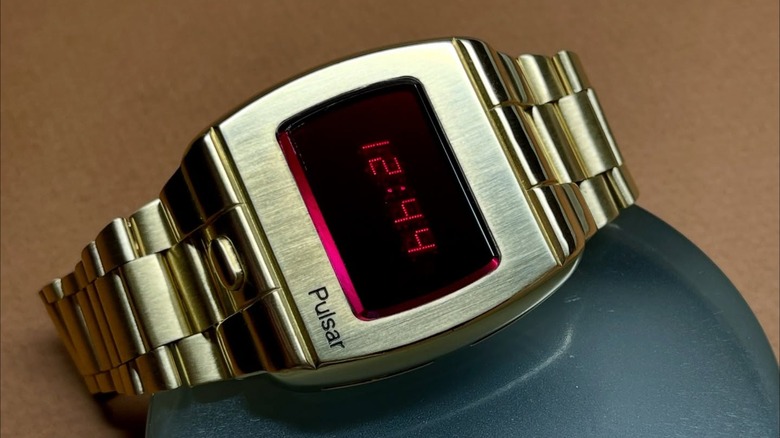
In modern society, people use all kinds of timepieces, including smartwatches, which are effectively small cellphones. You can find digital watches in arcade claw machines, and they're incredibly inexpensive pieces of technology. As you might imagine, it wasn't always like this, and for most of recent history, humanity kept time via analog clocks and watches. The first electronic digital watch didn't come about until 1972, and when it did, it was a big deal.
Digital watches quickly became so ubiquitous that Douglas Adams famously poked fun at them in "The Hitchhiker's Guide to the Galaxy," joking that humans were so primitive they still found digital watches impressive. The technology that made the first ones possible wasn't LCD, as you might guess, but LED, which was first invented in 1927. The very first digital watch released in 1972 was the limited-edition Hamilton Pulsar P1, which featured a red LED display and an 18-karat gold case. The gold and the underlying tech made the watch considerably expensive.
The Hamilton Pulsar P1 cost a whopping $2,100, which is almost $17,000 in 2026, so wearing one on your wrist was certainly a way to make a statement. Hamilton marketed the watch as "a time computer," and in the years that followed, digital watches became common all over the world. Many modern timepieces owe their existence to this 1972 innovation, which evolved in '74 to include the first system-on-chip, in a Microma watch.
Cellphones
For the vast majority of consumers, cellphones didn't become affordable until the late 1990s and early 2000s. That's when you could buy products like the legendarily unbreakable Nokia 3310 and other now-primitive phones, but the technology goes much further back in time. While the first handheld cellphone didn't arise until the 1970s, the technology goes back to the wireless communication of backpack radios in World War II. They were developed by Motorola, which ultimately pioneered cellphones, with the first arriving in 1973.
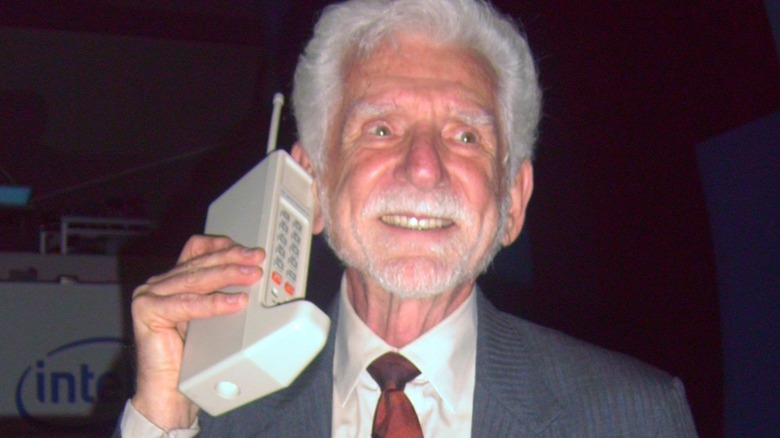
On April 3, 1973, Martin Cooper (pictured above recreating the event) made the world's first handheld cellphone call. He did it using a massive brick-like phone while standing on 6th Avenue near the Hilton Hotel in New York City. Cooper worked as the head of the communications division at Motorola, and the call was made to demonstrate the new technology. At the time, seeing someone make a call on the street with a handheld device wasn't normal.
The phone he used weighed 2.5 pounds and measured 10 inches by 3 inches by 1.5 inches, so calling it a brick isn't far off. From that one phone call, cellphone technology expanded, growing to encompass the world's telecommunications networks. Modern cellphones owe their existence to Motorola's innovative '70s technology, which came from innovations made three decades earlier, making Cooper's call one of the most important in modern history.
Betamax
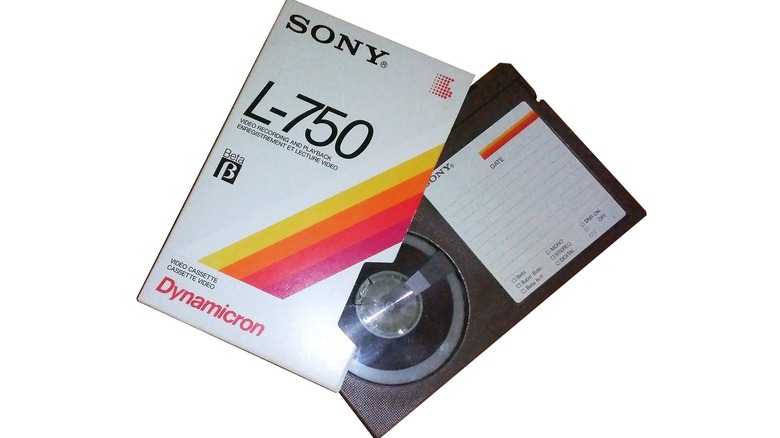
Long before streaming was a thing, when people wanted to watch a movie in their homes, they had to wait for a network to broadcast it. Otherwise, movies were strictly limited to theaters, but that all changed in the 1970s. The invention of Betamax in 1975 introduced a tape that consumers could pop into their Betamax players and do one of two things: record something off a television broadcast, or play whatever was already recorded onto the tape.
The latter option is how people got movies in their homes, though it was possible to play film reels if you had the equipment and the actual films. Still, for the vast majority of people, watching a movie at home didn't become an option until Sony introduced Betamax in 1975. Betamax ultimately lost the so-called videotape format war to VHS, but it was Betamax that beat its rival to market, and it did so with better resolution that many people appreciated.
The home VCR actually arrived in 1971 via the Philips N1500, but its short recording time and high price kept it from catching on, so Betamax ushered in the era of in-home entertainment. Eventually, businesses like Blockbuster arose, and ultimately, streaming services like Netflix came and took over. These days, watching whatever you want at home is incredibly easy, and we can all thank Betamax for paving the way.
Digital cameras
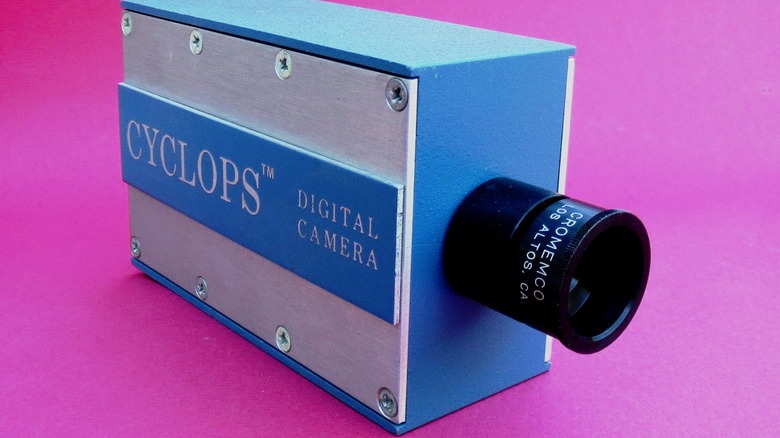
While we take digital cameras for granted, they weren't always available, and taking photos meant using up a limited amount of film you had to get developed. This was how photography worked for decades, and it wasn't until the late 1990s that digital cameras became semi-affordable consumer electronics. Despite this, the technology goes all the way back to 1975 when Dr. Harry Garland, an engineer from Stanford University, created the first consumer all-digital camera, the Cromemco Cyclops (pictured).
The camera used a solid-state recording method with digital electronics to capture images, and it was a large, clunky affair with 32 x 32 resolution. It was first mentioned in "Popular Electronics," and became a consumer product in 1976, when it sold for as much as $299 (roughly $1,700 in 2026). That was the first consumer digital camera, but the first self-contained digital camera was developed by a Kodak engineer, Steven Sasson, in 1975.
His prototype was built using a movie camera lens, some parts from Motorola, 16 AA batteries, and a Fairchild CCD electronic sensor. It took 23 seconds to take a picture at a resolution of 0.01 megapixels. Both innovations led to today's digital cameras, including those in smartphones, which are cheap, tiny, and able to snap incredible pictures. For example, the Samsung Galaxy S26 Ultra's main camera takes 200-megapixel images, or 20,000 times the resolution of Sasson's prototype.
GPS
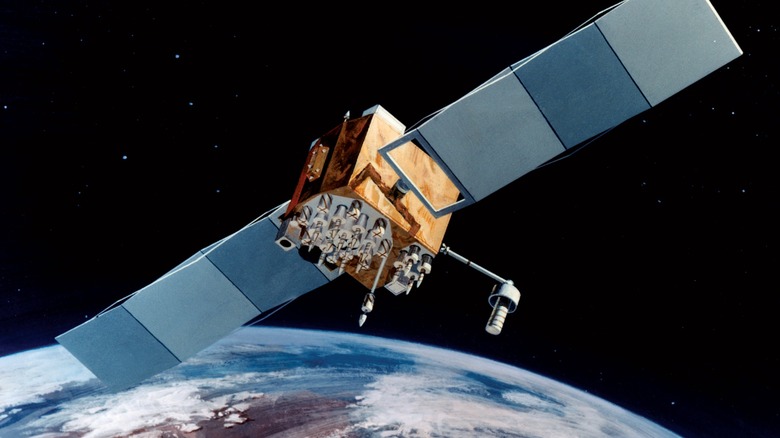
These days, if you want to get from A to B, it's as easy as pulling out your phone and plotting a course. It not only knows the fastest way to get wherever you're going, but it also knows what traffic to avoid and is updated constantly. Your phone pinpoints your location primarily via the global positioning system (GPS), which was first introduced in 1978. Initially, GPS was limited to the United States military, as it was developed and put into place by the U.S. Air Force, which launched the first GPS satellite into orbit.
The satellite in question was the Navstar 1, which launched on February 22, 1978, into medium Earth orbit, which is approximately 12,550 miles above the planet's surface. GPS satellites circle the globe roughly every 12 hours, and with enough in place, you can determine your actual position at any time, anywhere on the planet. Of course, when it first launched, this wasn't known to the public, as the military kept GPS technology close at hand for years.
In 1983, after a Korean passenger plane that had strayed into Soviet airspace was shot down by the Soviet Union, the U.S. government declassified GPS to protect commercial airlines. In 1989, the technology became available to consumers, and as the technology developed, it went from large systems on your car's dash to tiny GPS antennas hidden within your phone, accessed by software.
Sony Walkman
If there's one thing that's true of today's audio landscape, it's that it's never been easier to play your favorite songs on the go. All you need is your phone, or if you're old school, an iPod of some sort ... maybe even a Zune. Digital music is the norm today, but back in the 1970s, if you wanted songs on the go, you were limited to whatever was playing on the radio unless you had a portable cassette recorder.
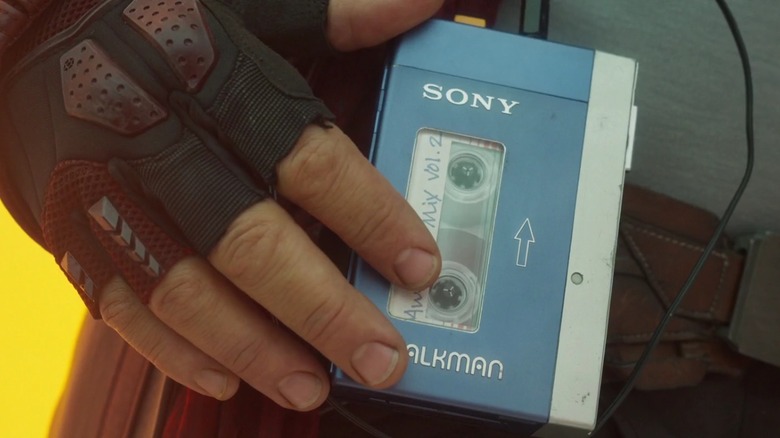
That all changed in 1979 when Sony introduced the Walkman, which let people take their music anywhere they wanted. You were limited to whatever fit onto a cassette tape, so your music choices were cassingles, albums, or mixtapes, which were all the rage throughout the 1980s. The pictured Sony TPS-L2 "Walkman" was so iconic of the era that it found its way into the Marvel Cinematic Universe via "Guardians of the Galaxy," which shows just how well known and influential it truly is decades after its release.
Initially, it was called the "Soundabout" in the U.S., but the name eventually became "Walkman," which was synonymous with any portable music player for some time. Technically, the Walkman wasn't the first portable music player, but it was the first mass-market consumer electronics device that let people listen to music on the go, and without it, who knows how music would have evolved into what it is today?