

DJI Osmo 360 II Review: An Awesome Upgrade (If You Find Out Where To Buy It)
We may receive a commission on purchases made from links.
DJI is a relative newcomer to the 360 camera space, and the DJI Osmo 360 II is their opportunity to fix some of the problems that come with expanding into a new product category. I had a lot of praise for the original Osmo 360 camera, but also a number of caveats that needed fixing. If they can do that with the Osmo 360 II, then this will become a much more competitive option for creators.
360 cameras offer an appealing level of flexibility to creators. For those with high levels of creative skill, they deliver enormous potential for innovative filmmaking. For those at a lower skill level, 360 cameras moderate the learning curve in some key ways; you can't so easily miss a shot when you're recording every direction at once. The high level of performance the Osmo 360 II delivers (at least on paper), benefits creators of every level of capability.
As when I reviewed the DJI Osmo Pocket 4 and DJI Osmo Pocket 4P, DJI paid for expenses involved with traveling to Canada to test the Osmo 360 II, as their new cameras are being blocked from import in the U.S. at this time.
I had just two days in which to test the camera, but I made the most out those two days, packing in nearly 24 hours of thorough testing into that span of time. Once I had the many hours worth of footage I captured back home, I was able to thoroughly evaluate its capabilities through dozens of hours of video editing. DJI had no input on what I did with the camera, nor on the content of this review.
Image quality
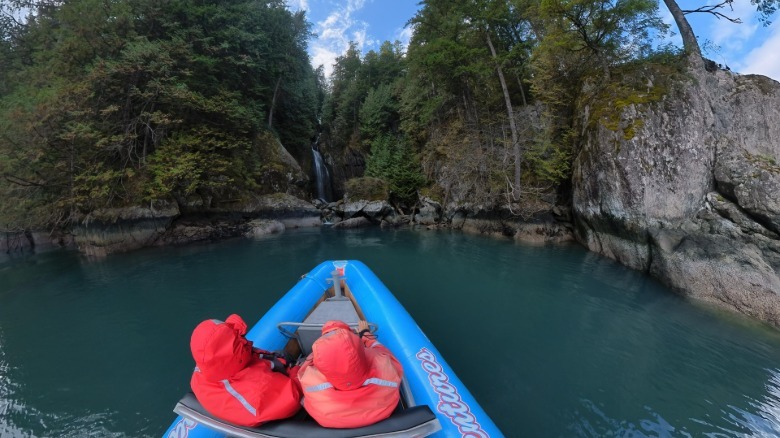
The 8K 60fps footage that the Osmo 360 ii produces is some of the best imagery I've seen from a 360 camera. In good light it's sharp and rich with detail, though I did notice a tendency for the footage to become slightly washed out in some scenarios. At 60fps, it's very smooth and realistic to view. You'll definitely want to have that footage on a fast drive to play it on your PC though, because 8K 60fps playback is highly demanding in terms of bandwidth, to the point where it can be limited by a slower external drive. Stitching is largely invisible between the two image halves, though occasionally it did create noticeable flaws in the imagery.
 Andy Zahn/SlashGear
Low light capability is impressive with the Osmo 360 ii. I walked around downtown Vancouver in the middle of the night to test it out, in a mix of brightly lit streets, dimly lit public squares, and dark alleys that felt a little bit sketchy at such a late hour. It gave me a fairly good picture of what the Osmo 360 ii is capable of in this regard, and it's honestly pretty impressive what the camera was able to achieve. It controls noise very nicely, and preserves shadows and highlights well in high-contrast low-light scenarios. It also does a good job of preventing noticeable blurring from camera shake when filming in dim conditions. My one criticism is that it has a tendency to brighten shadows beyond what the human eye observes, both in low light and and daylight conditions.
 Andy Zahn/SlashGear
Overall, the sharpness, low light capability, and overall image quality of the Osmo 360 ii is very good. It produces really immersive video if you're shooting for virtual reality experiences, and it's great for post-processing into flat video.
Industrial Design
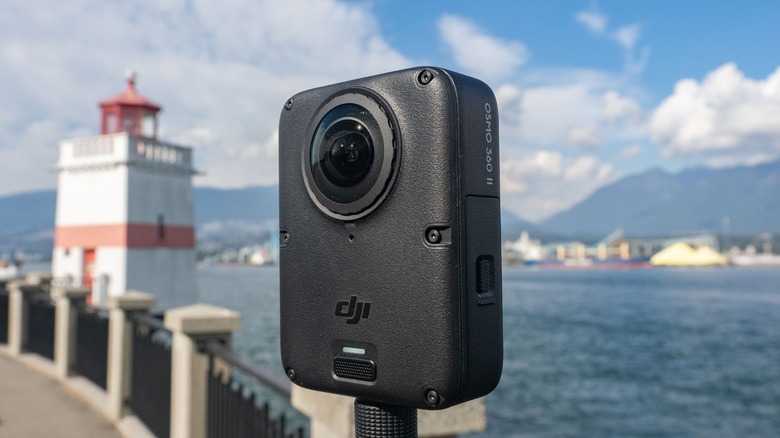
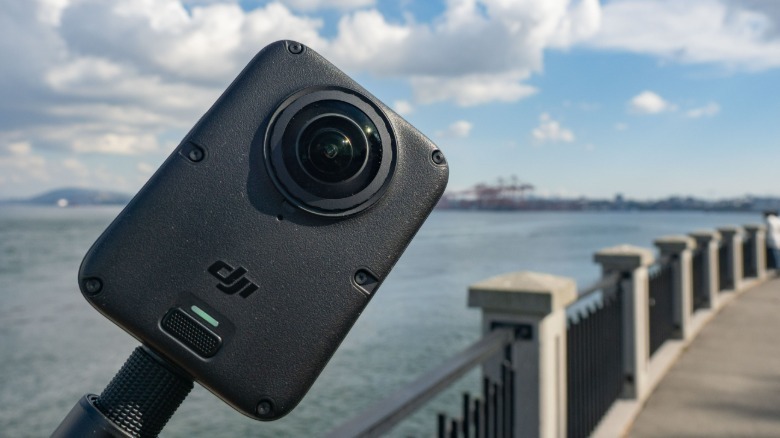
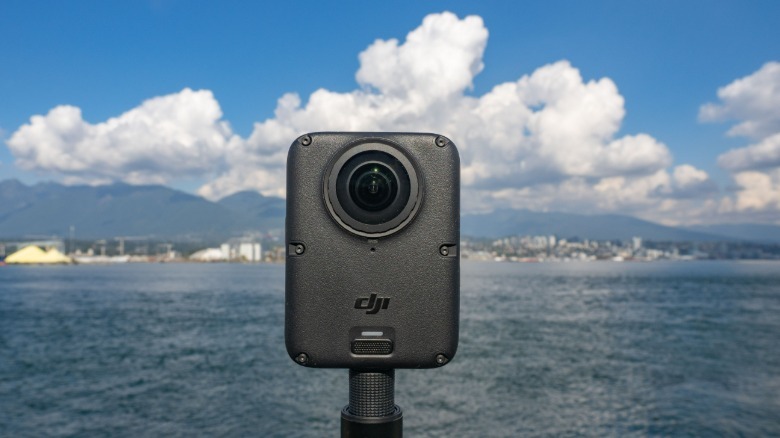
On the outside, the DJI Osmo 360 II looks pretty much the same as the original DJI Osmo 360, except that the front of the camera now has exposed screw heads that lend a more rugged and appealing aesthetic. The Osmo 360 II uses the same squat format as the original Osmo 360 and the GoPro Max 2, which Insta360 recently adopted as well with the Insta360 X6. In the past, the ideal shape of 360 cameras had yet to be determined, but it certainly appears now that the shape of choice is as short as possible, and that reflects my personal experience with 360 cameras. Squat 360 cameras are inherently more stable than tall 360 cameras, and are easier to mount in a variety of scenarios.
 Andy Zahn/SlashGear
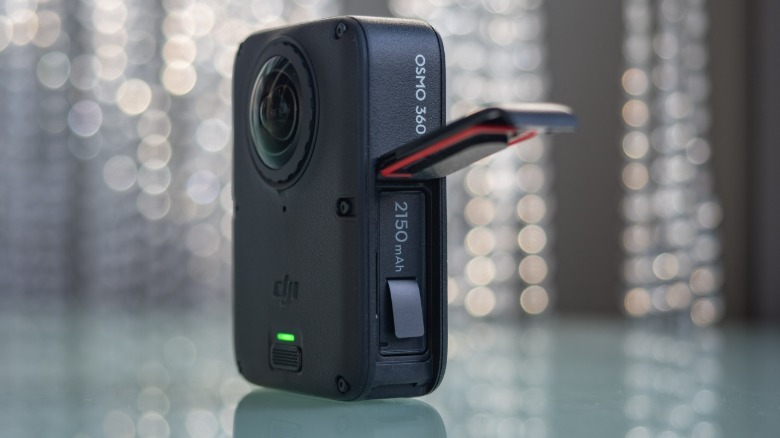
Perhaps the most significant upgrade to the Osmo 360 II is that now it's lenses are user-replaceable. This was the one major Achilles heel of the original Osmo 360, as by the time it rolled around such user-replaceable lenses had become basically industry standard. Without user-replaceable lenses, if you scratch or smash a lens, getting it repaired can be a major hassle.
 Andy Zahn/SlashGear
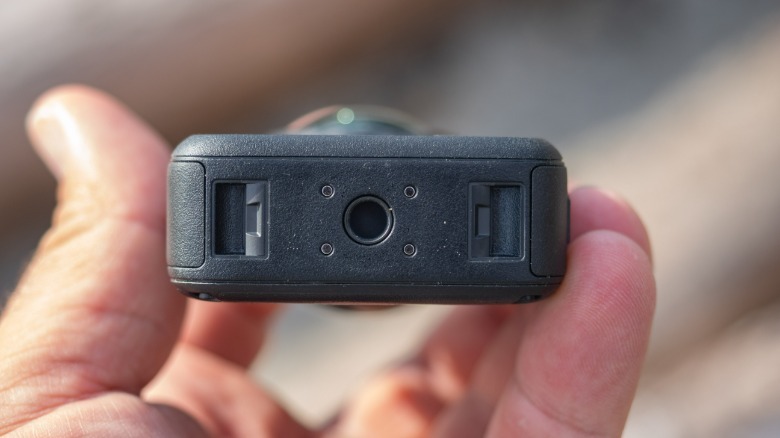
I like that DJI includes a 1/4-20 screw mount in the Osmo 360 II, which is unfortunately absent from most of DJI's Osmo lineup (unless you use an adapter). It's not quite up to the standard of the GoPro Max 2 in terms of mounting options, as there are no action-camera fingers in the Osmo 360 II, but I nevertheless appreciate having the screw mount as an alternative to the magnetic mount. That magnetic mount is solid and great to use, but in high risk scenarios I really value a strong, purely mechanical mount.
Durability, battery life, and temperature sensitivity
I tested the Osmo 360 II in some fairly demanding conditions. It got knocked around a fair bit as I bicycled around the busy streets of Vancouver, and in Stanley Park. Combined with my prior experience with the original Osmo 360, and with the Osmo camera line in general, I'm confident that the camera can hold up to action-sports type use.
 Andy Zahn/SlashGear
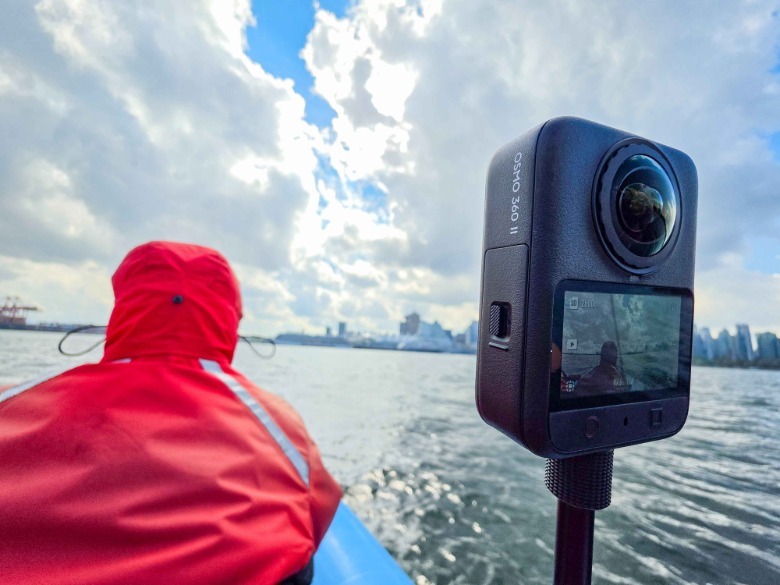
I also exposed it to fast, cold wind on a zodiac boat ride up Indian Arm to Granite Falls for 3 hours. With over 2 hours of recording, mostly at 8K 60fps, I drained roughly 2 batteries worth of power (None of the batteries were completely fully charged to start with). Such performance in those conditions is admirable, though I now suspect it may have benefited from the freezing wind given my later experience recording extended 8K 60fps footage in warmer conditions.
 Andy Zahn/SlashGear
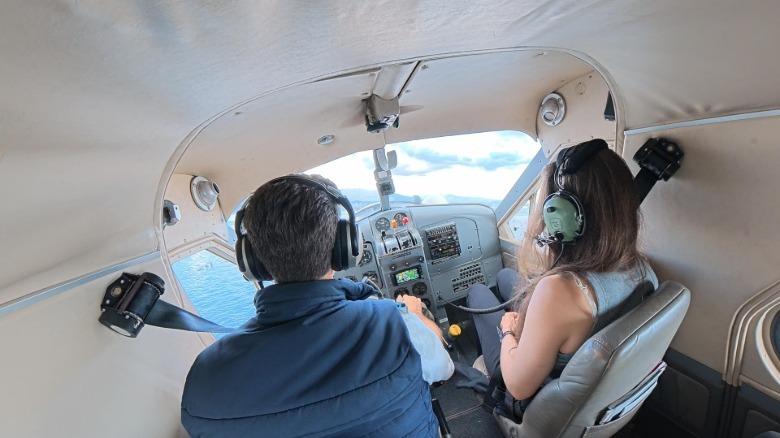
Those warmer conditions were in fact the unexpectedly stuffy and hot interior of a seaplane. My prior experiences with aerial photography in small aircraft have been very cold affairs (once to the point of minor frostbite in my pinky finger), so the heat of this seaplane caught me off guard. The Osmo 360 II clearly didn't appreciate the lack of airflow and the temperature of the plane's cabin while recording 8K at 60fps.
Nevertheless, the camera soldiered through for nearly all of the 40 minute ride (sadly running out of space on my memory card at the dramatic moment of touchdown). The issue was that all but one clip from that flight then registered as "invalid file" when viewed on the camera. Fortunately, they were visible in the Mimo app, and work fine on my PC, but I admit I panicked a bit when the camera first threw up that error.
In-Device Software And Mimo Companion App
My impression of the Osmo 360 ii hasn't changed much from when I originally reviewed the camera. DJI have still not seen fit to include a dedicated mode for recording video of stars, which is an excellent use of a 360 camera. You can obviously set up a simple timelapse yourself and capture the stars that way, but I would like a dedicated mode with options to implement cool effects, such as star trails.
 Andy Zahn/SlashGear
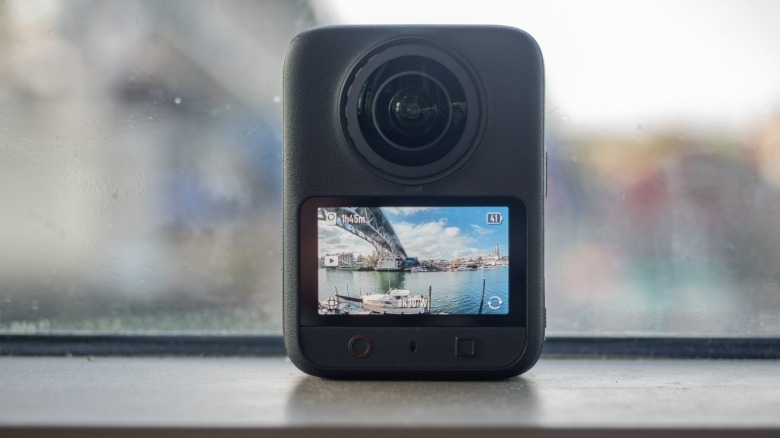
I also have to insert my mandatory gripe about having to activate the camera when first setting it up, as I firmly believe that cameras should not need to access the internet or be tied to an account in order to be used. Aside from this, the in-camera software works just fine, editing footage through the Mimo companion app is still somewhat frustrating, and I like the desktop companion software. Editing and exporting your footage through the desktop DJI Studio application is a highly intuitive and efficient process, even when working with hours of 8K 60fps video footage.
Audio capture quality is extremely high, with the microphone system easily besting that of the GoPro Max 2, which until now I had considered the best in terms of internal audio capture in a 360 camera. Of course, you can easily connect one of DJI's wireless microphones to the Osmo 360 ii, which is great if you want to cut down on ambient audio in noisy conditions. Also worth mentioning is the 128GB of onboard storage, a feature which I very much appreciate on the occasion I forget to insert a memory card.
Price and availability
As with practically every recent product from DJI, the frustrating fact of the matter is that the Osmo 360 II is going to be difficult to purchase for U.S. customers. The government here has decided that it doesn't want DJI products in the country, and has been rapidly restricting the import of DJI cameras and drones. In my expert opinion, their stated reasons for this are utterly without merit.
The idea that a consumer camera from a particular brand poses some kind of threat to national security is outrageously absurd. Regardless, the upshot is that the only way to purchase it in the U.S. is from on Ebay or various other unofficial channels, which can get sketchy, may not get you a functional warranty, and tend to be listed at a significant markup. It's definitely a purchase-at-your-own-risk situation.
 Andy Zahn/SlashGear
The MSRP of the DJI Osmo 360 II in Canada starts at $799 Canadian, which at the current exchange rate (as of this writing) works out to $565 U.S.D. If you were to buy it on Ebay in the U.S. from an unofficial seller, it is surprisingly close-to or even practically on par with that price point. By comparison, the Insta360 X6 starts at a painful $699.99 from the Insta360 online store, while the GoPro Max 2 can currently be found for a shockingly low $299.99 from the GoPro store. That puts the DJI Osmo 360 II into an interesting mid-range price point.
I haven't had the opportunity to test the Insta360 X6 myself yet, but I have used the GoPro Max 2 extensively. In short, the Osmo 360 II offers better image quality (particularly at night). However, the Max 2 is absolutely awesome in good daylight, and remains superior in terms of its design.
Conclusion
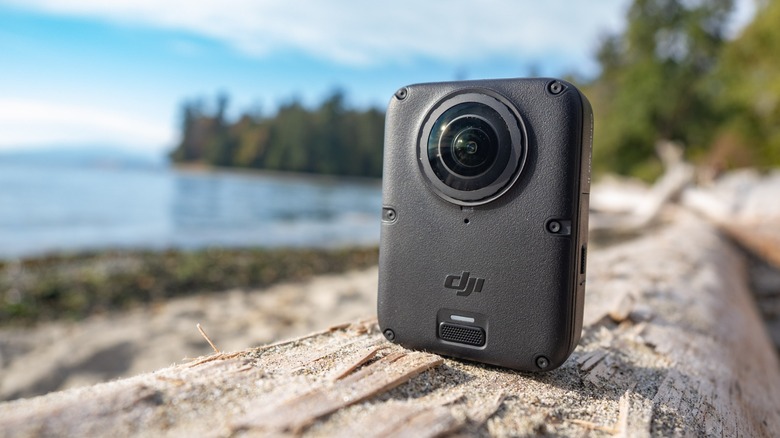
The DJI Osmo 360 II is one of those products I often encounter where there's no real huge leap forward, yet the incremental improvements and corrected design flaws add up to create a really compelling device. It's a case where anyone looking at picking up a 360 camera for the first time, or upgrading from an older 360 camera from a different manufacturer, would do well to consider the Osmo 360 II, but if you already own the original Osmo 360 camera, it might be better to wait a year or two for the next iteration. With that said, the user-replaceable lenses of this camera are a vital addition, and if you have a tendency to use 360 cameras in high risk situations, this feature may justify the upgrade on its own.
It is important to note that my opinion of the DJI Osmo 360 II rose progressively higher the more time I spent editing the video footage I captured with it. While superficially it may seem very similar to its predecessor, it has in fact come a long way.
The DJI Osmo 360 II is available from most major retailers outside of the U.S., and through third party sellers (like those found on Ebay*) in the U.S. starting around $565 (as of this writing).
*Again, yes, you can find this camera for sale from sellers on Ebay and some less-than-reputable sources we won't list here — but you MUST take heed: trust at your own risk. We'd trust this Ebay seller just as much as we're able to trust any other, for good or ill.