

As Data Centers Continue To Strain The Power Grid, This New Transformer Tech Could Help
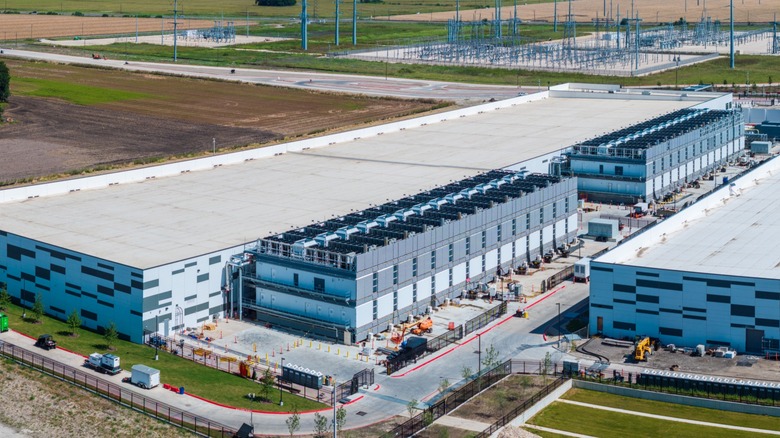
The demand for electricity in the United States barely moved for almost two decades. So, planning the power grid was relatively predictable. However, artificial intelligence (AI) came along and upended a lot of that predictability. By 2023, power-hungry data centers were already consuming around 4.4% of all electricity in the U.S. And according to Lawrence Berkeley National Laboratory, that number could climb up to 15% by 2030.
In fact, by the end of the decade, the International Energy Agency projects that data centers alone will account for roughly half of the country's growth in demand for electricity. What's particularly curious about this conundrum is that the solution isn't as simple as just producing more electricity. That's because all that extra power still has to travel through a grid that wasn't exactly built to handle this kind of sudden, concentrated demand. Plus, core grid equipment can take more than two years to procure. Mind you, over the past five years, the prices of some transformers have jumped by as much as 9x.
But the outlook isn't completely dreary. At least, not to Hyosung Heavy Industries, which thinks a different kind of transformer could help. The South Korean company has developed what it calls the world's first 22.9-kilovolt solid-state transformer, or SST, capable of connecting directly to urban distribution networks. So, instead of relying entirely on the heavy electromagnetic components inside a conventional transformer, an SST uses power semiconductors and digital controls to actively manage electricity. Here's how it works.
What is the difference between a conventional and solid-state transformer?
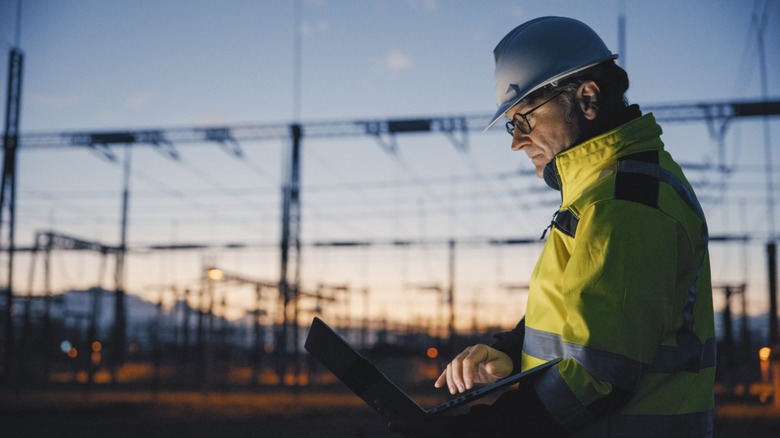
A conventional transformer, like the ones you may have noticed with the big cylinders on power lines, depends on bulky physical components and electromagnetism to regulate and transmit electricity. As a result, they're often heavy and not very flexible. Whereas, a solid-state transformer trades many of those electromagnetic components for semiconductors. That, in turn, makes it much lighter and a lot smarter, since operators can control and regulate electricity digitally. It can also convert AC power to DC power, making it more adaptable to the changing energy demands, especially for this century.
What Hyosung's SST is trying to achieve is somewhat similar to the smart transformer that recently went online in China. While they're not exactly the same technology, they share the same goal of making transformers smarter and more responsive to current realities. And the reality is that AI data centers need a staggering amount of electricity to function smoothly. To that end, Hyosung has invested roughly $300 million in acquiring and expanding its production facility in Memphis, Tennessee.
By the time the ongoing expansion is done, the company believes the plant will have one of the largest ultra-high-voltage transformer production capacities in the U.S. The big question now is how reliable will these systems be. Conventional transformers may be bulky and old-school, but they have lasted for decades. Hyosung still has to prove its SSTs can be just as reliable at scale. If they can, though, the technology could give America's power infrastructure a more sustainable way to handle the increasing demands of data centers.