

4 Drawbacks Of Using A Mulching Lawn Mower
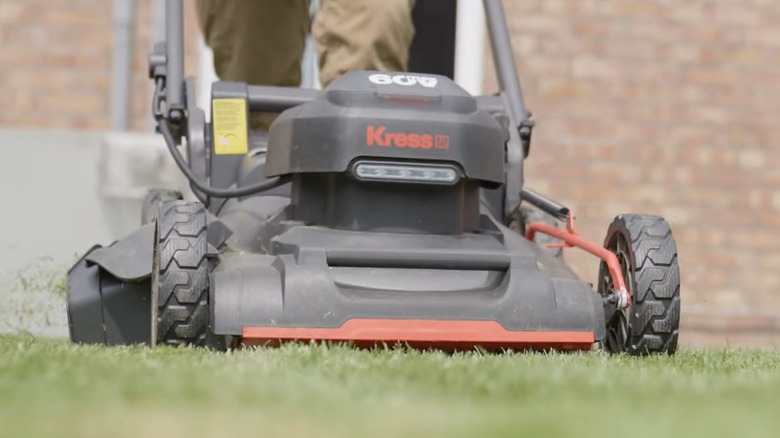
Picking the right lawn mower for your needs can be a much more involved process than you might think. While the brand and the specific model type — riding or push — are important, you shouldn't overlook exactly how a mower goes about its job. For instance, a mulching lawn mower handles its clippings a little differently than other mowers. More specifically, it chops up your grass multiple times into even finer pieces than usual, dispersing them throughout the yard as you mow rather than collecting them in a bag for disposal once your mowing is completed.
There are a few benefits to a mulching lawn mower when used right that make them a viable choice for some users. For one, they leave your yard looking clean since the clippings are so small. No unsightly clumps or rows of dead grass to worry about. On top of that, these mowers leave you without a bag full of lawn clippings to throw away, saving you on post-mow cleanup time. Additionally, the remaining clippings help out your lawn by acting as fertilizer for the soil once they break down. With all of that said, these mowers aren't for everyone, and they do come with their share of drawbacks to keep in mind.
While many users believe mulching mowers are more than worth it, it's undeniable that they have some weak points. These are some of the most notable areas where mulching lawn mowers fall short.
Tall grass can make mulching a no-go
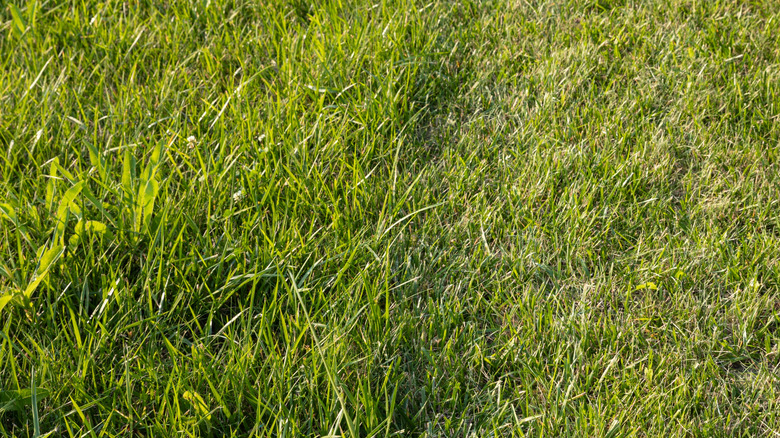
Arguably the biggest problem with mulching mowers is that they aren't always effective if the lawn's conditions aren't just right. First and foremost, if the grass is too tall, you won't get great performance from a mulching mower. It's just too much grass to cut, so the desired mulching effect won't be achieved, and you'll end up with lumps of leftover, improperly chopped-up grass all over the place. If it gets too long for a single pass, you may need multiple passes to trim everything adequately. If you're busy during the height of mowing season, this model type might not be for you.
As mentioned previously, mulching mowers are best suited for lawns that aren't extremely overgrown. That's to say that if you do want a mulching mower and want to get everything cut up properly in one go, you should be someone who's able to prevent their lawn's growth from getting out of hand. For the best results, you should expect to mow more often during peak growing season — at least once per week or so — in order to keep up with your lawn's growth and avoid overwhelming your mulching mower. If that's not possible for you, then another mower type is likely better for your lifestyle. In any case, just be sure to stay within the parameters of the 1/3 lawn rule for best results.
Wet and thick grass can cause struggle
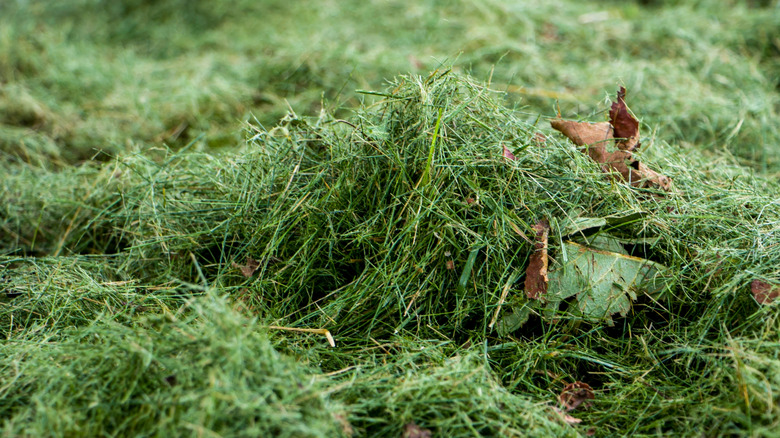
Tall grass is far from ideal for a mulching mower, but height isn't the only limiting factor of a lawn for this mower type. Wet lawns won't cooperate very well with really any mower type — hence why mowing wet grass is one of several things to stop doing with a push mower if you're in the habit — and mulching mowers are no exception. Wet grass tends to get sticky, so if you try to force a mulching mower through, the cut grass is likely to hold that moisture and clump up. This leaves your yard looking pretty ugly and, worse yet, the caked-on wet grass can stick to the underside of the mower deck. This makes for a messy, not-so-fun deck-scraping after your cutting is complete.
The issue of wet grass is worsened if you're dealing with an especially thick lawn as well. Thick, wet grass can inhibit blade rotation performance at best or shut the mower down at worst as more and more grass builds up on the underside of the deck. For a sizable lawn, you may even find yourself cleaning out your mower deck a time or two before the job is done, extending your time out in the yard and putting excess wear and tear on the mower by shutting it down and restarting it over and over again. You should avoid cutting wet grass entirely, and seek out a different mower type if you're dealing with lots of thick grass.
The lawn weed problem
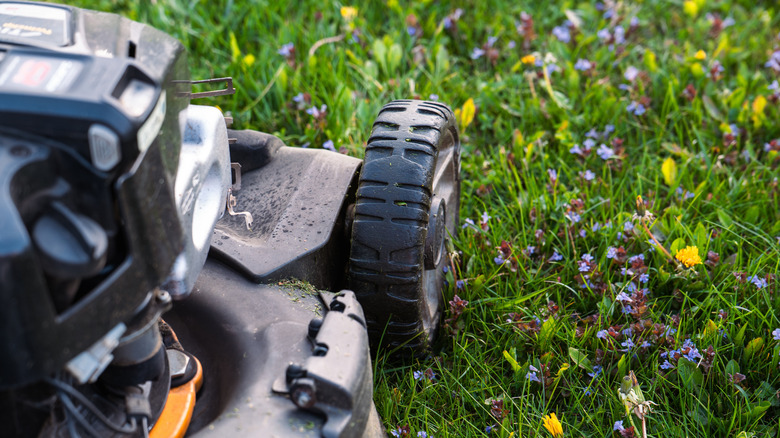
Even well-maintained lawns see their share of weeds pop up throughout spring and summer. Like the grass blades around them, they're easily chopped up by any lawn mower. However, when it comes to mulching mowers, the cutting and dispersing of weed remains can become a big issue. While mulching mowers distribute grass clippings as fertilizer, doing the same with weeds creates the risk of spreading them around the yard. Suddenly, one or two unwanted growths in your yard become a full-on infestation in need of concentrated removal efforts.
It should be clarified that cutting down a weed or two with a mulching mower doesn't guarantee additional weed growth. Generally speaking, this only becomes a problem if the cut weeds had already sprouted mature seed heads before they were cut and flung around. For any type of mower, though, seed spreading remains a problem. This is one of the ways lawn mower tires can ruin your lawn, with them picking up weed seeds and moving them about. They can also stick to mower blades, which is why routine deck cleaning is so important. Without a bag to contain any potential growth, unintentional weed dispersion remains a high possibility, so keep that in mind if you're debating a mulching mower and want to keep a largely weed-free lawn.
Mulching can spread lawn diseases
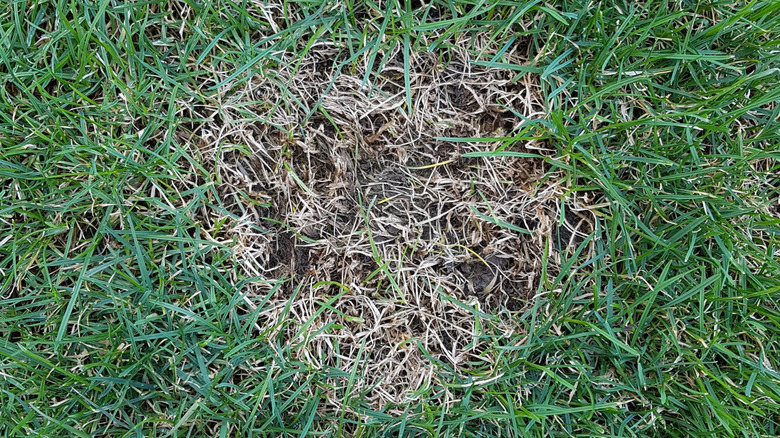
It has been established that in the process of chopping up and spraying out grass clippings, mulching mowers can send weed seeds all over a yard. Fortunately, these will be chopped up as well during your next mow and can be easily removed with a string trimmer and a weed-killing solution. However, the same dispersion principle applies to lawn diseases, which are significantly more harmful and difficult to eradicate. All it takes is mowing over a small patch that's infected for you to potentially put your entire yard at risk.
Lawn diseases can come in a host of forms. Some show up as patches of discoloration, while others appear as mold blotches or fungal growths. In any case, it's a bad idea to just mow over these areas and hope for the best with a mulching mower. You should take them out at the source before running the risk of sending spores throughout your yard. If you don't want to go through such a potentially multi-step process, a bagging mower might be a strong alternative to a mulching one. These can at least limit disease spread by pulling in infected clippings instead of sending them elsewhere in the yard to fester.