

5 Things To Stop Doing If You Use A Push Mower On Your Lawn
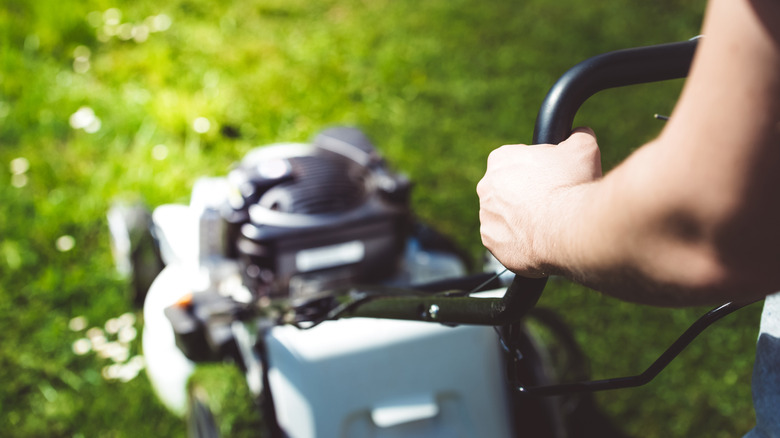
From suburban homeowners to eco-conscious city dwellers, there's nothing quite like disturbing the quiet of an early Saturday morning with the roar of a push lawn mower. Almost three-quarters of all homeowners cut their own grass, many because they enjoy the process, and some because they believe hiring a professional is an unnecessary expense.
If you have a sprawling property with acres of grass, you've probably elected to use a riding lawn mower. But many Americans have smaller yards that can be easily handled with a push mower. When it comes to these traditional walk-behind mowers, buyers have plenty of options, including gas-powered, battery-powered, corded electric, and even old-fashioned, environmentally friendly reel mowers. Self-propelled mowers make the job easier, and push mowers tend to be less expensive than larger, ride-on mowers. They also come in a variety of deck widths to cut down on mowing time, and many people enjoy the light workout of tackling their overgrown yard with a walk-behind mower.
Like any job, however, there's a right way and a wrong way to cut your grass using a push mower. Some mistakes can harm your yard, but others can lead to a nasty injury. Here are five things you should stop doing immediately when mowing your grass with a push mower.
1. Mowing when the grass is wet

We get it — many people lead very busy lives, and sometimes the only free moment you have to care for your lawn is when it's dew-covered or after a recent rain shower. While it's not typically inherently dangerous, there's an increased risk that you may slip and injure yourself. If you're using a corded electric lawn mower, however, you should never mow your grass while it's wet due to the risk of electrocution. If you're using a battery-operated mower, check the user's manual before tackling a wet yard.
In addition to an increased risk of injury, mowing your grass when it's wet isn't the best choice for a healthy lawn. When wet, grass blades tend to bend. If the blades aren't straight when you mow, you might end up with an uneven, patchy cut, especially once it dries. Wet grass also tends to tear rather than cut evenly, which can make it vulnerable to fungus, disease, and even insects.
If you do have to cut your grass when it's wet, take a few precautions first. Check the mower's manual to be sure it's safe. Then, raise the cutting height a bit, which will be kinder to the grass and minimize clumping. You can also try mowing your grass in sections, starting with areas that may have dried more quickly due to direct sunlight. Finally, be sure to clean the wet grass out of your lawn mower once you've finished the job.
2. Forgetting to clear your lawn
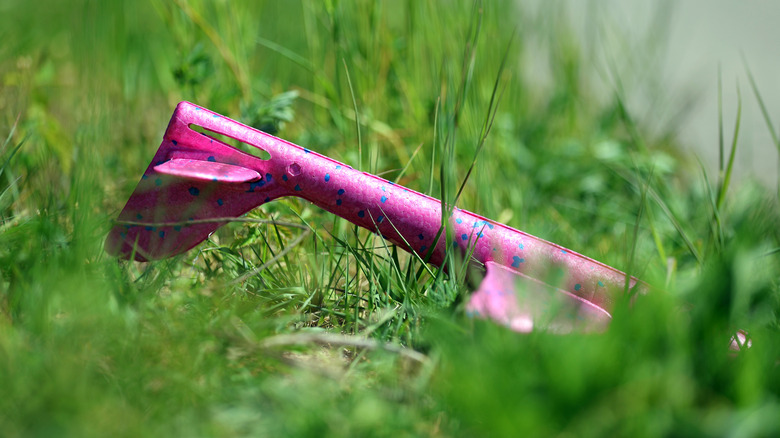
You're already in for a long walk while you mow, especially if you have a larger yard, but you should always do a sweep of your property first. If you have kids or pets, your lawn may be littered with plastic and rubber toys. A pre-mow inspection will help you find those toys along with rocks and sticks that may damage your mower if you hit them. These objects can also be hurled out from under the blades and hit you or a bystander, or damage your home or vehicle. Remember, the mower blades are rotating at about 200 mph, and any object that you hit may go flying at a similar speed.
You should also check for any unexpected holes or divots that could damage your mower or result in a twisted ankle. Use this time to move lawn furniture, garden hoses, and other obstacles out of the way. If there are obstacles that you can't move, such as tree stumps, large branches, heavy rocks, and fences, be sure to avoid them when you mow and tackle the long grass nearby with an edger or string trimmer.
3. Wearing inappropriate attire
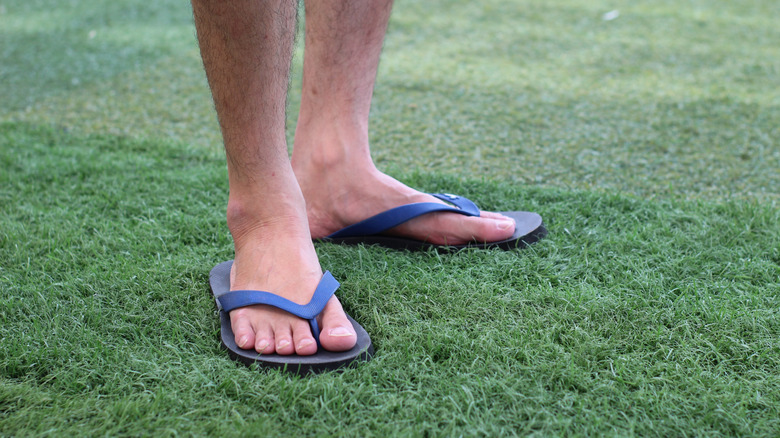
Flip-flops and sandals are go-to favorites when the weather heats up, but you should reach for a closed-toe shoe when you're ready to mow. It should also go without saying that you should never mow in your bare feet! Open-toed shoes leave your feet vulnerable to injury from flying debris. If you slip and accidentally pull the mower back, your foot could slide under the deck, leading to serious injury. Experts recommend wearing heavy shoes or work boots when you mow. Steel-toed shoes will offer the best protection.
In addition to proper shoes, you should wear long pants and consider a long-sleeved shirt. These choices will protect you from flying debris, sunburn, and bug bites. You should avoid loose-fitting clothing that could potentially get caught in the mower. You can choose lightweight, moisture-wicking, or UV-blocking fabrics depending on the weather and personal concerns. A hat and sunscreen are also a good idea. Finally, you may want to consider wearing safety glasses to protect your eyes and earplugs to prevent any hearing damage from the mower. If you opt for sunglasses instead, go with a wrap-around style that still offers protection from debris.
4. Ignoring the importance of patterns and grass length
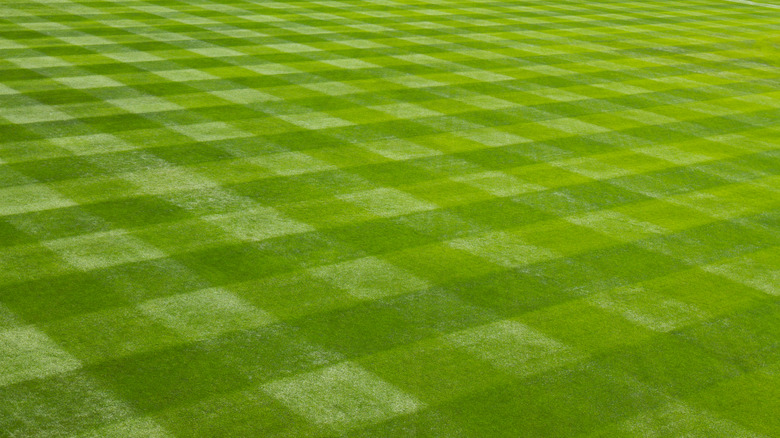
Mowing in a pattern looks great and impresses the neighbors. Whether you go with classic stripes, a checkerboard pattern, or zigzags, this technique gives your yard a polished look and is good for the grass — as long as you change up the pattern. It may be tempting to follow the same pattern every time, but if you opt for the same look, you are essentially training the grass to always grow in one direction. The result may be a patchy, uneven yard. Running your mower in the same direction may also leave unsightly ruts. Next time you mow, change up the direction of stripes for healthier grass.
If you're running out of daylight and in a rush, you may be tempted to mow in larger rows that don't overlap. While this isn't harmful for your lawn, you may miss spots and end up with longer grass in between those neat rows. To avoid any gaps, always slightly overlap the rows as you make your laps.
Finally, avoid the temptation to cut your grass extremely short so that you don't have to mow as often. You may think you're being clever, but this tactic actually has a name — lawn scalping — and it does more harm than good. Sometimes used in early spring to remove dead grass, this technique can lead to a dry, brown yard that is susceptible to insects and disease. It's best to adhere to the ⅓ rule, which advises that you not cut more than ⅓ of the grass height when you mow.
5. Mowing when it's too hot
Waiting until a cooler part of the day to mow your grass may be challenging if you live in a warmer climate, but your grass will thank you. If you tend to your yard during the hottest part of the day, you not only run the risk of overheating yourself, but it can also damage your grass. It weakens the root system, causing the grass to turn brown or become discolored, and stunting its growth. Grass loses moisture quickly in the heat, and it may struggle to recover if you mow it when it's already dehydrated and stressed.
To protect your grass and make the experience more comfortable, try mowing when the temperature is below 85 degrees Fahrenheit. If you're an early riser, wait until the dew has evaporated before pulling your lawn mower out of the garage to avoid mowing wet grass, as we covered above. Additionally, if you have nearby neighbors, you don't want to disturb them too early on a Saturday morning! If you prefer to sleep in, late afternoon may be ideal once the temperature starts to drop. Mowing at this time of day gives your grass time to recover overnight, out of direct sunlight. Early evening is also preferable; just be sure the temperature hasn't dropped enough for dew to form again. You also don't want to be caught mowing in the dark.