

Why Do Portable Air Conditioners Have Two BTU Ratings?
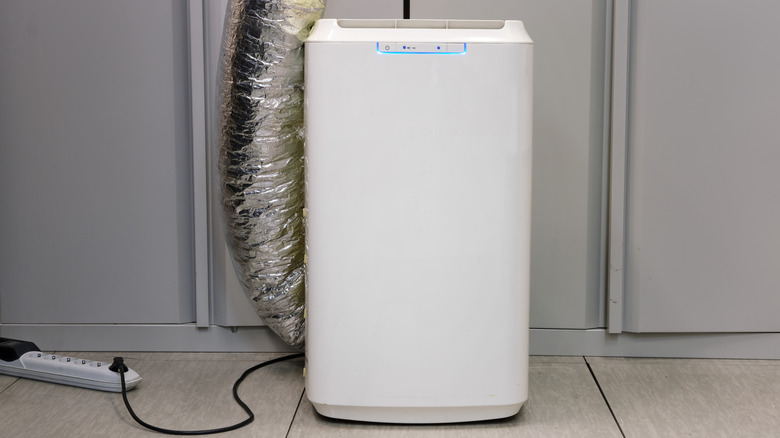
There are some downsides to portable air conditioners, including the fact that they can be quite power-hungry appliances. This means customers are likely looking to choose one that is the most energy-efficient as possible. If you've ever compared and contrasted different portable AC systems with this factor in mind, there's little doubt that you've come across the term BTU.
A British Thermal Unit (BTU) is a measure of thermal energy. With an air conditioning system, the BTU determines its cooling capacity in terms of the power used by the system to extract heat from a room. Specifically, it measures the amount of energy required to raise the temperature of 1 pound of water 1 degree Fahrenheit — at sea level, as different altitudes can effect the process. The higher this number, the more effective the machine's cooling is. BTU is often divided into two separate figures: SACC, which stands for Seasonally Adjusted Cooling Capacity, and ASHRAE, which stands for the American Society of Heating, Refrigerating and Air-Conditioning Engineers.
An ASHRAE BTU is a value arrived at by testing the machine in very specific conditions in a laboratory. While it's a valuable datapoint because each machine is tested in exactly the same way, it only registers the machine's performance in those very specific conditions. That is why the SACC BTU is used as well, as it averages how the system performs across a range of conditions to estimate how it will perform in a real-world home. Neither system provides a full picture by itself, but both can tell potential buyers something important about any particular portable air conditioning unit.
How an ASHRAE BTU is determined

As the name suggests, an ASHRAE BTU has been determined through professional methods in specific testing conditions. You'll typically find that when you're looking at these two BTU ratings side-by-side on an air-conditioning unit, the ASHRAE BTU will likely be higher than the SACC one. This is because the appliance was working in optimal, unchanging conditions in the former.
According to appliance manufacturer Danby, manufacturers test AC units at 80 degrees Fahrenheit in rooms with 50% relative humidity to get an ASHRAE BTU. Through these figures, users can compare the performance of different varieties of portable air conditioner against each other, but not really predict how it will perform in their home. Factors like distance from the wall can affect how a portable air conditioner works, after all. To provide consumers with a more accurate picture, the Seasonally Adjusted Cooling Capacity BTU measurement is also included.
The more recent SACC BTU and its advantages over the ASHRAE system
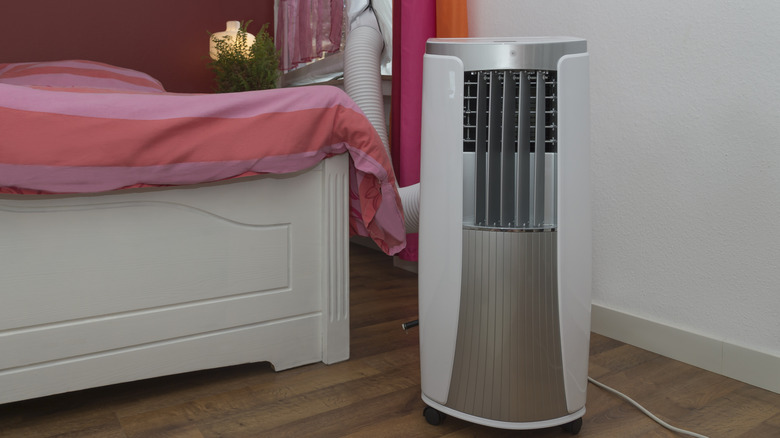
The SACC BTU was put forth by the U.S. Department of Energy in late 2017 (so you may also see it referred to as the DOE BTU). It is designed to demonstrate how the system will perform in changeable conditions over a certain period of time. A system that's used consistently over the course of weeks or months will be operating in a whole range of different conditions, so this measurement is arguably more useful than the than ASHRAE BTU, which uses just one environment.
The SACC BTU measures performance figures across different temperatures and levels of humidity. While the SACC BTU can prove very useful, it's not intended to replace the older ASHRAE BTU. That's ultimately why you'll continue to see both.
Just as with any other appliance, it's important to remember that the SACC BTU still won't necessarily give you the exact cooling output of your machine because that's very dependent on the settings you use, what kind of climate you live in, and other factors. You'll want to look at BTU values that are most suited to the space that the appliance you are buying will be operating in. Efficient operation relies on BTU values that aren't too low or too high for the size of a given room, so bear that in mind when considering some of the best portable air conditioners.