

Cheaper Fuel Blend Could Help Fight CA's Soaring Gas Prices
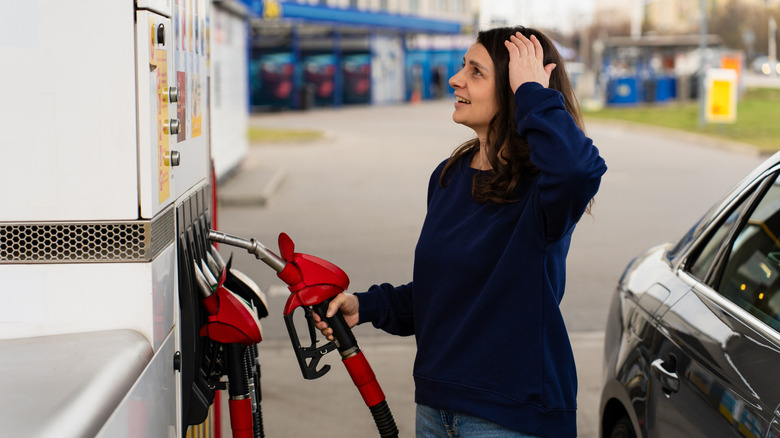
To help offset rising gas prices, the governor of California, Gavin Newsom, signed a bill in September to provide more residents with access to E15 gas, a less expensive option that contains more ethanol than is used in regular gasoline. Now, Newsom wants to take it a step further and introduce winter blend gasoline to the pumps now rather than waiting until November 1, when it typically makes the switch. The Environmental Protection Agency (EPA) requires all gas stations to sell the summer blend until at least September 15, but the winter blend is less expensive than the summer blend, even in California.
AAA, which reports the national average gas prices, reported that consumers are paying $4.39 at time of writing. However, that number is an average, meaning some drivers are paying less, and some are paying more — much more. Californians historically pay more at the pump than any other Americans due to a high tax rate, unique environmental and fuel requirements, and an isolated market with no pipelines across the Rocky Mountains. As of early October, drivers in California are paying about $6.40 per gallon, $2 more than the national average; premium is $6.82, while diesel fuel is a whopping $8.37.
The difference between summer and winter blends
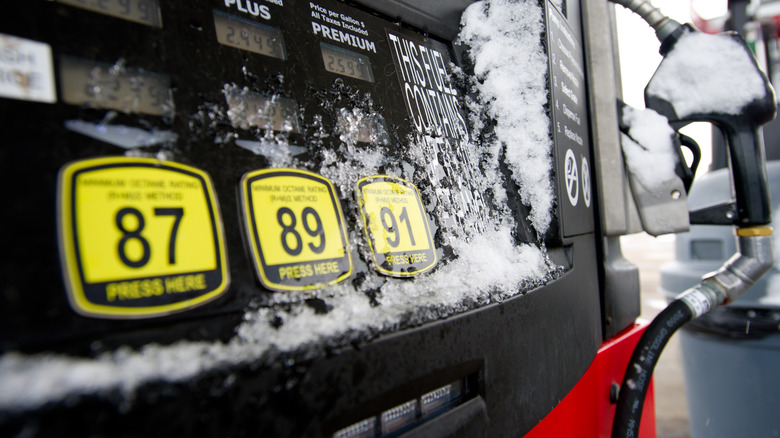
You may assume the gas you put in your car is the same year-round. For drivers, there's no obvious indicator of the change other than the price. When it gets hot, gas evaporates more easily, which can increase smog and emissions. To decrease the chances of evaporation, refiners produce gas blends with a lower Reid Vapor Pressure (RVP) that is sold in the hot, summer months. When the weather begins to cool, gas stations switch to a winter blend, which is cheaper to produce and results in lower gas prices.
For drivers in California, the early switch-up may save them between $0.15 to $0.20 per gallon. If your vehicle has a 15-gallon tank, that's a savings of up to $3 every time you fill up. It may not be much, but it's a few more dollars in your pocket. While the change will be welcome, it could take five to ten days to go into effect. In the meantime, gas prices may steady, or they could continue to soar. In California, gas prices went up $0.15 this week alone, and drivers are paying $0.66 more than they were in September 2026.
With high prices looming for the foreseeable future, there are a few easy steps motorists can take to save a few more pennies on gas. You can sign up for free rewards and loyalty programs, for example, or use an app or website like GasBuddy to help find the cheapest nearby option. You can also keep up with vehicle maintenance and try to adjust your driving style to avoid rapid acceleration and hard braking. Using your vehicle's cruise control feature could also help a bit.