

What's The Difference Between Commercial And Residential Appliances?

One minute you're shopping for a new appliance, the next you're spending your valuable time trying to figure out the difference between equipment types. To save you the trouble, it helps to know what separates a commercial appliance from a residential appliance before you shop. That way, you can be better prepared to choose the best appliance for your specific needs.
To begin with, commercial and residential appliances generally serve the same basic purposes. A refrigerator is still a refrigerator, regardless of if it has a commercial or residential designation, and regardless of which major brand makes it. Same for washers, dryers, washing machines, ovens, and so on. The difference is that commercial equipment is intended to handle heavier workloads, larger quantities, and more frequent use. Standard residential models, on the other hand, are designed more toward the needs of an average household. Those differences can ultimately affect an appliance's size, power, durability, maintenance requirements, and not to mention the price you'll have to pay.
What the difference means for specific appliances
For refrigerators, the difference between commercial and residential means more storage capacity than a household model, more powerful cooling components, and, unsurprisingly, more energy consumption and utility costs. Residential refrigerators use fewer amps compared to commercial. Commercial refrigerators also tend to need more specialized servicing and more regular maintenance.
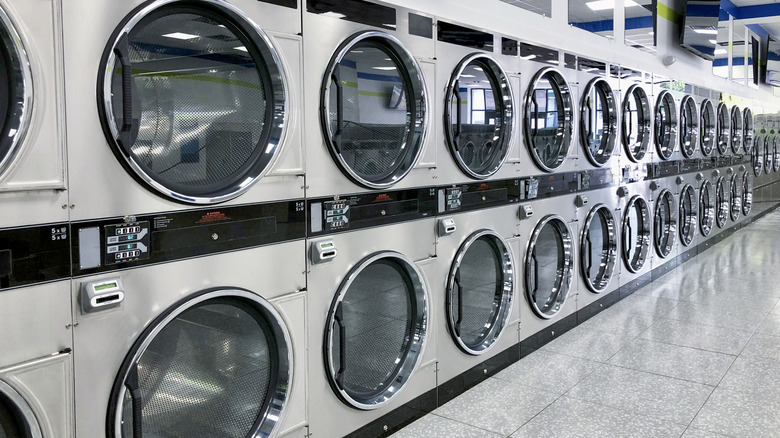
Moving over to laundry, you'll often find commercial machines have more heavy-duty components compared to typical residential machines and their lighter household workload. Commercial washers and dryers – similar to commercial fridges — also come with greater capacity and faster spin speeds for shorter cycles to move more laundry through. Some brands like Speed Queen make both commercial and residential machines, so make sure you know which is which when shopping.
Broadly speaking, as their designations imply, commercial appliances are for professional use, while residential appliances are for the home. That doesn't mean you can't put a commercial machine in your house or a residential machine in a place of work, though. If you've got the right amount of counter depth, feel free to go for it, but it might not be the most ideal version of the appliance if you're using it contrary to how it was intended to be used. The important thing is to just match the machine to the space, the workload, and the budget.