

What Does Counter Depth Mean On A Refrigerator?
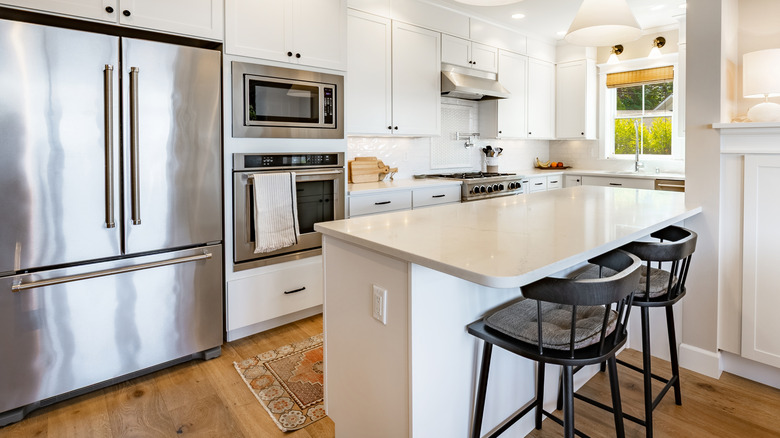
Looking at refrigerators, you might find them divided into two groups: Counter-depth and standard-depth. As the name suggests, a counter-depth refrigerator is designed to line right up with the front edge of your kitchen cabinets and countertops. It makes it look like a built-in appliance without actually requiring you to get a custom installation. Compare that to a standard-depth refrigerator, which extends much more prominently into the room.
Kitchen countertops are typically about 24 to 25 inches deep and most counter-depth models measure about 24 to 30 inches deep. Standard-depth refrigerators, on the other hand, generally range from 31 to 36 inches deep. Because counter-depth models are closer to the actual depth of your kitchen countertops, they won't protrude out into the room as obviously. The downside is that you're sacrificing some of your front-to-back storage space. Manufacturers will often try to make up for it by making counter-depth models wider or taller than standard-depth fridges, but you may still end up with less overall fridge space. Whichever you choose, just don't forget to leave some space between the fridge and the wall.
Important considerations of counter-depth refrigerators
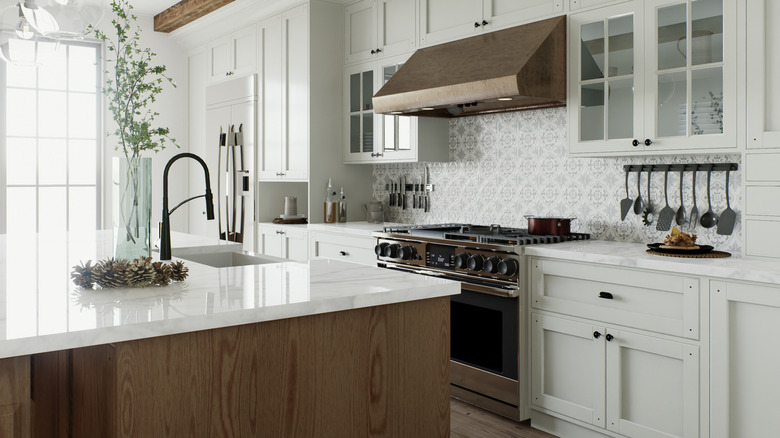
This storage space issue is the biggest downside of owning a counter-depth refrigerator. Depending on the model, you only get about 15 to 25 cubic feet of fridge space. Standard-depth models average about 20 to 30 cubic feet by comparison. This impacts the size of your shelves as well. Counter-depth models naturally have shallower shelves than a standard-depth's deeper cabinets. Sure, it's going to stick out into the kitchen space more, but you're going to have more space inside because of it.
Counter-depth refrigerators also cost more on average than standard-depth fridges thanks to their specialized design. That means standard-depth models will typically come out on top in terms of cost and overall capacity. Of course, you might be willing to overlook these downsides for the space-saving positive of being flush with your countertops and cabinets.
If you don't care about whether or not your fridge sticks out a little, you may be better off with a standard-depth refrigerator. It's more affordable, more spacious on the inside, and typically works better for families and larger households. But if you need appliances for a smaller kitchen, have a galley layout, or some other reason to savor every inch of extra floor space you can get, counter-depth models might make more sense for you.