

Why Refrigerators Are Measured In Cubic Feet – And What Size You Need
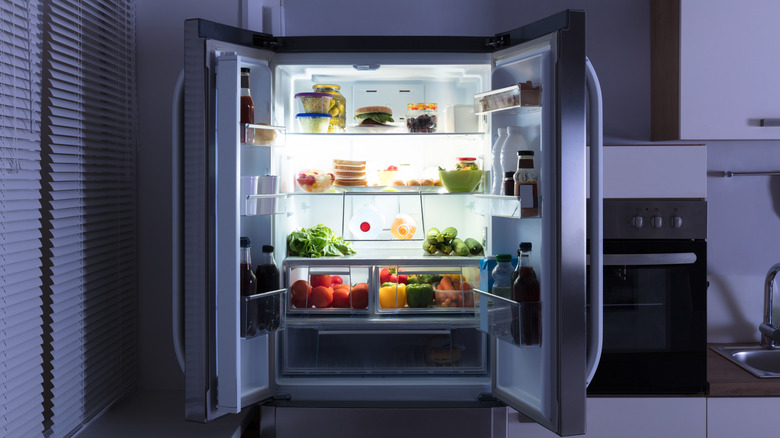
It's easy to make mistakes when buying and installing home appliances, especially refrigerators. You could either get a model that's too small to suit your needs, or you may end up with one that's way too big. Understanding the fridge's interior measurements can also be tricky, because "cubic feet" may as well be another language altogether for many buyers. The reason that measurement is used has to do with storage space.
Refrigerators are measured in cubic feet because it's actually the easiest way to understand how much room is available inside. Since you're essentially measuring a box and not a flat shape, you have to take volume into account, not just length. Cubic feet does this by combining the fridge's height, width, and depth into a single number. Doing it this way allows you to compare different brands from the worst to the best, since two units can look nearly identical, but have two very different amounts of usable storage.
When it comes to the capacity you need, the best way to narrow it down is to the size of your household. For one to two people, a compact refrigerator in the 4 to 13 cubic foot range is usually enough. If you have three to four people in your home, it's better to go with a mid-size model around 14 to 24 cubic feet. For households with five or more people, 25 cubic feet should be enough to handle the higher volume of food you'll need to hold.
Refrigerator size and organization tips
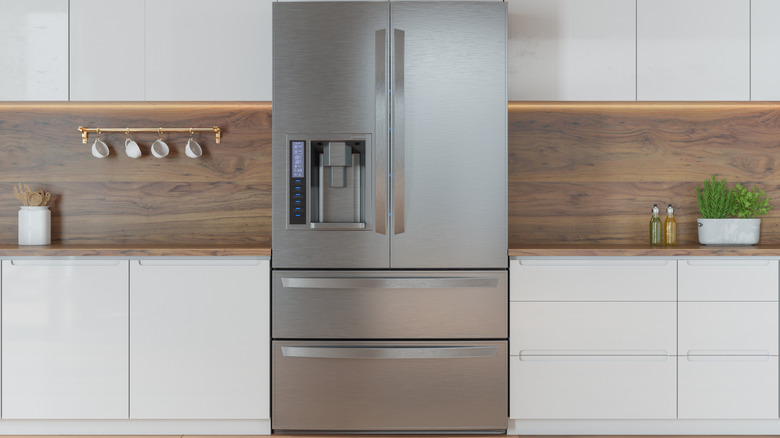
If you have to re-stock your refrigerator more often than you'd like, then you may need more holding capacity. On the other hand, if you rarely have to buy groceries and your food is perhaps going bad before it's eaten, then you may need to go with a smaller size. You also want to think about your available kitchen space, so you can get a unit that will actually fit.
Start by measuring the width of the upper cabinet over your current fridge, leaving at least 1 inch for clearance. You should also account for the countertop and base levels, using the narrowest point for the correct fit. Measure the height from the floor to the lowest point of the upper cabinet while checking the front and back of the space. Then measure the depth from the back wall to the front edge of the counters, leaving 2 inches free. Be sure you have enough room for the doors to open and leave about 1/8 inch on either side for proper clearance. Don't forget to double-check all your measurements.
If your current refrigerator still has some life left, but it's cramped inside, you can use clear containers to separate categories of food, making them easier to find. This will also allow you to get rid of bulky or oversized packaging. Labeling those containers with storage or expiration dates is a good idea, so you can stay on top of rotation while also making your available storage much more efficient.