

4 Tech Brands Owned By SpaceX
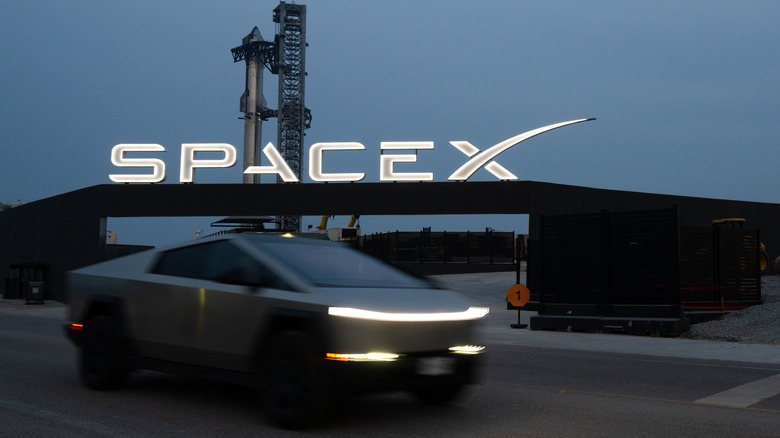
Elon Musk's SpaceX operation is the world's most valuable space company. Impressive enough, but as of September 2026, it ranks as the seventh-largest global company by market cap, placing it among such illustrious names as Amazon, NVIDIA, Apple, and Microsoft in the world's top 10 most valuable companies. Of course, SpaceX's primary business is hurling massive rockets into space. The Falcon 9 rocket, for instance, is the company's workhorse and has completed 687 successful launches at the time of writing. SpaceX has also managed to successfully land the Falcon 9 hundreds of times.
While it's rockets like this that are largely responsible for the company's "meteoric rise" to its place among the world's biggest companies, SpaceX has also acquired other tech brands since its founding in 2002. SpaceX doesn't buy a lot of companies, but each purchase makes sense for the company and its ambitions. To the general public at least, perhaps the most recognizable of these is xAI, the Musk-founded AI company behind the Grok chatbot. But this isn't the company's only venture into AI; alongside this, it has purchased an AI coding assistant, an integrated device manufacturer, and an IoT tech firm.
Let's have a closer look at four tech brands owned by SpaceX.
xAI (Grok)
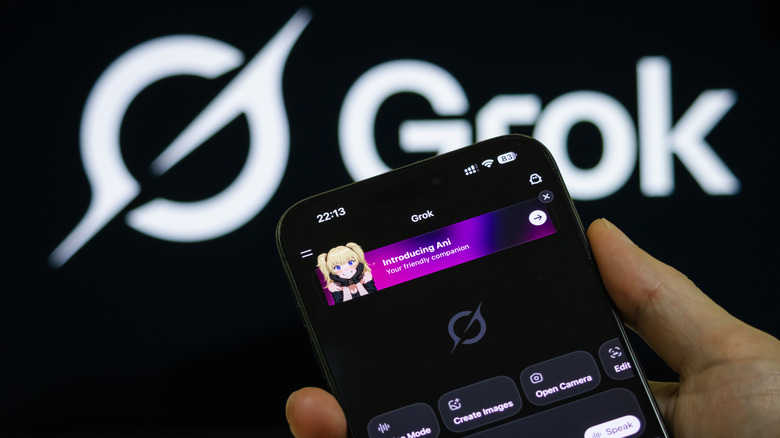
xAI was founded in 2023 by Elon Musk and a team of former Google DeepMind, Microsoft, and Google Research engineers. The company became known for developing the Grok AI chatbot integrated into Musk's social media platform X. The chatbot quickly made headlines, and it's fair to say that many of these headlines were controversial. However, they say that no publicity is bad publicity, and for xAI, this certainly seems to be the case. By early 2026, xAI had grown to be one of the most valuable AI startups in the world, reaching a value of $230 billion before its acquisition.
The deal happened on February 2, 2026, in what Reuters described as the biggest merger and acquisition deal in history. The all-stock transaction valued SpaceX at $1 trillion and xAI at $250 billion, making the merger one of the most ambitious tie-ups ever attempted in the technology sector. The deal formally unified Musk's AI and space ambitions.
According to Elon Musk, at least part of the rationale behind the acquisition was to move AI companies away from their reliance on massive Earth-based data centers to satellite data centers. However, this was a two-way deal because despite Grok AI's success, it wasn't a money-making model. It was an AI business without the kind of cash-generating abilities that supported rivals like Meta, Google, or Microsoft. Indeed, xAI reportedly burned through $13 billion in 2025. However, the US Government did sign a deal to use Grok. This seems like more than internal shuffling within Elon Musk's business empire; it lets two sectors where Elon has strong ambitions sustain each other.
Anysphere (Cursor)

Sticking to the AI theme, the next tech company on the list is Anysphere, the company behind Cursor, an AI-native coding tool and one of the best AI coding tools. This was another record-breaking deal that has been touted as being the largest startup acquisition on record, something that Mr. Musk seems to be good at. Anysphere was founded in 2022 by Michael Truell and three MIT classmates, and quickly became one of the fastest-growing AI software companies. By February 2026, it had annualized revenue of $2 billion, and that more than doubled to $4 billion by the time the acquisition went through in August 2026. Once again, this was a stock-only deal, with the final cost of the takeover totaling a hefty $60 billion.
This is another deal that benefits both companies. From Cursor's perspective, the company had problems with computing bottlenecks; the deal gave them access to SpaceX's massive fleet of GPUs. Of course, with Musk's xAI also under the SpaceX umbrella, the deal also allowed the two companies to collaborate. Indeed, this had happened before the deal was even finalized: Grok 4.5 and 4.6, which were released on July 8, 2026, and August 12, 2026, respectively, had both been trained using Cursor data.
Swarm Technologies (IoT Satellite Network)
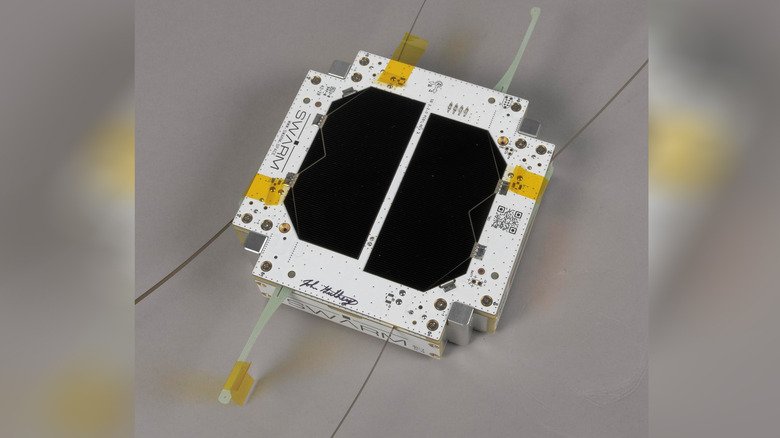
One of the companies that Elon Musk is most famous for is Starlink, the satellite-based internet provider. However, Starlink doesn't host the only global network of data satellites. Founded in 2016 by Dr. Sara Spangelo and Benjamin Longmier, Swarm Technologies' goal was to build a global, low-cost Internet of Things network using tiny satellites called SpaceBEEs. Each satellite is about 4 inches square and about 1 inch deep. They're designed to provide simple, low-bandwidth connectivity for smart devices, sensors, meters, trackers, and industrial monitoring equipment. In other words, this system is intended to do for smart devices what Starlink did for internet access — provide data services from any point on the planet.
Swarm Technologies also has the honor of being the first company that SpaceX ever purchased outright. SpaceX acquired Swarm in 2021, and the deal included Swarm's entire constellation (120 at the time), ground stations, IP portfolio, and engineering team. As far as the strategy behind the decision, the rationale was straightforward — Swarm's low-bandwidth IoT network complemented Starlink's high-speed broadband service, giving SpaceX a way to offer connectivity across both ends of the spectrum. It also gave Starlink access to the expertise and intellectual property of a company operating in a very similar field.
However, today Swarm no longer operates independently. Effectively, the company's assets and expertise were absorbed by SpaceX. One of the co-founders, Dr. Spangelo, went on to co-lead the company's Direct to Cell program before leaving to work in the energy sector.
Akoustis Technologies
SpaceX acquired Akoustis Technologies from bankruptcy in 2025. The company manufactures acoustic wave RF filters, tiny semiconductor components that clean and isolate radio signals by blocking interference and reducing noise. RF filters are something of an unsung hero of the digital age, with modern smartphones using over a hundred to keep the multitude of signals that modern phones can cope with from interfering with each other. Even car rear-window antennas rely on them to block interference from the defroster. Of course, another area where these components are essential is in satellite communication systems.
The latter application makes the SpaceX acquisition of the manufacturer make sense. By rescuing the company from bankruptcy, SpaceX bought the Akoustis manufacturing facilities, intellectual property, and engineering team, allowing it to move most of its RF manufacturing in-house. Additionally, for Musk's company, the fact that Akoustis had experience building RF filters for U.S. military satellites was undoubtedly a big carrot.
Akoustis went into bankruptcy mainly due to a large judgment owed to a competitor after losing a patent-infringement lawsuit. This saw the company's assets put up for auction under Section 363 of the US Bankruptcy Code. It was Tune Holdings that emerged as the winning bidder; Tune Holdings is a wholly owned subsidiary of SpaceX. The $30.2 million deal could end up being a shrewd purchase for SpaceX, one that brings RF manufacturing in-house and helps to reduce supply chain bottlenecks with these components.