

Do You Need To Sharpen Both Sides Of A Shovel?
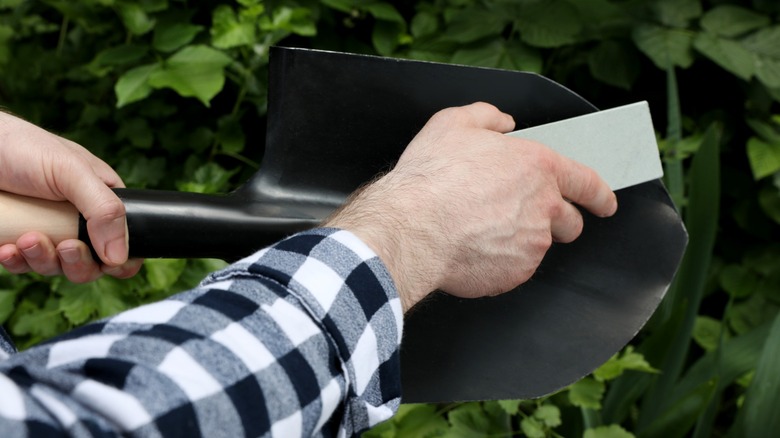
Having properly maintained tools makes lawn and garden projects easier and more enjoyable. While replacing some blades instead of sharpening them is the way to go, sharpening the cutting edge of a shovel is better than buying a new one. While there is some debate over sharpening both sides of a lawn mower blade, the best approach for shovels is to only sharpen one side. The side that gets sharpened depends on the shovel's style. Digging shovels often have the sharpened edge on the scooping or load-carrying front side, while flat shovels or spades are typically sharpened on the opposite back side.
Sharpening the front of a digging shovel makes it easier to dig straight down without the bevel trying to push the blade away from you. A flat shovel is often used for scraping where the bevel on the back can make contact with hard surfaces instead of the cutting edge. In either case, a sharp shovel provides a number of benefits. It's easier to dig through matted grass, tangled roots, and hard soil with a sharp shovel. That reduces fatigue and allows you to dig a cleaner hole with less chance of an injury brought on by struggling with the shovel.
It's best to use a sharp shovel when digging up plants for replanting. While you'll want to dig far enough from the desired plant to miss the majority of its roots, it's nearly impossible to miss them all. A dull shovel will smash and pull any roots it encounters, while a sharp shovel will cut through them cleanly.
How to sharpen a shovel safely
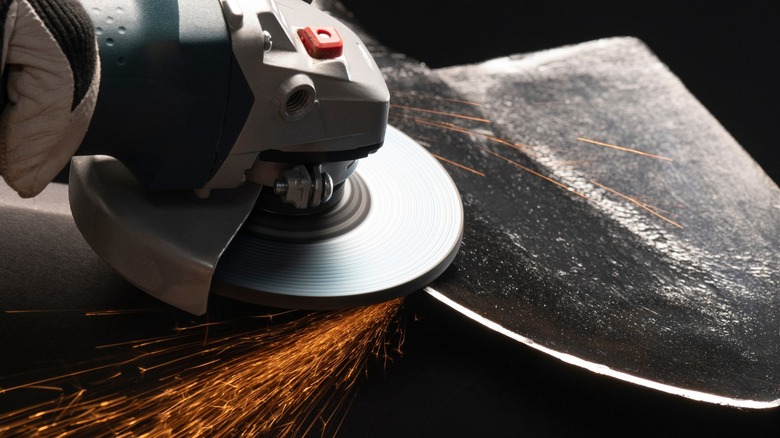
As with sharpening lawn mower blades safely, there are a few ways to safely sharpen a shovel. First, you'll need to determine which side of the shovel to sharpen since we're only going to sharpen one side. Ideally, you'll be able to see which side was previously sharpened. Then, use the existing bevel as a guide, maintaining the original angle (likely around 45 degrees) and dimensions while sharpening.
If you already have the necessary tools for maintaining lawn mower blades, you're likely already prepared for sharpening a shovel. Protective gear should include eye protection at a minimum. Safety glasses are good for hand filing, while eye and face protection, along with hearing protection, are recommended if you plan to use a power grinder. Wear appropriate hand protection based on the tool you're using, and follow the grinder manufacturer's safety instructions.
You could wrestle with a shovel to hold it for sharpening, or make life easier by using a bench vise mounted to a workbench. Start with a clean shovel that's free of any caked-on mud or excessive rust. Depending on the amount of metal that must be removed to restore the shovel's edge, use a coarse stone, hand file, rotary tool, or angle grinder to sharpen the shovel.
A coarse abrasive stone or hand file can remove a small amount of metal easily enough, while rotary tools and angle grinders remove metal more aggressively. Use caution with power tools, as they can quickly remove more material than needed and could also overheat the metal, causing the shovel blade to soften in that area. If the sharpening process rolls a burr to the other side, use a file to remove it without creating a bevel.