

What Does 'Permanent Press' Cycle Mean On A Washing Machine & How Does It Work?
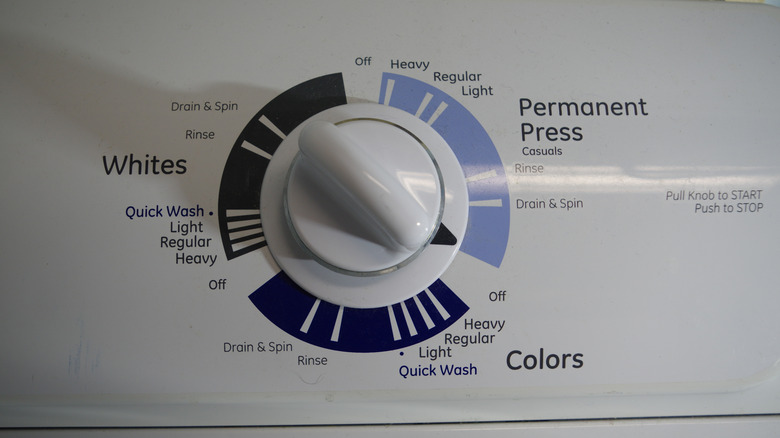
A washing machine is an exceptionally convenient appliance for anyone to own, as it reduces the otherwise lengthy, labor-intensive process of washing clothes and linens down to tapping a couple of buttons and waiting. While most of the settings on a typical washing machine from the major brands are fairly self-explanatory, there are a couple that may not seem quite as obvious, including the "Permanent Press" cycle setting.
As opposed to straightforward cycles like "Normal" or "Towels," it's not immediately apparent what kind of washing job the Permanent Press setting is intended for. In actuality, the Permanent Press cycle is intended for cleaning clothes and fabrics made of materials that are prone to wrinkling, not unlike pressing the wrinkles out of your clothes by hand on an ironing board. Once you know how the Permanent Press cycle works, you might just find it useful for certain kinds of apparel, especially if you've previously had troubles with them wrinkling up on you.
Permanent press removes wrinkles from clothes
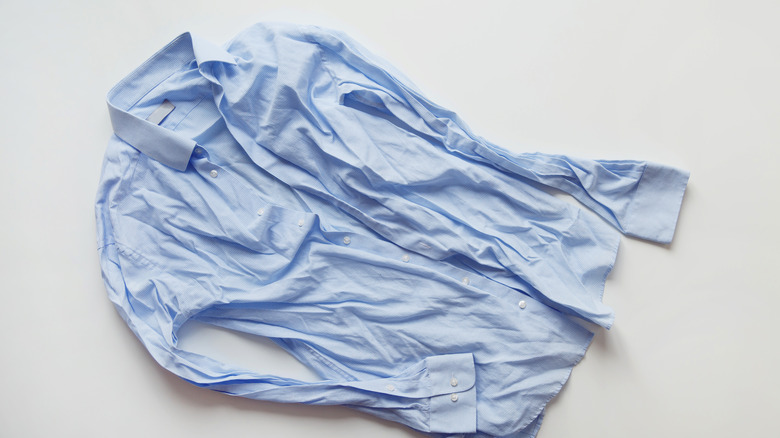
The term "Permanent Press" specifically refers to clothes that are designed to resist wrinkles. In other words, clothes that remain "permanently pressed." Some types of clothes are naturally resistant to wrinkles, such as those made of stretchy synthetic fabrics like polyester, or those that have been treated in some way to prevent wrinkles from forming. Of course, not all clothes have this treatment, with some articles, like those made from natural fibers, being more prone to wrinkling than others. If you have any formal attire like dresses, dress shirts, or suit jackets, these aren't Permanent Press clothes, which means they are particularly prone to wrinkling.
The Permanent Press cycle, rather than being intended for Permanent Press clothes, is actually intended for everything else. The particular process used in a Permanent Press cycle is meant to help work wrinkles out of articles of clothing, while still providing the regular cleaning that you put them in the washer for in the first place. It is safe to run Permanent Press clothes through this cycle as well, and in fact, it's a great choice for polyester clothes and dress pants, as the stronger heat and spinning of a normal cycle can cause these kinds of clothes to gradually lose their shape and suppleness.
A Permanent Press cycle uses multiple temperatures and spin settings
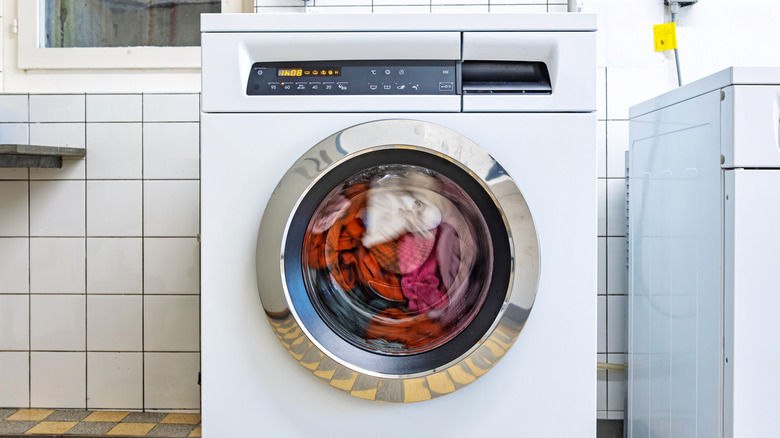
When you run your clothes through a Permanent Press cycle, it's a more elaborate process than the normal setting. The normal setting just pummels your clothes with spinning, water, and detergent. This is great for working out stubborn soil stains, but not the best when it comes to wrinkle-prone fabrics. The Permanent Press cycle is kind of like a middle ground between that and the Delicate cycle.
It starts with a medium-heat wash, including gentle agitation and slower spinning, followed by a cool water spray rinse. The combination of warm and cool water temperatures, as well as less severe physical action, help to work out existing wrinkles and prevent new ones from setting in. Because it's a gentler, shorter cycle, though, it only really works on clothes and shouldn't be used for heftier items like towels or bedding. You also shouldn't use it on delicate fabrics like those in undergarments. Save those for the Delicate cycle.
Incidentally, both washing machines and dryers typically have a Permanent Press setting. After you run your clothes through a Permanent Press cycle in the washer, you should follow with a Permanent Press cycle on the dryer, which dries gently with medium heat followed by a cool-down to get rid of clinging moisture without completely pulverizing your clothes. As an added bonus, the Permanent Press setting might actually use less energy on your dryer than high-heat settings.