

15 Handheld Video Games From The 1980s That Are Pure Nostalgia Today
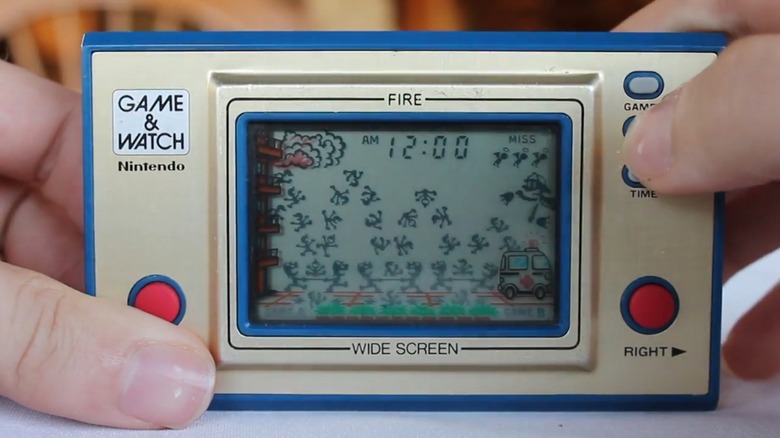
These days, when people think of handheld games, they probably look at their smartphone or Steam Deck. Those modern examples are impressive, but if you grew up in the 1980s, you already know that handheld gaming exploded in popularity long ago. While the Nintendo Game Boy was released during the decade, it didn't come out until July 31, 1989.
Most gamers of the period relied on old-school LCD, LED, and VFD games to keep them entertained, and there were tons of options. Companies like Mattel, Nintendo, Tandy, Coleco, Tiger Electronics, and others released hundreds of different types of handheld games, many of which are collectibles today.
These are the kinds of systems that people threw into backpacks and showed off to jealous friends, so looking back on them today is nostalgic. Games people played and forgot about are just as entertaining now as they were back in the day, and nostalgia being the market driver that it is, some have even been remade and re-released after decades of fond memories.
Nintendo Game & Watch Helmet
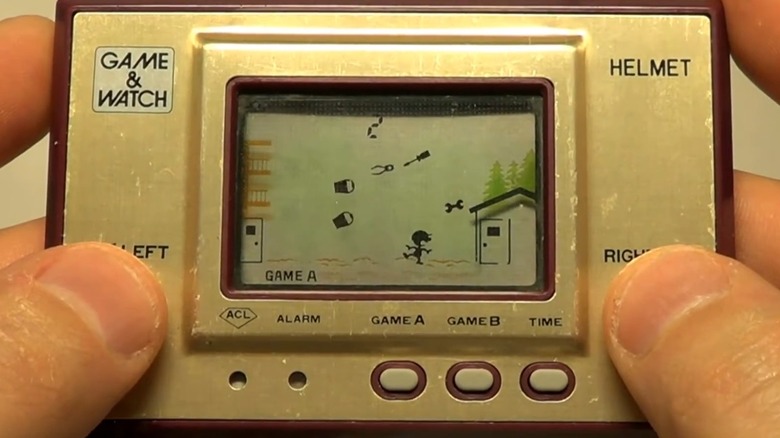
Nintendo got its start in the United States by releasing arcade games, and it was "Donkey Kong" that made the company what it is today. But before it released the Nintendo Entertainment System (NES), Nintendo started out with handheld devices in its Game & Watch series. The portable LCD games were relatively simplistic compared to what the Game Boy produced at the end of the decade, but they were nonetheless fun.
The series launched in 1981 with "Ball," and more games followed as time passed. "Helmet" arrived in 1981 as an action game where the player had to move a construction worker through the most dangerous build site imaginable. They had to cross the screen while dodging falling tools, but on occasion, the door wouldn't open, requiring the player to run back into the danger zone.
The game required quick reflexes and excellent timing, making it challenging but also entertaining. While the original LCD game is a great addition to any collection, there are more recent ways play it without having to find a working device. Nintendo re-released it on the Nintendo DSi and Nintendo 3DS.
Tandy Electronic 2-Player Baseball
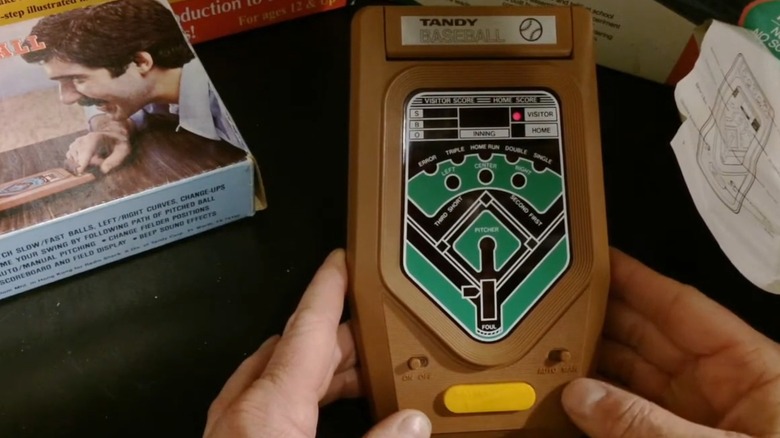
RadioShack sold a ton of classic electronic devices over the years, and because the company was owned by the Tandy Corporation, much of it was exclusive. One of the more interesting ones from the early 1980s was the Tandy Electronic 2-Player Baseball. The LED game features a baseball diamond as its playfield, using red LEDs to track progress.
The game featured a scoreboard, tracked innings, and was playable by two people simultaneously, which was an impressive capability for a 1981 game. When you turn it on, the device plays "Take Me Out to the Ballgame" in beeps. You can play against the computer if you don't have a friend to play with, and hitting the ball requires tapping the button at the right time.
Once a ball is hit, your player runs the bases (unless the ball is caught). It's a basic baseball game that's surprisingly addictive despite being little more than a beeping, red-dot playable device. RadioShack sold different versions of its baseball games, including some with more features and different capabilities.
Mattel Electronics Dungeons & Dragons Computer Fantasy Game
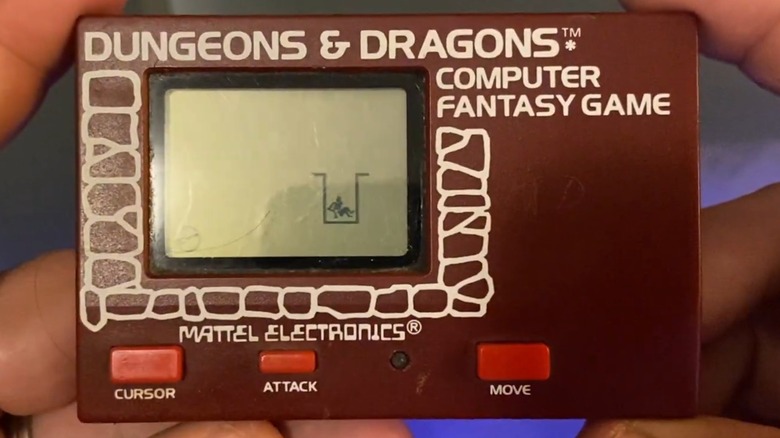
"Dungeons & Dragons" was first published in 1974, and in 1981 Mattel Electronics took the popular tabletop role-playing game and made it into a handheld LCD device. When it was released, the game quickly old, as players wanted to dive into a D&D campaign via the unique gaming device.
"Dungeons & Dragons Computer Fantasy Game" is a remake of "Hunt the Wumpus," a text-based adventure game released in 1972, but with added D&D themes. Play involves choosing a level, which changes how your character starts. You then guide the character through a 10x10 dungeon, where each square represents a room, allowing for 100 rooms to explore.
Some rooms have pits. Others have monsters. A few have loot. You play until your character dies, and just like tabletop D&D, you have to start over if you can't resurrect. The game's object is to find a magic arrow, which you then use to kill a dragon. By today's standards, it's an ancient device of a lost culture, but in 1981, the "Dungeons & Dragons Computer Fantasy Game" was a hot item.
Coleco Donkey Kong
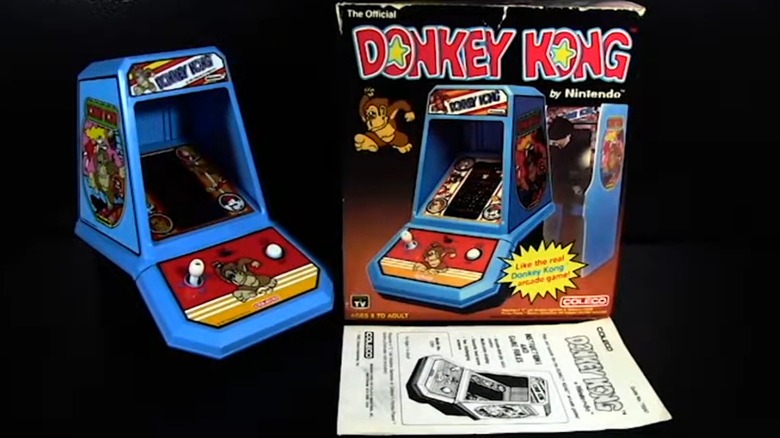
There's no denying the impact the original "Donkey Kong" had on the video game industry, so it's not surprising that multiple versions of the game were released. A year after the game debuted in arcades, Coleco released "Donkey Kong" as a tabletop mini arcade machine that did a great job of recreating the original game, and it only required four C batteries to function.
This was an impressive piece of hardware, which explains the hefty price tag in '82 of $54.95 ($191 in 2026). It uses a colored VFD display representing Mario, Donkey Kong, Pauline, barrels, and ladders along the game's platform levels. You controlled Mario with a small four-directional joystick and jumped via the jump button.
The game appeared in the original "Gremlins" film, where Gizmo is seen playing it as if it's a full-size arcade game. Coleco released several licensed games in similar devices, including "Frogger," "Galaxian," "Pac-Man," and "Ms. Pac-Man," but the "Donkey Kong" game was easily the most popular, thanks to how well it approximated the original arcade machine's look and gameplay.
Mattel Electronics Masters of the Universe
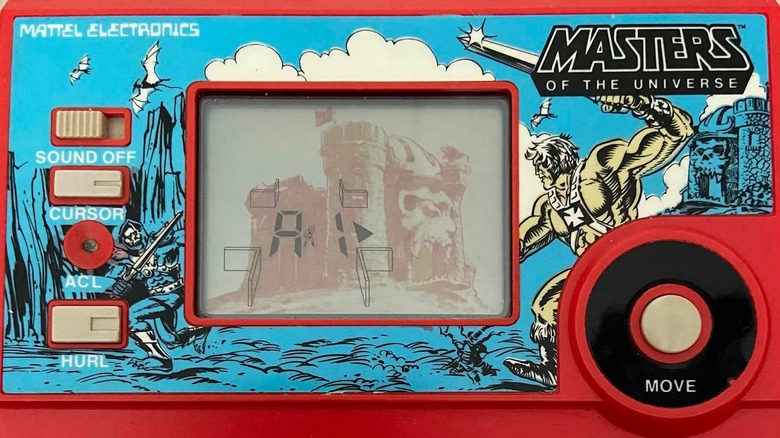
When Mattel released "Masters of the Universe" in 1982, it launched with a Marvel Comics series and a handheld game. The cartoon didn't arrive until 1983, but by then, folks were already buying "He-Man" toys for their kids. Mattel Electronics' "Masters of the Universe" shares characteristics with the company's "Dungeons & Dragons Computer Fantasy Game," and there's a reason for that.
The two games are almost identical in how they're played, though there are several key differences. You'll notice the artwork clearly places the "Masters of the Universe" game in Eternia, not a random dungeon in a tabletop RPG. It also features more buttons and a different movement system, but the gameplay is decidedly similar.
The game starts with He-Man in a maze, and you need to guide him to his Power Sword and use it to take out Skeletor. It requires some guesswork for navigation, not to mention luck, and failure to achieve your goal results in the game ending, so you need to restart. It's an entertaining remake of Mattel's earlier device, but marketed towards fans of "Masters of the Universe."
Coleco Zaxxon
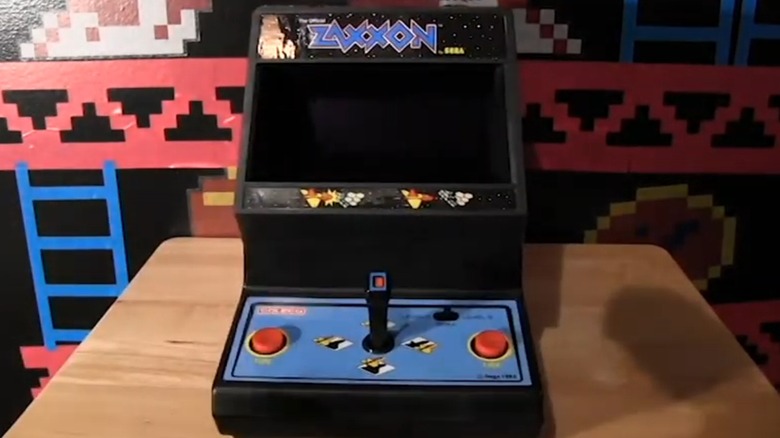
"Zaxxon" was a pioneering isometric arcade scrolling Sega shooter released in 1982, and it was incredibly popular. That popularity resulted in the creation of several handheld games emulating its arcade gameplay. While none rose to the same level of complexity as the original, Coleco's "Zaxxon" came the closest.
The use of two VFD screens and a mirror, which enabled an isometric view just like the arcade game, made Coleco's handheld version feel as close to the original as possible. Gameplay is similar, as you guide your ship along a path while shooting enemies and avoiding obstacles. The game had varying beeps to indicate movement and fire, and it was about as challenging as a handheld game approximating an arcade game could be in 1983.
While it's larger than your standard handheld system and was more easily played atop a table, "Zaxxon" was portable despite the four D batteries needed to power it. The game is incredibly difficult to play well, so it posed an excellent challenge in pitting players' high scores against one another, but the original "Zaxxon" was also difficult, so there's that.
Parker Bros. Q*Bert
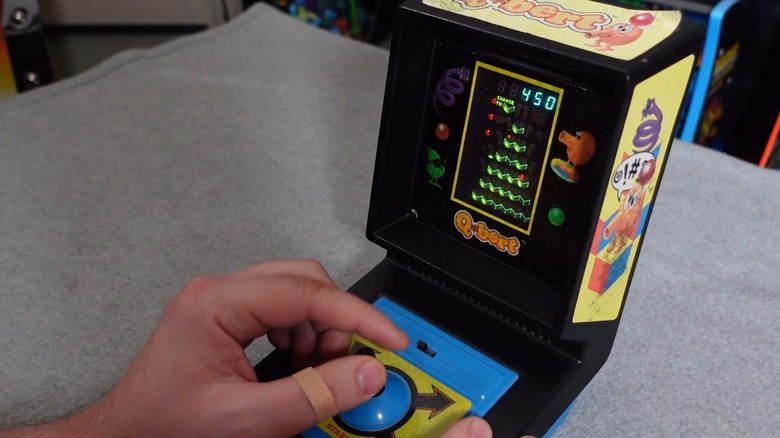
While Parker Brothers is best known for its tabletop board games, it produced an excellent handheld version of "Q*Bert" in 1983. This was one year after "Q*Bert" arrived in arcades, where its unique gameplay made the cabinet a hit. The game uses a four-way directional joystick to move the character from one platform to another, and Parker Brothers' game emulated it perfectly.
The unit's VFD screen did a great job of reproducing the various cubes, shaded colors, and mobs. Once you powered on the game, which beeped at you for every movement, you guided Q*Bert to turn on each block, which was represented by the left side becoming highlighted. Enemies were simple red dots, while Q*Bert was a dot with appendages.
The graphics were nowhere near the quality of the arcade game, but they didn't have to be. Anyone familiar with "Q*Bert" would not only have instantly recognized it, but they'd also been able to play with little to no instruction, which is one of the reasons that Parker Brothers' "Q*Bert" was an excellent game.
Tandy Championship Electronic Golf
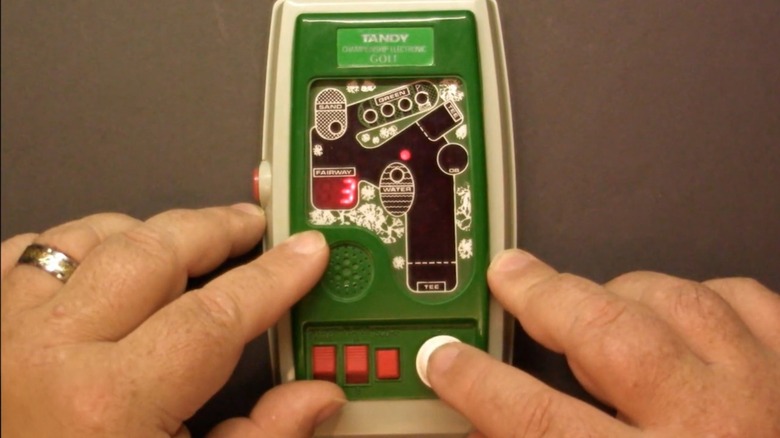
Handheld golf games were easy to find throughout the 1980s — there were tons of them. Most had limited functionality, but a lot of them were fun ways to play golf while inside, though it would be some time before really good video game versions of golf arrived. Tandy produced its "Championship Electronic Golf" in 1983, which it sold exclusively through RadioShack stores.
As you can see, the game is fairly limited, but it features a nine-hole course, uses red LEDs to track gameplay, and it's more challenging than it appears. Tandy's game is a licensed version of one made by Bandai, which is almost identical, save for some of the labeling.
Either version is great to play, as they both offer the same holes and interface. It came with a paper scorecard that let you track your progress when playing with someone else, so the total score wasn't kept by the machine. The system has two switches and a button alongside a golf ball-shaped controller. To play, you have to time everything just right, as you cannot aim.
Tiger Electronics Space Invaders
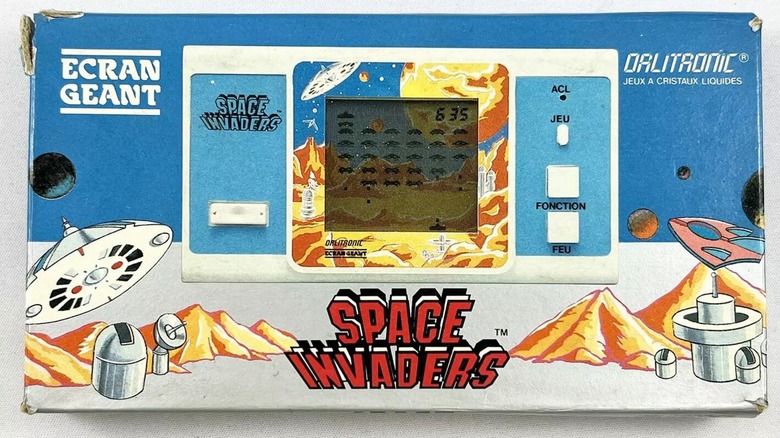
Like many classic arcade games, "Space Invaders" received the handheld gaming treatment in the 1980s. In fact, the game's popularity has continued to see it reproduced in all kinds of cool mini arcade machines and handheld devices long after it arrived in arcades in 1978. One of the better adaptations of the OG arcade game was made by Tiger Electronics, which produced it in several versions.
"Space Invaders" didn't require much in the way of graphics, sound, or controls when it was miniaturized. All you needed was a left-right directional pad and a fire button, which is exactly what Tiger Electronics created for the game. It even featured some of the same arcade artwork behind the screen, making it look as much like the game as possible.
Tiger Electronics also released an earlier portrait version of the game in 1982, so the '84 version is a bit more advanced. Regardless of which one you got to play, it was still the same game, requiring players to shoot at enemies, avoid their dropping ammunition, and deal with an ever-increasing level of difficulty to get the high score.
Nintendo Game & Watch Super Mario Bros.
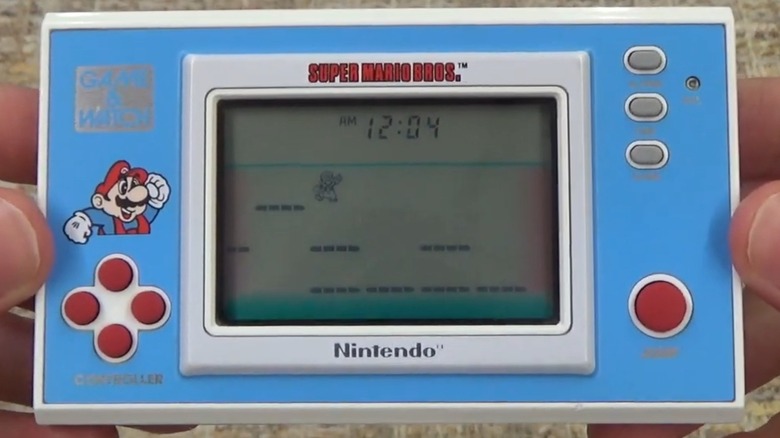
Despite the availability of newer technology, Nintendo continued making Game & Watch systems as late as 1991, so there were lots of them to choose from. While everyone has their favorite, one that most people enjoyed was "Super Mario Bros." The game was first released in 1986, though two years later, it was re-released in a newer widescreen format.
This game was an approximation of "Super Mario Bros." on the NES, albeit with some limitations due to the technology. That said, it also featured eight levels, just like the NES game, and gameplay involves jumping from platforms and avoiding enemies. While the system didn't feature a Game B mode, beating it restarted the game in a more difficult setting.
This game introduced Bullit Bill and Lakitu, the hammer-throwing turtle from the original game. "Super Mario Bros." was successful, and in 2020, Nintendo upped the game by releasing an all-new "Super Mario Bros." Game & Watch system that features the exact same game as the NES version and "Super Mario Bros. The Lost Levels" in full color.
Tiger Electronics The Terminator
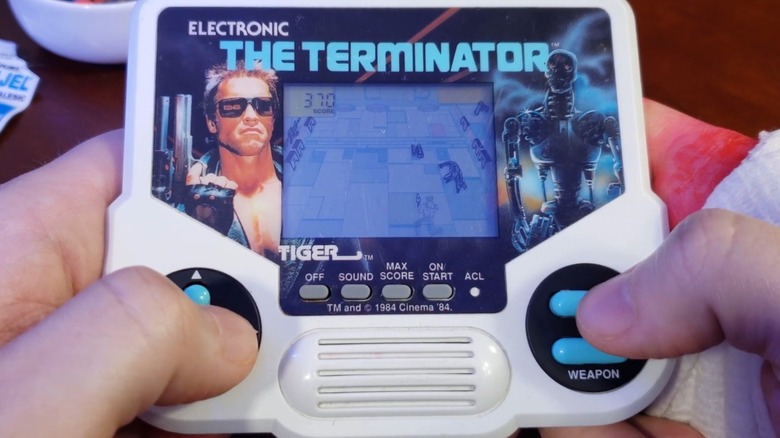
Despite Hasbro going to the trouble of reviving Tiger Electronics' handhelds a few years go, the brand had a well-deserved reputation for making crummy LCD games in the '80s and '90s. Not all of its games were actually bad, though. Case in point: "The Terminator," an engaging game that took on aspects from the movie and gave the player a completely new experience. In it, you control John Connor in the future, and shoot at approaching terminators to defeat Skynet.
That didn't even happen in the film — you only caught a glimpse of John as an adult in the future — so "The Terminator" isn't much like the movie. Still, it features engrossing and complex gameplay, requiring you to swap your weapons and tactics depending on what type of enemy is blinking its way to you at any given moment.
The game was challenging without being a straight-up button-masher. On top of its dynamic gameplay, "The Terminator" featured "16 levels of peril from the future!," according to the package. Tiger Electronics released this game in 1988, which was four years after the film was released, and another three years before "Terminator 2: Judgment Day" hit theaters.
Acclaim 1943
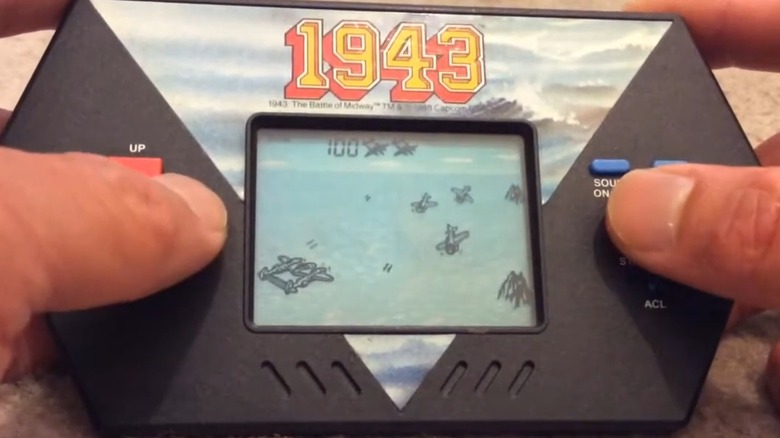
Capcom's "1943: The Battle of Midway" was another popular arcade game that did well in its switch to a handheld system, thanks to Acclaim's "1943," which released in 1989. The original arcade game featured a scrolling vertical screen of enemies to shoot down and dodge, but this little LCD handheld couldn't accomplish that. Instead, it was a one-screen, single-player take on it.
The game featured the standard beeps you'll be used to if you've enjoyed a few LCD games, but you could also thankfully turn the sound off, as it could get annoying after a while. Gameplay involved moving your plane left and right on the bottom of the screen while enemies approach from the upper right. This gave it a feeling of depth you didn't see in many LCD handhelds of the era.
You could also move your plane up and down, though this was limited to the bottom third of the screen. It was challenging enough to keep you engaged through multiple gameplay attempts, though a bit difficult at first. Acclaim made several games in this handheld format, including "Knight Rider" and "Wizards and Warriors," but "1943" was one of the more popular options.
Nelsonic The Legend of Zelda Game Watch
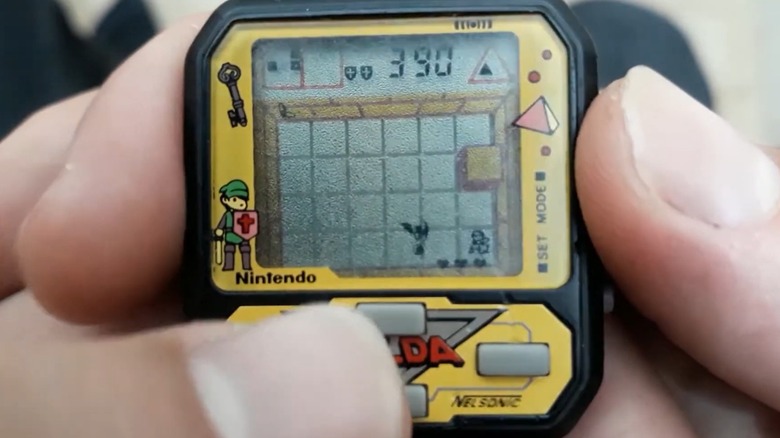
An interesting type of handheld video game system arose in the 1980s: game watches. Casio made a bunch, and it wasn't the only company producing them. Nelsonic produced several licensed Nintendo games as watches, including "The Legend of Zelda Game Watch," which is a mini adventure in a dungeon that's not unlike the NES game.
These systems were incredibly limited due to the technology of the day, so you were only afforded a single small screen, and it featured four movement buttons on the face. It was essentially a top-down dungeon crawl with four dungeons, each with four rooms for you to explore.
You need to collect a weapon to defeat some enemies, gain a key, and use it to proceed. For what it was, "The Legend of Zelda Game Watch" was a pretty cool game to have on your wrist in 1989. It's hardly the best "Zelda" game, nor is it considered canon, but in the late '80s, this was how the cool kids played games on the go... if they hadn't yet gotten their hands on a Game Boy.
Konami Blades of Steel
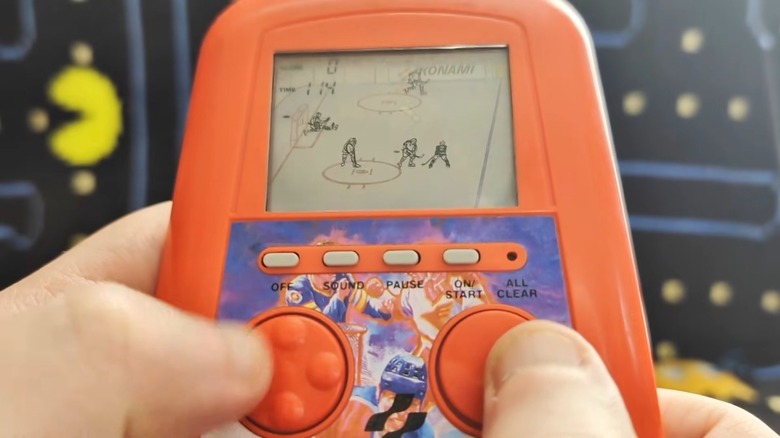
Konami released "Blades of Steel" on the NES in 1988, and it was a huge hit. This was at a time when hockey games hadn't found a solid footing on the home console market, and while that's certainly changed, in 1987, a good hockey game was hard to come by. Fortunately, Konami was paying attention, and in line with its NES release, Konami developed a handheld version of the game.
"Blades of Steel" came in a striking red system that is only a small approximation of the NES game. This was due to the limitations of LCD tech, but Konami managed to pack a lot into this small device. Gameplay wasn't like typical hockey — you didn't defend at all. Instead, the object was to score as many goals as possible before time ran out. This made it all about timing, which wasn't uncommon in LCD games, and it took a lot of work to get good at the game.
Given the hardware limitations, "Blades of Steel" is surprisingly fun to play, and it kept plenty of fans entertained long before better options were made available for handheld gaming systems.
Tiger Electronics Gauntlet
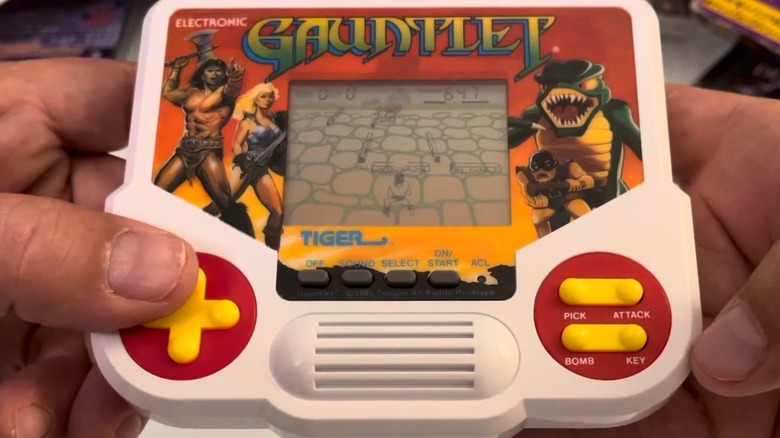
Many of the Tiger Electronics games were shameless cash grabs, but "Gauntlet" was a surprisingly good adaptation. The original game was released in arcades in 1985, and it's a classic that let four people play simultaneously. Tiger's take wasn't as complex, but it did capture the original game's primary elements, creating a similar experience with plenty of options.
Gameplay involved a quest to find the Sacred Orb over nine stages spread across five worlds: the Castle, the Dark Forest, the Lost Caverns, the Unseen, and Volcana. Unfortunately, you were limited to choosing from only two of the arcade game's four characters, so it was either the Valkyrie or Barbarian on the handheld device.
The different characters offered variations in their looks and in the sounds made by the machine. You would guide whichever one you picked across a large area filled with enemies and obstacles, gaining bombs, keys, and power along the way. It's pretty involved for a Tiger Electronics handheld LCD game, and for many fans, it's one of the best games the company ever produced.