

Who Is RadioShack Owned By And How Many Stores Are Left?
When it comes to major electronics and weird 1980s gadgets, very few retailers stand out like RadioShack. Once the premier destination for tech shoppers, RadioShack is a shadow of the company it once was. Despite its fall from grace, though, it's still around. Today, the company is a subsidiary of Grupo Unicomer, a retail and financial services company with operations across Latin America and the Caribbean. Unicomer's affiliate Global Franchising Corporation holds a majority ownership of the RadioShack brand worldwide.
The company operates 336 RadioShack stores across Central America, the Caribbean, and South America, while the brand has a presence in 70 countries globally. As of 2026, RadioShack has also begun rebuilding its retail presence in the U.S. through an Authorized Dealer Program. In an interview with Twice, RadioShack USA Managing Director Kevin Hamann claimed more than 170 former RadioShack stores were participating in the program as of August 2026.
RadioShack is no longer trying to rebuild its former retail footprint in the U.S. Instead, RadioShack has chosen to work with local dealers and regional partners that can provide physical presence for the company's products. Additionally, RadioShack is working with retailers like Target and Macy's for online-only sales, while also expanding its distribution through retailers like Amazon, Best Buy, Walmart, and TikTok.
How RadioShack became a household name
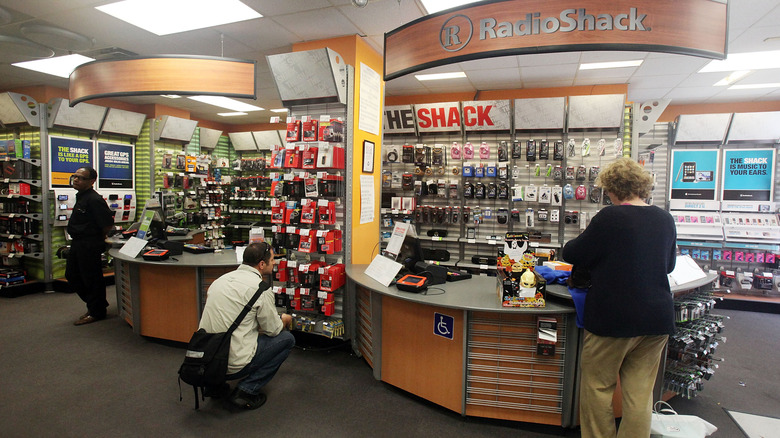
RadioShack got its start as Radio Shack in 1921, when Theodore and Milton Deutschmann opened a store in Boston. The company sold radio equipment and components in-store and via a mail-order business. Radio Shack eventually expanded into more modern tech like high-fidelity audio gadgets and other electronics, growing to nine retail locations by the early 1960s. Despite that growth, financial problems led to a company acquisition that would change its future.
In 1963, Charles Tandy bought the company for about $300,000 and, in the years that followed, began shifting the company's focus more toward consumer electronics. Eventually, Tandy made the retail chain the centerpiece of his company. This set the stage for Radio Shack's expansion into a nationwide retail powerhouse in the 1980s and beyond.
Radio Shack's popularity and appeal were built on a combination of convenience, selection, and knowledgeable employees. At its peak, Radio Shack had thousands of walk-in electronics stores across the United States, giving customers easy access to a wide range of electronics and related products. This helped the electronics giant become a trusted destination for consumers who wanted not only the products, but also the technical expertise to use them.