

5 Overrated Sports Cars Drivers Say Aren't Worth The Hype
In the world of sports cars and enthusiast vehicles, it can sometimes be hard to separate the hype around a given car from the reality of owning and driving it. With so many models from so many manufacturers to choose from — many of them quite rare and valuable — it can be hard to get firsthand experience with your dream car, whether it's a modern sports car or a pricey classic.
Instead, the hype and appreciation we have for these cars often come from secondary sources, such as movies, video games, or online influencers who tend to present things in an idealized or romanticized form. This means some of these popular cars might fall short of fans' expectations in the real world, particularly when compared to other, less-hyped, or less fashionable sports cars. With this in mind, we've gathered five well-known, popular, and even iconic sports cars that, depending on your expectations, might not be worth the hype or the high market prices they command.
Few cars are perfect, of course, and we're not saying that these cars are bad, undeserving of their status, or should be avoided. Instead, these are examples of sports cars where excess hype and an idealized image can overshadow their real-world driving and ownership experience.
BMW E30 M3
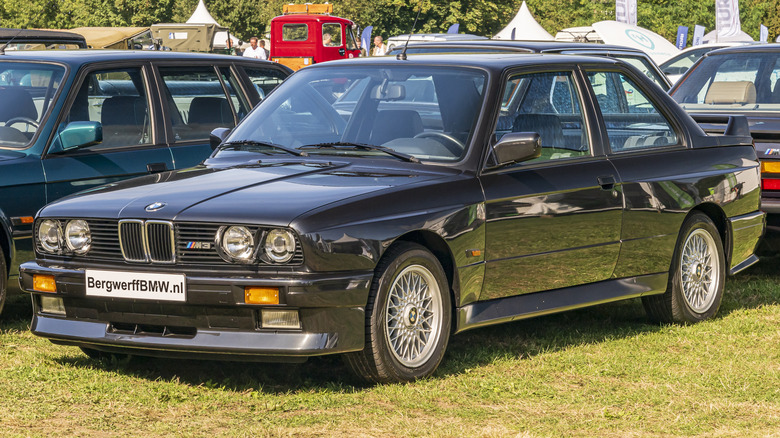
The BMW M3, through its various iterations, is widely considered one of the best performance cars of the last 40 years — and it all started in the mid-1980s with the debut of the original E30 M3. Historically, the E30 M3 is an absolute legend that commands a very high premium in today's collector car market.
With its distinct, boxy '80s looks, strong motorsport pedigree, and high-revving four-cylinder engine, there's a lot to like about the original M3. Where the E30 falls short, though, is in its performance, especially when compared to newer, more powerful M3 models. When Car & Driver tested an M3 in 1988, the coupé put down a high six-second 0-60 time and a 15.2-second quarter-mile ET — which would put it slightly behind a 2025 Toyota Camry Hybrid on the drag strip.
This combination of middling real-world performance and ultra-high prices has led some modern reviewers, such as Machines With Souls' Mike D'Ambrosio, to call the E30 M3 "the most overrated car ever." Even within the BMW family, some enthusiasts have said they prefer the smoothness and torque of the six-cylinder BMW 3-series of the same era — and unlike the ultra-hyped M3, those non-M E30s are still available at somewhat reasonable prices.
Dodge Viper
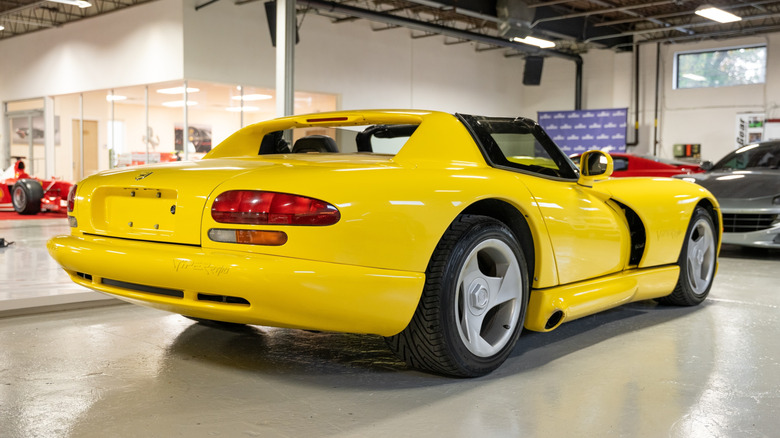
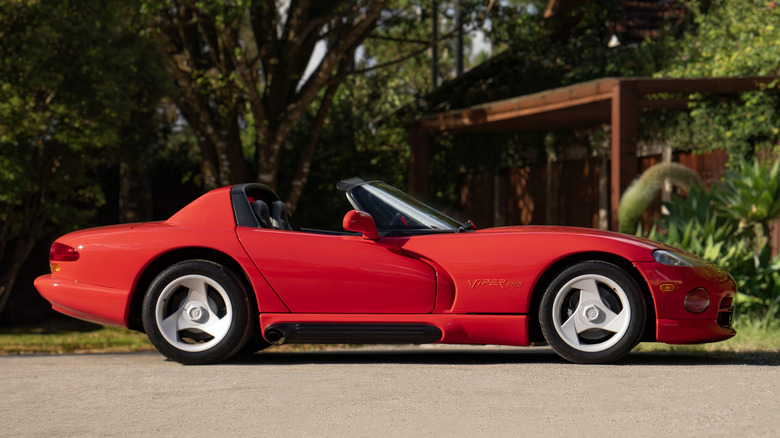
If you came of age in the 1990s, then there's a good chance that the first-generation Dodge Viper was one of your dream cars. The groundbreaking first-generation Viper was heavily inspired by the '60s Shelby Cobra and, like the Cobra, it's about as raw as a sports car can get, with a massive 400-hp 8.0-liter V10 and a lack of any creature comforts or electronic driver aids. It looked good and was quite fast, but was also a handful to drive.
Even the updated, later-generation Vipers are still considered to be poorly built and unrefined, with a driving experience they say is closer to a garbage truck than a high-end sports car. The Viper's combination of big power and low traction can be dangerous, and as numerous videos have shown, you don't even have to be going that fast to get bitten by the Viper.
Now, you could argue that the Viper's dangerous driving experience and lack of refinement are part of the car's mystique and contribute to the hype around it. The thing is, while wild side may sound cool on paper, those used to the comforts, conveniences, and safety cushions of modern performance cars may not enjoy the Viper's primitive, untamed personality.
Mazda Miata
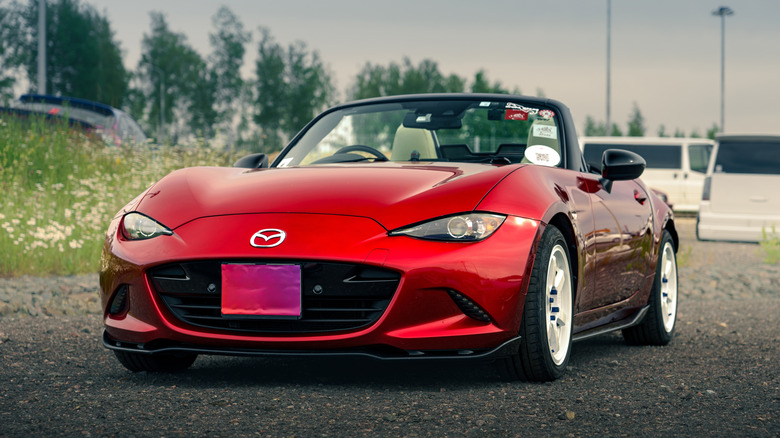
The Mazda MX-5 Miata is one of the world's most popular sports cars and a bona fide driver's favorite. Generally speaking, the Miata is affordable, fun to drive, and very reliable — and our own reviews of the MX-5 have echoed these points. So how, then, could the lovable Miata be considered overrated or over-hyped?
It's not so much that the Miata doesn't deliver on its mission; it's that the car occupies a niche that just might not be for everyone. The Miata handles well and is great fun on twisty roads, but its performance numbers and lap times aren't impressive. Despite the wide-reaching praise, those used to more powerful sports cars might be disappointed by the Miata's real-world performance.
The Miata's small size also limits its appeal. It only has two seats and a small trunk, making it hard for most people to use as a daily driver. It may be affordable compared to other sports cars, but it's arguably less appealing if buying a Miata also means you'll need to buy a more practical second car. Also, taller or larger drivers may find the Miata's tight cabin a no-go. All in all, it's not so much that the Miata is overrated; it's just not always the sports car answer everyone says it is. A Honda Civic Type R, for example, will be much more practical, outmuscle the Miata in a straight line, and still be quite fun in the corners.
DeLorean DMC-12
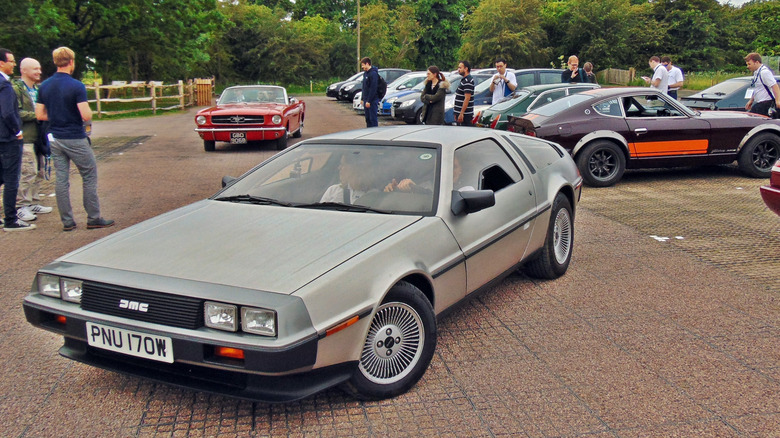
On paper, the DeLorean DMC-12 seems to have everything needed to be a dream car. It has exotic 1980s styling, a mid-engine layout, gull-wing doors, and played a starring role in the "Back to the Future" movies, easily making it one of the most iconic cars of the '80s. This, combined with the DeLorean's rarity, has made the DMC-12 very desirable among collectors and film aficionados alike.
Looks can be deceiving, though. Taken as an actual sports car you might use, the DMC-12 starts to fall on its face. Despite its supercar looks, the DeLorean's engine is a modest 2.8-liter, Renault-sourced V6 that was rated at 130 hp when new. When Road & Track let one loose on a track in 1982, the DeLorean took a glacial 10.5 seconds to hit 60 mph and nearly 18 seconds to complete the quarter-mile run. Even by the standards of its time, the DeLorean's lethargic driving performance didn't match its exotic looks.
Even worse, despite its mundane performance, the DeLorean isn't particularly easy or cheap to find parts for, either. Unless you are a "Back to the Future" superfan or have absolutely fallen in love with the DeLorean's unique stainless-steel body, there are much better 1980s sports cars to own and drive.
Toyota Supra Mk4
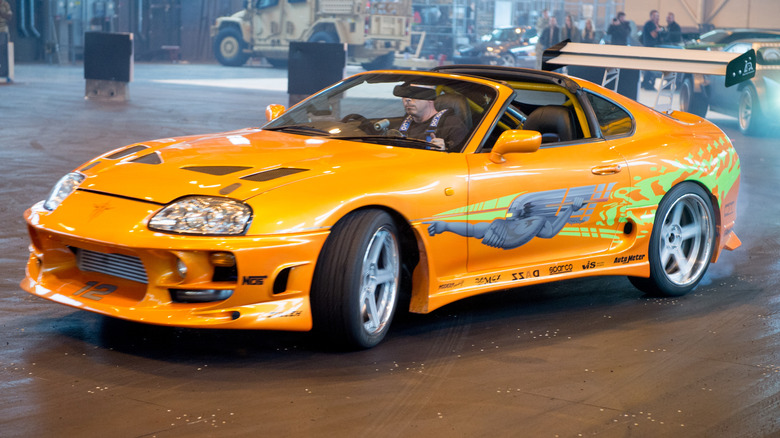
Let's get this out of the way first. There's nothing objectively wrong with the fourth-generation Toyota Supra. The new twin-turbocharged Supra was a big deal when it arrived in 1993, and its performance numbers still hold up very well today. However, the Mk4 Supra's status as a JDM icon and tuner dream car, not to mention its insanely high prices, might not quite match up to reality.
Yes, the Supra is powered by Toyota's legendary 2JZ engine, and yes, it played a memorable, starring role in the original "The Fast and the Furious" movie — but it's still a relatively conventional sports car that has been criticized for its excess weight and isn't especially exciting to drive in stock form. Selling prices for good-condition fourth-gen Supra Turbos now regularly cross the $100,000 mark, which is a lot of money for a 1990s Toyota that performs similarly to a modern base-model Ford Mustang.
If the fourth-gen Supra is your childhood dream car, or you have a burning need to cosplay as Brian O'Connor, there may be no other choice. However, those who just want a powerful 1990s Japanese sports car with a lot of tuning potential, no matter the nameplate, have plenty of other cars to choose from.