

Are 4-Cylinder Turbos Really As Powerful As V6 Engines?
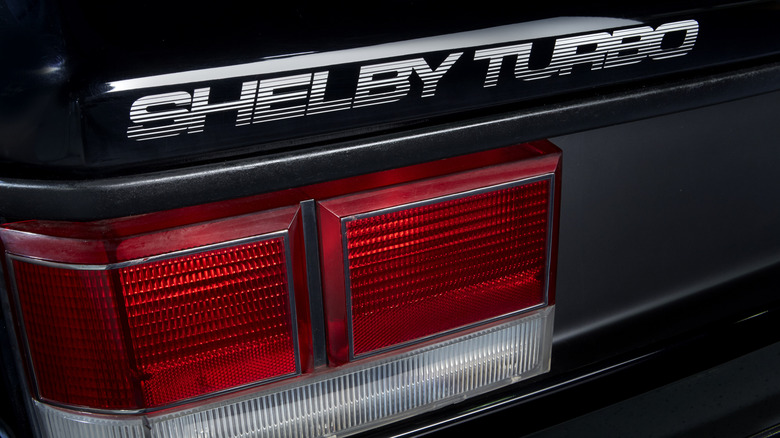
In the normal car world, outside of the realm of Vipers, Bugattis, and race cars, turbocharged four-cylinders are becoming the default engine choice for a great many cars. But can those engines really keep up with naturally aspirated V6s, which used to be a lot more common? Do four-bangers with a little bit of help from a turbocharger provide as much power as a V6? After all, a car like the new BMW 2-Series or the Dodge Omni GLH-S does just fine with a four-cylinder. Well, the answer is not really a cut and dry "yes" or "no." Realistically, it depends on the specific application.
The small 1.5-liter turbocharged four-cylinder that sits in a current Chevy Equinox, for example, won't be a suitable replacement for the 3.8-liter V6 that the Nissan Frontier uses. It's just an apples and oranges comparison if you look at directly replacing one engine with another; not all cars would benefit from a turbo four-cylinder and not all cars would benefit from a V6. It's a little more complicated than that.
However, if you look at the actual performance envelope of the very wide spectrum of turbocharged four-cylinders versus V6s, we can at least inch closer to a real answer: Turbocharged four-cylinders have the edge on power if you consider all of the automotive world.
Opting for four-cylinders over six
Naturally aspirated V6s are only in a few newly offered vehicles, with the Lexus IS 350's 311 horsepower being just about your sportiest option in 2026. The automakers have really made the decision for you. The number of naturally aspirated V6s on the market is dwindling, as unfortunate as that may sound.
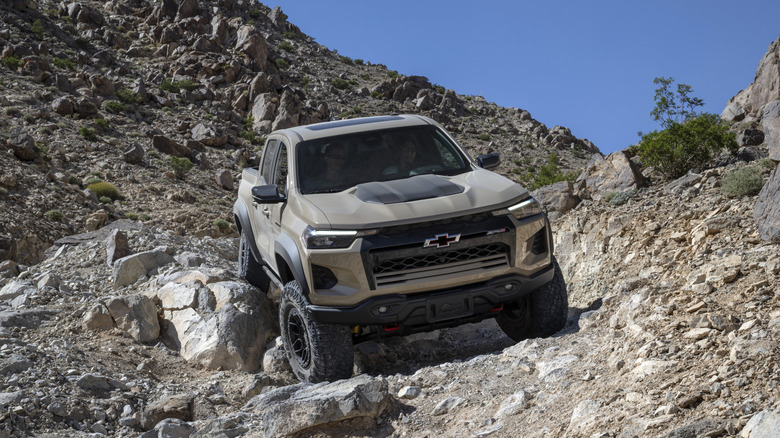
Meanwhile, thanks to the power dense nature of turbochargers and general efficiency inherent to their design, big off-roaders like the Chevy Colorado ZR2 come with a 310 horsepower turbo four-cylinder as standard. There's also something more on the wild end, like the BMW M12, a 1.5-liter inline-four-cylinder that made up to 1,400 horsepower in a few Formula 1 cars from the 1980s.
So, yes, a turbocharged four-cylinder can be more powerful than a naturally aspirated V6, but the application is more important than power output. A V6 isn't "better" than a turbo four or vice-versa, they're just different. As with most automotive questions and answers, context is just as important as facts and figures.