

LG Makes A Massive 115-Inch TV, But Is It Worth The Massive Price?
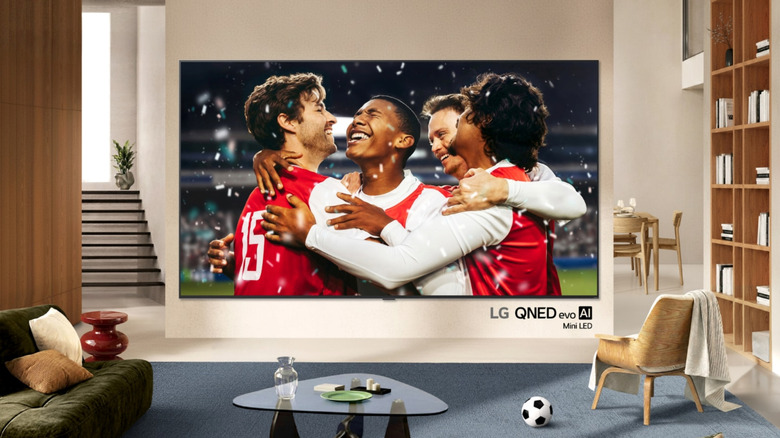
The fact that LG makes one of the largest commercially available TVs on the market shouldn't come as a shock. The Korean manufacturer has been at the cutting edge of the market for years and, even a decade ago in 2016, its range-topping Signature G6 model was one of its largest OLED TVs. What might be shocking is just how large the latest range-topping TVs have gotten: in 2016, LG's largest TV had a 77-inch screen, but today, its flagship QNED92B Mini LED 4K Smart TV has a massive 115-inch display.
This latest release comes with a correspondingly massive price tag of $12,999.99, putting it well out of reach for all but the wealthiest TV buyers. Anyone who does decide to cough up the cash gets to enjoy the benefits of LG's latest AI-powered 4K upscaling technology, as well as Motion Booster 330 technology for gamers, with VRR up to 165Hz. Film fans will also appreciate the integrated Filmmaker mode and support for Dolby Atmos and Dolby Vision. The screen uses QNED rather than OLED, which combines LG's QNED color technology with Mini LED backlighting for an even more vibrant picture than the brand's older TVs.
If you simply want one of the best and are prepared to pay for it, you could purchase the latest LG TV and be fairly confident that it's about as good as they get in 2026. That is, of course, if you can stomach the idea of spending an amount of money on a TV that could otherwise get you a used car.
Size does matter, but bigger isn't always better
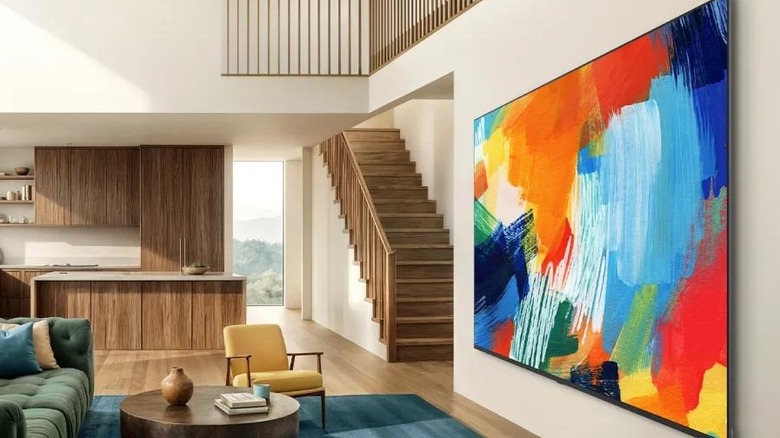
Most buyers would understandably look at a TV with a price tag of $12,999.99 and wonder why anyone would be willing to spend so much money on one. There's certainly no need to, as some of the best TVs you can buy in 2026 cost under $2,000. A bigger screen doesn't automatically translate to a better viewing experience either, because a larger screen will have a greater optimal viewing distance. Put a huge TV in a space that's too small, and you can potentially end up with eye strain after watching it.
Recommended viewing distances vary based on the kind of content you'll be watching. For everyday mixed usage, the recommended viewing distance from a 115-inch screen is 15 feet and 7 inches. Cinephiles looking for a theater-like experience should sit slightly closer, around 11 feet and 6 inches away from the screen. Even for the most immersive experience, it's still recommended to sit at least 6 feet and 11 inches away from the screen.
If the space you're putting the TV in isn't large enough to accommodate that range of viewing distances, then there's really no point in buying a 115-inch TV. A smaller TV will feel just as immersive if you sit closer to it, and LG makes plenty of smaller TVs with a similarly packed feature list. To take just one example, the QNED84B 85-inch smart TV uses the same QNED technology as the brand's flagship 115-inch model, but it retails for $1,999.99.
Larger screens will likely get cheaper soon
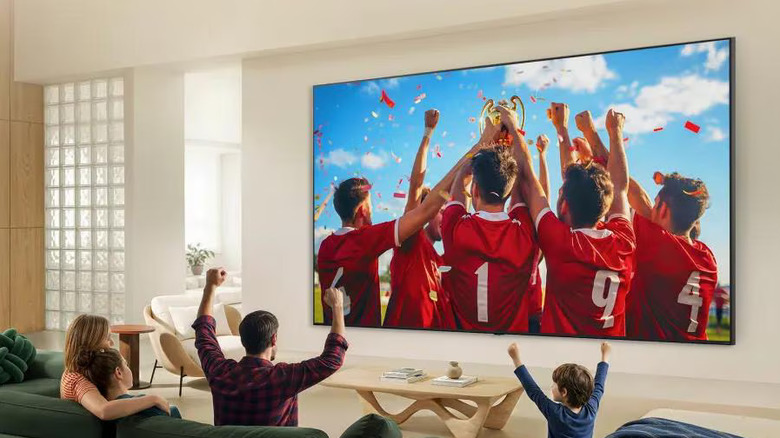
Even if you have the space to justify buying LG's massive TV, it's worth considering whether you're willing to wait for prices to decrease. Unlike food, housing, or hospital bills, TVs have become consistently cheaper over the last few decades, and the fierce competition between manufacturers means that's unlikely to change in the near future.
LG's most cutting-edge TV in 2016, the one with the 77-inch screen, retailed for $20,000. Adjusted for inflation, that's the equivalent of around $27,750 today, over double the price of the brand's latest and greatest 115-inch TV in 2026. In contrast, LG's 2026 75-inch TVs start at just $649.99, and you can buy a 77-inch OLED 4K TV with AI upscaling, Dolby Atmos, Filmmaker mode, and a 144Hz gaming mode for a retail price of $3,699.99.
If today's $12,999.99 price tag seems far too steep, there's a decent chance that anyone who's willing to wait a couple of years will be able to find the same-sized LG TV a lot cheaper. As such, the latest TV is only worth purchasing if you're willing to pay a big premium to be an early adopter of the very latest technology and have the space to actually enjoy it once it's delivered. For the rest of us, it's little more than a cool showcase of how large mass-market TVs in the future could eventually become.