

Sonos Ace Ultra Review: Headphone Link And Improved ANC Seal The Deal
We may receive a commission on purchases made from links.
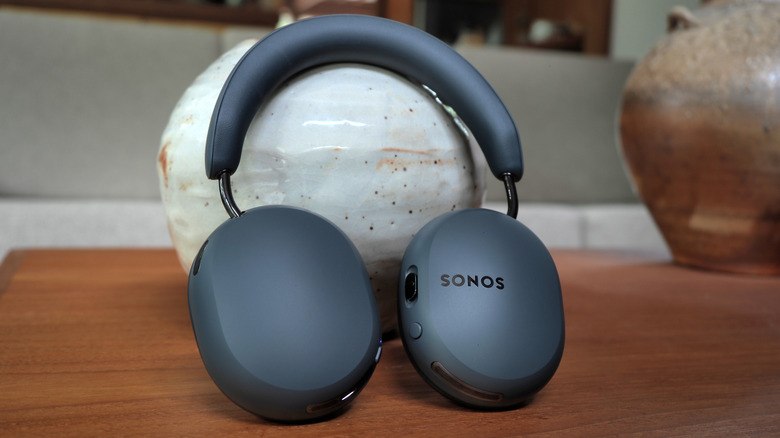
Sonos first headphones were not quite what fans of the home audio company expected: less a Sonos speaker you happened to wear, rather a set of smarter headphones that flirted at the edges of a home entertainment ecosystem. The new Sonos Ace Ultra headphones build on that foundation, expanding the smart transfer of audio to now support music.
Carried over are Spatial Audio and lossless audio playback (assuming you have sources for such things), plus the ability to snatch TV audio from select Sonos soundbars and pipe it to the headphones. New, though, is more battery life, better audio and ANC quality, and — courtesy of extra onboard processing, among other things — enhanced integration with Sonos' music ecosystem. It's the latter which Sonos is counting on to justify its $449 pricing for Ace Ultra, versus the $349 of the regular headphones.
 Chris Davies/SlashGear
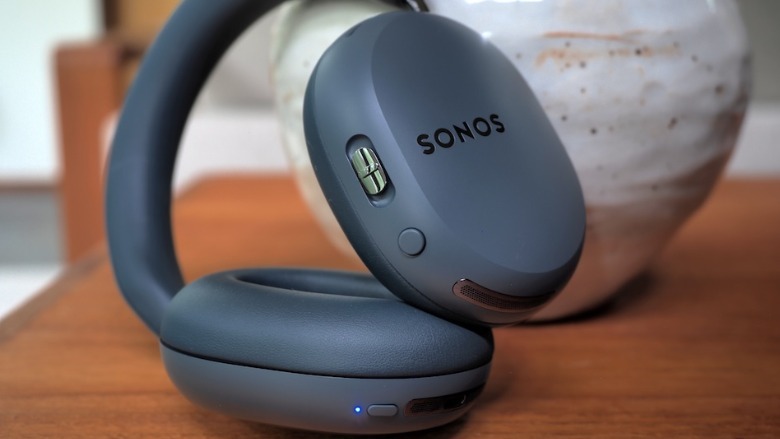
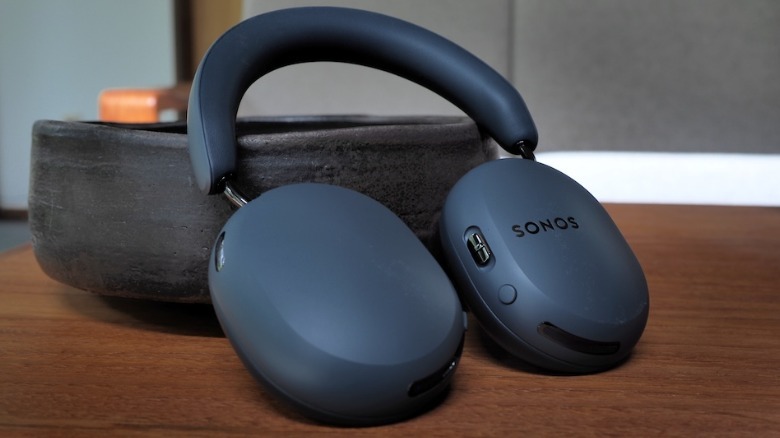
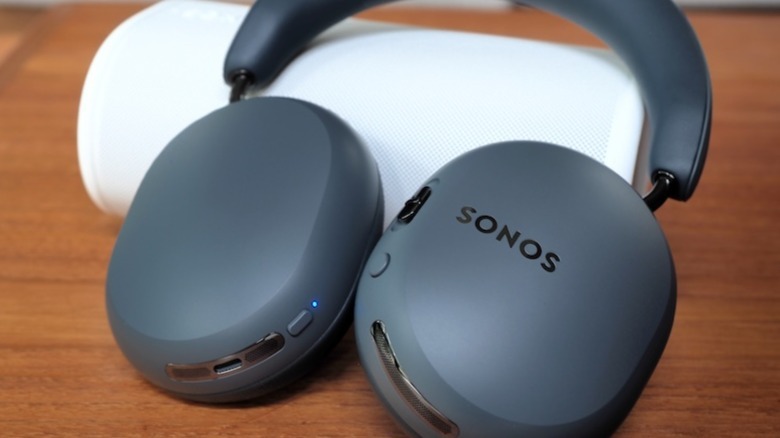
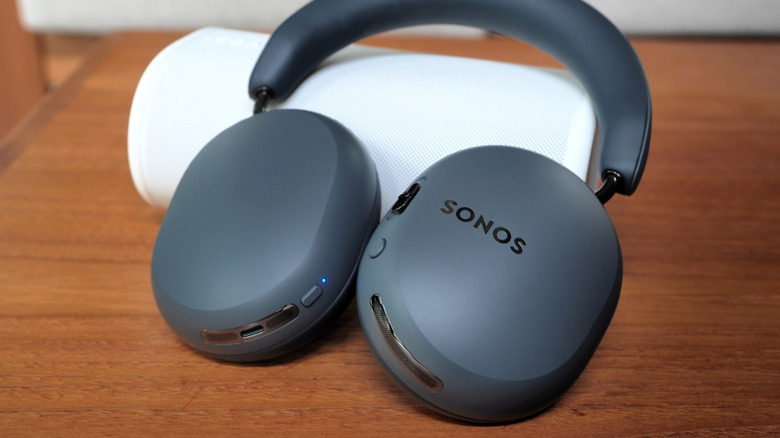
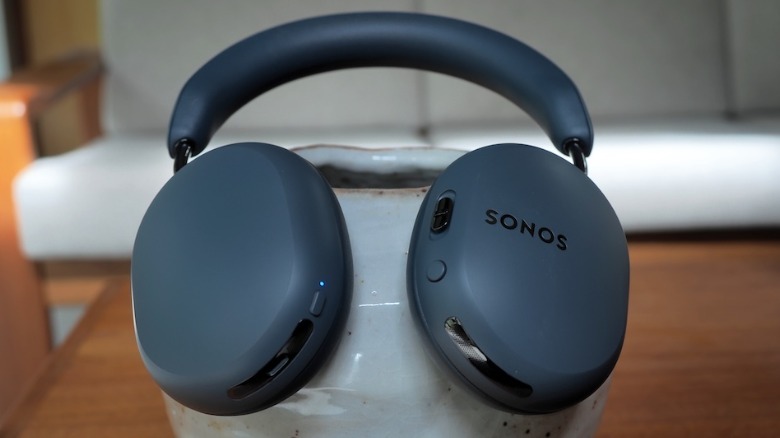
In addition to the Black and Soft White that the original Ace are offered in, Ace Ultra come in a beige Sand and this rather fetching Agave with hints of blue-green. Indeed at first glance, new colors aside, you could assume the Ace and Ace Ultra are the same.
Bigger buttons make for happier fingers
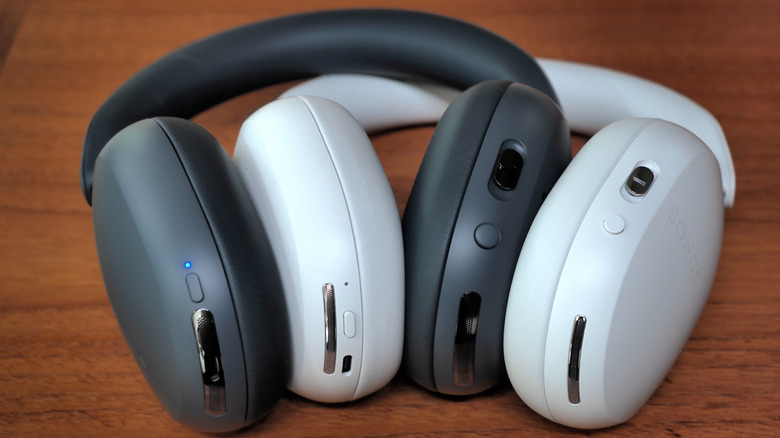
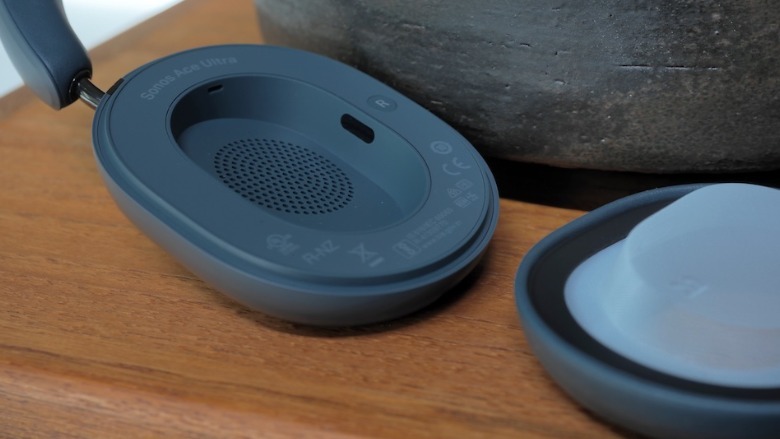
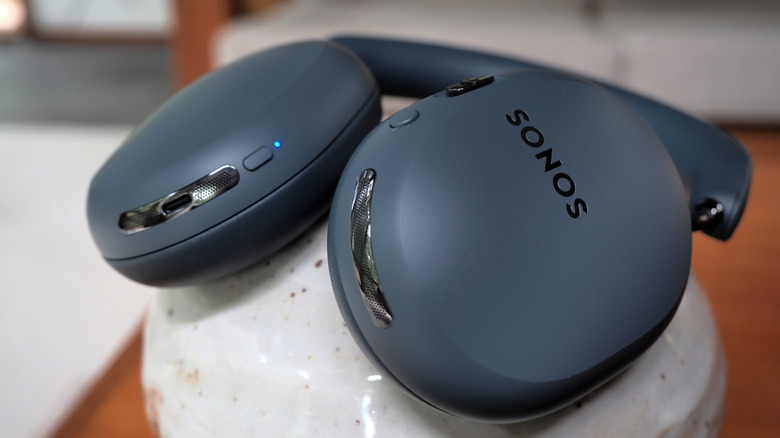
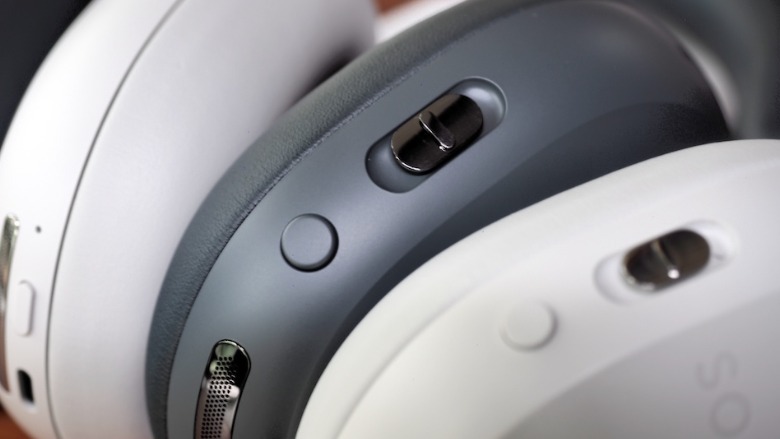
In fact there are numerous little tweaks to the design: the power/pairing button and USB port have moved; the Content Key slider and the button to switch between ANC modes are slightly larger. New microphone grilles are generally bigger — and greater in number — and while the ear cups are still magnetically-attached and easy to pop off for replacement, cushions for the original Ace won't attach to the Ace Ultra.
 Chris Davies/SlashGear
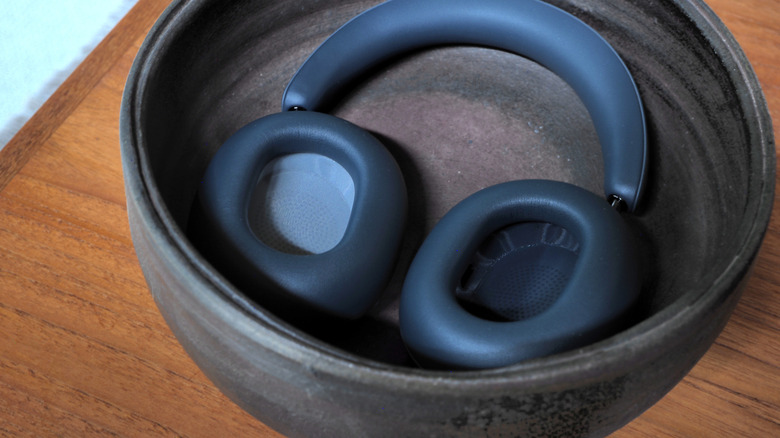
They're still comfortable headphones, and feel sturdy with their metal arms and memory foam padding. Weight is up slightly, but I can't say I noticed the 10 grams extra. I've worn the original Ace for extended periods on international flights with zero discomfort, and had similar results with longer listening sessions with Ace Ultra.
 Chris Davies/SlashGear
A zippered travel case is supplied, with a cable pouch for the bundled USB-C to USB-C and USB-C to 3.5mm cables. With those you can use the Ace Ultra as wired headphones with a computer or in-flight entertainment system. Sonos' headphones don't fold like some travel-minded rivals, and the case could be a little bulky for smaller backpacks. I will say that I've put a white set of Ace in my bag, loose, while traveling and they've remained unscathed. Sonos' design is still not waterproof, sadly.
A lot smarter inside
The outer changes may be subtle, but the "Ultra" updates behind the plastic casing are significant. There's a new driver and new Adaptive EQ that taps 10 microphones — up two from the original Ace — to automatically adjust the sound. Up to 35 hours of battery life is five hours more than before, and Sonos claims the ANC is up to twice as effective.
There's now Bluetooth 6.0, rather than v5.4, and you still get Multipoint Bluetooth support — for linking the headphones to two devices for fast-switching — and wear detection to automatically pause music when you take Ace Ultra off. So far, so normal for high-end ANC models, but Sonos also adds its Headphone Engine 2 for better integration with a Sonos home speaker system.
Working in tandem with that is Sonos 27app, a fancy name for a long-awaited app redesign. It's no overstatement to say that Sonos owners have been various levels of furious with the company's software in the past couple of years, the most common complaint being that it has steadily moved away from the "it just works" multi-room audio Sonos built its reputation on. That's something this new software aims to address, while also supporting various new integrations for Ace Ultra.
They still sound like a Sonos speaker
Perhaps the biggest praise for the original Ace was that Sonos' headphones sounded pretty much just like its speakers: if you liked the latter, you'd probably like the former, too. It's no criticism, then, to say that Ace Ultra brings more of the same.
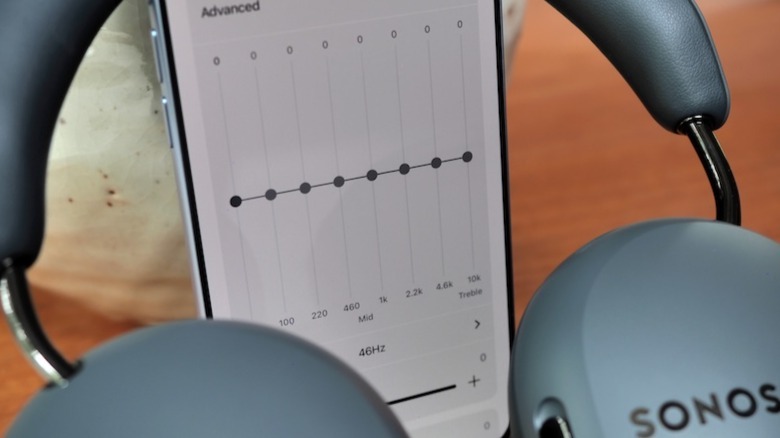
The promise from the new driver is deeper bass and more detail. Again, the default tuning is very "Sonos" — balanced and warm — though you can tweak that with either 3- or 8-band EQ (the original Ace had 2-band EQ adjustment) and optional Loudness in the app. Dynamic EQ attempts to adjust those settings automatically, though more to combat things like poor headphone fit for those wearing glasses or whose hair gets in the way.
 Chris Davies/SlashGear
Side by side, the differences in music playback are subtle (in fact, it was a welcome reminder of just how pleasant musical performance is on the original Ace headphones). There's slightly more separation to the Ace Ultra's soundstage, to my ears — singers and instruments sound more distinct — and at higher volumes lower frequency sounds seemed more precise. Bass gets a subtle boost. Still, it's a narrow thing.
If you're a tinkerer, though, the new EQ options are welcome. Sonos splits the EQ adjustment in two: a regular mode with Bass, Mid, and Treble sliders; and an advanced mode with eight sliders for bass frequencies as low as 46Hz and treble as high as 10kHz. Both modes support balance adjustment and optional Loudness; advanced mode adds adjustable gain, too.
Tweaks to the ANC but nothing groundbreaking
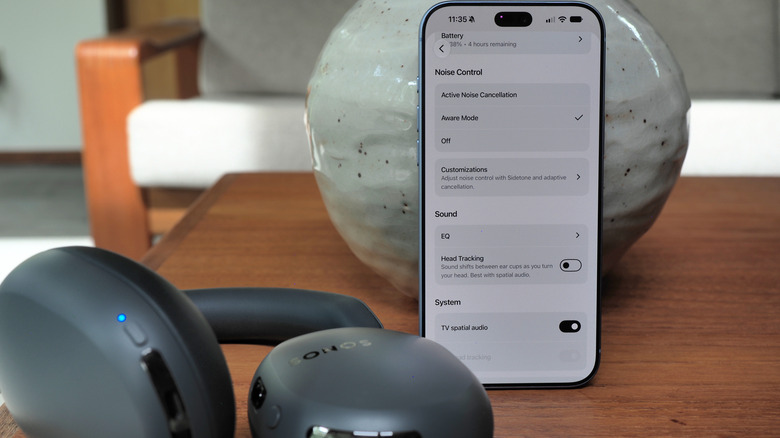
Sonos' first attempt at ANC was solid, though still not quite as proficient across the board as mainstays in the headphone space like Sony and Bose. With its extra microphones and more onboard processing grunt, Sonos claims up to 2x the performance in Ace Ultra, though pinning that down in practice can be tricky.
Side by side, the new and old headphones still perform similarly. Without a long-haul flight coinciding with my review, I simulated ambient sounds for things like airplane cabins, busy coffee shops, and more with various videos and soundtracks. Both models dealt with the drone of airplane engines roughly the same; the Ace Ultra tamped down on things like background chatter and road noise a little more aggressively. There was a small improvement in ousting the hum from my walking desk's treadmill, which was welcome.
 Chris Davies/SlashGear
Arguably the bigger difference I've noticed is an improvement in ANC when you're wearing eyeglasses. With the original Ace, the arms of my glasses broke the seal more noticeably, letting in outside noise. The inner edge of the Ace Ultra ear cushions has been re-profiled, and the fit (and thus the isolation) is just that little bit better.
Meanwhile, Aware Mode — which pipes ambient sound through — sounds more natural to my ears, without the sight metallic timbre of the original headphones.
Fast-switching for music builds on TV Audio Swap
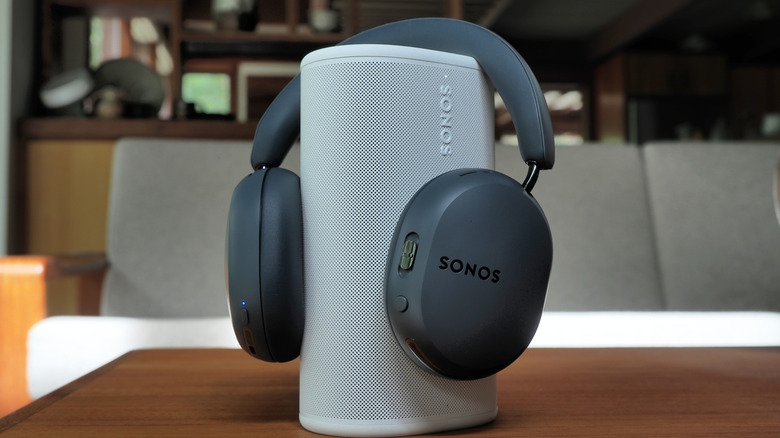
TV Audio Swap launched on Sonos' original headphones: long-press the Content Key (which also controls play/pause and track skipping, and slides to adjust volume) while watching a movie with a compatible Sonos soundbar, and the soundtrack would flip over to the headphones. Eventually two pairs of Ace headphones were supported simultaneously, with spatial sound compatibility.
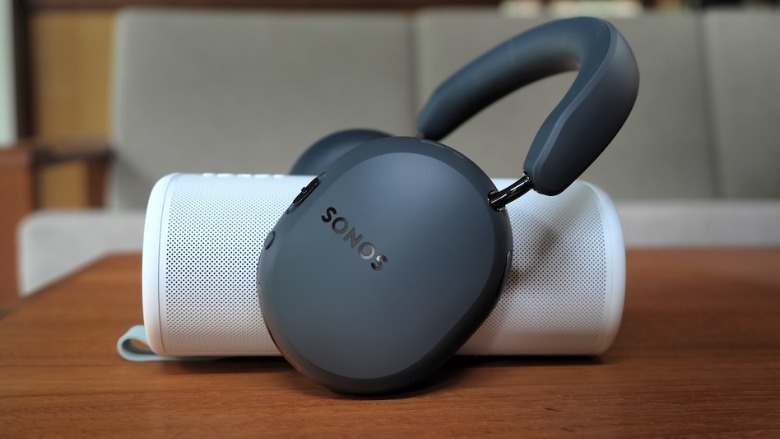
That's carried over to Sonos Ace Ultra, but the new Headphone Engine 2 expands it. With Headphone Linking you can transfer music playing from (select) Sonos speakers like the 2026 Sonos Play to the new headphones, and vice-versa. Sonos uses proximity — i.e. the speaker you're standing near to – to figure out where the music should go.
 Chris Davies/SlashGear
It sounds simple, and assuming you began playback in the Sonos app it works — with a long-press of the Content Key and then about 3-4 seconds delay for the switchover — that way too. If you have active playback in the headphones, pressing the Content Key will switch that to the nearby Sonos speaker. If headphones and speaker are playing two different things, you'll need to pause playback on the Ace Ultra to grab what's currently piped through the speaker. Otherwise, the headphones audio will overrule what the speaker was playing.
Things get even more complicated behind the scenes. For power and processing reasons, the headphones aren't acting like a regular Sonos connected speaker: instead, one of the speakers in your home system is doing the heavy lifting, encoding an audio stream to send to Ace Ultra over WiFi.
Headphone Link works, once you figure out the nuances
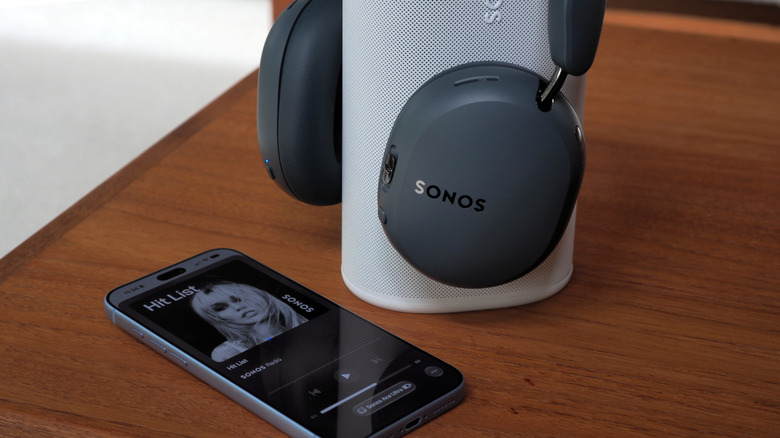
That's why you need to have one of the models on Sonos' compatibility list. The speaker you transferred music from — and the speaker acting as the headphones' proxy, which may or may not be the same — can be used for playback of another audio source, independent of what's now playing via WiFi through the headphones. I was able to move music from the Sonos Arc Ultra in my TV room to the Ace Ultra, and thus free up the soundbar for someone wanting to watch TV. Once transferred to the Ace Ultra, I could control that playback in the Sonos app.
Going in the opposite direction can be a little more complicated, depending on where you began audio playback: only audio routed through the Sonos app can be switched between headphones and speakers. If you initiated Ace Ultra playback in, say, Apple Music, Spotify, or some other source, you'll get a sad "bloop" noise when you long-press the Content Key to transfer it to a Sonos speaker.
 Chris Davies/SlashGear
Also unsupported is adding Ace Ultra to a Sonos speaker group in the traditional way, where music plays to all simultaneously. Headphone Linking does use WiFi for streaming — rather than Bluetooth — but it's an either/or situation: you either have that music playing on your speakers, or on your Ace Ultra. For most situations that probably isn't a great hardship, of course — if you're in a room where the speakers are already playing, why listen on headphones? — but it means no "silent disco" parties where everyone listens to the same thing on their headphones.
Headphone Linking is currently in Early Access, with the proviso that there may still be bugs. I didn't encounter any in my testing, though those with more complex Sonos systems — or complex networking — may have a different experience. It's also exclusive to Ace Ultra, at least for the moment: it's unclear if those with a set of Sonos Ace headphones will ever get Headphone Linking, which is somewhat galling. You can, at least, mix Ace and Ace Ultra when you connect two sets of headphones to a soundbar for TV Audio Swap.
Sonos Ace Ultra verdict
With Sonos Ace remaining on sale — for the moment, anyway — alongside Ace Ultra, the question I kept coming back to was whether the new headphones justified the $100 delta. After all, $449 is no small chunk of change.
Seen solely as ANC headphones for music, I'm not entirely convinced. Don't get me wrong, Sonos Ace Ultra sound great, and their noise-cancellation is solid. You could say much the same about the original Ace, however, and if you're particularly demanding about ANC then I suspect Sennheiser, Sony, and Bose will still have the edge.
 Chris Davies/SlashGear
What those rivals lack — and where Sonos Ace Ultra's appeal is grounded — is the way the headphones integrate with a broader Sonos system. Just like Ace's ace card was for those with a Sonos soundbar, being able to transition music between the company's speakers and the Ace Ultra headphones is a nice joining-of-the-dots. Arguably not so compelling an argument, mind, if Sonos hadn't done the legwork to bring its multi-room speaker system closer to its original simplicity.
It's early days for the new app, but so far I've been impressed: a fair number of the frustrating bugs and design decisions (which frankly left me disinclined to play music at all, sometimes) have been ironed out. Similarly, it's early days for the cohesiveness and potential of what Sonos insists is "an audio operating system" not just a collection of speakers, headphones, and soundbars. Headphone Link is expected to be just one of the first elements of that, though what comes next — and when — has not been specified. At the very least, Ace Ultra is grounded on what the Ace got right before it: eminently listenable audio quality and capable ANC in a long-lasting set of headphones, even if existing Ace owners might not feel the need to upgrade on day one.