

Every Washing Machine Type Ranked Worst To Best In Terms Of Efficiency
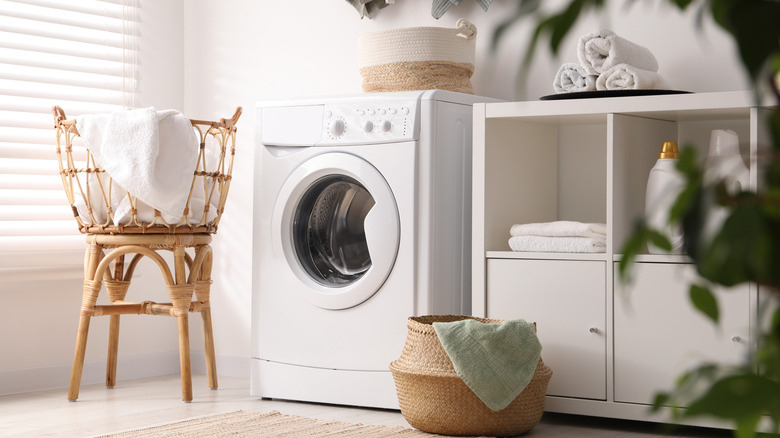
Not all washing machines are built equal, and despite advancements, there is a wide gap between the hungriest models and the most efficient ones. With electricity bills rising and water usage restrictions in many parts of the world, choosing an effective yet resource-friendly washer becomes crucial.
A washing machine's efficiency goes beyond power consumption to include water consumption, physical footprint, and fabric wear and tear. And each washer type strikes a different balance between these factors — a washer that saves on power and water may cost more upfront, take longer to run, or require more hands-on involvement. Still, highly efficient washing machines deliver great value across the board.
In this list, we rank six washing machine types from worst to best and discuss why we've given them this ranking. Since the best choice for you depends on your household's unique requirements, we'll also discuss the advantages and disadvantages of each washer type.
Top-load agitator washing machine
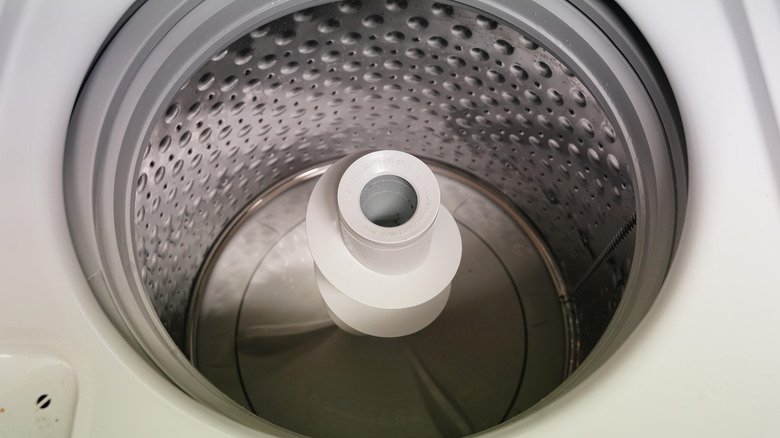
Top-load agitators are washers with a lid on top and a vertical wash drum. They have a tall post or agitator in the washer drum that rotates or twists back and forth, rubbing against clothes and making them rub against each other in turn to clean with friction.
This design is popular for its low pricing and speedy cycles, but is notorious for water consumption, averaging 20 gallons per cycle, with the more inefficient models exceeding 40 gallons. In contrast, the most efficient washer types use 13 gallons or less per cycle. Top-load agitators also consume 50 percent more power than the most efficient washer types because the motor must force the agitator to twist against water and fabric resistance. The higher water use paired with slower spin speeds leaves clothes wetter after wash, requiring lengthier drying that consumes more power.
The agitator itself imposes space restrictions, so heavy or bulky fabrics don't have space to move around, and multiple bulky items will need to be split into separate loads. Moreover, the agitator's rough mechanical action inflicts more wear on fabric than other washers.
But since these washers are familiar, inexpensive, and less prone to mold, they frequently outsell other washer types. Their easy reparability is a bonus, potentially extending their usability beyond the average lifespan of a washing machine.
Combo washer-dryer
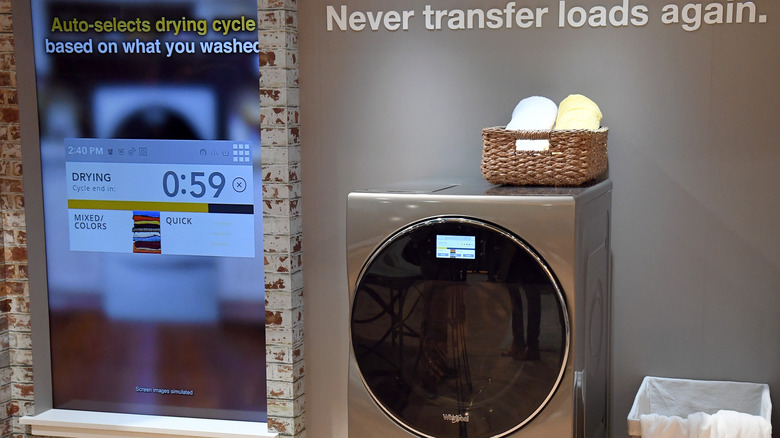
Combo washer-dryers first wash your clothes and then use condensation drying or heat pump technology to dry them. The advantages are that you save space by having the washer and dryer in a single unit and don't have to move washed clothes into a separate dryer. These washers are also much gentler on fabrics than agitator models.
There are some trade-offs, though, key among them being the time it takes to wash and dry clothes. Standalone dryers with an Energy Star rating don't exceed a maximum cycle time of 1 hour 20 minutes, often drying loads in 45 to 60 minutes. But washer-dryers, which are exempt from this requirement, can take over 3.5 hours just to dry clothes, and the entire wash-dry cycle can take between three and six-plus hours.
With most combo models, water consumption increases by a few dozen gallons, because condensation drying can use up more water than the wash cycle. For instance, the Samsung WD16J9845KG consumes a whopping 55 gallons to dry a full load.
Newer combo models with heat pump technology save water and consume less power than standard dryers, but these are more expensive and harder to come by. Despite saving space, a washer-dryer combo misses out on the faster cycles you get with a separate washer and dryer, and it sends your power and water consumption soaring.
Compact washing machine
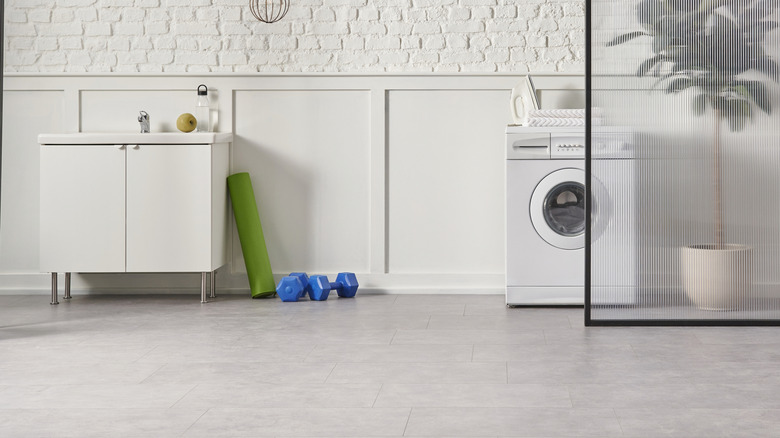
Compact washers shine when it comes to handling light loads and tight spaces. They're gentle on clothes and easy to set up, requiring only a connection to a regular sink faucet — no need for additional plumbing.
Thanks to their compact drum size, the best of these machines can have high spin speeds that extract more water out of the clothes to cut down drying times. But the highly power-efficient, premium compact washers cost significantly more than standard washers, and most of the affordable portable washers aren't as efficient.
Regular compact washers consume less water and power than regular washers but tend to have slower spin speeds; this means clothes take longer to dry. Dryers are among the most power-hungry appliances at home, so wetter garments increase energy consumption.
In addition, their small drum sizes accommodate fewer items at once, with capacity ranging from four to eight pounds of laundry per load. This is lower than standard-sized washers that manage 12 to 16 pounds of laundry at once, so higher loads will require multiple cycles and eat up more resources. These washers frequently lack Energy Star certification because many sit under the 1.6 cubic feet minimum to qualify for ratings.
Semi-automatic washing machine
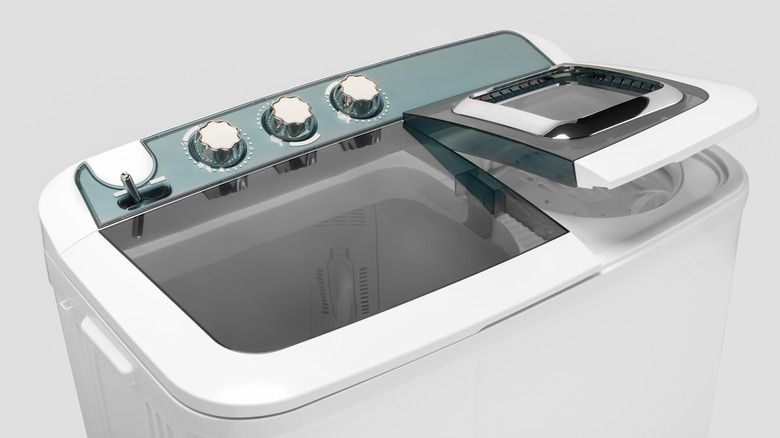
Semi-automatic washing machines are rare in the USA but common in South Asia and Latin America because of their low price point. With the semi-automatic variant, users manually fill the wash tub and then begin a wash and rinse cycle. Once complete, they move the wet clothes to the spin tub and extract water.
In terms of convenience, this washer type ranks lowest because of the physical involvement. But most consumers purchasing this prioritize affordability; physical labor aside, semi-automatic washers are indeed efficient.
These washers consume less power because they don't heat water internally and have much shorter spin cycles. Typically, this washer type uses 150 to 300 watts of power, which is far less than the 350 to 2,200-watt range of automatic washers.
Most standard automatic washers also have preset water levels, meaning even a smaller load would end up consuming more water than necessary. But with a semi-automatic washer, water filling is manual, so you choose how much water to add depending on the load.
The higher tub capacity (16 to 35 pounds) lets you wash more clothes at once, and water consumption can range from 20 to 35 gallons per cycle. You can further minimize water usage by reusing wash water for a second load if the first load wasn't too dirty.
Semi-automatic washers have high spin speeds (1,000-plus RPM) that extract more water from fabric, but they aren't as gentle on clothes as other washers. For budget-conscious buyers willing to trade convenience for affordability, the water and power savings are decent.
Top-load impeller washing machine
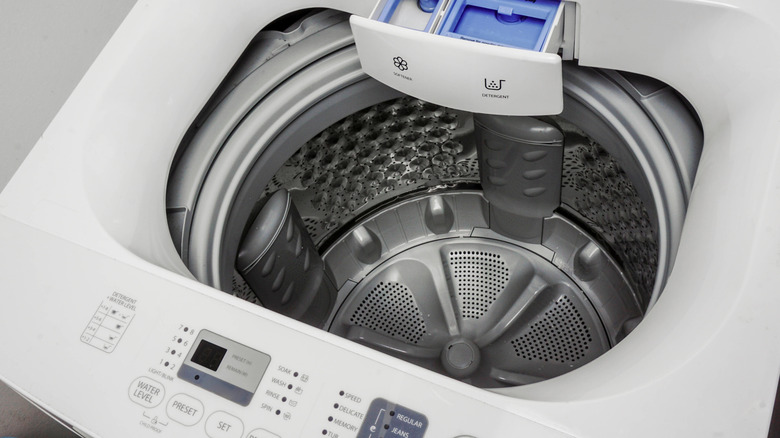
Although a bit similar, a top-load impeller and top-load agitator differ in important ways. The impeller variant replaces the bulky agitator in the drum with a rotating disc (impeller) at the bottom for massive efficiency gains. This washer doesn't use as much power as an agitator washer because rotating the disc requires less energy than moving the agitator.
Impeller washers are on average $100 to $200-plus more expensive than agitator washers, but use less water, averaging around 13 gallons per load. They can wash more clothes at once because there's no central post occupying space in the drum. These machines also have longer spin cycles than agitator models, but the higher spin speeds ensure clothes have less moisture and dry faster.
Although the missing agitator makes impeller washers more garment-friendly, the high rotation speed and long wash cycle are tough on fabric and can lead to tangling. Still, the impeller variant is a solid option for homes seeking a large-capacity top loader that's cheaper than a front loader and more judicious than an agitator variant.
Front-load washing machine
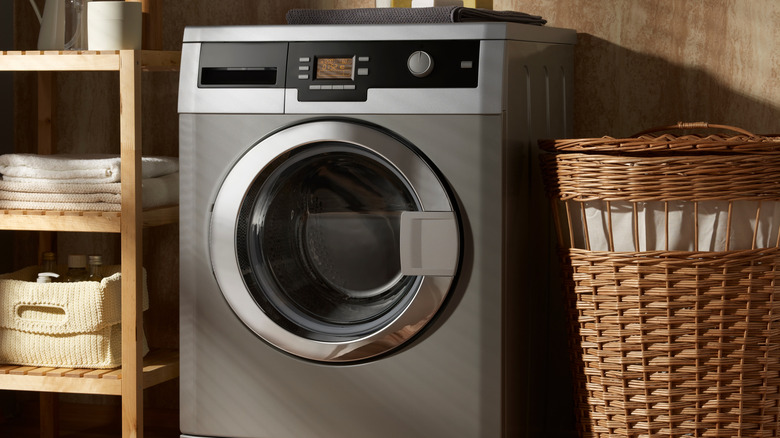
Front-load washers are the most efficient type of washing machine. According to Energy Star, these washers use 50 percent less water and power than top-load agitators and 25 percent less than top-load impellers. On average, this washer type uses 10 to 13 gallons of water per cycle, with the most efficient models consuming seven to eight gallons per cycle.
The front-load design relies on gravity to tumble garments in a horizontal drum half filled with water. Despite its higher spin speeds (1,200 to 1,600 RPM) and longer wash cycles, this high-capacity washer is gentler on clothes because there's no agitator or impeller pushing against the fabric. It also removes more water from clothes, so the dryer doesn't run as long.
The front-load design also allows you to stack a dryer atop, giving you a complete laundry setup in half the floor space. But there are compromises for the convenience. These models have a much higher upfront cost, costing $250 to $1,000-plus more than top-load agitator and impeller variants. The standard wash cycles, too, are lengthier at 60-plus minutes, compared to top-load variants that can complete a cycle in half the time. Lastly, the machine's rubber door gasket needs regular upkeep to avoid mold.
Nonetheless, all of its advantages compound in the long term and will save you more money and space while keeping your clothes in excellent shape.