

What AMD GPU Offers Xbox Series X-Level Performance?
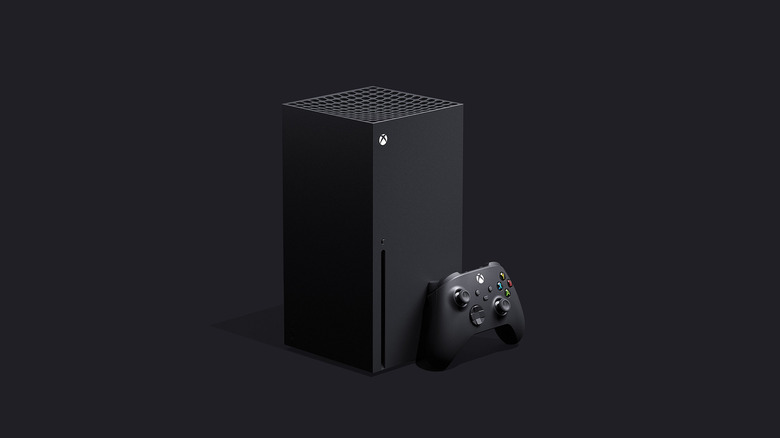
Modern consoles share a lot in common with PCs, unlike the early days of gaming where consoles had more bespoke hardware. The line between consoles and PCs may even get blurrier, as it's rumored Microsoft's next console – tentatively known as Project Helix – may be a PC in all but name. Then there's the Steam Machine, which actually is a PC housed in a case about the size of a GameCube. It's hard to imagine that once upon a time, early consoles like the Magnavox Odyssey only used analog circuits, rather than GPUs.
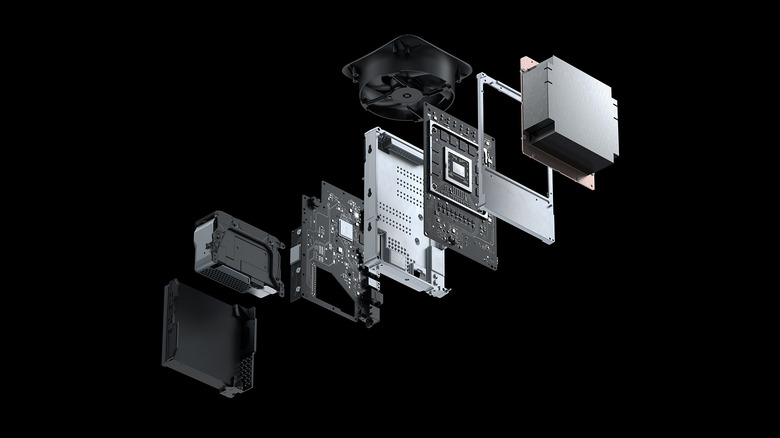
Current generation consoles like the Xbox Series X and PlayStation 5 use a semi-custom SoC (system on a chip) that uses AMD's Zen 2 CPU architecture and the RDNA 2 GPU architecture. The semi-custom nature of these chips means AMD uses its existing IP as the building blocks, and its partners like Sony and Microsoft are able to have some level of proprietary silicon on top of that, making it unique to that console. This is an effective middle ground between using an existing product and developing an entirely custom design, which would take much longer to bring to market.
The Xbox Series X SoC uses eight Zen 2 CPU cores and 52 RDNA 2 CUs (Compute Units), with a total of 16GB of GDDR6 memory. The RDNA 2 GPU runs at 1.825 GHz and is able to deliver roughly 12 TFLOPS of compute power. This makes the AMD Radeon 6700 XT its closest relative, based on specs and performance. Even though these two share some similar DNA, it's not exactly apples to apples. There's a lot of nuance – memory bandwidth, clock speeds, and API efficiency – that can greatly impact performance, even if the on-paper specs are similar.
AMD's Radeon 6700 XT is the closest comparison, but it's not apples to apples
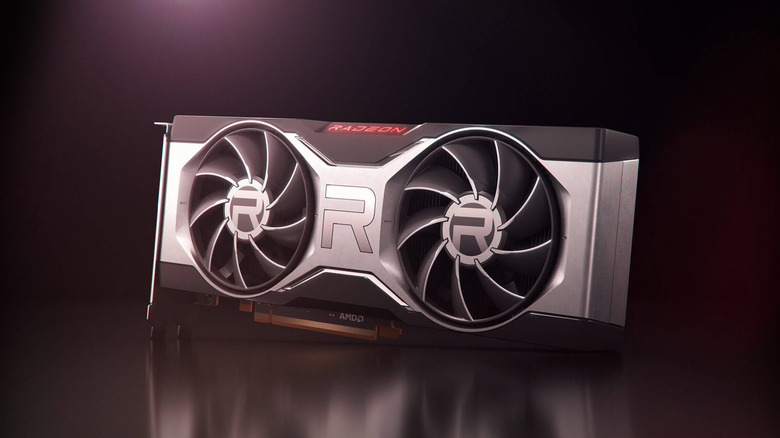
Comparing the Xbox Series X and the Radeon 6700 XT, the Xbox Series X GPU actually has more CUs; 52 CUs for the Xbox and 40 for the 6700 XT. The difference is in the clock speeds – the Xbox Series X GPU runs at 1.825 GHz, while the Radeon 6700 XT runs significantly faster at 2.321 GHz, and can boost up to 2.581 GHz. This gives the 6700 XT a game clock of 12.4 TFLOPS, but based on its boost speed, can hit a theoretical 13.21 TFLOPS. The Xbox Series X GPU is essentially a pared-down Navi 21 die, which structurally begins to resemble the Navi 22 die that the 6700 XT is based on.
Both use GDDR6 memory, but they have distinctly different memory architectures. This is a big reason why comparing specs on paper doesn't always tell the whole story. The Radeon 6700 XT uses a full 12GB of VRAM dedicated to the GPU, whereas the Xbox Series X splits its 16GB pool between the GPU, CPU, and system functions. The Xbox also uses a unified memory architecture, and asymmetrical memory bandwidth giving the GPU higher data transfer rates. The Radeon 6700 XT benefits from a dedicated pool of VRAM, but also has to rely on the split memory systems of PCs, where the CPU, RAM, and GPU are all separated and have to pull data back and forth, adding latency.
The two are similar in some ways, and diverge in others. For instance, both share supported features like hardware-supported ray tracing and AMD's Fidelity FX Super Resolution (FSR). They diverge in key areas such as on-board cache, clock speeds, and memory bandwidth.
The console advantage and why specs don't tell the whole story
Comparing desktop GPUs to consoles is a bit of a gray area, and technical specifications don't make for a one-to-one comparison. This is because of the deep level of optimization that consoles benefit from. Developers are able to hone in on single target performance goals when optimizing for consoles, because console hardware is a fixed target – PCs span multiple generations of hardware and millions of configurations. When developing for consoles, those variables don't exist. This means developers can code close to the metal, developing low-level software that runs directly to the hardware and has little overhead. When developing for PCs, there's multiple layers between the software and hardware, like different APIs (DirectX, Vulcan, etc.) operating systems, and hardware drivers.
There have been features that have come along that bridge the gap between PCs and consoles to some degree, such as AMD's Smart Access Memory (SAM), which is AMD's brand-specific implementation of Resizable BAR (Base Address Register). Both can mimic a unified memory structure like consoles, allowing the CPU access to the GPU's full VRAM pool and can improve efficiency between the CPU and GPU, improving framerates and performance.
Consoles historically use locked clock rates, with the exception being the PlayStation 5, which uses a variable rate clock speed. The locked clock rate for the Xbox Series X means no boosting or overclocking, which isn't true for desktop GPUs like the Radeon 6700 XT that has a factory boost clock, and can also be overclocked even further depending on power budget and cooling. The Xbox Series X and Radeon 6700 XT have distinct architectural and platform differences, but through different avenues, can achieve similar levels of performance – similar to how this GPU and the PlayStation 5 are pretty close.