

Gen Z Loves The Honda Gold Wing But My Vespa Road Trip Proved Smaller Bikes Can Be More Exciting
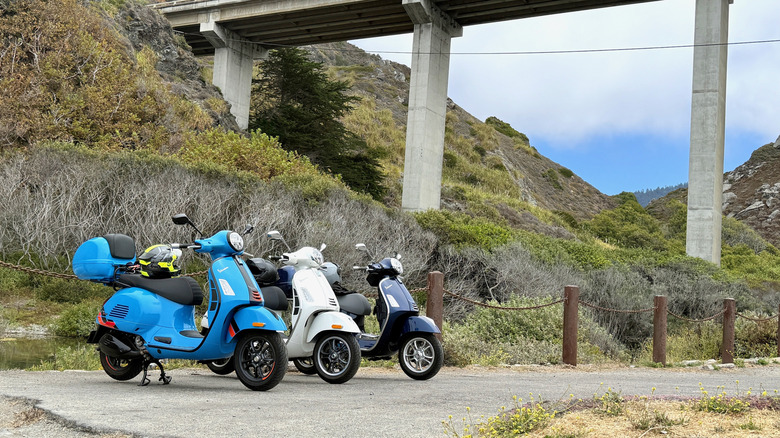
Riding a 310cc scooter for over 700 miles sounds like the punishment for a speeding violation, right? "Here: Take this scooter and ride the length of California and think about what you've done. If you show no remorse when you return, we'll make you do it again on a 50cc minibike." But while this trip took me through some of California's hottest desert towns, along some of its coldest sections of coastline, and required that I pack my gear down into the tiniest possible spaces, I did this voluntarily.
In fact, I was tagging along for the ride. A friend, Matt, had recently purchased a Vespa and wanted to prove to the world that it was a real motorcycle, one capable of actual road trips. He planned to ride his new Vespa 310 from Los Angeles to Monterey, CA, using fun, winding roads along the way. He'd be using minimal highway asphalt, mostly experiencing the ride on California's iconic Pacific Coast Highway.
Another pal of his, Ali, had already co-signed to be part of the trip on his also-brand-new Vespa, so I signed up as the third wheel. I sent the folks at Vespa a message about the trip, and they were happy to help out by loaning me a bike, cheering me on ahead of the group ride.
Up to the task
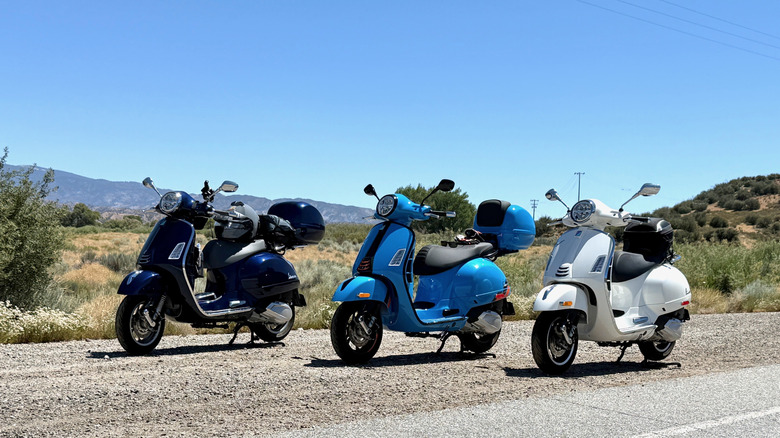
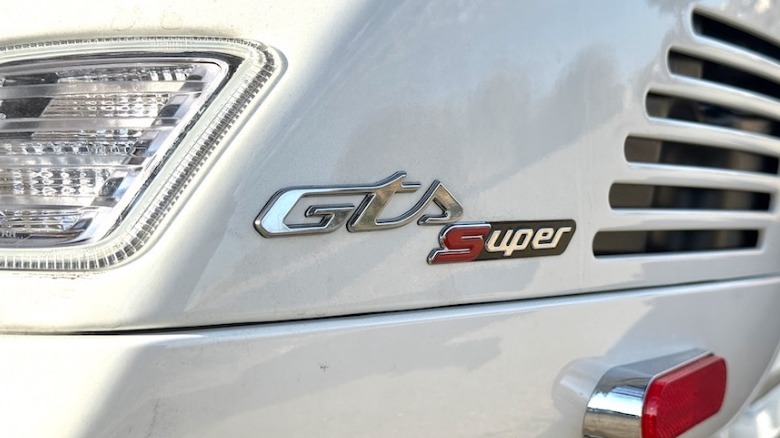
With limited time between when I picked up the Vespa Gts and when the road trip started, I wanted to see just how gutsy it was (or wasn't). The night before we set off, I took it on the highway to see just how fast it could go, making sure to go late at night when traffic was low and I wouldn't be blocking anyone's way. I weigh 225 lbs, so I figured the top speed would be relatively limited, but I was surprised at just how spunky the little scooter felt.
The Vespa Gts 310 is powered by a 310 cc single-cylinder engine, producing 25 horsepower and 21.3 pound feet of torque. It uses a CVT to send power to the rear wheel, which means there's no shifting gears and no clutch lever. Easy peasy. The single-cylinder engine felt quick off the line, darting away from traffic, and while I had to twist my right wrist all the way rearward to merge, it got on to the highway with no issue.
 Travis Langness/SlashGear
It's not conventionally powerful, but the Vespa was certainly quick enough for all the kinds of riding we had planned. Keeping pace with most of the lanes on even LA's fastest highways was no issue — at least on flat ground. Some steep hills gave it a bit of trouble, which had me concerned for the uphill climbs on our route, but I was way more confident after my maiden voyage than I was when I signed up for this trip.
Assembling the Vespa crew and getting through the heat
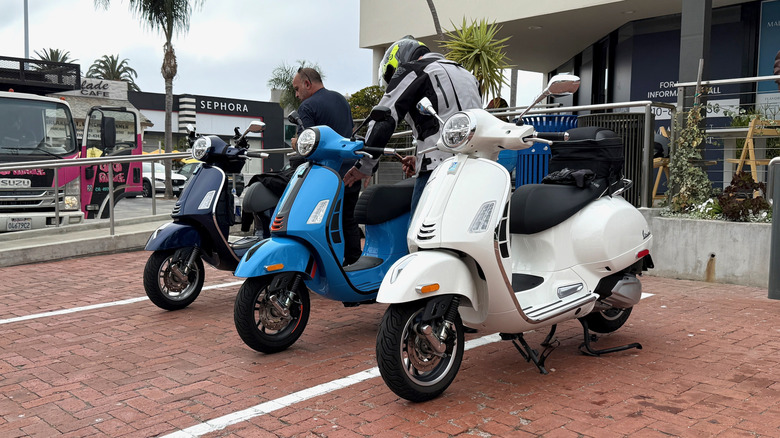
Leaving Los Angeles, we had an early start. We met in Malibu and headed north. Under the seat, I had four days worth of clothes, a spare pair of shoes, and some toiletries. Stuffed to the brim, the underseat storage area held quite a bit of gear and retained a lot of heat, but it was spacious enough for almost everything I needed.
The other two Vespas on the trip had the benefit of hard-shelled top cases, but I was restricted to my portable soft case, strapped to the back seat of the scooter. In there I fit a small tool kit, items for flat-tire repair, a first-aid kit, and some window cleaner to periodically clean my helmet visor.
 Travis Langness/SlashGear
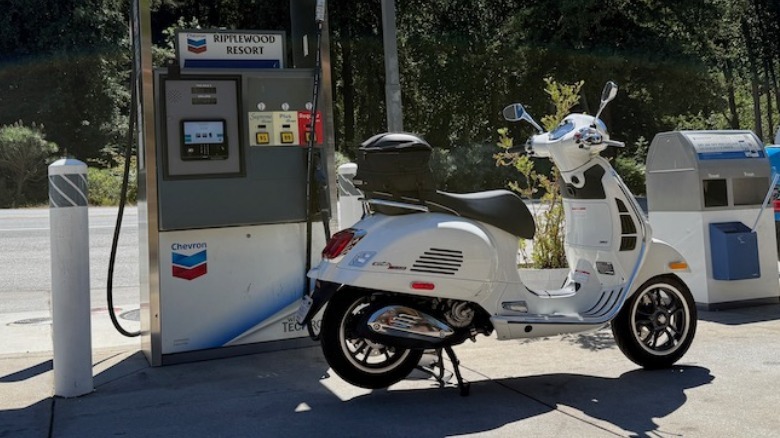
On our way out of town, it was hot. Like, really hot. As we rode north, away from major highways and toward California's interior, the temperature rose to well above 100 degrees. We stopped for a fuel brake before heading through some steep, winding terrain, but I was worried about making it out unscathed. A few months earlier I had traveled the same roads in the GMC Canyon AT4X and I noticed several of the local gas stations were closed. With only 2.2 gallons of fuel when fully topped up, the Vespa would be stretching this part real thin.
Running on empty, almost
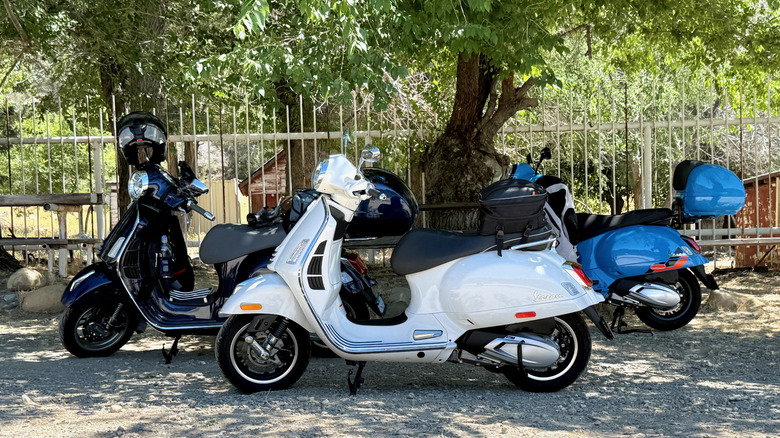
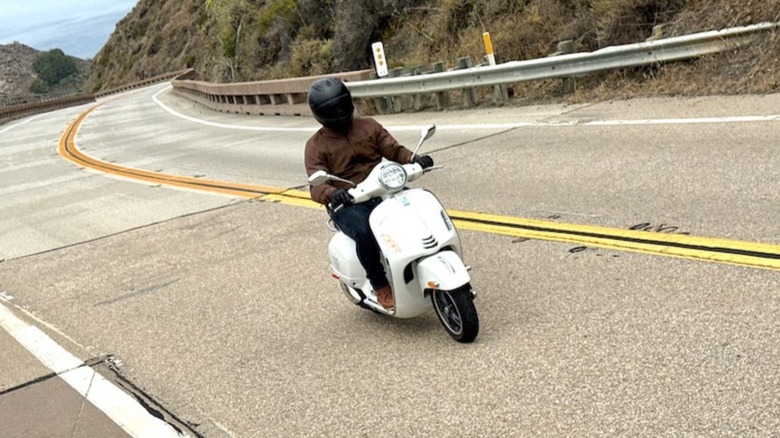
I rode along the canyon roads north of Ojai, California, with a bit of a red mist. The Vespa's small, skinny tires don't soak up big potholes well, but they dice through tight corners. Immediate turn-in makes the Vespa properly fun, and even at the speed limit it feels like you're Marc Marquez, just waiting to plant a knee through the next corner. We were cooking through the twisty roads, so much so that I could smell the Vespa pumping gas to keep things cool.
 Travis Langness/SlashGear
Sure enough, about 100 miles after our fill-up, our fuel lights were blinking red. Oops. It was 20 miles or so to the next gas station, but at a fork in the road, we had lost one of our riders. Matt and I were still paired up, but Ali was nowhere to be seen. We called him and confirmed he was already at a different gas station, on a different road — the proper road. Double oops.
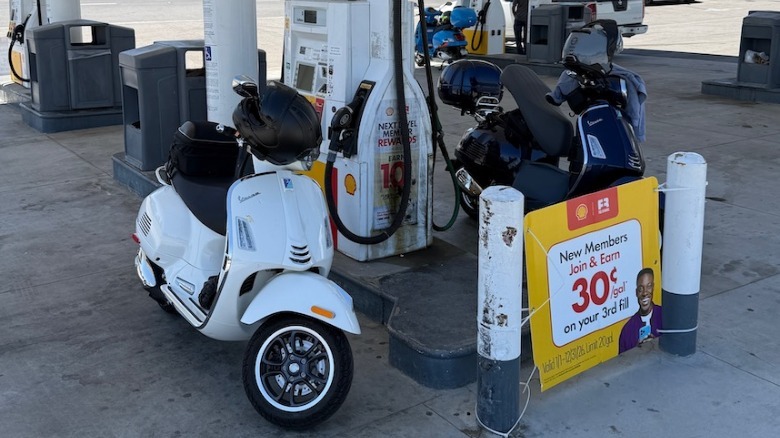
It was too late to turn back, though. We were pot-committed to the road we'd taken. With sweat dripping in our eyes and the ambient temperature hovering around 104 degrees, we headed for the next fuel stop on our GPS. The station had decrepit pumps, and they were both out of fuel.
 Travis Langness/SlashGear
Going light on the throttle, coasting downhill, and likely cursing the heavens in our respective helmets, we headed another 8 miles away and mercifully arrived at the next gas station. We each filled up, putting around 1.8-1.9 gallons in our tanks. That meant we weren't as close to empty as our anxiety (and the blinking red lights on our dashboards) had led us to believe, but it was still too close for comfort.
Power suffers in the heat
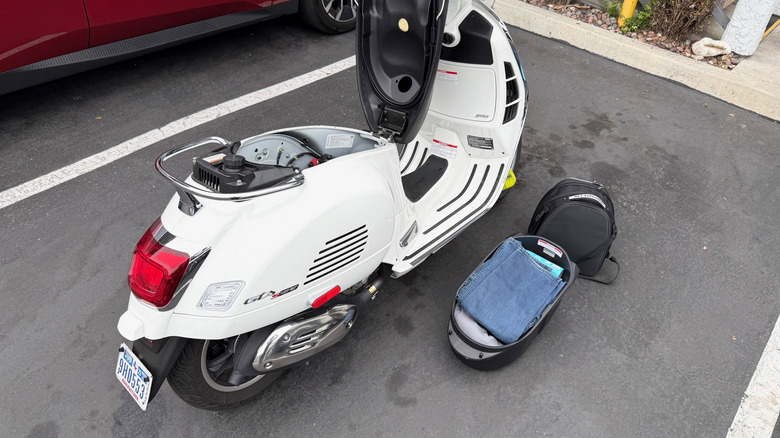
I did notice that during that particular section of riding, my Vespa felt a bit taxed; Matt and Ali confirmed that their bikes felt similar, with reductions in power as we climbed the steepest hills in the hottest weather. With all my clothing stuffed to the brim under the seat, I figured that my Vespa had a hard time cooling itself down via ambient air. Still, the storage space was practical enough to bring all that clothing along, so I wasn't going to complain.
 Travis Langness/SlashGear
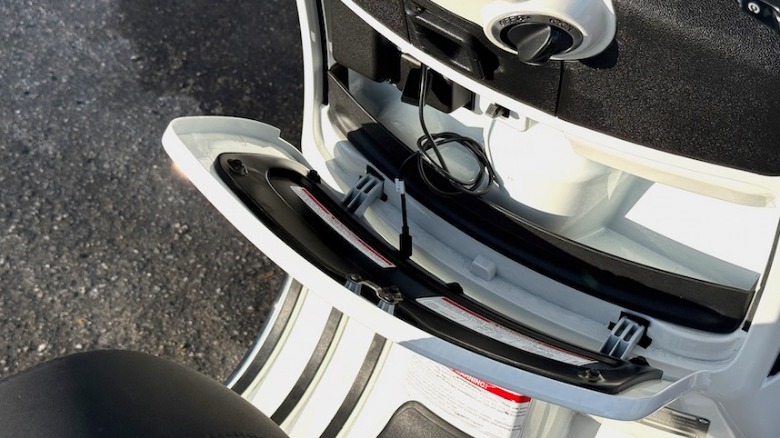
The phone-storage and USB-charging area of the bikes was another hot spot, though (and not of the WiFi variety). Charging your phone in that area, with no airflow and temps rising, will cause a smartphone to fail. With the heat building up in that area, I had to move my phone to my jacket pocket to keep it cool enough for music playback in my headphones. So the Vespa is practical, but it has its limits in ultra-hot weather.
Focusing on the important stuff
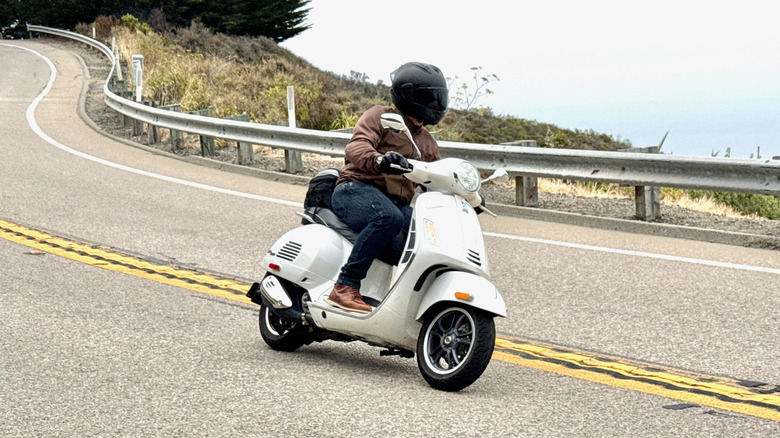
With one of the most stressful yet entertaining stretches of our trip over, I was happy to focus on the little things for the next few hundred miles. From our sweaty gas stop on day one to our overnight stop on night one in Cayucos, California, the ride didn't take long, but it did highlight a few things on the Vespa.
Its suspension, while forgiving over little bumps, does bounce a bit on rougher roads. The highway sections (or anywhere with a 55 mph speed limit, really) revealed that the ride was stiff but the seat was soft. It took most of the abuse of rough roads and kept me from any serious discomfort.
 Matt Farah
Normally, stiffly sprung motorcycles will translate a lot of road imperfections into your hands. The sportier the riding position, the more this becomes a problem, as you lean forward to place your weight on the handlebars. With the Vespa, though, this problem didn't exist. Even after hours on the road, the relaxed seating position meant my arms weren't tired. And small single-cylinder or not, the Vespa didn't vibrate much – the engine is particularly smooth at speed, even at speeds in excess of 70 mph.
Calling this thing just a scooter is really doing it a disservice. The Vespa's controls, its various switchgear, and even its mix of analog and digital gauges all felt premium enough to justify the high price of entry (more on that later).
Going (mostly) unseen
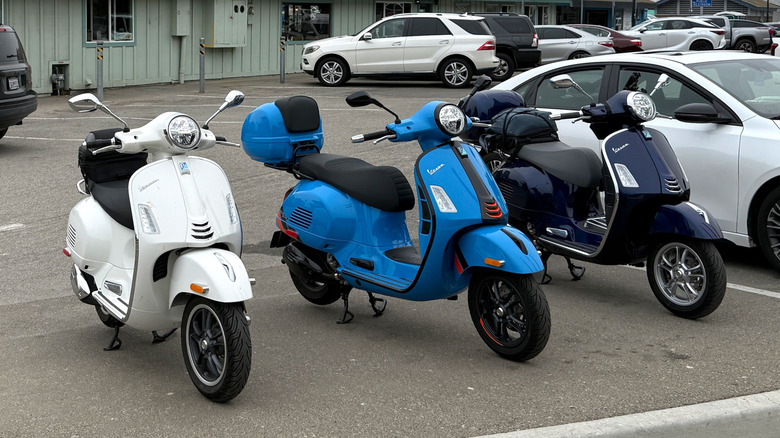
Day two, from Cayucos to Monterey, California, was trouble-free. No near-empty situations with fuel, no sweaty stops in the desert to drink water and take refuge in the shade. We rode along some of California's most scenic stretches of road, at an enthusiastic pace, mostly unnoticed by other motorists.
The great part about being on a small two-wheeled machine like the Vespa, instead of something large and loud (like my personal motorcycles always seem to be), is that the Vespa goes unnoticed. Even if you're passing other motorists, they don't seem to care. The cute, inoffensive nature of the scooters gives them a generally free pass, and you can park them just about anywhere.
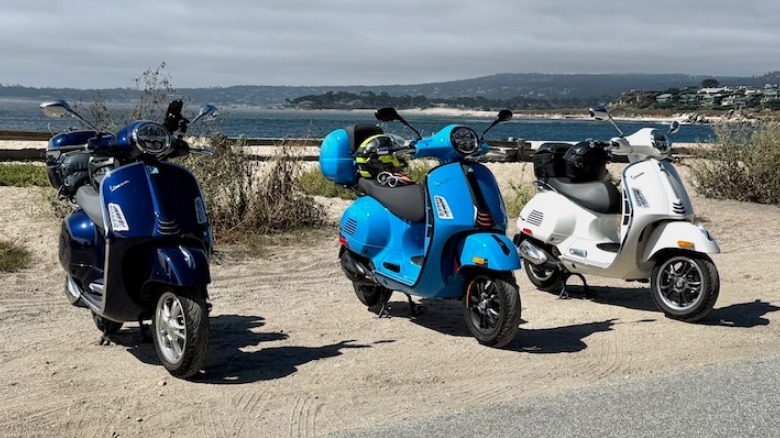 Travis Langness/SlashGear
Even a small motorcycle would garner much more attention as it passed a long line of cars waiting to see some local attraction, but not the Vespa. It just got thumbs up from tourists and lots of attention from people who couldn't believe we were riding them so far in one trip.
Time for the cold
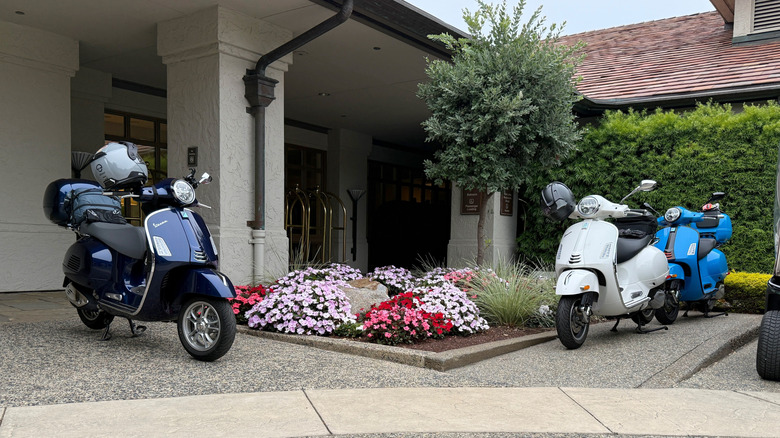
On our final day, we went for breakfast before splitting up the group. We had stayed in Monterey the night before, the home of the World Famous Car Week, but we were there ahead of the big event so things were relatively quiet. Quiet enough even to ride the Vespas along one of Monterey's busiest roads during Car Week, 17 Mile Drive.
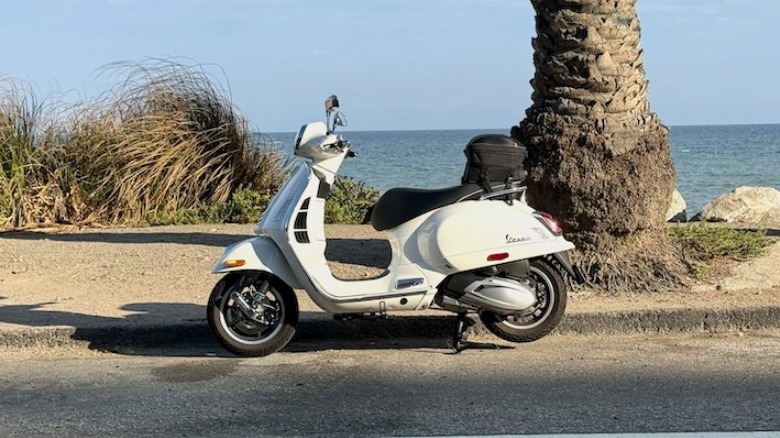
After breakfast at Inn at The Spanish Bay (where motorcycles are normally not allowed, but somehow, we snuck by unnoticed), I split off on my own. Matt and Ali had other plans, so I rode the full 300+ miles home, by myself.
 Travis Langness/SlashGear
The trip home, mostly on PCH and Highway 101, was easy, but not without some challenges. With a forecasted temperature swing from day one of 105 degrees to a day-three temp of around 50 degrees, I had to choose between hot and cold gear for the ride. I went for hot-weather gear, opting for maximum comfort on the hot days. That meant a breeze along the ocean made it easily through my summer gloves and even through my multi-layered approach with my jacket.
With no wind protection on the Vespa, I was at the mercy of Mother Nature for several hours before the sun broke through the clouds. My hands froze up a few times, necessitating stops I wouldn't have otherwise made with the proper gloves. But that's a problem I could've solved with the extra storage space of a top case like the ones installed on Matt and Ali's bikes.
2026 Vespa Gts Super 310 verdict
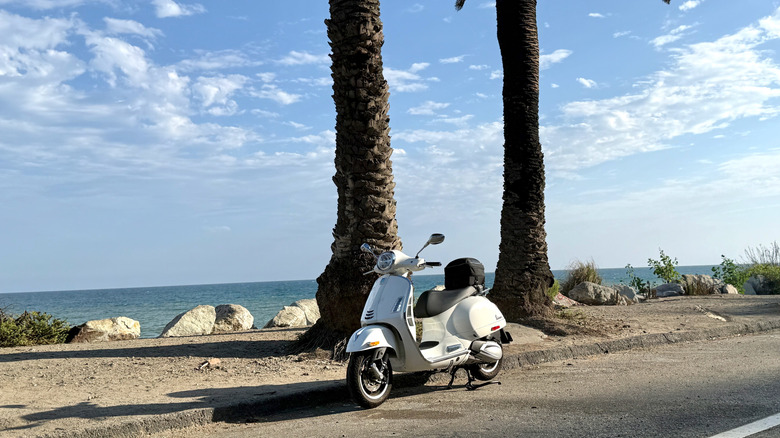
Riding home along my local stretch of PCH, I stopped to take in the view of the Pacific and revel in the fact that I'd just done three straight days of riding a scooter up and down the California coast. I've done this road trip dozens of times, in everything from hatchbacks to supercars, and I thought that doing it on Vespa's newest version of their small scooter would be a hoot — I was right.
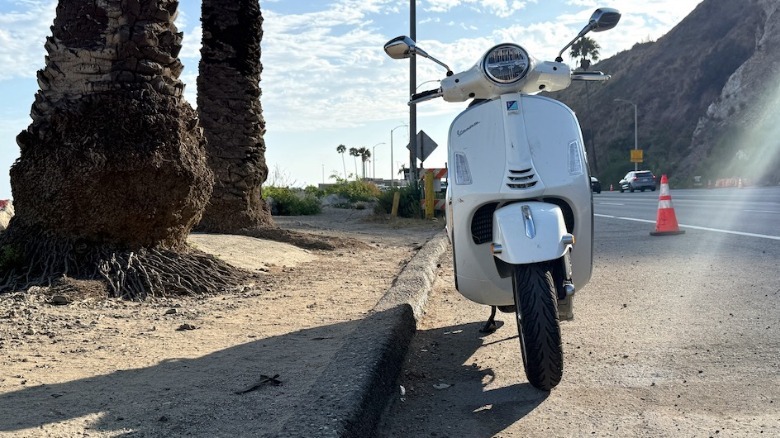
It's the lowest amount of power I've ever had at my disposal for such a long journey, but it was more than enough. It was also the most efficient way I've ever made the trip, averaging between 40 and 70 (!) mpg depending on the riding conditions. The Gts 310 Super I was riding has a starting price of $8,199 (not including destination fees), which is a lot in the world of motorcycling, especially when you consider all the inexpensive beginner bikes that are more powerful, but the Vespa provides a pretty unique experience.
 Travis Langness/SlashGear
I know just how luxurious it can be to ride hundreds of miles on a big, comfy, land-yacht of a bike, but with this sort of trip, there's far more character-building and joy. No cruise control, no fancy electronic riding aids, and certainly no electronically adjustable suspension. It's pure motoring at its core, an excellent and practical way to enjoy everyday riding as well as a long road trip.