

Why Are Mazda's Four-Cylinder Skyactiv-G Engines So Reliable?
Launched more than a decade ago, Mazda's Skyactiv-G engine involves a unique approach to traditional compression ratios. Take for instance the Skyactiv-G 2.5-liter engine available in models like the Mazda3 Sedan, which features a higher 13:1 compression ratio than some of its peers, like the Volkswagen Jetta with an 11.5:1 compression ratio. Although, it seems that Mazda isn't the only automaker pushing compression figures, as competitors like Honda and Hyundai are following suit with their own higher compression four-cylinder engine designs.
To the automaker's credit, the reliability of Mazda's Skyactiv engines is considered very good by owners, many of whom tout they've exceeding 200,000 miles with regular maintenance. Mazda ranked third in a J.D. Power 2025 U.S. Vehicle Dependability Study, outperforming several of the top automotive brands in the industry. The Mazda3 sedan, which features the Skyactiv-G engine, achieved an above average reliability score of four out of five on Repair Pal, noting the few problems that are reported aren't severe.
There are a few reasons this Mazda engine is reliable and they have to do with specific design considerations. Mazda engineers made a concerted effort to reduce friction inside the engine and opted for stronger forged steel for the crankshaft as opposed to the typical cast iron composition. Another potential factor in the longevity of Skyactiv-G engines is Mazda's refusal to use continuously variable transmissions (CVT), which have some downsides compared to traditional automatics.
The Skyactiv-G design incorporates reduced friction and more robust materials
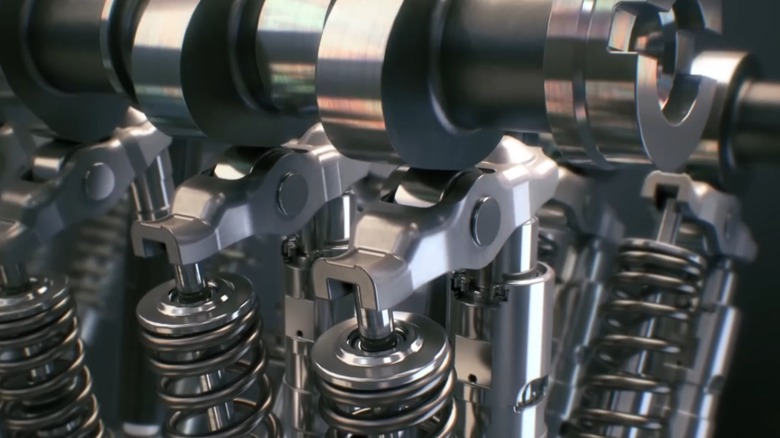
One of the biggest enemies of an engine is friction, largely held at bay by the oil. No matter how an engine is designed, there will be frictional losses, meaning mechanical energy is lost to heat as multiple components slide against each other. This, in turn, can eventually break down engine components through surface damage and increased temperatures. However, there are certainly ways to minimize the loss of energy due to friction and help protect engine components.
The Skyactiv-G engine has taken steps such as adding roller finger followers on the rocker arms of the valvetrain. This replaces the static, flat contact surface design, with a wheel-like one that smoothly rolls along with the turn of the camshaft lobes, reducing friction. In addition, Mazda utilizes piston skirts that are shorter. The piston skirt is the cylindrical-like piece extending from the top of the piston. Essentially, the greater the length of skirt, the more metal contact as the piston moves up and down.
In addition to reducing friction inside the engine, Mazda's Skyactiv-G also includes more robust materials. For example, instead of a cast-iron crankshaft, the automaker has opted for one made from forged steel. Forged steel crankshafts have a higher tensile strength of 110,000 psi versus cast iron's 80,000 psi. In addition, the measure of elongation – how much the crankshaft can flex under pressure before failure — is far superior in the forged steel version.
Unlike its peers, Mazda doesn't offer CVT transmissions
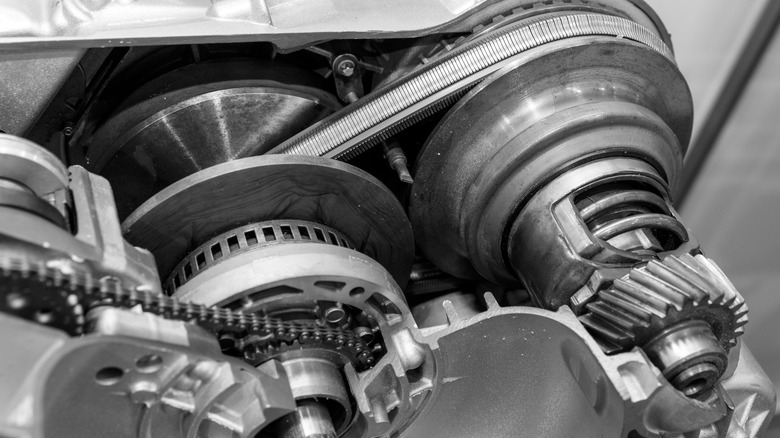
When looking at the key differences between CVT vs. automatic transmissions, the way in which power is sent to the wheels is the defining contrast. Traditional automatic transmissions feature planetary gears, which work well within certain speed or load ranges and feature different set ratios. Conversely, CVTs don't have set gears, they essentially have an untold number of variations throughout the normal range, using a combination of a belt and pulleys.
There are plenty of reasons why you should avoid a CVT transmission according to drivers. In terms of reliability, while CVT's have improved over the years, there have been numerous problems with them, prompting questions about longevity. Mazda's SkyActiv-Drive six-speed automatic (FW6A-EL) on the other hand, features a conventional design, with tried-and-true functionality. Considering these Mazda transmissions have been on the road for well over a decade, there doesn't seem to be many complaints, with outlets like Transmission Digest noting their helpline has received few calls on them.
One of the most significant issues with a CVT is the reliance on a chain to transfer power. If this chain (made of steel), breaks, it can present serious risks to the engine in the form of flying metal fragments. Comparatively, an automatic transmission that fails won't present such a destructive outcome. In addition, if a CVT needs to be repaired, its not only expensive, but isn't something every shop works on, making it more of a specialty service.