

Scientists Studied Over 400K Hard Drives, And This Major Tech Brand's Failed The Most
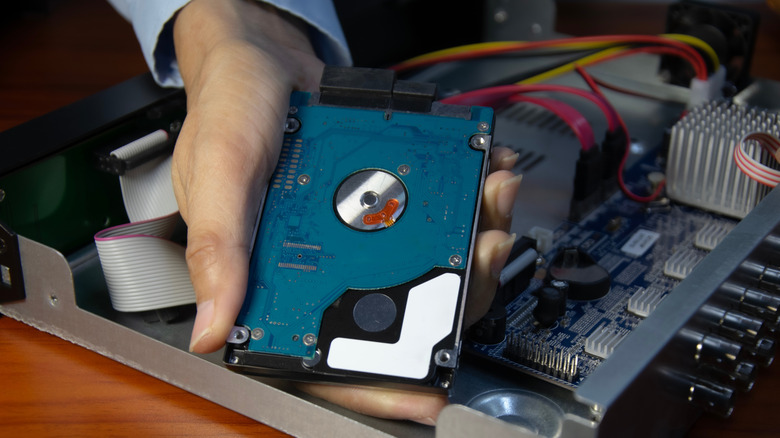
One of the important things to keep in mind when buying a hard disk drive (HDD) is that it can fail. While all HDDs eventually fail, it turns out that models from different manufacturers aren't created equal, with some proving more reliable than others in the short and medium term. That's according to new peer-reviewed research by two scientists (Christoph Siemroth and Yeomyung Park) published on IEEE Xplore. The two analyzed the reliability of more than 400,000 hard drives from four major brands, including Hitachi Global Storage Technologies (HGST), Seagate, Toshiba, and Western Digital. Of the four, the team found that Toshiba's HDDs failed the most.
For drives between 50 and 100 months old, Toshiba's HDD failure rate was between five and six out of 1,000 HDDs per month, while models from other manufacturers in the study had 2.5 or fewer failures, according to the study. The study found Toshiba's monthly HDD failure rate worsens after 60 months, rising to over four times the early-month rate, something that wasn't observed in the sample for other HDD brands. The research in question, titled "Are There Manufacturer Differences in Hard-Drive Reliability?" is based on an analysis of publicly available data from Backblaze, a cloud storage provider.
The sample used in the analysis is comprehensive; it includes 443,156 HDDs and covers more than 1.66 million drive-years of data from 2013 through the second quarter of 2025. The analysis used two different duration regression models, holding drive age, capacity, form factor, and drive temperature constant, so these aren't raw failure rates. The research shows drive reliability changes over the lifetime of the HDD and varies by manufacturer, which is why you probably shouldn't buy a used HDD.
HGST and Western Digital had the lowest failure rates
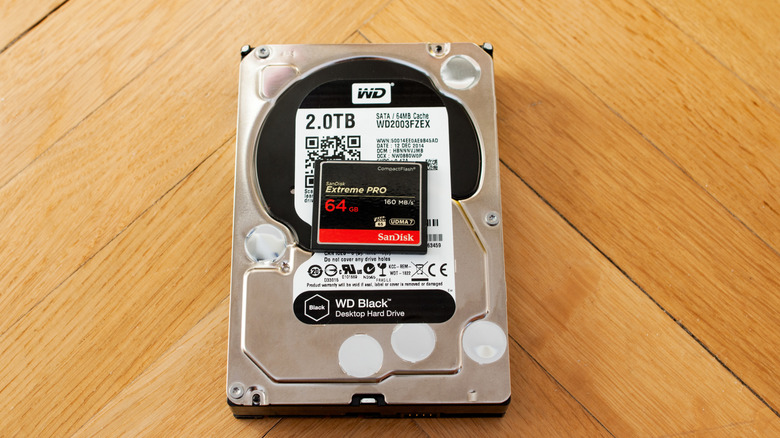
The study used Seagate as the baseline, assigning it a 100% hard-drive failure rate, then compared the other three brands against it. Of the three, only Toshiba had a higher failure rate than Seagate, at 107%, indicating lower reliability among the four brands analyzed. That said, the data shows that Toshiba isn't far off from the baseline, so Seagate's HDDs aren't exceptionally reliable. In fact, the study shows that Seagate's drives have higher failure rates early on, and Toshiba only overtakes the company after about the 50-month mark.
However, HGST and Western Digital stood out among the four, with low failure rates of about half or less than Seagate's. HGST (currently owned by WD) had the lowest failure rate at about 39 to 41% compared to Seagate. On the other hand, Western Digital's failure rate stood at around 51 to 52% relative to the baseline, clinching second place in reliability. According to the study, these two brands ranked highest in reliability based on the chosen sample, which mainly included drives under 10 years old. HGST HDDs had the lowest failure rate at most ages, followed by WD.
With various companies making and selling HDDs, this research shows that brand reliability is an important consideration when shopping for a hard drive. After all, you'll be trusting that drive to hold some of your most sensitive data, some of which you might deem too private to store in mainstream cloud storage services.
What the study reveals about hard drive reliability
While the study shows some brands' HDDs are more reliable than others in the short- to mid-term, it also shows that a manufacturer's overall failure rate alone can be misleading. In addition to analyzing whether reliability varies between manufacturers — which it does — the study also looked into how factors such as capacity, drive temperature, and drive location affect the failure rate. The team found drive temperature to be a key contributor to drive failure.
According to the study, a 1-degree increase in temperature can increase the failure rate by 2.1%; imagine how that figure compounds when the temperature rises by 10 to 20 degrees, or even more. In fact, the team estimates a ten-degree jump in drive temperature can increase the failure rate by 23.1%. Interestingly, capacity also affects reliability, and the study shows that larger-capacity drives tend to be more reliable. Per the research, a drive with 1 TB more capacity is estimated to have a 3.4% lower failure rate.
The team also mentions that workload can influence the failure rate, although they couldn't measure it directly. It's also important to note that the drives used in the sample were mostly enterprise ones; therefore, these conclusions might not apply to regular consumer drives. Since all HDDs will eventually stop working, it's important to be informed of the different signs that your drive is about to fail. That way, you can tell when it's time to finally upgrade.