

Popular Tech Brands Almost Everyone Used In The '90s That No Longer Exist
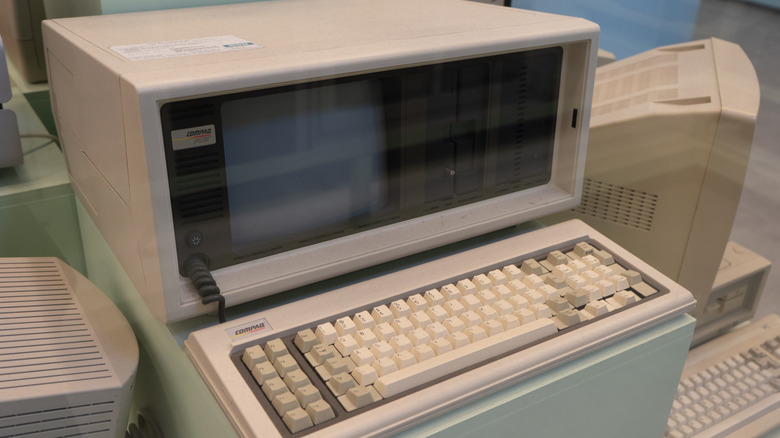
True tech enthusiasts might balk at the claim that our current technological age began in the 1990s. Regardless, there's no denying the decade of grunge and Gen X angst was when much of the tech that now dominates our lives first gained widespread familiarity (and even usage) among the average consumer. Yes, cell phones and the internet may have existed before the '90s, but this was the first decade when there was a good chance you or someone you knew started using this tech. That said, as is often the case in a competitive marketplace, many of the brands that defined the '90s tech experience are now completely defunct.
All the brands covered here were known for the types of products and services that are still in use today. They didn't necessarily fail because their driving ideas were weak. Instead, they failed to transform their short-lived popularity into enduring success due to a variety of factors, including strong competition. Their stories serve as reminders that "the next big thing" could end up being relegated to tech history's trivia file fairly easily.
Netscape Navigator
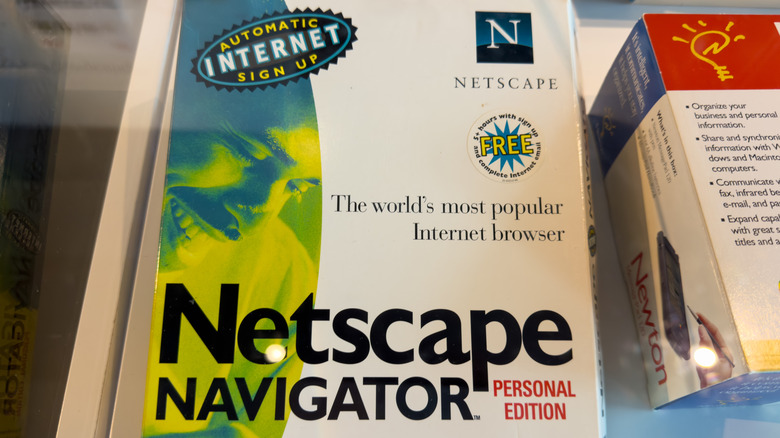
Years before Google was a recognizable brand, let alone a verb, Netscape Navigator was the dominant browser of '90s-era internet. Much of its early success comes down to timing. Netscape Navigator arrived on the scene in 1994, when widespread internet usage was just starting, and there was virtually no major browser competition. During the years when regular consumers first began using the internet, Netscape Navigator was essentially the only reasonably well-known option.
It didn't maintain this status forever. Although about 90% of internet users in the middle of the decade opted to explore the World Wide Web via Netscape Navigator, Microsoft deployed its considerable resources to launch what would become the first major browser war. Among other tactics, Microsoft edged out the competition by including Internet Explorer with Windows 95, making it easier for users to adopt and embrace the new option.
By 1998, Netscape was in such dire straits that it had to sell to AOL. In 2008, AOL officially shut down Netscape Navigator, ending the legacy of a short-lived brand that nevertheless defined many users' first online experiences.
Compaq
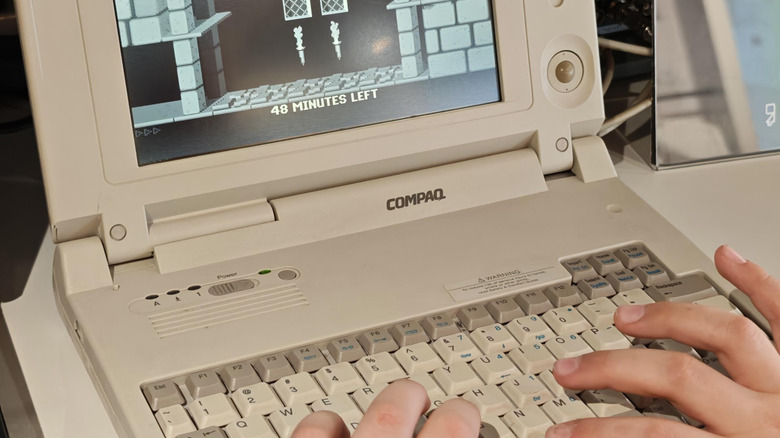
Ask a member of Gen Z (or even a younger millennial) to explain Compaq, and at best, they might assume you're mispronouncing the word "compact." It's hard to believe the now almost-forgotten brand was actually the largest PC manufacturer in the world in 1994.
Formed in Texas in 1982, the Compaq Computer Corporation leveraged a few strategies to rapidly achieve dominance in the PC and related consumer tech markets. For example, during the brand's heyday, Compaq's leaders were particularly skilled at identifying the newest tools and components, such as Intel's 386 chips, using them to improve Compaq's products before many others caught up. The company also prioritized hiring experienced personnel to optimize its products and give the overall brand a sense of authority and trustworthiness.
So, what led to the company's downfall? There isn't just one answer to this question. Various factors are ultimately to blame. Although mergers helped the company grow, they also resulted in major staff shakeups that required Compaq to adjust quickly. On top of that, competitors both at home and overseas were starting to find ways to offer affordable alternatives to Compaq's products that didn't sacrifice quality or features. Perhaps most importantly, Compaq simply failed to ensure its products were optimized for the internet in a timely manner.
Following a merger with Hewlett Packard, Compaq stopped operating as its own separate company in 2003. In 2013, HP officially discontinued the brand. Since then, outside of North America and Europe, some smaller companies have struck licensing deals to create Compaq-branded products. However, these are far from representative of the official brand that briefly reigned supreme in the personal computer arena.
The PalmPilot and related Palm devices
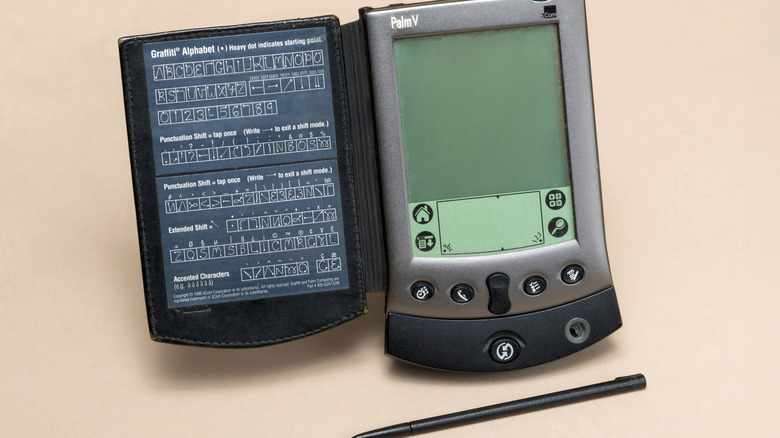
We're cheating a little bit with this entry. It may not be fair to say that "everyone" used Palm's famous PalmPilot, mainly because this type of device was still fairly niche in the '90s. However, thanks to pop culture osmosis, even those not tech-savvy enough to adopt the early personal digital assistant (PDA) were likely thoroughly familiar with it about a decade before smartphones went mainstream.
Palm Computing was founded in 1992. By 1995, US Robotics purchased the company for $44 million. The next year, the PalmPilot 1000 arrived on store shelves. Due to disputes with another company, future iterations of the device would drop the "Pilot" from the name.
What's noteworthy about this particular brand is the way it established a market for computers that can fit in a user's pocket. Perhaps more importantly, Palm succeeded in this area after more well-recognized companies like Apple had already attempted to develop and sell such a device, the Apple Newton.
Of course, as with all the brands here, Palm couldn't stay relevant forever. Although Palm was acquired by HP for $1.2 billion in 2010, HP ultimately discontinued the brand in 2011.
Remembering these brands, you may start to wonder which of today's big names will stand the test of time. You don't have to do much digging to learn that plenty of failed brands offered genuinely useful products and services during their most successful years. Startups of today need to take notice. Satisfying the customer is essential, but so is making sure you never rest on your laurels, lest your brand become another entry on a future list like this one.